Loading...
Alfonso VII of Leon vs Sikandar Lodi
Sikandar Lodi leads by 4.0 pts · 2 figures compared
…
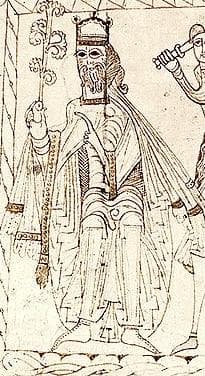
Alfonso VII of Leon
Emperor · Medieval
55.8Total

Sikandar Lodi
Emperor · Medieval
59.8Total
Basic Information
Born
1105
1458
Died
1157
1517
Era
Medieval
Medieval
Nationality
Leon
India
Occupation
Emperor
Emperor
Civilization
Western
Indian
Score Comparison
Military (10%)
72.5
70.0
Political (20%)
68.0
68.0
Influence (20%)
58.0
54.9
Legacy (20%)
48.3
49.2
Leadership (15%)
40.0
74.0
Strategy (15%)
57.5
55.0
TOTAL
55.8
59.8
Alfonso VII of Leon — Complete Timeline
1135 AD
Coronation as Emperor of All SpainPolitical Action◆ Major
Alfonso VII was crowned Emperor of All Spain in the Cathedral of Leon, claiming imperial authority over all Christian and Muslim rulers in the Iberian Peninsula. This coronation asserted Leon's supremacy over Castile, Aragon, and Navarre.
CoronationImperial TitleLeon
Impact: regionalconstructive
1147 AD
Conquest of AlmeriaWar◆ Major
Alfonso VII led a coalition of Leon, Castile, Genoese, and Pisan forces to capture the wealthy Moorish port city of Almeria. The conquest opened the Mediterranean to Christian trade and was a major victory in the Reconquista.
ReconquistaConquestAlmeria
Impact: regionalconstructive
1151 AD
Treaty of TudejénPolitical Action
Alfonso VII signed the Treaty of Tudej
TreatyReconquistaPartition
Impact: regionalconstructive
1157 AD
Death and Division of the KingdomPolitical Action◆ Major
Alfonso VII died, dividing his kingdom between his sons: Sancho III received Castile and Ferdinand II received Leon. This division reversed the union achieved by his father and weakened Christian power in Iberia.
SuccessionDivisionLeonCastile
Impact: regionaldestructive
Sikandar Lodi — Complete Timeline
1500 AD
Promotion of Trade and CommerceReform
Sikandar Lodi implemented policies to promote trade, including standardizing weights and measures and reducing customs duties. He also improved roads and security for merchants. These measures boosted the economy of the Lodi Sultanate.
Economic PolicyTradeInfrastructure
Impact: nationalconstructive
1503 AD
Suppression of the Rebellion of Barbak ShahWar
Sikandar Lodi crushed a rebellion led by his brother Barbak Shah, the governor of Jaunpur. He defeated Barbak's forces and reasserted central authority. This internal conflict weakened the Lodi dynasty's stability.
Civil WarRebellionDynastic Conflict
Impact: nationaldestructive
1504 AD
Founding of AgraCultural◆ Major
Sikandar Lodi founded the city of Agra on the banks of the Yamuna River. He moved his capital there from Delhi, building a fort and palaces. Agra later became a major Mughal city under Akbar.
City FoundingUrban PlanningCapital Shift
Impact: regionalconstructive
1506 AD
Conquest of GwaliorWar◆ Major
Sikandar Lodi led a campaign against the Tomara kingdom of Gwalior. He captured the Gwalior Fort after a long siege, defeating Raja Man Singh Tomar. This extended Lodi control into central India.
Military CampaignGwalior FortTerritorial Expansion
Impact: regionaldestructive
Expert Analysis
Origins
Alfonso VII was born in 1105 in Caldas de Reyes, Galicia, the son of Raymond of Burgundy and Urraca of Leon. His mother, Queen Urraca, was a ruler in her own right, and his father was a count. After Urraca's death in 1126, Alfonso inherited the thrones of Leon, Castile, and Galicia. He was raised amidst the turbulent politics of the Iberian kingdoms, with constant conflicts between nobles and the church shaping his early years. His education likely included military training and Latin learning, preparing him for kingship.
Sikandar Lodi was born around 1450, the second son of Bahlul Lodi, the founder of the Lodi dynasty in the Delhi Sultanate. His birth name was Nizam Khan. The Lodi family were Afghans who had risen to power in the chaotic aftermath of the Timurid invasions. Sikandar grew up in a military court, learning the arts of war and governance. He was appointed governor of Sirhind during his father's reign, gaining administrative experience. His early life was marked by the need to consolidate Afghan power over the Indian subcontinent.
Rise to Power
Alfonso VII was proclaimed king of Leon and Castile in 1126 upon his mother's death. He immediately faced challenges from his stepfather, King Alfonso I of Aragon, who claimed regency. Through military campaigns and diplomacy, Alfonso VII secured his position. In 1135, he was crowned Emperor of All Spain in the Cathedral of Leon, a title that asserted supremacy over all Christian and Muslim rulers in Iberia. This coronation, supported by the papacy, marked the peak of his early power. He also expanded his influence by marrying Berenguela of Barcelona, forging an alliance with the powerful Count of Barcelona.
Sikandar Lodi rose to power after his father Bahlul's death in 1489. Bahlul had designated him as successor, but his elder brother Barbak Shah contested the throne. Sikandar defeated Barbak's rebellion in 1490, consolidating control. He then moved to strengthen the sultanate's administration, founding the city of Agra in 1504 as his new capital, shifting the center of power from Delhi. His military campaigns expanded Lodi territory, notably the conquest of Gwalior in 1505, which secured a strategic fortress.
Leadership & Governance
Alfonso VII's leadership was characterized by coalition-building and imperial ambitions. He styled himself as emperor, seeking to unite the Iberian kingdoms under his hegemony. His governance involved constant negotiations with powerful nobles and the church. He granted fueros (charters) to towns, fostering urban growth, but also faced rebellions. His military strategy relied on alliances, as seen in the conquest of Almeria (1147), where he coordinated with Genoese and Pisan fleets. However, his division of his kingdom upon his death reversed the union of Leon and Castile, showing a weakness in succession planning. He scored 40.0 in leadership, reflecting divided rule.
Sikandar Lodi was a more centralized ruler. He implemented administrative reforms, standardizing weights and measures to promote trade, and reducing customs duties. He also improved roads and encouraged commerce, boosting the economy. His leadership score of 74.0 is the highest among the categories, indicating effective governance. He suppressed rebellions, such as that of his brother Barbak Shah, and maintained a strong military. However, his patronage of the arts and architecture was limited compared to later Mughals. His founding of Agra laid the groundwork for that city's future importance.
Triumph & Tragedy
Alfonso VII's greatest triumph was his coronation as Emperor of All Spain, a symbolic achievement that asserted his preeminence. The conquest of Almeria in 1147 was a major military success, capturing a wealthy Moorish port and opening the Mediterranean to Christian forces. However, his greatest failure was the division of his kingdom at his death in 1157, splitting Leon and Castile between his sons. This led to decades of conflict and weakened Christian unity in Iberia. His political score of 68.0 reflects his ability to build alliances, but his legacy was undermined by this division.
Sikandar Lodi's triumph was the founding of Agra, which became a cultural and political center. His capture of Gwalior Fort in 1505 was another success, demonstrating his military capability. His promotion of trade and administration brought stability. However, his failure to establish a lasting dynasty was a tragedy; after his death in 1517, his son Ibrahim Lodi's misrule led to the Mughal invasion. Sikandar's legacy score of 49.2 is modest, as his achievements were overshadowed by the Mughals.
Character & Destiny
Alfonso VII was ambitious and diplomatic, using the title 'Emperor' to project power. He was a capable military leader but relied heavily on allies, as seen in the Almeria campaign. His decision to divide his kingdom suggests a feudal mindset, prioritizing his sons' inheritance over unity. This choice sealed his destiny: the fragmentation of his empire. Historical assessments view him as a transitional figure between the early Reconquista and the later unification of Spain.
Sikandar Lodi was an able administrator and cautious military commander. He focused on consolidation rather than expansion, which stabilized the sultanate. His character was marked by pragmatism, but he failed to groom a competent successor. His destiny was to be the last effective Lodi ruler before the dynasty's collapse. Historians note his contributions to urban planning and trade, but his influence was limited by the brevity of his dynasty.
Legacy
Alfonso VII's legacy is mixed. His imperial title influenced later Spanish monarchs, but his kingdom's division set back unification. The conquest of Almeria was a significant Christian victory, but the city was lost again in 1157. The Treaty of Tudején (1151) with Ramon Berenguer IV shaped the partition of Moorish lands, affecting the Reconquista. His total score of 55.8 reflects his impact, but he is less remembered than his grandson Alfonso VIII.
Sikandar Lodi's legacy is more tangible. Agra, his capital, became the seat of the Mughal Empire under Akbar, who built the Agra Fort. His administrative policies influenced later rulers. However, his dynasty ended within two generations. His total score of 59.8 is slightly higher than Alfonso VII's, but his long-term influence is overshadowed by the Mughals. He scored 49.2 in legacy, similar to Alfonso's 48.3.
Conclusion
Alfonso VII and Sikandar Lodi both ruled medieval empires, but their impacts differ. Alfonso VII's claim to imperial authority over all Spain was grandiose but short-lived; his division of the kingdom was a strategic error that weakened Christian Iberia. Sikandar Lodi, with a higher total score of 59.8 compared to Alfonso's 55.8, and superior leadership (74.0 vs 40.0), achieved more stable governance and founded a city that became a world heritage site. While Alfonso's military score (72.5) is slightly higher than Sikandar's (70.0), Sikandar's political and administrative achievements had a more lasting effect. Therefore, Sikandar Lodi had greater impact, as his foundations for Agra and trade reforms outlasted his dynasty, whereas Alfonso's empire fragmented upon his death.
Rankings
🥇
Sikandar LodiLeader
Mil: 70.0Pol: 68.0Inf: 54.9
59.8
🥈
Alfonso VII of Leon
Mil: 72.5Pol: 68.0Inf: 58.0
55.8
+4.0 behind
How This Comparison Works
Algorithm
Each figure is scored on 6 dimensions (0—100 scale) based on structured historical data: Military (10%), Political (20%), Influence (20%), Legacy (20%), Leadership (15%), Strategy (15%). The weighted total produces the final ranking.
Data Sources
Scores are computed from structured sub-indicators in the database. Scale factors adjust for era (Ancient ×0.85, Modern ×1.0) and civilization size (Eastern ×1.05, Other ×0.80) to account for differences in population and military scale.
Maximum 3 Figures
Comparisons are limited to 2—3 figures to ensure readability and statistical meaningfulness.
Error Margins
±5 points per dimension — Sub-scores are derived from historical records with inherent uncertainty. Two figures within 5 points on a dimension should be considered roughly equivalent in that area.
Total Score Accuracy
±3 points overall — The weighted combination of 6 dimensions produces a total score with approximately ±3 points of uncertainty. Differences of less than 3 points are not statistically significant— the figures are effectively tied.
Known Limitations
- Historical records are incomplete and uneven across civilizations
- Figures from oral-tradition societies may be underrepresented
- Occupation labels can misclassify multi-role figures
- Scores measure capability and impact, not moral character
- Quantitative scoring is a comparison tool, not absolute truth
Capability Radar
Military (10%) — Battles & Warfare
Battles
55
55
Win Rate
60
60
Expansion
65
60
Political (20%) — Governance & Reform
Reform
50
50
Diplomacy
60
55
Economy
45
50
Influence (20%) — Cultural & Global Reach
Cultural
45
40
Global
35
30
Legacy (20%) — Historical Impact
Historical
50
50
Longevity
40
45
Leadership (15%) — Power & Stability
Tenure
65
65
Stability
50
45
Strategy (15%) — Tactics & Innovation
Strategy
55
55
Tactics
50
50
Reform
40
45
Similar Comparisons
Comments & Discussion
No comments yet. Be the first to share your thoughts!