Loading...
Alfonso VII of Leon vs Napoleon Bonaparte
Napoleon Bonaparte leads by 15.1 pts · 2 figures compared
…
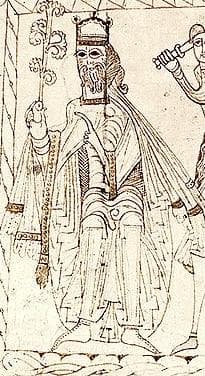
Alfonso VII of Leon
Emperor · Medieval
55.8Total

Napoleon Bonaparte
General · Modern
70.9Total
Basic Information
Born
1105
1769
Died
1157
1821
Era
Medieval
Modern
Nationality
Leon
France
Occupation
Emperor
General
Civilization
Western
Western
Score Comparison
Military (10%)
72.5
94.0
Political (20%)
68.0
72.0
Influence (20%)
58.0
40.0
Legacy (20%)
48.3
80.0
Leadership (15%)
40.0
78.0
Strategy (15%)
57.5
90.0
TOTAL
55.8
70.9
Alfonso VII of Leon — Complete Timeline
1135 AD
Coronation as Emperor of All SpainPolitical Action◆ Major
Alfonso VII was crowned Emperor of All Spain in the Cathedral of Leon, claiming imperial authority over all Christian and Muslim rulers in the Iberian Peninsula. This coronation asserted Leon's supremacy over Castile, Aragon, and Navarre.
CoronationImperial TitleLeon
Impact: regionalconstructive
1147 AD
Conquest of AlmeriaWar◆ Major
Alfonso VII led a coalition of Leon, Castile, Genoese, and Pisan forces to capture the wealthy Moorish port city of Almeria. The conquest opened the Mediterranean to Christian trade and was a major victory in the Reconquista.
ReconquistaConquestAlmeria
Impact: regionalconstructive
1151 AD
Treaty of TudejénPolitical Action
Alfonso VII signed the Treaty of Tudej
TreatyReconquistaPartition
Impact: regionalconstructive
1157 AD
Death and Division of the KingdomPolitical Action◆ Major
Alfonso VII died, dividing his kingdom between his sons: Sancho III received Castile and Ferdinand II received Leon. This division reversed the union achieved by his father and weakened Christian power in Iberia.
SuccessionDivisionLeonCastile
Impact: regionaldestructive
Napoleon Bonaparte — Complete Timeline
1799 AD
Coup of 18 BrumaireOther◆ Major
Napoleon Bonaparte, with support from his brother Lucien and key political figures, overthrew the Directory in a bloodless coup. He established the Consulate with himself as First Consul, effectively becoming the ruler of France. This event ended the French Revolution's most unstable period.
French RevolutionCoupRise to Power
Impact: regional
1804 AD
Promulgation of the Napoleonic CodeOther◆ Major
Napoleon enacted the Civil Code of the French, known as the Napoleonic Code, a comprehensive set of laws that replaced the fragmented feudal legal systems. The code established legal equality, protected property rights, and secularized law. It became the basis for legal systems in many European and world countries.
Legal ReformNapoleonic CodeCivil Law
Impact: globalconstructive
1805 AD
Battle of AusterlitzWar◆ Major
Napoleon's Grande Arm
Napoleonic WarsBattleDecisive Victory
Impact: global
1812 AD
Invasion of RussiaWar◆ Major
Napoleon led the Grande Arm
Napoleonic WarsInvasionDisaster
Impact: globaldestructive
1815 AD
Battle of WaterlooWar◆ Major
Napoleon's French army was defeated by the combined forces of the Duke of Wellington's Anglo-Allied army and Gebhard Leberecht von Bl
Napoleonic WarsBattleFinal Defeat
Impact: globaldestructive
Expert Analysis
alfonso-vii-of-leon-vs-napoleon-bonaparte
# The Emperor’s Two Faces
In the winter of 1812, Napoleon Bonaparte watched his Grand Army burn Moscow, a city he had conquered but could not hold. Less than three years later, he would be exiled to a rocky island in the South Atlantic. Seven centuries earlier, in the spring of 1135, Alfonso VII knelt before the altar of the Cathedral of León, accepting a crown that declared him Emperor of All Spain. He would die peacefully twenty-two years later, his kingdom divided but his honor intact. Both men claimed imperial titles. Both sought to reshape the world around them. Yet one ended in lonely exile, the other in a quiet grave. What drove such different outcomes?
Origins
Napoleon was born in 1769 on the island of Corsica, a territory only recently acquired by France. His family belonged to the minor nobility, but they were outsiders in a kingdom that still measured worth by bloodlines stretching back centuries. He spoke French with a thick Italian accent, and his schoolmates mocked him for it. This sense of being an outsider—brilliant but never fully accepted—fueled a ferocious ambition. The French Revolution, which shattered the old order, became his ladder.
Alfonso VII, by contrast, was born into the very marrow of power. His mother, Urraca of León, was a queen who fought her own battles—literally, leading armies alongside her second husband. His father, Raymond of Burgundy, had come to Spain to fight the Moors. Alfonso grew up in a world where kingship was inherited, where legitimacy came from blood and the blessing of the Church. He did not need to invent himself; he needed only to live up to what he already was.
Rise to Power
Napoleon’s rise was a series of explosions. At twenty-four, he drove the British out of Toulon. At twenty-six, he saved the revolutionary government from a royalist uprising with a “whiff of grapeshot.” At twenty-seven, he took command of the Army of Italy and, in a single year, shattered the Austrian Empire. His campaigns were lightning: fast marches, decisive battles, total victory. He was not a general who fought wars of attrition; he fought wars of annihilation. By 1804, at thirty-five, he crowned himself Emperor of the French in Notre-Dame, taking the crown from the Pope’s hands and placing it on his own head.
Alfonso’s path was slower, more patient. He became King of León and Castile in 1126, at twenty-one, inheriting a kingdom fractured by his mother’s turbulent reign. He spent the next nine years consolidating his authority, subduing rebellious nobles, and extending his influence over the other Christian kingdoms of Iberia. His coronation as Emperor of All Spain in 1135 was not a conquest but a recognition—a claim to primacy over the Christian princes of the peninsula, from Portugal to Aragon. He did not seize the title; he grew into it.
Leadership & Governance
Napoleon governed as he fought: with speed, centralization, and overwhelming force. His Napoleonic Code swept away feudal privileges, established equality before the law, and standardized legal systems across Europe. He built roads, founded banks, and reformed education. But he also appointed his brothers as puppet kings, demanded tribute from conquered states, and treated Europe as a chessboard for his ambition. His political wisdom was real but shallow—brilliant at tactics, poor at strategy. He could win battles, but he could not win peace.
Alfonso governed as a medieval emperor should: through alliance, marriage, and religious authority. His greatest military achievement, the capture of the Moorish port city of Almería in 1147, was not a solo feat. He led a coalition of Leónese, Castilian, Genoese, and Pisan forces, sharing the spoils and the glory. The Treaty of Tudején in 1151, signed with Ramon Berenguer IV of Barcelona, divided future conquests in Moorish Spain before they were even made. Alfonso understood what Napoleon never fully grasped: that lasting power requires partners, not subjects.
Triumph & Tragedy
Napoleon’s greatest triumph was also the seed of his tragedy. In 1805, at Austerlitz, he destroyed the combined armies of Russia and Austria in a battle so perfect that it is still studied in military academies. He was at the height of his power—master of Europe, architect of a new order. But he could not stop. The invasion of Russia in 1812 was a gamble he did not need to take. The winter destroyed his army, and with it, his aura of invincibility. By 1814, his enemies were in Paris. By 1815, after a brief return, Waterloo ended it all. He died in 1821 on Saint Helena, a prisoner of the British, at fifty-one.
Alfonso’s tragedy was quieter. He died in 1157 at fifty-two, having achieved his imperial dream. But he knew his kingdom was too large for one man to hold. In his final act, he divided his realm between his sons: Sancho III received Castile, Ferdinand II received León. It was a medieval solution—preserving family inheritance over national unity—and it undid much of what he had built. The two kingdoms would not be reunited for another seventy years. Yet Alfonso died in his bed, surrounded by his family, his legacy intact if fragmented.
Character & Destiny
Napoleon was a creature of will. He believed that history was made by great men, and he was determined to be the greatest. “I am the state,” he once said, and he meant it. His brilliance was also his blindness: he saw obstacles only as things to be overcome, never as limits to be respected. His empire was a monument to his ego, and when his ego failed, the monument crumbled.
Alfonso was a creature of context. He understood that his power came not from himself alone but from his lineage, his faith, and his alliances. He was crowned Emperor of All Spain not because he conquered it, but because the other Christian kings of Iberia accepted his primacy. His ambition was real, but it was tempered by a sense of what was possible. He built a house that could stand without him, even if it was later divided.
Legacy
Napoleon’s legacy is global and contested. He is remembered as a military genius, a reformer, and a tyrant. The Napoleonic Code shaped legal systems from Europe to Latin America. His campaigns are still studied, his name still evokes passion. But his empire lasted barely a decade, and his final years were spent in humiliation.
Alfonso’s legacy is smaller but more stable. He is remembered as the Emperor of All Spain, a title that symbolized the Christian reconquest of the peninsula. His reign was a bridge between the chaos of the early Reconquista and the consolidation that would eventually produce a unified Spain. He did not change the world, but he held his world together.
Conclusion
In the end, the two emperors reveal a fundamental truth about power. Napoleon tried to bend the world to his will and broke himself against it. Alfonso bent with the world and endured. One built an empire that collapsed with his fall; the other built a kingdom that survived his division. The Corsican outsider who crowned himself in Paris and the Leónese king who knelt in his cathedral both claimed the same title. But one sought to conquer history, while the other sought only to live within it. The difference was not in their ambition, but in their understanding of what ambition could buy.
Rankings
🥇
Napoleon BonaparteLeader
Mil: 94.0Pol: 72.0Inf: 40.0
70.9
🥈
Alfonso VII of Leon
Mil: 72.5Pol: 68.0Inf: 58.0
55.8
+15.1 behind
How This Comparison Works
Algorithm
Each figure is scored on 6 dimensions (0—100 scale) based on structured historical data: Military (10%), Political (20%), Influence (20%), Legacy (20%), Leadership (15%), Strategy (15%). The weighted total produces the final ranking.
Data Sources
Scores are computed from structured sub-indicators in the database. Scale factors adjust for era (Ancient ×0.85, Modern ×1.0) and civilization size (Eastern ×1.05, Other ×0.80) to account for differences in population and military scale.
Maximum 3 Figures
Comparisons are limited to 2—3 figures to ensure readability and statistical meaningfulness.
Error Margins
±5 points per dimension — Sub-scores are derived from historical records with inherent uncertainty. Two figures within 5 points on a dimension should be considered roughly equivalent in that area.
Total Score Accuracy
±3 points overall — The weighted combination of 6 dimensions produces a total score with approximately ±3 points of uncertainty. Differences of less than 3 points are not statistically significant— the figures are effectively tied.
Known Limitations
- Historical records are incomplete and uneven across civilizations
- Figures from oral-tradition societies may be underrepresented
- Occupation labels can misclassify multi-role figures
- Scores measure capability and impact, not moral character
- Quantitative scoring is a comparison tool, not absolute truth
Capability Radar
Military (10%) — Battles & Warfare
Battles
55
95
Win Rate
60
90
Expansion
65
95
Political (20%) — Governance & Reform
Reform
50
95
Diplomacy
60
80
Economy
45
85
Influence (20%) — Cultural & Global Reach
Cultural
45
85
Global
35
90
Legacy (20%) — Historical Impact
Historical
50
95
Longevity
40
90
Leadership (15%) — Power & Stability
Tenure
65
85
Stability
50
70
Strategy (15%) — Tactics & Innovation
Strategy
55
95
Tactics
50
98
Reform
40
92
Similar Comparisons
Comments & Discussion
Alfonso The Underrated6/17/2026
Let's be real: comparing Alfonso VII to Bonaparte is like comparing a chess grandmaster to a drunk guy flipping the board. Napoleon’s brilliance burned fast and crashed hard, but Alfonso played the long game—uniting Christian Spain, holding off the Almoravids, and keeping his empire intact for two decades. One died on a rock; the other in his own cathedral. That’s not luck; that’s strategy.
战术诗人6/17/2026
拿破仑的失败不是军事问题,而是政治白痴。1812年莫斯科大火烧掉的不只是房子,是他对统治的幻觉。他以为打胜仗就能征服民心——结果连普鲁士农民都恨他。阿方索七世压根不玩这套,他靠联姻、封建关系、和谈蚕食领土。皇帝不是打出来的,是谈出来的。拿破仑不懂这个,所以他活该流放。