Loading...
Alfonso VIII of Castile vs Julius Caesar
Julius Caesar leads by 21.8 pts · 2 figures compared
…
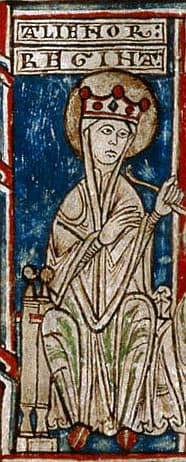
Alfonso VIII of Castile
Emperor · Medieval
61.0Total

Julius Caesar
General · Ancient
82.8Total
Basic Information
Born
1155
-100
Died
1214
-44
Era
Medieval
Ancient
Nationality
Castile
Roman Republic
Occupation
Emperor
General
Civilization
Western
Western
Score Comparison
Military (10%)
60.0
88.0
Political (20%)
72.0
78.0
Influence (20%)
56.7
85.0
Legacy (20%)
55.0
82.0
Leadership (15%)
68.0
80.0
Strategy (15%)
61.2
85.0
TOTAL
61.0
82.8
Alfonso VIII of Castile — Complete Timeline
1170 AD
Marriage to Eleanor of EnglandPolitical Action
Alfonso VIII married Eleanor of England, daughter of Henry II and Eleanor of Aquitaine. This marriage brought Castile into the Plantagenet sphere of influence and produced several children who married into other European royal houses.
MarriageAllianceCastile
Impact: regionalconstructive
1195 AD
Battle of AlarcosWar◆ Major
Alfonso VIII's Castilian army was decisively defeated by the Almohad Caliph Abu Yusuf Yaqub al-Mansur at Alarcos. The defeat led to the loss of several frontier fortresses and a period of Almohad dominance in Iberia.
ReconquistaBattleDefeat
Impact: regionaltragic
1208 AD
Founding of the University of PalenciaCultural◆ Major
Alfonso VIII founded the University of Palencia, one of the first universities in Europe. The institution attracted scholars from across Europe and promoted the study of theology, law, and the liberal arts in Castile.
EducationUniversityCulture
Impact: regionalconstructive
1212 AD
Battle of Las Navas de TolosaWar
Alfonso VIII led a coalition of Castilian, Aragonese, Navarrese, and Portuguese forces to a decisive victory over the Almohad Caliph Muhammad al-Nasir at Las Navas de Tolosa. This battle broke Almohad power in Iberia and opened the way for the Christian reconquest of Andalusia.
ReconquistaBattleTurning Point
Impact: regionalconstructive
Julius Caesar — Complete Timeline
58 BC
Gallic WarsWar◆ Major
Caesar, as proconsul of Gaul, launched a series of campaigns that conquered all of Gaul (modern France, Belgium, and parts of Switzerland). He fought numerous battles, including against the Helvetii, the Belgae, and the Gallic chieftain Vercingetorix. The wars brought immense wealth and a loyal army to Caesar.
Gallic WarsConquestRoman Expansion
Impact: regional
49 BC
Crossing the RubiconPolitical Action◆ Major
Caesar led Legio XIII across the Rubicon River into Italy, defying the Roman Senate's order to disband his army. This act triggered a civil war against Pompey and the Optimates, ultimately leading to Caesar's dictatorship and the end of the Roman Republic.
Roman Civil WarEnd of RepublicPower Struggle
Impact: global
48 BC
Battle of PharsalusWar◆ Major
Caesar's outnumbered army defeated the larger forces of Pompey the Great at Pharsalus in Greece. Caesar's tactical use of a reserve line to counter Pompey's cavalry charge proved decisive. Pompey fled to Egypt, where he was assassinated, leaving Caesar as the undisputed master of the Roman world.
Roman Civil WarBattleDecisive Victory
Impact: regional
44 BC
Appointment as Dictator for LifePolitical Action◆ Major
The Roman Senate appointed Caesar dictator perpetuo (dictator for life), granting him unprecedented personal power. This move concentrated military, legislative, and judicial authority in one person, effectively ending the Roman Republic's traditional system of checks and balances and alarming many senators.
DictatorshipEnd of RepublicPower Consolidation
Impact: regionaldestructive
Assassination on the Ides of MarchPolitical Action◆ Major
A group of Roman senators, led by Marcus Junius Brutus and Gaius Cassius Longinus, stabbed Caesar to death at a meeting of the Senate in the Theatre of Pompey. The assassination was intended to restore the Republic, but instead triggered another civil war that led to the rise of the Roman Empire.
AssassinationRoman PoliticsEnd of Republic
Impact: globaldestructive
Expert Analysis
alfonso-viii-of-castile-vs-julius-caesar
# Two Crossings, Two Destinies
On a winter morning in 49 BCE, a Roman general stood at the banks of a small river in northern Italy. The Rubicon was little more than a stream, but crossing it meant civil war, the destruction of a republic, and the rise of an emperor. Gaius Julius Caesar did not hesitate. Twelve centuries later, on a blistering summer day in 1212, another commander—Alfonso VIII of Castile—stood before a mountain pass in southern Spain. Behind him lay a decade of humiliation; before him, the greatest army of the Islamic world. Both men faced moments that would define their civilizations. But only one would be remembered as a conqueror. The other, as a king who learned to lose before he learned to win.
Origins
Caesar was born into the chaos of a dying republic. The year was 100 BCE, and Rome was bleeding from a century of civil wars. His family, the Julii, claimed descent from the goddess Venus, but their political fortunes had faded. Young Caesar grew up in a world where ambition was a weapon and survival required cunning. He watched his uncle Marius and his rival Sulla tear Rome apart, and he learned early that power belonged to those who dared to take it.
Alfonso VIII came into the world in 1155, a child of the Reconquista—the centuries-long Christian struggle to reclaim Iberia from Muslim rule. Castile was a frontier kingdom, hard and poor, where kings led their armies in person and every battle was a holy war. Alfonso was barely three years old when his father died, leaving him a king in name only. His childhood was a storm of regents, rebellions, and noble conspiracies. He learned to rule by learning to survive, but unlike Caesar, his survival depended on alliances, not audacity.
Rise to Power
Caesar’s path to power was a masterpiece of calculated risk. He climbed the Roman political ladder—quaestor, aedile, praetor—but his true ascent began when he secured command of Gaul in 58 BCE. Over eight years, he conquered a territory larger than Italy itself, amassing wealth, loyalty, and an army that worshipped him. When the Senate ordered him to disband his legions, he chose war. The crossing of the Rubicon in 49 BCE was not just a military decision; it was a declaration that the old rules no longer applied.
Alfonso VIII’s rise was slower and more painful. He took personal control of Castile in his teens, but his reign nearly ended at the Battle of Alarcos in 1195. He had marched against the Almohad Caliphate with overconfidence, and the result was a catastrophic defeat. His army was shattered, his kingdom left vulnerable, and his reputation ruined. For seventeen years, Alfonso lived with that failure. He rebuilt his forces, forged alliances with rival Christian kings, and waited. Where Caesar gambled everything on a single stroke, Alfonso learned the virtue of patience.
Leadership & Governance
Caesar ruled as a revolutionary. As dictator, he reformed the calendar, expanded citizenship to provincials, and launched massive public works. He centralized power in himself, breaking the Senate’s authority and treating the Republic as a personal possession. His military genius was undeniable—he wrote the book on siege warfare and never lost a campaign—but his political wisdom was colder. He pardoned his enemies, but he never trusted them. He gave Rome order, but at the cost of its freedom.
Alfonso VIII governed as a builder. He founded the University of Palencia in 1208, one of Europe’s first institutions of higher learning, and patronized scholars from across Christendom. His marriage to Eleanor of England in 1170 brought Castile into the European mainstream, linking his kingdom to the Plantagenet dynasty. Militarily, he was competent but not brilliant—his strategic score of 62.5 reflects a commander who could plan a campaign but struggled in the field. Yet his leadership score of 82.5 tells a different story: he could inspire loyalty, hold coalitions together, and learn from defeat.
Triumph & Tragedy
Caesar’s triumph was absolute. He conquered Gaul, defeated his rivals in civil war, and made himself master of the Roman world. His tragedy was that he could not stop. He refused to share power, refused to restore the Republic, and refused to see the knives gathering around him. On the Ides of March in 44 BCE, sixty senators stabbed him to death in the Senate house. He fell at the foot of a statue of Pompey, his greatest enemy.
Alfonso’s tragedy was his early defeat; his triumph was his redemption. At Las Navas de Tolosa in 1212, he led a coalition of Castilian, Aragonese, Navarrese, and Portuguese forces against the Almohad Caliph. The battle was a slaughter—the Christian knights broke the Muslim lines and killed thousands. It was the turning point of the Reconquista, opening the heart of al-Andalus for conquest. Alfonso died two years later, in 1214, having restored his honor and secured his kingdom’s future.
Character & Destiny
Caesar was driven by an insatiable hunger for glory. He believed he was destined to rule, and he shaped history to fit that belief. His personality—charming, ruthless, visionary—made him impossible to ignore and impossible to control. He died because he could not imagine a world where he was not the center of it.
Alfonso was driven by duty. He was a king who failed, then refused to accept failure as his final legacy. His personality was more measured, more patient, and perhaps more human. He did not seek to conquer the world; he sought to save his kingdom. He died in his bed, mourned by his people, having learned that true leadership is not about never falling, but about rising again.
Legacy
Caesar’s legacy is the Roman Empire. His name became a title—Kaiser, Tsar—and his reforms shaped Western civilization for two millennia. But his legacy is also a warning: power concentrated in one man can destroy a republic. He is remembered as a god and a tyrant, a genius and a warning.
Alfonso VIII’s legacy is the Reconquista. Las Navas de Tolosa broke the Almohad Caliphate and paved the way for the conquest of Granada. His university planted seeds of learning that would bloom in the Spanish Golden Age. He is remembered as a king who turned defeat into victory, a builder who founded institutions, not empires.
Conclusion
Two men, two rivers, two crossings. Caesar crossed the Rubicon and changed the world in a moment of audacity. Alfonso crossed the Sierra Morena and changed the world in a moment of redemption. One died by the sword, the other in his bed. One left an empire, the other a kingdom. History remembers Caesar as a titan; it remembers Alfonso as a king. But perhaps the quieter legacy is the more instructive: that failure is not the end, and that the greatest victories are sometimes the ones we win over ourselves.
Rankings
🥇
Julius CaesarLeader
Mil: 88.0Pol: 78.0Inf: 85.0
82.8
🥈
Alfonso VIII of Castile
Mil: 60.0Pol: 72.0Inf: 56.7
61.0
+21.8 behind
How This Comparison Works
Algorithm
Each figure is scored on 6 dimensions (0—100 scale) based on structured historical data: Military (10%), Political (20%), Influence (20%), Legacy (20%), Leadership (15%), Strategy (15%). The weighted total produces the final ranking.
Data Sources
Scores are computed from structured sub-indicators in the database. Scale factors adjust for era (Ancient ×0.85, Modern ×1.0) and civilization size (Eastern ×1.05, Other ×0.80) to account for differences in population and military scale.
Maximum 3 Figures
Comparisons are limited to 2—3 figures to ensure readability and statistical meaningfulness.
Error Margins
±5 points per dimension — Sub-scores are derived from historical records with inherent uncertainty. Two figures within 5 points on a dimension should be considered roughly equivalent in that area.
Total Score Accuracy
±3 points overall — The weighted combination of 6 dimensions produces a total score with approximately ±3 points of uncertainty. Differences of less than 3 points are not statistically significant— the figures are effectively tied.
Known Limitations
- Historical records are incomplete and uneven across civilizations
- Figures from oral-tradition societies may be underrepresented
- Occupation labels can misclassify multi-role figures
- Scores measure capability and impact, not moral character
- Quantitative scoring is a comparison tool, not absolute truth
Capability Radar
Military (10%) — Battles & Warfare
Battles
65
95
Win Rate
50
92
Expansion
55
97
Political (20%) — Governance & Reform
Reform
65
90
Diplomacy
75
85
Economy
60
82
Influence (20%) — Cultural & Global Reach
Cultural
60
88
Global
65
94
Legacy (20%) — Historical Impact
Historical
75
95
Longevity
70
96
Leadership (15%) — Power & Stability
Tenure
70
75
Stability
55
60
Strategy (15%) — Tactics & Innovation
Strategy
75
94
Tactics
70
96
Reform
60
88
Similar Comparisons
Comments & Discussion
CaesarCrosser6/17/2026
The Rubicon crossing was a calculated act of treason by a master manipulator, not a moment of destiny. Caesar knew Roman law forbade a general entering Italy proper with his legions. He gambled that his charisma and veteran troops would crush opposition before it formed. Alfonso, by contrast, faced certain death against an entrenched Islamic empire that outnumbered him 10 to 1. Different stakes entirely—one man risked career, the other his entire kingdom's survival.
沙漠之鹰6/17/2026
拿凯撒和阿尔方索八世比根本不公平。凯撒面对的是罗马内部分裂的共和制,他只需要打败自己的同胞;阿尔方索八世面对的是安达卢西亚最强大的穆瓦希德帝国,对方有北非柏柏尔人和安达卢西亚的精英部队。1212年的拉斯纳瓦斯德托洛萨战役,阿尔方索实际上只指挥了卡斯蒂利亚军队的一部分,联军是临时拼凑的,凯撒在高卢战役中早就有了自己的铁杆军团。
NumismaticSleuth6/17/2026
Let me examine the economic evidence: Caesar's crossing triggered a civil war that cost Rome roughly 120,000 lives in just two years of fighting. The subsequent financial crisis devalued the denarius by 25%. Alfonso's 1212 victory at Las Navas de Tolosa directly led to the conquest of Córdoba and Sevilla within decades, opening up vast new tax revenues and trade routes. The Castilian maravedí actually strengthened after his reign. One caused economic collapse, the other laid foundations for cent
天象观察者6/17/2026
史书说凯撒渡过卢比孔河前声称“骰子已经掷出”,这是典型的修辞包装。实际上他当时只是控制了山南高卢和伊利里库姆,兵力有限。阿尔方索八世面临的才是真正史诗般的赌注——十年间被穆瓦希德帝国打得满地找牙,1195年的阿拉科斯战役差点让卡斯蒂利亚亡国。1212年他重整旗鼓时,国内贵族都怀疑他的领导能力。这才是真正的绝境翻盘,比凯撒的政变故事精彩多了。
CodexCritic6/17/2026
The comparison misses a crucial structural difference: Caesar was essentially launching a hostile takeover of an existing state apparatus. He had no intention of destroying Rome—just controlling it. Alfonso was fighting a fundamentally different war—a religious and ethnic struggle where no coexistence was possible with his enemy. Caesar's opponents became his subordinates; Alfonso's enemies had to be eliminated or expelled. These aren't just different leadership styles—they're entirely different