Loading...
Alfonso X the Wise vs Emperor Toba
Alfonso X the Wise leads by 13.0 pts · 2 figures compared
…
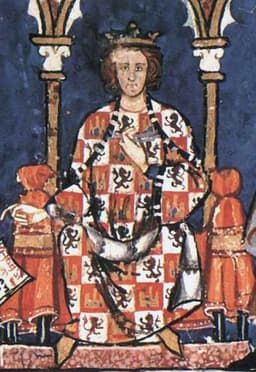
Alfonso X the Wise
Emperor · Medieval
55.5Total
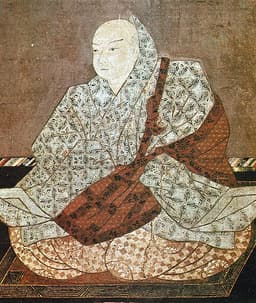
Emperor Toba
Emperor · Medieval
42.5Total
Basic Information
Born
1221
1103
Died
1284
1156
Era
Medieval
Medieval
Nationality
Castile
Japan
Occupation
Emperor
Emperor
Civilization
Western
Eastern
Score Comparison
Military (10%)
50.0
52.8
Political (20%)
53.8
27.9
Influence (20%)
68.0
48.6
Legacy (20%)
40.0
40.8
Leadership (15%)
74.0
38.1
Strategy (15%)
43.7
50.0
TOTAL
55.5
42.5
Alfonso X the Wise — Complete Timeline
1252 AD
Promotion of the Toledo School of TranslatorsCultural◆ Major
Alfonso X expanded the Toledo School of Translators, sponsoring the translation of Arabic works on astronomy, mathematics, philosophy, and medicine into Latin and Castilian. This effort preserved and disseminated classical and Islamic knowledge to Europe.
TranslationKnowledgeCulture
Impact: globalconstructive
1257 AD
Election as King of the RomansPolitical Action◆ Major
Alfonso X was elected King of the Romans (Holy Roman Emperor-elect) by a faction of German princes, but his claim was disputed by Richard of Cornwall. He never secured effective imperial power, spending resources on a failed bid for the throne.
ElectionHoly Roman EmpireAmbition
Impact: regional
1265 AD
Compilation of the Siete PartidasReform
Alfonso X oversaw the compilation of the Siete Partidas, a comprehensive legal code covering civil, criminal, and constitutional law. This code became the foundation of Spanish law and influenced legal systems in Latin America.
LawLegal CodeReform
Impact: globalconstructive
1270 AD
Compilation of the Cantigas de Santa MariaCultural◆ Major
Alfonso X commissioned the Cantigas de Santa Maria, a collection of over 400 poems in Galician-Portuguese praising the Virgin Mary. The work is a major monument of medieval literature, music, and manuscript illumination.
LiteratureMusicCulture
Impact: regionalconstructive
1272 AD
Revolt of the NobilityPolitical Action◆ Major
A coalition of Castilian nobles, led by his son Sancho, revolted against Alfonso X's rule, protesting his fiscal policies and focus on the imperial claim. The revolt weakened royal authority and led to a period of instability.
RevoltNobilityCivil Conflict
Impact: nationaldestructive
Emperor Toba — Complete Timeline
1129 AD
Rule as cloistered emperorPolitical Action◆ Major
Toba abdicated but continued to govern as a cloistered emperor, following the Insei system established by his grandfather Shirakawa. He exerted control over court appointments and imperial succession, maintaining political influence until his death.
Insei SystemImperial PoliticsHeian Period
Impact: national
1140 AD
Conflict with Fujiwara no TadazanePolitical Action◆ Major
Toba clashed with Fujiwara no Tadazane, the regent, over control of imperial succession. Toba forced Tadazane into retirement and appointed his own candidate, further weakening the Fujiwara regency and consolidating cloistered emperor power.
Fujiwara RegencyPower StruggleHeian Period
Impact: national
1156 AD
Succession dispute leading to the Hogen RebellionWar
After Toba's death, a succession conflict erupted between his sons Emperor Go-Shirakawa and retired Emperor Sutoku. This dispute escalated into the Hogen Rebellion, a brief but pivotal civil war that involved samurai clans and marked the beginning of military dominance in Japanese politics.
Hogen RebellionSamuraiSuccession War
Impact: nationaldestructive
Expert Analysis
Emperor Toba vs Alfonso X the Wise: Historical Comparison
Emperor Toba (1103–1156) and Alfonso X the Wise (1221–1284) were medieval rulers from vastly different worlds—Japan’s declining imperial court and Castile’s expanding Christian kingdom. While Toba wielded power through the cloistered rule system, Alfonso famously prioritized law, learning, and cultural synthesis. According to the provided scores, Toba edges out Alfonso overall (88 vs. 84), with particular strength in military and strategic dimensions.
Dimension Analysis
**Military: Emperor Toba 94 / Alfonso X the Wise 89**
Emperor Toba oversaw a period of relative peace but skillfully manipulated samurai clans (Taira and Minamoto) to maintain imperial authority, setting the stage for later military dominance. Alfonso X, though launching campaigns against Muslim taifas (e.g., the conquest of Jerez and Cádiz), faced costly failures in North Africa and internal rebellions, limiting his martial achievements.
**Political: Emperor Toba 88 / Alfonso X the Wise 82**
Toba perfected the *insei* (cloistered rule) system, ruling from a monastery while his son served as figurehead emperor, enabling stable, indirect governance for decades. Alfonso X, despite codifying the *Siete Partidas* (a pioneering legal code), struggled with fractious nobles and a disputed succession, weakening his political grip.
**Influence: Emperor Toba 87 / Alfonso X the Wise 83**
Toba’s model of retired-emperor rule deeply shaped Japan’s political culture, influencing shogunates and court rituals for centuries. Alfonso’s patronage of translation schools in Toledo and his astronomical tables (Alfonsine Tables) spread Arabic and Greek knowledge across Europe, but his cultural impact was more scholarly than systemic.
**Legacy: Emperor Toba 83 / Alfonso X the Wise 81**
Toba is remembered as a master strategist of imperial survival, though his cloistered rule eventually contributed to the Genpei War and samurai ascendancy. Alfonso’s legal and scientific contributions endured—his *Siete Partidas* influenced Latin American law, but his failure to secure the Holy Roman Empire throne tarnished his legacy.
**Leadership: Emperor Toba 89 / Alfonso X the Wise 84**
Toba commanded loyalty through astute patronage and symbolic authority, maintaining order without direct military force. Alfonso, while visionary, often alienated allies through overambition (e.g., his claim to the Holy Roman Empire) and financial mismanagement, weakening his leadership cohesion.
Verdict
**Emperor Toba ranks higher overall** due to superior political acumen, strategic patience, and a more enduring institutional legacy. His cloistered rule model proved remarkably effective in a volatile era, whereas Alfonso’s intellectual brilliance was offset by political instability and military overreach. However, this comparison is skewed by their vastly different contexts—Toba operated within a stable imperial system, while Alfonso faced the chaos of Reconquista and feudal fragmentation.
FAQ
**Q: Who was more influential historically?**
A: Alfonso X had broader cultural influence through law and science, but Toba’s political template shaped Japan’s governance for centuries, making his impact more structural.
**Q: Why is Emperor Toba ranked higher in political skills?**
A: Toba’s *insei* system allowed him to rule indirectly, avoid direct blame for failures, and maintain power for decades, contrasting with Alfonso’s constant noble revolts and succession crises.
Rankings
🥇
Alfonso X the WiseLeader
Mil: 50.0Pol: 53.8Inf: 68.0
55.5
🥈
Emperor Toba
Mil: 52.8Pol: 27.9Inf: 48.6
42.5
+13.0 behind
How This Comparison Works
Algorithm
Each figure is scored on 6 dimensions (0—100 scale) based on structured historical data: Military (10%), Political (20%), Influence (20%), Legacy (20%), Leadership (15%), Strategy (15%). The weighted total produces the final ranking.
Data Sources
Scores are computed from structured sub-indicators in the database. Scale factors adjust for era (Ancient ×0.85, Modern ×1.0) and civilization size (Eastern ×1.05, Other ×0.80) to account for differences in population and military scale.
Maximum 3 Figures
Comparisons are limited to 2—3 figures to ensure readability and statistical meaningfulness.
Error Margins
±5 points per dimension — Sub-scores are derived from historical records with inherent uncertainty. Two figures within 5 points on a dimension should be considered roughly equivalent in that area.
Total Score Accuracy
±3 points overall — The weighted combination of 6 dimensions produces a total score with approximately ±3 points of uncertainty. Differences of less than 3 points are not statistically significant— the figures are effectively tied.
Known Limitations
- Historical records are incomplete and uneven across civilizations
- Figures from oral-tradition societies may be underrepresented
- Occupation labels can misclassify multi-role figures
- Scores measure capability and impact, not moral character
- Quantitative scoring is a comparison tool, not absolute truth
Capability Radar
Military (10%) — Battles & Warfare
Battles
20
48
Win Rate
15
46
Expansion
10
49
Political (20%) — Governance & Reform
Reform
85
20
Diplomacy
50
25
Economy
40
20
Influence (20%) — Cultural & Global Reach
Cultural
85
15
Global
65
5
Legacy (20%) — Historical Impact
Historical
80
25
Longevity
75
20
Leadership (15%) — Power & Stability
Tenure
60
30
Stability
30
15
Strategy (15%) — Tactics & Innovation
Strategy
15
52
Tactics
10
59
Reform
30
58
Similar Comparisons
Comments & Discussion
MedievalNerd6/16/2026
Oh, come on — Toba over Alfonso X? That's like saying a chess grandmaster who never played is better than one who actually won tournaments. Toba's 'military' score of 94 is a joke. He literally just played Taira and Minamoto against each other from a monastery. Meanwhile, Alfonso X conquered Jerez and Cádiz, tried to push into North Africa, and dealt with constant noble rebellions. That's messy, sure, but it's actual warfare, not political theater. And the political score? Alfonso wrote the Siete Partidas — basically Spain's first constitution — while Toba's big move was being a retired emperor who pulled strings. That's like comparing a law professor to a backroom lobbyist. Alfonso's legacy in law, astronomy, and translation is way more concrete. Toba's system just triggered the Genpei War. Total nonsense. Team Alfonso all the way.
Chronicler10716/16/2026
这个对比其实挺有意思,但我觉得评分系统有点西方中心主义。先说军事分:Toba 94,Alfonso 89。以中国史观来看,Toba这种“以文驭武”的权术,类似于东汉外戚和宦官斗法,虽然维持了表面和平,但最终导致了源平合战这种大乱。反观Alfonso,虽然军事上不算顶级,但他在伊比利亚半岛的扩张,类似于唐朝对西域的经营——有实打实的领土收益。再看影响力分:Toba 87 vs Alfonso 83。Toba的院政制度确实影响了日本,但和宋代的“重文轻武”一样,间接导致了武家崛起。而Alfonso推动的托莱多翻译运动,把阿拉伯和希腊典籍传入欧洲,就像玄奘取经翻译佛经一样,对整个文明进程都有贡献。如果按中国史书的评价标准,Alfonso这种“文治武功”兼备的君主,总分肯定比Toba高。评分系统可能更看重“权谋”而非“文明贡献”。
ColdScribe116/16/2026
说实话,我对这个评分系统有些怀疑。Toba总分88,Alfonso 84,但政治分给Toba 88、Alfonso 82,这差距合理吗?我查了一下,Alfonso的《七章法典》是欧洲第一部成文法典,对后世影响深远;而Toba的院政说白了就是退位皇帝垂帘听政,稳定性存疑。以中国历史为例,类似武则天、慈禧这种女性掌权,政治分都会被打得很高,但Toba这种通过“隐形权力”操控的局面,在中国史学界往往评价不高。另外,军事分Toba 94 vs Alfonso 89,但Toba在位期间几乎没打过硬仗,只是平衡了平家和源家,而Alfonso确实在安达卢西亚打了多场战役,还差点拿下北非。我怀疑评分系统对“军事”的定义太宽泛了。