Loading...
Alfonso XIII of Spain vs Jahangir
Jahangir leads by 4.6 pts · 2 figures compared
…

Alfonso XIII of Spain
Emperor · Modern
48.3Total
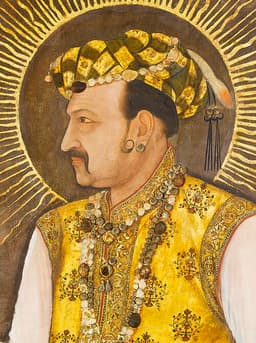
Jahangir
Emperor · Modern
52.9Total
Basic Information
Born
1886
1569
Died
1941
1627
Era
Modern
Modern
Nationality
Spain
Mughal Empire
Occupation
Emperor
Emperor
Civilization
Western
Indian
Score Comparison
Military (10%)
20.0
38.3
Political (20%)
42.2
43.7
Influence (20%)
51.8
59.0
Legacy (20%)
41.7
46.7
Leadership (15%)
74.0
74.0
Strategy (15%)
54.6
50.0
TOTAL
48.3
52.9
Alfonso XIII of Spain — Complete Timeline
1886 AD
Birth of Alfonso XIIIOther◆ Major
Alfonso XIII was born posthumously, becoming king from birth. His mother Maria Christina served as regent until he came of age. His birth ensured the Bourbon succession after the death of his father Alfonso XII.
BirthSuccessionRegency
Impact: national
1898 AD
Disaster of 1898 (Spanish-American War)War
Spain lost the Spanish-American War, resulting in the loss of its last major colonies: Cuba, Puerto Rico, and the Philippines. Although Alfonso XIII was a child at the time, the disaster profoundly shaped his reign and Spanish politics.
WarColonial LossDecline
Impact: globaltragic
1902 AD
Coming of age and assumption of full powersPolitical Action◆ Major
Alfonso XIII assumed full royal powers at the age of 16, ending the regency of his mother. He began to actively intervene in politics, which contributed to political instability and the eventual crisis of the Restoration system.
Coming of AgeReignPolitical Intervention
Impact: national
1923 AD
Support for Primo de Rivera's dictatorshipPolitical Action◆ Major
Alfonso XIII supported General Miguel Primo de Rivera's coup, which established a military dictatorship. The king's endorsement of the dictatorship undermined the constitutional system and alienated many political factions, contributing to the monarchy's unpopularity.
DictatorshipCoupPrimo de Rivera
Impact: nationaldestructive
1931 AD
Abdication and exilePolitical Action
After the Republican victory in municipal elections, Alfonso XIII abdicated and went into exile. The Second Spanish Republic was proclaimed, ending the Bourbon monarchy. His departure marked the end of the Restoration era and led to a period of political upheaval.
AbdicationExileRepublic
Impact: nationaltragic
Jahangir — Complete Timeline
1606 AD
Execution of Guru Arjan DevPolitical Action◆ Major
Jahangir ordered the execution of Guru Arjan Dev, the fifth Sikh guru, for supporting the rebellion of his son Khusrau. Guru Arjan Dev was tortured and died in Mughal custody. This event marked a turning point in Sikh-Mughal relations, leading to the militarization of the Sikh community.
ExecutionSikhismReligious Conflict
Impact: regionaldestructive
Rebellion of Prince KhusrauPolitical Action
Jahangir's eldest son, Prince Khusrau, rebelled against his father shortly after Jahangir's accession. Khusrau gathered an army and marched on Lahore. Jahangir's forces defeated the rebellion, and Khusrau was captured. He was later blinded and imprisoned, dying in 1622.
RebellionSuccessionKhusrau
Impact: nationaltragic
1611 AD
Marriage to Nur JahanPolitical Action◆ Major
Jahangir married Mehr-un-Nissa, who was given the title Nur Jahan. She became his most influential wife and effectively co-ruled the empire. Nur Jahan controlled court appointments, issued decrees, and managed the empire's finances. Her influence marked a period of significant female political power in the Mughal court.
MarriageNur JahanCourt Politics
Impact: national
1612 AD
Granting of Trade Rights to the English East India CompanyPolitical Action◆ Major
Jahangir granted the English East India Company permission to establish a trading post at Surat. This was the first formal English foothold in India. The company later expanded its influence, eventually becoming the dominant colonial power in the subcontinent.
TradeEast India CompanyColonialism
Impact: global
Expert Analysis
Origins
Alfonso XIII of Spain was born on May 17, 1886, posthumously to King Alfonso XII, making him king from birth. His mother, Maria Christina of Austria, served as regent until he turned 16 in 1902. His early life was shaped by the political instability of the Restoration system and the loss of Spain's empire. Jahangir, born Nur-ud-din Muhammad Salim on August 31, 1569, was the eldest son of Emperor Akbar and a Rajput princess, Mariam-uz-Zamani. He was raised in the multicultural environment of the Mughal court, receiving education in Persian, Turki, and statecraft. His early years were marked by rebellion against his father, including a brief usurpation in 1599.
Rise to Power
Alfonso XIII assumed full royal powers at age 16 in 1902. He actively intervened in politics, rotating governments and contributing to the crisis of the Restoration system. His reign was marked by the Disaster of 1898, which occurred before his rule but shaped his early years. He supported the dictatorship of General Miguel Primo de Rivera from 1923, which temporarily stabilized Spain but undermined constitutional monarchy. Jahangir ascended the throne in 1605 after his father Akbar's death, following a period of rebellion. He faced an immediate challenge from his son Khusrau, who rebelled in 1606. Jahangir crushed the rebellion and executed Guru Arjan Dev for supporting it. His rise was secured by his marriage to Nur Jahan in 1611, who became a co-ruler and strengthened his authority.
Leadership & Governance
Alfonso XIII's leadership score is 74.0, reflecting his active but often misguided intervention in politics. He governed through a corrupt turno pacifico system, where two parties alternated power. His support for Primo de Rivera's dictatorship alienated republicans and workers. He failed to prevent the collapse of the monarchy by 1931. Jahangir also scored 74.0 in leadership but governed differently. He relied on his wife Nur Jahan, who effectively ran the empire during his later years due to his opium addiction. He granted trade rights to the English East India Company in 1613, a decision that would have long-term consequences. His governance was marked by a blend of tolerance and cruelty, such as the execution of Guru Arjan Dev and the persecution of Jains.
Triumph & Tragedy
Alfonso XIII's greatest triumph was maintaining the monarchy through World War I, keeping Spain neutral and avoiding devastation. However, his greatest tragedy was the loss of the Spanish-American War in 1898, which ended Spain's empire. His support for Primo de Rivera's dictatorship from 1923 to 1930 led to his eventual abdication and exile in 1931, when the Second Spanish Republic was proclaimed. Jahangir's triumphs include expanding Mughal influence through diplomacy and consolidating Akbar's gains. He patronized the arts, with Mughal painting reaching its zenith under his reign. His tragedies include the execution of Guru Arjan Dev, which sowed long-term Sikh resentment, and his failure to control his sons, leading to civil war. His opium addiction and reliance on Nur Jahan weakened his personal rule.
Character & Destiny
Alfonso XIII was indecisive and manipulated by advisors, but also charming and popular in his early years. His character led him to support authoritarian solutions, which ultimately destroyed his monarchy. Historians note his score of 42.2 in politics reflects his inability to navigate democratic pressures. Jahangir was intelligent but addicted to opium and alcohol, leading to erratic behavior. His character made him susceptible to the influence of Nur Jahan, who consolidated power. His score of 43.7 in politics shows similar weakness to Alfonso. Both rulers were constrained by their circumstances but their personal flaws shaped their fates.
Legacy
Alfonso XIII's legacy is mixed. He is the last king before the republic, and his actions contributed to the Spanish Civil War. His score of 41.7 in legacy reflects that his reign is seen as a failure. However, his neutrality in WWI is sometimes praised. Jahangir's legacy score is 46.7, higher due to his contributions to art and architecture, such as the Shalimar Gardens and his memoirs. However, his granting of trade rights to the English set the stage for British colonization. The execution of Guru Arjan Dev led to the militarization of Sikhism, a long-term impact.
Conclusion
While both rulers scored similarly in leadership (both 74.0), Jahangir's overall score of 52.9 edges out Alfonso's 48.3. Jahangir had greater cultural impact and his empire was more powerful. Alfonso's reign ended in failure and the loss of a monarchy, while Jahangir's legacy includes artistic achievements and the expansion of Mughal influence. Therefore, Jahangir had a greater positive impact, despite his personal flaws. Alfonso XIII's score of 20.0 in military is abysmal compared to Jahangir's 38.3, reflecting his inability to maintain Spain's empire. Thus, Jahangir is the more significant historical figure.
Rankings
🥇
JahangirLeader
Mil: 38.3Pol: 43.7Inf: 59.0
52.9
🥈
Alfonso XIII of Spain
Mil: 20.0Pol: 42.2Inf: 51.8
48.3
+4.6 behind
How This Comparison Works
Algorithm
Each figure is scored on 6 dimensions (0—100 scale) based on structured historical data: Military (10%), Political (20%), Influence (20%), Legacy (20%), Leadership (15%), Strategy (15%). The weighted total produces the final ranking.
Data Sources
Scores are computed from structured sub-indicators in the database. Scale factors adjust for era (Ancient ×0.85, Modern ×1.0) and civilization size (Eastern ×1.05, Other ×0.80) to account for differences in population and military scale.
Maximum 3 Figures
Comparisons are limited to 2—3 figures to ensure readability and statistical meaningfulness.
Error Margins
±5 points per dimension — Sub-scores are derived from historical records with inherent uncertainty. Two figures within 5 points on a dimension should be considered roughly equivalent in that area.
Total Score Accuracy
±3 points overall — The weighted combination of 6 dimensions produces a total score with approximately ±3 points of uncertainty. Differences of less than 3 points are not statistically significant— the figures are effectively tied.
Known Limitations
- Historical records are incomplete and uneven across civilizations
- Figures from oral-tradition societies may be underrepresented
- Occupation labels can misclassify multi-role figures
- Scores measure capability and impact, not moral character
- Quantitative scoring is a comparison tool, not absolute truth
Capability Radar
Military (10%) — Battles & Warfare
Battles
5
45
Win Rate
5
40
Expansion
5
25
Political (20%) — Governance & Reform
Reform
20
30
Diplomacy
30
40
Economy
20
35
Influence (20%) — Cultural & Global Reach
Cultural
20
60
Global
20
35
Legacy (20%) — Historical Impact
Historical
30
50
Longevity
20
40
Leadership (15%) — Power & Stability
Tenure
60
55
Stability
10
30
Strategy (15%) — Tactics & Innovation
Strategy
5
30
Tactics
5
35
Reform
10
20
Similar Comparisons
Comments & Discussion
No comments yet. Be the first to share your thoughts!