Loading...
John II of Portugal vs Napoleon Bonaparte
Napoleon Bonaparte leads by 7.2 pts · 2 figures compared
…
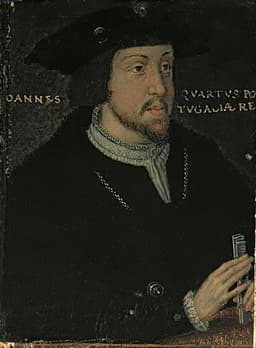
John II of Portugal
Emperor · Medieval
63.7Total

Napoleon Bonaparte
General · Modern
70.9Total
Basic Information
Born
1455
1769
Died
1495
1821
Era
Medieval
Modern
Nationality
Portugal
France
Occupation
Emperor
General
Civilization
Western
Western
Score Comparison
Military (10%)
50.0
94.0
Political (20%)
72.0
72.0
Influence (20%)
65.0
40.0
Legacy (20%)
65.0
80.0
Leadership (15%)
66.0
78.0
Strategy (15%)
55.0
90.0
TOTAL
63.7
70.9
John II of Portugal — Complete Timeline
1483 AD
Suppression of the Portuguese nobilityPolitical Action◆ Major
John II executed the Duke of Braganza for conspiracy and later personally stabbed the Duke of Viseu to death. These actions crushed the power of the high nobility, centralizing royal authority and eliminating internal opposition to his policies.
Nobility PurgeCentralizationPolitical Violence
Impact: nationaldestructive
1484 AD
Rejection of Columbus's proposalPolitical Action
John II's committee of experts rejected Christopher Columbus's proposal for a westward voyage to Asia, judging the distance estimates to be inaccurate. This decision led Columbus to seek sponsorship from Spain, resulting in the Spanish discovery of the Americas.
Age of DiscoveryColumbusNavigation
Impact: global
1488 AD
Discovery of the Cape of Good HopeInvention
John II sponsored Bartolomeu Dias's expedition that rounded the southern tip of Africa, naming it the Cape of Good Hope. This proved that a sea route to the Indian Ocean was possible, opening the way for future voyages to India.
Age of DiscoveryNavigationExploration
Impact: globalconstructive
1494 AD
Treaty of TordesillasPolitical Action
John II negotiated the Treaty of Tordesillas with Spain, dividing the non-European world along a meridian 370 leagues west of the Cape Verde islands. This agreement secured Portuguese control over the route to India and later Brazil, shaping colonial boundaries for centuries.
TreatyColonial DivisionAge of Discovery
Impact: globalconstructive
1495 AD
Establishment of the Portuguese India ArmadaPolitical Action◆ Major
John II commissioned the construction of a fleet and the preparation of a voyage to India under Vasco da Gama, though he died before the expedition departed. His planning and support for exploration laid the foundation for Portugal's maritime empire in Asia.
Age of DiscoveryNavigationExploration
Impact: globalconstructive
Napoleon Bonaparte — Complete Timeline
1799 AD
Coup of 18 BrumaireOther◆ Major
Napoleon Bonaparte, with support from his brother Lucien and key political figures, overthrew the Directory in a bloodless coup. He established the Consulate with himself as First Consul, effectively becoming the ruler of France. This event ended the French Revolution's most unstable period.
French RevolutionCoupRise to Power
Impact: regional
1804 AD
Promulgation of the Napoleonic CodeOther◆ Major
Napoleon enacted the Civil Code of the French, known as the Napoleonic Code, a comprehensive set of laws that replaced the fragmented feudal legal systems. The code established legal equality, protected property rights, and secularized law. It became the basis for legal systems in many European and world countries.
Legal ReformNapoleonic CodeCivil Law
Impact: globalconstructive
1805 AD
Battle of AusterlitzWar◆ Major
Napoleon's Grande Arm
Napoleonic WarsBattleDecisive Victory
Impact: global
1812 AD
Invasion of RussiaWar◆ Major
Napoleon led the Grande Arm
Napoleonic WarsInvasionDisaster
Impact: globaldestructive
1815 AD
Battle of WaterlooWar◆ Major
Napoleon's French army was defeated by the combined forces of the Duke of Wellington's Anglo-Allied army and Gebhard Leberecht von Bl
Napoleonic WarsBattleFinal Defeat
Impact: globaldestructive
Expert Analysis
john-ii-of-portugal-vs-napoleon-bonaparte
# The Emperor and the Perfect Prince
On a June morning in 1815, Napoleon Bonaparte watched his dreams dissolve into the mud of Waterloo, a final, crushing defeat that would send him to a remote island in the South Atlantic. Just over three centuries earlier, in 1495, another ruler, John II of Portugal, died in his bed at the age of forty, having never lost a battle he commanded—because he had never fought one. Two Western leaders, both architects of transformation, yet their stories could hardly be more different. What drove the conqueror to ruin and the strategist to triumph?
Origins
Napoleon was born in 1769 on the island of Corsica, a recent French acquisition, into a minor noble family of Italian heritage. His childhood was marked by resentment toward the French who had conquered his homeland, and by a fierce ambition to rise above his modest station. He attended military school in mainland France, where his Corsican accent and poverty made him an outsider. The French Revolution, which erupted when he was twenty, shattered the old order and opened doors that had been sealed for centuries.
John II of Portugal, born in 1455, was the grandson of Henry the Navigator and the heir to a kingdom already rich from exploration. His father, Afonso V, had been a warrior king who neglected administration, leaving the treasury drained and the nobility swollen with power. John grew up watching his father’s failures and resolved to rule differently. Where Napoleon’s world was one of revolution and chaos, John’s was one of consolidation and calculation.
Rise to Power
Napoleon’s ascent was meteoric and violent. At twenty-four, he recaptured Toulon from British forces in 1793, earning promotion to brigadier general. By 1796, he commanded the French army in Italy, where his lightning campaigns shattered Austrian power and made him a national hero. Each victory fed his ambition, and each political crisis in Paris created new opportunities. In 1799, he staged a coup and made himself First Consul, then Emperor in 1804. His path was that of a gambler who kept doubling his bets.
John II’s rise was quieter but no less decisive. He became king in 1481 at the age of twenty-six, inheriting a kingdom in disarray. The nobility had grown accustomed to power and privilege under his father’s weak rule. John moved slowly at first, gathering information and allies. In 1483, he struck. The Duke of Braganza was arrested, tried for treason, and executed. Two years later, John personally stabbed the Duke of Viseu to death after uncovering another conspiracy. Where Napoleon conquered through armies, John conquered through terror and patience.
Leadership & Governance
Napoleon’s genius was military. His campaigns—Austerlitz in 1805, Jena in 1806, Wagram in 1809—remain models of speed, deception, and decisive force. He reorganized the French army into corps that could operate independently or converge for battle, and he inspired soldiers with promises of glory and loot. But his political wisdom lagged behind his military brilliance. The Napoleonic Code, which he enacted in 1804, reformed French law and influenced legal systems across Europe. Yet he could not stop conquering. Each victory bred new enemies, and his Continental System, designed to strangle Britain economically, only united Europe against him.
John II was a ruler of a different kind. He never led an army in the field, but his strategic vision was no less profound. In 1488, he sponsored Bartolomeu Dias’s expedition that rounded the Cape of Good Hope, opening the sea route to Asia. When Christopher Columbus proposed a westward voyage in 1484, John’s committee of experts rejected it—correctly judging the distance to Asia to be far greater than Columbus claimed. In 1494, John negotiated the Treaty of Tordesillas with Spain, dividing the non-European world along a meridian 370 leagues west of the Cape Verde islands. This diplomatic masterstroke secured Portugal’s monopoly on the African and Indian Ocean trade routes. John was building an empire of commerce, not conquest.
Triumph & Tragedy
Napoleon’s greatest triumph was Austerlitz, where he crushed the combined armies of Russia and Austria in December 1805. His greatest tragedy was the invasion of Russia in 1812, a catastrophic campaign that destroyed his Grand Army of over 600,000 men. He never recovered. Exiled to Elba in 1814, he returned in 1815 for a hundred days, only to meet final defeat at Waterloo. His end was lonely, bitter, and confined to the remote island of Saint Helena.
John II’s triumph was subtler. He died in 1495, just as his plans were reaching fruition. He had commissioned the fleet that would sail to India under Vasco da Gama, though he did not live to see it. His tragedy was that of the architect who never sees the building completed. Yet he died in his bed, his kingdom secure, his treasury full, his legacy assured. He was called “The Perfect Prince” not because he was flawless, but because he achieved exactly what he set out to do.
Character & Destiny
Napoleon was driven by an insatiable hunger for glory. “I live only for posterity,” he once said. His personality—arrogant, restless, and supremely confident—shaped every decision. He could not stop because stopping meant admitting limits, and limits were foreign to his nature. His downfall came not from any single mistake but from the accumulation of a lifetime of overreach.
John II was driven by calculation, not passion. He was cold, patient, and ruthless when necessary. He understood that power was not about glory but about control—control of the nobility, control of trade, control of knowledge. He invested in navigation, shipbuilding, and cartography while Napoleon invested in artillery and cavalry. One sought to dominate the land; the other sought to dominate the sea. One died in exile; the other died in power.
Legacy
Napoleon’s legacy is written in the laws of Europe, the borders of nations, and the very concept of modern warfare. He is remembered as both a liberator and a tyrant, a genius and a madman. His name evokes the roar of cannon and the glitter of empire.
John II’s legacy is quieter but no less profound. He laid the groundwork for the Portuguese Empire, which would span Brazil, Africa, and Asia. He broke the power of the nobility and centralized the state. He chose knowledge over conquest, and in doing so, changed the world. The Treaty of Tordesillas shaped the colonization of the Americas. The Cape of Good Hope route transformed global trade.
Conclusion
Two rulers, two worlds, two destinies. Napoleon Bonaparte conquered Europe and lost everything. John II of Portugal never fought a battle and gained an empire. The difference was not in their ambition—both were driven men—but in their understanding of power. Napoleon saw power as something to be seized; John saw it as something to be built. One burned bright and fast; the other burned steady and long. In the end, the perfect prince outlasted the emperor, not because he was greater, but because he knew when to stop.
Rankings
🥇
Napoleon BonaparteLeader
Mil: 94.0Pol: 72.0Inf: 40.0
70.9
🥈
John II of Portugal
Mil: 50.0Pol: 72.0Inf: 65.0
63.7
+7.2 behind
How This Comparison Works
Algorithm
Each figure is scored on 6 dimensions (0—100 scale) based on structured historical data: Military (10%), Political (20%), Influence (20%), Legacy (20%), Leadership (15%), Strategy (15%). The weighted total produces the final ranking.
Data Sources
Scores are computed from structured sub-indicators in the database. Scale factors adjust for era (Ancient ×0.85, Modern ×1.0) and civilization size (Eastern ×1.05, Other ×0.80) to account for differences in population and military scale.
Maximum 3 Figures
Comparisons are limited to 2—3 figures to ensure readability and statistical meaningfulness.
Error Margins
±5 points per dimension — Sub-scores are derived from historical records with inherent uncertainty. Two figures within 5 points on a dimension should be considered roughly equivalent in that area.
Total Score Accuracy
±3 points overall — The weighted combination of 6 dimensions produces a total score with approximately ±3 points of uncertainty. Differences of less than 3 points are not statistically significant— the figures are effectively tied.
Known Limitations
- Historical records are incomplete and uneven across civilizations
- Figures from oral-tradition societies may be underrepresented
- Occupation labels can misclassify multi-role figures
- Scores measure capability and impact, not moral character
- Quantitative scoring is a comparison tool, not absolute truth
Capability Radar
Military (10%) — Battles & Warfare
Battles
45
95
Win Rate
50
90
Expansion
65
95
Political (20%) — Governance & Reform
Reform
75
95
Diplomacy
80
80
Economy
85
85
Influence (20%) — Cultural & Global Reach
Cultural
70
85
Global
75
90
Legacy (20%) — Historical Impact
Historical
85
95
Longevity
80
90
Leadership (15%) — Power & Stability
Tenure
70
85
Stability
65
70
Strategy (15%) — Tactics & Innovation
Strategy
70
95
Tactics
55
98
Reform
60
92
Similar Comparisons
Comments & Discussion
战史锐评6/17/2026
拿破仑的铁蹄踏遍欧陆,从意大利到埃及,从奥斯特里茨到耶拿,他指挥的每一场战役都是教科书级的战略杰作。而若昂二世呢?一个从未上过战场的“完美王子”,躲在里斯本宫墙内玩权术。战场上的勇气和智慧,拿破仑秒杀这位和平主义者。别拿纸上谈兵和沙场之血相比。
数字猎手6/17/2026
拿破仑的军事神话建立在尸山血海之上——法国人口损失近七分之一,财政彻底崩溃。反观若昂二世,用外交和航海技术让葡萄牙成为第一个全球帝国。看看他的遗产:迪亚士绕好望角、达伽马通印度,数据漂亮得惊人。拿破仑是泡沫,若昂是基石。
古典镜鉴6/17/2026
从希腊史看,拿破仑像极了阿喀琉斯——为个人荣誉冲锋陷阵,最终被骄傲吞噬。若昂二世则是奥德修斯,用智慧而非蛮力重塑王国。他收编贵族、资助航海、推动条约,每一步都深思熟虑。历史钟爱史诗悲剧,但明智的人会选择冷静算尽的那条路。
SabreAndScroll6/17/2026
Data skeptic here: stop romanticizing Napoleon's "glory." His campaigns cost France over a million soldiers dead before age 30, and he left the country smaller than he found it. John II took Portugal from a medieval debt trap to a global maritime power without a single major war. The numbers don't lie: per capita GDP and state revenues exploded under John, while Napoleon bankrupted France. Efficiency beats ego every time.
RedoubtReader6/17/2026
History buff with a contrarian take: you're all missing the context. Napoleon inherited a revolutionary mess and had to fight his way to legitimacy; John inherited a stable exploration dynasty with three generations of experience. Put Napoleon in 1480s Portugal with a quiet treasury
VanguardView6/17/2026
Classics scholar chiming in—what fascinates me is how each ruler mirrors a different classical ideal. Napoleon is pure Achilles: furious, personal glory, fatal flaw of hubris that brings ruin. John II is Odysseus: patient, cunning, always working behind the scenes. Both transformed their worlds, but one burned too bright and crashed. If you want lasting impact, craft like the tactician, not the warrior.
ParchmentProbe6/17/2026
As a military historian, I have to give this one to Napoleon. The man conquered most of Europe from scratch, leading armies in person through 60+ battles. John II never fought a single engagement—his "genius" was avoiding conflict entirely. That's not leadership, that's luck. Waterloo was a gamble that failed, sure, but at least he took risks. John just sat in Lisbon counting gold from Africa. Give me the Corsican who actually bled for his empire any day.