Loading...
This comparison has not been analyzed yet.
One-time AI generation (~1 minute). Scores and timeline are already available below.
Alfred von Tirpitz vs Valerii Zaluzhnyi
Alfred von Tirpitz leads by 7.7 pts · 2 figures compared
…

Alfred von Tirpitz
General · Modern
60.0Total
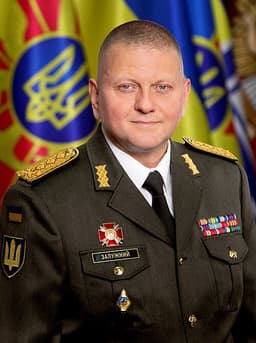
Valerii Zaluzhnyi
General · Modern
52.3Total
Basic Information
Born
1849
1974
Died
1930
—
Era
Modern
Modern
Nationality
Germany
Ukraine
Occupation
General
General
Civilization
Western
Western
Score Comparison
Military (10%)
55.0
52.5
Political (20%)
45.0
35.1
Influence (20%)
68.0
61.0
Legacy (20%)
58.0
50.0
Leadership (15%)
72.0
47.3
Strategy (15%)
55.0
69.1
TOTAL
60.0
52.3
Alfred von Tirpitz — Complete Timeline
1898 AD
Naval Arms Race with BritainPolitical Action
Tirpitz, as State Secretary of the Imperial German Navy, initiated a massive naval building program. He pushed through the First and Second Navy Laws, authorizing the construction of a battle fleet. This triggered a naval arms race with Britain that strained Anglo-German relations before World War I.
World War INavalArms Race
Impact: globaldestructive
1900 AD
Risk Theory DoctrinePolitical Action◆ Major
Tirpitz formulated the 'Risk Theory' doctrine, arguing that Germany should build a fleet strong enough that Britain would risk losing naval supremacy if it attacked. This doctrine guided German naval policy for over a decade and led to the construction of the High Seas Fleet.
World War INavalStrategy
Impact: global
1916 AD
Resignation as Naval ChiefPolitical Action◆ Major
Tirpitz resigned as State Secretary of the Imperial German Navy in March 1916. He opposed the decision to restrict U-boat warfare after the sinking of the Lusitania. His resignation marked the end of his influence over German naval policy, though he remained a public figure.
World War INavalResignation
Impact: national
Valerii Zaluzhnyi — Complete Timeline
2021 AD
Zaluzhnyi's appointment as Commander-in-ChiefPolitical Action◆ Major
Zaluzhnyi was appointed Commander-in-Chief of the Armed Forces of Ukraine by President Zelenskyy. He was tasked with reforming the military and preparing for potential Russian aggression.
AppointmentUkraineMilitary
Impact: nationalconstructive
2022 AD
Zaluzhnyi's defense of KyivWar
Zaluzhnyi commanded the successful defense of Kyiv against Russian forces attempting to capture the capital. Ukrainian forces repelled the assault, forcing a Russian withdrawal. This was a turning point in the 2022 invasion.
WarKyivUkraine
Impact: globalconstructive
Zaluzhnyi's Kharkiv counteroffensiveWar◆ Major
Zaluzhnyi planned and executed a surprise counteroffensive in Kharkiv Oblast, recapturing over 3,000 square kilometers of territory from Russian forces. The operation demonstrated Ukrainian military capability and shifted the war's momentum.
WarCounteroffensiveUkraine
Impact: regionalconstructive
2024 AD
Zaluzhnyi's dismissal as Commander-in-ChiefPolitical Action◆ Major
Zaluzhnyi was dismissed by President Zelenskyy amid reported tensions over war strategy and political ambitions. His removal was controversial, as he was highly popular among the military and public.
DismissalUkraineMilitary
Impact: national
This comparison has not been analyzed yet.
One-time AI generation (~1 minute). Scores and timeline are already available below.
Rankings
🥇
Alfred von TirpitzLeader
Mil: 55.0Pol: 45.0Inf: 68.0
60.0
🥈
Valerii Zaluzhnyi
Mil: 52.5Pol: 35.1Inf: 61.0
52.3
+7.7 behind
How This Comparison Works
Algorithm
Each figure is scored on 6 dimensions (0—100 scale) based on structured historical data: Military (10%), Political (20%), Influence (20%), Legacy (20%), Leadership (15%), Strategy (15%). The weighted total produces the final ranking.
Data Sources
Scores are computed from structured sub-indicators in the database. Scale factors adjust for era (Ancient ×0.85, Modern ×1.0) and civilization size (Eastern ×1.05, Other ×0.80) to account for differences in population and military scale.
Maximum 3 Figures
Comparisons are limited to 2—3 figures to ensure readability and statistical meaningfulness.
Error Margins
±5 points per dimension — Sub-scores are derived from historical records with inherent uncertainty. Two figures within 5 points on a dimension should be considered roughly equivalent in that area.
Total Score Accuracy
±3 points overall — The weighted combination of 6 dimensions produces a total score with approximately ±3 points of uncertainty. Differences of less than 3 points are not statistically significant— the figures are effectively tied.
Known Limitations
- Historical records are incomplete and uneven across civilizations
- Figures from oral-tradition societies may be underrepresented
- Occupation labels can misclassify multi-role figures
- Scores measure capability and impact, not moral character
- Quantitative scoring is a comparison tool, not absolute truth
Capability Radar
Military (10%) — Battles & Warfare
Battles
10
75
Win Rate
10
70
Expansion
60
10
Political (20%) — Governance & Reform
Reform
75
15
Diplomacy
40
35
Economy
50
10
Influence (20%) — Cultural & Global Reach
Cultural
50
45
Global
55
50
Legacy (20%) — Historical Impact
Historical
65
55
Longevity
40
40
Leadership (15%) — Power & Stability
Tenure
70
20
Stability
30
25
Strategy (15%) — Tactics & Innovation
Strategy
70
78
Tactics
30
80
Reform
85
72
Similar Comparisons
Comments & Discussion
No comments yet. Be the first to share your thoughts!