Loading...
Alfred von Waldersee vs Jean-Baptiste Bernadotte
Jean-Baptiste Bernadotte leads by 12.8 pts · 2 figures compared
…

Alfred von Waldersee
General · Modern
48.2Total
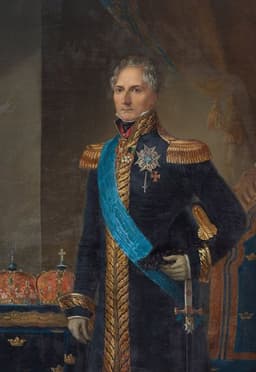
Jean-Baptiste Bernadotte
General · Modern
61.0Total
Basic Information
Born
1832
1763
Died
1904
1844
Era
Modern
Modern
Nationality
Germany
France
Occupation
General
General
Civilization
Western
Western
Score Comparison
Military (10%)
20.0
67.5
Political (20%)
46.6
62.7
Influence (20%)
54.1
55.0
Legacy (20%)
44.2
52.0
Leadership (15%)
64.5
80.0
Strategy (15%)
50.0
61.2
TOTAL
48.2
61.0
Alfred von Waldersee — Complete Timeline
1888 AD
Appointment as Chief of the German General StaffPolitical Action◆ Major
Waldersee succeeded the elder Moltke as Chief of the German General Staff. He held the position until 1891. His tenure was marked by advocacy for a preventive war against Russia, which was not adopted by Chancellor Bismarck. He was known for his political ambitions and close ties to the Kaiser.
General StaffMilitary LeadershipPreventive War
Impact: national
1900 AD
Command of the International Relief Expedition in ChinaWar◆ Major
Waldersee was appointed Supreme Commander of the Eight-Nation Alliance forces during the Boxer Rebellion. He arrived in China after the relief of the legations in Beijing. His command oversaw punitive expeditions and the signing of the Boxer Protocol, which imposed heavy indemnities on China.
Boxer RebellionColonial WarInternational Coalition
Impact: globaldestructive
Jean-Baptiste Bernadotte — Complete Timeline
1805 AD
Battle of AusterlitzWar◆ Major
Bernadotte commanded the I Corps at Austerlitz. His corps held the Allied left flank and participated in the encirclement of the Russian and Austrian forces, contributing to the French victory.
Napoleonic WarsBattleCorps Command
Impact: global
1809 AD
Battle of WagramWar◆ Major
Bernadotte commanded the Saxon IX Corps at Wagram. His corps was routed by Austrian forces, and he was criticized by Napoleon for his performance, leading to his dismissal from the Grande Arm
Napoleonic WarsBattleDefeatDismissal
Impact: regional
1810 AD
Elected Crown Prince of SwedenPolitical Action
The Swedish Riksdag elected Bernadotte as Crown Prince, due to his popularity and perceived ability to secure Norway. He converted to Lutheranism and was adopted by King Charles XIII, becoming heir to the throne.
SwedenSuccessionNapoleonic Era
Impact: nationalconstructive
1813 AD
Battle of LeipzigWar◆ Major
Bernadotte, now Crown Prince of Sweden, commanded the Swedish contingent and the Army of the North in the Allied coalition. His forces fought against Napoleon at Leipzig, contributing to the French defeat.
Napoleonic WarsBattleAllied Coalition
Impact: global
1814 AD
Treaty of KielPolitical Action◆ Major
Bernadotte negotiated the Treaty of Kiel with Denmark, which ceded Norway to Sweden. This fulfilled a key Swedish war aim and established the union between Sweden and Norway.
TreatySwedenNorwayDiplomacy
Impact: regionalconstructive
1818 AD
Reign as King of Sweden and NorwayReform◆ Major
As king, Bernadotte pursued a policy of neutrality and internal development. He improved infrastructure, reformed the legal system, and maintained peace, but faced opposition from liberal factions.
ReignReformsNeutrality
Impact: nationalconstructive
Accession as King Charles XIV JohnPolitical Action
Bernadotte ascended the Swedish throne as King Charles XIV John upon the death of Charles XIII. He founded the House of Bernadotte, which continues to reign in Sweden.
MonarchySwedenBernadotte Dynasty
Impact: nationalconstructive
Expert Analysis
Origins
Alfred von Waldersee was born in 1832 in Potsdam, Prussia, into a military family. His father, Franz von Waldersee, was a general. He attended the Prussian Cadet Corps and later the General War School. His early career was shaped by the Prussian military tradition, and he served as a staff officer during the Austro-Prussian War (1866) and the Franco-Prussian War (1870–1871).
Jean-Baptiste Bernadotte was born in 1763 in Pau, France, into a middle-class family. His father was a prosecutor. He enlisted in the French army at age 17 and rose through the ranks during the French Revolutionary Wars. His early experience included service in the Army of the Rhine, where he demonstrated tactical skill.
Rise to Power
Waldersee rose to prominence as a protégé of Helmuth von Moltke the Elder. In 1882, he became Quartermaster-General, and in 1888, he succeeded Moltke as Chief of the German General Staff. His tenure (1888–1891) was marked by advocacy for a preventive war against Russia, which created friction with Chancellor Otto von Bismarck. He was dismissed after Bismarck's fall but remained influential in military circles. In 1900, he was appointed Supreme Commander of the Eight-Nation Alliance forces during the Boxer Rebellion, arriving in China after the relief of Beijing.
Bernadotte's rise was meteoric. He was promoted to general of division in 1794 and served under Napoleon Bonaparte in Italy. He was appointed Marshal of France in 1804 and commanded the I Corps at Austerlitz (1805), where his forces held the Allied left flank. However, his relationship with Napoleon was strained. In 1810, the Swedish Riksdag elected him Crown Prince, hoping he would secure Norway. He converted to Lutheranism and took the name Charles John. He then allied with the Sixth Coalition against Napoleon, leading Swedish forces at the Battle of Leipzig (1813).
Leadership & Governance
Waldersee's leadership style was aggressive and political. He advocated for a preventive war against Russia and France, which conflicted with Bismarck's diplomatic approach. As Chief of Staff, he reorganized the General Staff but lacked the strategic acumen of his predecessor. During the Boxer Rebellion, his command was largely symbolic; he arrived after the main fighting. His governance was focused on military reform, but his political influence waned after 1891.
Bernadotte's leadership as crown prince and later king was pragmatic and diplomatic. He prioritized Swedish interests, shifting from France to the anti-Napoleon coalition. As king (Charles XIV John), he pursued neutrality and internal development. He improved infrastructure, reformed the legal system, and maintained peace. His governance score of 80.0 reflects his effective rule. He scored 62.7 in political ability, while Waldersee scored 46.6.
Triumph & Tragedy
Waldersee's greatest success was his rise to Chief of the General Staff, a position of immense prestige. He also commanded the international force in China, though his role was limited. His failures include his advocacy for preventive war, which damaged his relationship with Bismarck and led to his dismissal. The Boxer Rebellion command added little to his reputation, as the fighting was mostly over by his arrival.
Bernadotte's triumphs include his election as crown prince, the Treaty of Kiel (1814), which ceded Norway to Sweden, and his peaceful reign. He founded the House of Bernadotte, which still rules Sweden. His failures include his strained relationship with Napoleon, which limited his role in France, and the union with Norway, which ended in 1905. His military score of 67.5 reflects competent but not exceptional command.
Character & Destiny
Waldersee was ambitious and politically active, but his aggressive stance alienated key figures. He was described as intelligent but lacking the strategic vision of Moltke. His character led to his downfall; he was too eager for war. His total score of 48.2 reflects a competent but flawed career.
Bernadotte was adaptable and pragmatic. He switched sides when necessary and built a new dynasty. His character—cautious, diplomatic, and resilient—shaped his destiny. He scored 61.0 total, with strong leadership (80.0) and political (62.7) scores. He is remembered as a successful king who modernized Sweden.
Legacy
Waldersee's legacy is limited. He is remembered as a transitional figure between Moltke and Schlieffen. His military reforms had some impact, but his name is largely associated with the Boxer Rebellion. His influence score of 54.1 is moderate.
Bernadotte's legacy is profound. He founded a dynasty that continues to reign. His policies of neutrality shaped Swedish foreign policy for centuries. His legacy score of 52.0 reflects his enduring impact. He is remembered as a successful marshal-turned-king.
Conclusion
Jean-Baptiste Bernadotte had greater impact than Alfred von Waldersee. Bernadotte's total score of 61.0 outweighs Waldersee's 48.2. Bernadotte transitioned from a marshal to a king, founding a dynasty and shaping Swedish neutrality. Waldersee, despite his high position, failed to leave a lasting mark. The score gap of 12.8 points is clear: Bernadotte's legacy endures, while Waldersee is a footnote.
Rankings
🥇
Jean-Baptiste BernadotteLeader
Mil: 67.5Pol: 62.7Inf: 55.0
61.0
🥈
Alfred von Waldersee
Mil: 20.0Pol: 46.6Inf: 54.1
48.2
+12.8 behind
How This Comparison Works
Algorithm
Each figure is scored on 6 dimensions (0—100 scale) based on structured historical data: Military (10%), Political (20%), Influence (20%), Legacy (20%), Leadership (15%), Strategy (15%). The weighted total produces the final ranking.
Data Sources
Scores are computed from structured sub-indicators in the database. Scale factors adjust for era (Ancient ×0.85, Modern ×1.0) and civilization size (Eastern ×1.05, Other ×0.80) to account for differences in population and military scale.
Maximum 3 Figures
Comparisons are limited to 2—3 figures to ensure readability and statistical meaningfulness.
Error Margins
±5 points per dimension — Sub-scores are derived from historical records with inherent uncertainty. Two figures within 5 points on a dimension should be considered roughly equivalent in that area.
Total Score Accuracy
±3 points overall — The weighted combination of 6 dimensions produces a total score with approximately ±3 points of uncertainty. Differences of less than 3 points are not statistically significant— the figures are effectively tied.
Known Limitations
- Historical records are incomplete and uneven across civilizations
- Figures from oral-tradition societies may be underrepresented
- Occupation labels can misclassify multi-role figures
- Scores measure capability and impact, not moral character
- Quantitative scoring is a comparison tool, not absolute truth
Capability Radar
Military (10%) — Battles & Warfare
Battles
45
65
Win Rate
40
60
Expansion
30
55
Political (20%) — Governance & Reform
Reform
35
70
Diplomacy
45
85
Economy
20
65
Influence (20%) — Cultural & Global Reach
Cultural
25
50
Global
30
55
Legacy (20%) — Historical Impact
Historical
35
65
Longevity
20
60
Leadership (15%) — Power & Stability
Tenure
40
80
Stability
30
75
Strategy (15%) — Tactics & Innovation
Strategy
60
75
Tactics
55
70
Reform
50
60
Similar Comparisons
Comments & Discussion
No comments yet. Be the first to share your thoughts!