Loading...
Alfredo Zayas vs David Ben-Gurion
David Ben-Gurion leads by 18.8 pts · 2 figures compared
…

Alfredo Zayas
Politician · Modern
46.4Total
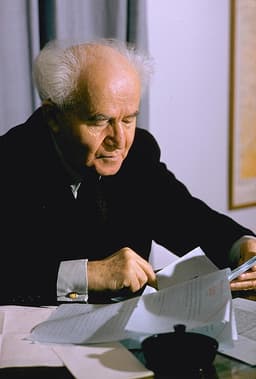
David Ben-Gurion
Politician · Modern
65.2Total
Basic Information
Born
1861
1886
Died
1934
1973
Era
Modern
Modern
Nationality
Cuba
Israel
Occupation
Politician
Politician
Civilization
Western
Middle Eastern
Score Comparison
Military (10%)
48.4
10.0
Political (20%)
40.8
78.0
Influence (20%)
47.9
68.0
Legacy (20%)
38.3
70.0
Leadership (15%)
65.0
79.8
Strategy (15%)
41.5
60.0
TOTAL
46.4
65.2
Alfredo Zayas — Complete Timeline
1920 AD
Election as President of CubaPolitical Action◆ Major
Alfredo Zayas was elected president of Cuba as the Liberal Party candidate. His election followed a period of political turmoil and US intervention, and he promised to restore honest government.
Cuban PoliticsElectionLiberal Party
Impact: nationalconstructive
1921 AD
Anti-Corruption CampaignReform◆ Major
Zayas launched an anti-corruption campaign, prosecuting officials from the previous Menocal administration. The campaign was popular but limited in scope, as Zayas himself faced accusations of corruption later in his term.
Anti-CorruptionReformGovernment
Impact: nationalconstructive
Financial Crisis and Austerity MeasuresReform◆ Major
Zayas faced a severe financial crisis caused by falling sugar prices and government debt. He implemented austerity measures, including salary cuts for public employees, which were unpopular but stabilized the economy.
Economic CrisisAusteritySugar Industry
Impact: national
1923 AD
Negotiation of the Platt Amendment RevisionPolitical Action◆ Major
Zayas negotiated with the US to revise the Platt Amendment, which limited Cuban sovereignty. While the revision was minor, it was a step toward greater Cuban autonomy and reduced direct US intervention.
Platt AmendmentUS-Cuba RelationsSovereignty
Impact: nationalconstructive
David Ben-Gurion — Complete Timeline
1948 AD
Declaration of the Establishment of the State of IsraelPolitical Action
Ben-Gurion read the Declaration of Independence in Tel Aviv, proclaiming the establishment of the State of Israel. He became its first prime minister, leading the provisional government during the ensuing 1948 Arab-Israeli War.
Founding of IsraelIndependenceZionism
Impact: globalconstructive
1956 AD
Operation Kadesh (Suez Crisis)War◆ Major
As prime minister, Ben-Gurion authorized Israel's invasion of Egypt's Sinai Peninsula in coordination with Britain and France. The operation aimed to regain control of the Suez Canal and end Egyptian blockade of Eilat, but international pressure forced withdrawal.
Suez CrisisSinai CampaignMilitary Action
Impact: regional
1963 AD
Resignation as Prime MinisterPolitical Action◆ Major
Ben-Gurion resigned as prime minister citing personal reasons and disagreements with his Mapai party colleagues, particularly over the Lavon Affair. He was succeeded by Levi Eshkol, ending his direct leadership of Israel.
ResignationPolitical TransitionLavon Affair
Impact: national
Expert Analysis
Origins
Alfredo Zayas was born in 1861 in Havana, Cuba, into a wealthy planter family. He studied law at the University of Havana and became a lawyer and journalist, aligning with the Cuban independence movement. His early career included participation in the Cuban War of Independence and subsequent service in the early republic.
David Ben-Gurion was born in 1886 in Plonsk, Poland, then part of the Russian Empire. He grew up in a Zionist family and was educated in Jewish and secular subjects. He studied law in Istanbul and became a labor activist, emigrating to Ottoman Palestine in 1906. His early life was shaped by socialist Zionism and the dream of a Jewish state.
Rise to Power
Zayas rose through Cuban politics, serving as secretary of state and vice president under President Mario García Menocal. He became the Liberal Party candidate and won the 1920 presidential election amid allegations of fraud and U.S. intervention. His presidency began in 1921 with a mandate to clean up government.
Ben-Gurion rose within the Zionist movement, leading the Histadrut labor federation and later the Jewish Agency. He was instrumental in organizing Jewish defense forces and lobbying for a Jewish state. In 1948, he declared independence and became Israel's first prime minister, a position he held until 1954 and again from 1955 to 1963.
Leadership & Governance
Zayas governed with a focus on fiscal responsibility and anti-corruption. He prosecuted officials from the previous administration and cut salaries to address a financial crisis caused by falling sugar prices. However, his reforms were limited by economic constraints and political opposition. He scored 65.0 in leadership and 41.5 in strategy, reflecting his cautious approach.
Ben-Gurion led with decisive vision, prioritizing state-building, immigration, and defense. He oversaw the absorption of hundreds of thousands of immigrants, established the IDF, and pursued nuclear research. His leadership score of 79.8 reflects his ability to mobilize a nation, while his strategy score of 60.0 indicates pragmatic but sometimes risky decisions, such as the Suez Canal invasion.
Triumph & Tragedy
Zayas' greatest success was negotiating a revision of the Platt Amendment, reducing U.S. intervention rights—a diplomatic win for Cuban sovereignty. His anti-corruption campaign was also popular. However, his failure to stabilize the economy and his reliance on austerity alienated many. His total score of 46.4 reflects mixed outcomes.
Ben-Gurion's triumph was founding Israel and defending it in the 1948 War of Independence. He also established key institutions like the Mossad and the Israel Atomic Energy Commission. His tragedy includes the Lavon Affair, a botched covert operation that led to his resignation in 1954. His total score of 65.2 indicates significant impact despite setbacks.
Character & Destiny
Zayas was a cautious reformer, more conciliatory than confrontational. He avoided direct conflict with the U.S. and focused on incremental changes. His character led to limited but real achievements, though he failed to transform Cuba's system. He scored 38.3 in legacy.
Ben-Gurion was a visionary autocrat, willing to take bold risks and suppress dissent for the sake of the state. His personality—assertive, ideological, and uncompromising—shaped Israel's destiny. He scored 70.0 in legacy, reflecting his foundational role.
Legacy
Zayas is remembered as a moderately effective president who fought corruption but struggled with economic crises. His revision of the Platt Amendment was a step toward sovereignty, but Cuba remained under U.S. influence. His legacy score of 38.3 reflects limited enduring impact.
Ben-Gurion is revered as the father of Israel. His policies on immigration, defense, and state-building set the country's path for decades. His legacy score of 70.0 is among the highest for modern national founders.
Conclusion
David Ben-Gurion had a greater impact, with a total score of 65.2 compared to Zayas' 46.4. Ben-Gurion's creation of a nation and its enduring institutions far outweighs Zayas' modest reforms. While Zayas contributed to Cuban sovereignty, Ben-Gurion fundamentally altered world history.
Rankings
🥇
David Ben-GurionLeader
Mil: 10.0Pol: 78.0Inf: 68.0
65.2
🥈
Alfredo Zayas
Mil: 48.4Pol: 40.8Inf: 47.9
46.4
+18.8 behind
How This Comparison Works
Algorithm
Each figure is scored on 6 dimensions (0—100 scale) based on structured historical data: Military (10%), Political (20%), Influence (20%), Legacy (20%), Leadership (15%), Strategy (15%). The weighted total produces the final ranking.
Data Sources
Scores are computed from structured sub-indicators in the database. Scale factors adjust for era (Ancient ×0.85, Modern ×1.0) and civilization size (Eastern ×1.05, Other ×0.80) to account for differences in population and military scale.
Maximum 3 Figures
Comparisons are limited to 2—3 figures to ensure readability and statistical meaningfulness.
Error Margins
±5 points per dimension — Sub-scores are derived from historical records with inherent uncertainty. Two figures within 5 points on a dimension should be considered roughly equivalent in that area.
Total Score Accuracy
±3 points overall — The weighted combination of 6 dimensions produces a total score with approximately ±3 points of uncertainty. Differences of less than 3 points are not statistically significant— the figures are effectively tied.
Known Limitations
- Historical records are incomplete and uneven across civilizations
- Figures from oral-tradition societies may be underrepresented
- Occupation labels can misclassify multi-role figures
- Scores measure capability and impact, not moral character
- Quantitative scoring is a comparison tool, not absolute truth
Capability Radar
Military (10%) — Battles & Warfare
Battles
30
30
Win Rate
32
65
Expansion
37
55
Political (20%) — Governance & Reform
Reform
30
85
Diplomacy
40
80
Economy
25
65
Influence (20%) — Cultural & Global Reach
Cultural
15
70
Global
10
80
Legacy (20%) — Historical Impact
Historical
20
85
Longevity
10
75
Leadership (15%) — Power & Stability
Tenure
60
70
Stability
20
60
Strategy (15%) — Tactics & Innovation
Strategy
36
60
Tactics
39
40
Reform
44
75
Similar Comparisons
Comments & Discussion
No comments yet. Be the first to share your thoughts!