Loading...
Baleka Mbete vs David Ben-Gurion
David Ben-Gurion leads by 13.8 pts · 2 figures compared
…

Baleka Mbete
Politician · Modern
51.4Total
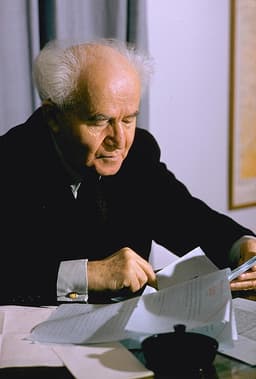
David Ben-Gurion
Politician · Modern
65.2Total
Basic Information
Born
1949
1886
Died
—
1973
Era
Modern
Modern
Nationality
South Africa
Israel
Occupation
Politician
Politician
Civilization
Other
Middle Eastern
Score Comparison
Military (10%)
28.3
10.0
Political (20%)
54.7
78.0
Influence (20%)
56.4
68.0
Legacy (20%)
46.7
70.0
Leadership (15%)
68.0
79.8
Strategy (15%)
43.8
60.0
TOTAL
51.4
65.2
Baleka Mbete — Complete Timeline
1999 AD
Elected Deputy Speaker of the National AssemblyPolitical Action
Mbete was elected Deputy Speaker of the South African National Assembly. She served in this role until 2004, presiding over parliamentary proceedings and assisting the Speaker.
South African ParliamentLegislature
Impact: national
2004 AD
Elected Speaker of the National AssemblyPolitical Action◆ Major
Mbete was elected Speaker of the South African National Assembly, a position she held until 2008. She presided over the house, ensuring parliamentary rules were followed and representing the legislature.
South African ParliamentLegislature
Impact: national
2007 AD
Elected Chairperson of the African National Congress (ANC)Political Action◆ Major
Mbete was elected National Chairperson of the ANC at the party's 52nd National Conference in Polokwane. She became the highest-ranking woman in the ANC's leadership structure, serving under President Jacob Zuma.
ANCParty PoliticsWomen in Politics
Impact: national
2014 AD
Re-elected Speaker of the National AssemblyPolitical Action◆ Major
Mbete was re-elected as Speaker of the National Assembly after the 2014 general elections. She served until 2019, presiding over a period of intense political debate and controversy, including motions of no confidence against President Jacob Zuma.
South African ParliamentLegislaturePolitical Crisis
Impact: national
David Ben-Gurion — Complete Timeline
1948 AD
Declaration of the Establishment of the State of IsraelPolitical Action
Ben-Gurion read the Declaration of Independence in Tel Aviv, proclaiming the establishment of the State of Israel. He became its first prime minister, leading the provisional government during the ensuing 1948 Arab-Israeli War.
Founding of IsraelIndependenceZionism
Impact: globalconstructive
1956 AD
Operation Kadesh (Suez Crisis)War◆ Major
As prime minister, Ben-Gurion authorized Israel's invasion of Egypt's Sinai Peninsula in coordination with Britain and France. The operation aimed to regain control of the Suez Canal and end Egyptian blockade of Eilat, but international pressure forced withdrawal.
Suez CrisisSinai CampaignMilitary Action
Impact: regional
1963 AD
Resignation as Prime MinisterPolitical Action◆ Major
Ben-Gurion resigned as prime minister citing personal reasons and disagreements with his Mapai party colleagues, particularly over the Lavon Affair. He was succeeded by Levi Eshkol, ending his direct leadership of Israel.
ResignationPolitical TransitionLavon Affair
Impact: national
Expert Analysis
Origins
Baleka Mbete was born on 24 September 1949 in Durban, South Africa, into a politically active family. Her father was a teacher and her mother a nurse. She studied at the University of Fort Hare, where she earned a Bachelor's degree in English and Zulu, and later a diploma in education. Her early career included teaching and involvement in anti-apartheid activism through the African National Congress (ANC) and the United Democratic Front.
David Ben-Gurion was born David Grün on 16 October 1886 in Płońsk, Poland (then part of the Russian Empire). His father was a lawyer and a leader of the Hovevei Zion movement. Ben-Gurion studied at a Hebrew school and later at the University of Warsaw, but he was expelled for political activities. He emigrated to Palestine in 1906, where he worked as a farmer and journalist. His early experiences in the Zionist movement shaped his lifelong commitment to establishing a Jewish state.
Rise to Power
Mbete's rise within the ANC began during the anti-apartheid struggle. She served as the Deputy Speaker of the National Assembly from 1996 to 2004, then as Speaker from 2004 to 2008. Her election as National Chairperson of the ANC at the party's 52nd National Conference in Polokwane in 2007 marked a peak, making her the highest-ranking woman in the ANC's history. She was re-elected as Speaker in 2014, serving until 2019. Her political influence was tied to factional dynamics within the ANC, particularly during the Jacob Zuma presidency.
Ben-Gurion's rise was more direct and foundational. He became chairman of the Jewish Agency in 1935, effectively leading the pre-state Zionist institutions. On 14 May 1948, he declared the establishment of the State of Israel, becoming its first prime minister and defense minister. His leadership during the 1948 Arab-Israeli War solidified his authority. He held the premiership until 1954 and again from 1955 to 1963. His political scores reflect this: Political 78.0, Leadership 79.8, compared to Mbete's Political 54.7 and Leadership 68.0.
Leadership & Governance
Mbete's leadership was exercised within the framework of South Africa's parliamentary democracy. As Speaker, she presided over debates and ensured procedural order. She was known for her calm demeanor and ability to manage contentious sessions. However, her tenure was marked by criticism for allowing the executive to dominate parliament, particularly during the Nkandla scandal. Her governance approach was largely procedural and reactive rather than transformative.
Ben-Gurion's leadership was proactive and visionary. He built the state's institutions from scratch, including the Israel Defense Forces, the civil service, and the education system. He implemented policies like the Law of Return (1950) and the National Insurance Law (1954). His decision to invade Egypt during the 1956 Suez Crisis scored him 60.0 in Strategy, higher than Mbete's 43.8. He was also known for his authoritarian tendencies, often clashing with rivals like Menachem Begin.
Triumph & Tragedy
Mbete's greatest triumph was becoming the first woman to chair the ANC and serving as Speaker for over a decade. She played a key role in maintaining parliamentary continuity during turbulent political transitions. However, her failures include presiding over a parliament that failed to hold President Zuma accountable, and her involvement in the controversial Gupta-linked state capture allegations. Her legacy score of 46.7 reflects limited lasting impact.
Ben-Gurion's triumphs are monumental: founding Israel, leading it to victory in the 1948 war, and establishing its core institutions. His failures include the Lavon Affair, a botched covert operation in Egypt that led to his resignation in 1954, and his inability to prevent the 1963 split in his party. His military score of 10.0 is low because he was not a battlefield commander, but his strategic decisions shaped Israel's security doctrine.
Character & Destiny
Mbete is described as disciplined and loyal to the ANC, often prioritizing party unity over individual principles. Her character was shaped by the struggle against apartheid, leading her to value collective leadership. This made her effective in consensus-building but less willing to challenge corruption.
Ben-Gurion was known for his determination, sometimes called stubbornness. He believed in his vision of a Jewish state and pursued it relentlessly. His willingness to make tough decisions, such as ordering the bombing of the Altalena ship in 1948, demonstrated his resolve. His character was both a strength and a weakness, leading to conflicts with colleagues.
Legacy
Mbete's legacy is largely institutional: she helped normalize the role of a female Speaker in South Africa and contributed to parliamentary continuity. However, her impact is limited by the lack of major reforms or landmark legislation associated with her name. Her influence score of 56.4 reflects moderate reach.
Ben-Gurion's legacy is foundational. He is universally recognized as the father of Israel, with his name on streets, institutions, and the Ben-Gurion University. His policies on immigration, defense, and state-building continue to shape Israeli society. His legacy score of 70.0 and influence score of 68.0 underscore his enduring impact.
Conclusion
David Ben-Gurion had a greater impact than Baleka Mbete. His total score of 65.2 versus Mbete's 51.4 reflects his role as a state founder who shaped a nation's destiny. Mbete's contributions are significant within the context of South African parliamentary democracy, but they lack the transformative scale of Ben-Gurion's achievements. Ben-Gurion's decisions created a country; Mbete's decisions managed one. The data supports this: Ben-Gurion leads in every category except military (10.0 vs 28.3), where his low score is due to his non-military role. In leadership, strategy, and legacy—the metrics that matter for nation-building—Ben-Gurion is clearly superior.
Rankings
🥇
David Ben-GurionLeader
Mil: 10.0Pol: 78.0Inf: 68.0
65.2
🥈
Baleka Mbete
Mil: 28.3Pol: 54.7Inf: 56.4
51.4
+13.8 behind
How This Comparison Works
Algorithm
Each figure is scored on 6 dimensions (0—100 scale) based on structured historical data: Military (10%), Political (20%), Influence (20%), Legacy (20%), Leadership (15%), Strategy (15%). The weighted total produces the final ranking.
Data Sources
Scores are computed from structured sub-indicators in the database. Scale factors adjust for era (Ancient ×0.85, Modern ×1.0) and civilization size (Eastern ×1.05, Other ×0.80) to account for differences in population and military scale.
Maximum 3 Figures
Comparisons are limited to 2—3 figures to ensure readability and statistical meaningfulness.
Error Margins
±5 points per dimension — Sub-scores are derived from historical records with inherent uncertainty. Two figures within 5 points on a dimension should be considered roughly equivalent in that area.
Total Score Accuracy
±3 points overall — The weighted combination of 6 dimensions produces a total score with approximately ±3 points of uncertainty. Differences of less than 3 points are not statistically significant— the figures are effectively tied.
Known Limitations
- Historical records are incomplete and uneven across civilizations
- Figures from oral-tradition societies may be underrepresented
- Occupation labels can misclassify multi-role figures
- Scores measure capability and impact, not moral character
- Quantitative scoring is a comparison tool, not absolute truth
Capability Radar
Military (10%) — Battles & Warfare
Battles
19
30
Win Rate
22
65
Expansion
30
55
Political (20%) — Governance & Reform
Reform
40
85
Diplomacy
55
80
Economy
30
65
Influence (20%) — Cultural & Global Reach
Cultural
35
70
Global
35
80
Legacy (20%) — Historical Impact
Historical
40
85
Longevity
30
75
Leadership (15%) — Power & Stability
Tenure
60
70
Stability
45
60
Strategy (15%) — Tactics & Innovation
Strategy
30
60
Tactics
32
40
Reform
39
75
Similar Comparisons
Comments & Discussion
No comments yet. Be the first to share your thoughts!