Loading...
Ali ibn Abi Talib vs Sinjong of Goryeo
Ali ibn Abi Talib leads by 14.3 pts · 2 figures compared
…
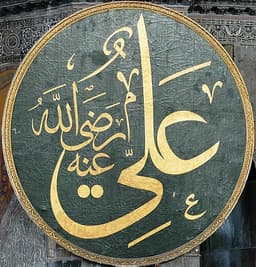
Ali ibn Abi Talib
Emperor · Medieval
64.8Total

Sinjong of Goryeo
Emperor · Medieval
50.5Total
Basic Information
Born
601
1144
Died
661
1204
Era
Medieval
Medieval
Nationality
Rashidun Caliphate
Korea
Occupation
Emperor
Emperor
Civilization
Middle Eastern
Eastern
Score Comparison
Military (10%)
60.0
54.4
Political (20%)
45.0
39.4
Influence (20%)
71.0
60.0
Legacy (20%)
71.4
42.5
Leadership (15%)
64.0
45.0
Strategy (15%)
68.1
67.9
TOTAL
64.8
50.5
Ali ibn Abi Talib — Complete Timeline
656 AD
Battle of the CamelWar◆ Major
Ali defeated a coalition led by Aisha, Talha, and Zubayr near Basra. The battle, named after Aisha's camel, was the first major conflict between Muslims. It resulted in the deaths of many prominent Companions and deepened the rift in the community.
First FitnaBattleRashidun
Impact: regionaltragic
Caliphate of AliPolitical Action◆ Major
Ali ibn Abi Talib became the fourth caliph after Uthman's assassination. His reign was marked by internal conflicts, including the Battle of the Camel and the Battle of Siffin, as he struggled to assert authority over a divided Muslim community.
CaliphateCivil WarRashidun
Impact: global
657 AD
Battle of SiffinWar
Ali's forces fought Muawiyah's army at Siffin in Syria. The battle ended in a stalemate when Muawiyah's troops raised copies of the Quran, calling for arbitration. Ali agreed, leading to a split among his supporters and the emergence of the Kharijites.
First FitnaBattleArbitration
Impact: global
658 AD
Arbitration of AdhruhPolitical Action◆ Major
The arbitration between Ali and Muawiyah at Adhruh resulted in a decision that undermined Ali's claim to the caliphate. The outcome alienated many of Ali's supporters, leading to the Kharijite rebellion and weakening his position.
First FitnaArbitrationRashidun
Impact: regional
661 AD
Assassination of AliPolitical Action
Ali was assassinated by a Kharijite named Ibn Muljam while praying at the mosque in Kufa. His death ended the Rashidun Caliphate and led to the establishment of the Umayyad dynasty under Muawiyah, cementing the Sunni-Shia split.
AssassinationKharijiteRashidun
Impact: globaltragic
Sinjong of Goryeo — Complete Timeline
1197 AD
Installation as king by Choe Chung-heonPolitical Action◆ Major
After deposing Myeongjong, military dictator Choe Chung-heon installed Sinjong as the new puppet king. Sinjong was a younger brother of the previous king and had no political experience, making him easily controllable.
InstallationPuppet KingGoryeo
Impact: nationaldestructive
Reign as figureheadPolitical Action
Sinjong's reign was entirely ceremonial, with all state affairs managed by Choe Chung-heon's private military regime. The king had no authority over appointments, taxes, or military decisions.
FigureheadMilitary RuleGoryeo
Impact: national
1204 AD
Deposition by Choe Chung-heonPolitical Action◆ Major
Choe Chung-heon deposed Sinjong after only seven years, citing the king's inability to control factional strife. Sinjong was exiled and replaced by his son Huijong, further entrenching Choe control over the throne.
DepositionExileGoryeo
Impact: nationaltragic
Expert Analysis
Origins
Ali ibn Abi Talib was born in 601 CE in Mecca to Abu Talib, a leader of the Banu Hashim clan. He was raised by his cousin Muhammad and became one of the first converts to Islam at age 10. Ali's early life was marked by his close association with the Prophet, learning the Quran and Islamic teachings directly. He married Muhammad's daughter Fatima, cementing his familial ties.
Sinjong of Goryeo, born in 1144, was a prince of the Goryeo dynasty, the son of King Injong. His early life was overshadowed by the power struggles between civil officials and the military. After the 1170 military coup led by Jeong Jung-bu, the royal family lost real authority. Sinjong's upbringing was in a court under constant threat from military dictators.
Rise to Power
Ali's rise to power came after the assassination of Caliph Uthman in 656 CE. As Muhammad's cousin and son-in-law, Ali had strong religious credentials. He was elected caliph in Medina, but his legitimacy was contested by Aisha, Talha, and Zubayr, leading to the Battle of the Camel in 656. Ali defeated this coalition, but his authority was further challenged by Muawiyah, the governor of Syria.
Sinjong was installed as king in 1197 by military dictator Choe Chung-heon, who had deposed the previous king, Myeongjong. Sinjong was a younger brother of Myeongjong and was chosen for his perceived docility. His rise was entirely orchestrated by Choe, who held all real power. Sinjong's reign began as a figurehead, with no independent authority.
Leadership & Governance
Ali's leadership was characterized by his commitment to Islamic justice and consultation. He moved the capital to Kufa to escape the rebellious atmosphere in Medina. He attempted to implement reforms, including equal distribution of state funds and removal of corrupt governors. However, his reign was plagued by civil war. At the Battle of Siffin in 657, his forces fought Muawiyah to a stalemate. When Muawiyah's troops raised Qurans, Ali agreed to arbitration, which ultimately weakened his position. The arbitration of Adhruh in 658 resulted in a ruling that undermined Ali's caliphate, leading to the defection of the Kharijites.
Sinjong's governance was non-existent; he was a puppet. Choe Chung-heon established a private military regime, the Choe family dictatorship, which controlled all state affairs. Sinjong's role was ceremonial, performing rituals and confirming Choe's decisions. He had no influence over policy, military, or administration. His political score of 39.4 reflects his complete lack of power.
Triumph & Tragedy
Ali's greatest triumph was his defense of Islamic principles and his role as a central figure in early Islamic history. He is revered by Shia Muslims as the first Imam and a model of piety. His tragedy was his assassination in 661 by a Kharijite, Ibn Muljam, while praying in Kufa. His death ended the Rashidun Caliphate and led to the establishment of the Umayyad dynasty. His internal conflicts divided the Muslim community permanently.
Sinjong's triumph is minimal; he managed to survive seven years as a figurehead without being killed. His tragedy was his deposition in 1204 by Choe Chung-heon, who exiled him and replaced him with his son, Huijong. Sinjong later died in exile in 1205. His reign was a footnote in Goryeo's military rule period.
Character & Destiny
Ali was known for his piety, eloquence, and courage. He was a skilled orator and judge. His decision to accept arbitration at Siffin was seen by supporters as a mistake that cost him the caliphate. His character was uncompromising in religious matters, which alienated some. He scored 64.0 in leadership and 68.1 in strategy, reflecting his military skill but political miscalculation.
Sinjong was likely a passive figure, chosen for his malleability. He made no significant decisions; his destiny was controlled by Choe. His leadership score of 45.0 and political score of 39.4 indicate his lack of agency. He was a victim of circumstance, not a shaper of events.
Legacy
Ali's legacy is immense. He is a central figure in Shia Islam, considered the rightful successor to Muhammad. His sayings and sermons are compiled in Nahj al-Balaghah. His descendants, the Hashemites, played key roles in Islamic history. He scored 71.4 in legacy, reflecting his enduring influence. In contrast, Sinjong's legacy is negligible. He is remembered only as a puppet king during the Choe military regime. His legacy score of 42.5 is low. The Choe regime continued after him, and his deposition had no lasting impact.
Conclusion
Ali ibn Abi Talib had a far greater impact than Sinjong of Goryeo. Ali's total score of 64.8 dwarfs Sinjong's 50.5, a gap of 14.3 points. Ali shaped the course of Islam and the Middle East, while Sinjong was a passive figure in a small kingdom. Ali's influence endures in religion and politics; Sinjong is a historical footnote. Therefore, Ali ibn Abi Talib is the more significant historical figure.
Rankings
🥇
Ali ibn Abi TalibLeader
Mil: 60.0Pol: 45.0Inf: 71.0
64.8
🥈
Sinjong of Goryeo
Mil: 54.4Pol: 39.4Inf: 60.0
50.5
+14.3 behind
How This Comparison Works
Algorithm
Each figure is scored on 6 dimensions (0—100 scale) based on structured historical data: Military (10%), Political (20%), Influence (20%), Legacy (20%), Leadership (15%), Strategy (15%). The weighted total produces the final ranking.
Data Sources
Scores are computed from structured sub-indicators in the database. Scale factors adjust for era (Ancient ×0.85, Modern ×1.0) and civilization size (Eastern ×1.05, Other ×0.80) to account for differences in population and military scale.
Maximum 3 Figures
Comparisons are limited to 2—3 figures to ensure readability and statistical meaningfulness.
Error Margins
±5 points per dimension — Sub-scores are derived from historical records with inherent uncertainty. Two figures within 5 points on a dimension should be considered roughly equivalent in that area.
Total Score Accuracy
±3 points overall — The weighted combination of 6 dimensions produces a total score with approximately ±3 points of uncertainty. Differences of less than 3 points are not statistically significant— the figures are effectively tied.
Known Limitations
- Historical records are incomplete and uneven across civilizations
- Figures from oral-tradition societies may be underrepresented
- Occupation labels can misclassify multi-role figures
- Scores measure capability and impact, not moral character
- Quantitative scoring is a comparison tool, not absolute truth
Capability Radar
Military (10%) — Battles & Warfare
Battles
75
47
Win Rate
70
50
Expansion
65
49
Political (20%) — Governance & Reform
Reform
70
0
Diplomacy
60
5
Economy
65
0
Influence (20%) — Cultural & Global Reach
Cultural
95
0
Global
90
0
Legacy (20%) — Historical Impact
Historical
95
5
Longevity
95
0
Leadership (15%) — Power & Stability
Tenure
55
5
Stability
40
0
Strategy (15%) — Tactics & Innovation
Strategy
80
51
Tactics
85
60
Reform
60
63
Similar Comparisons
Comments & Discussion
No comments yet. Be the first to share your thoughts!