Loading...
Ali ibn Abi Talib vs Yuri Dolgorukiy
Ali ibn Abi Talib leads by 14.5 pts · 2 figures compared
…
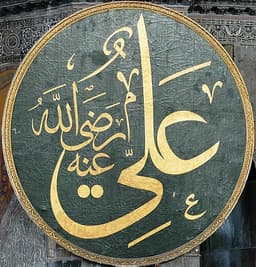
Ali ibn Abi Talib
Emperor · Medieval
64.8Total
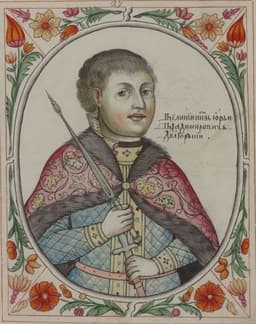
Yuri Dolgorukiy
Emperor · Medieval
50.3Total
Basic Information
Born
601
1099
Died
661
1157
Era
Medieval
Medieval
Nationality
Rashidun Caliphate
Kievan Rus
Occupation
Emperor
Emperor
Civilization
Middle Eastern
Western
Score Comparison
Military (10%)
60.0
10.0
Political (20%)
45.0
37.9
Influence (20%)
71.0
61.0
Legacy (20%)
71.4
58.0
Leadership (15%)
64.0
58.8
Strategy (15%)
68.1
50.0
TOTAL
64.8
50.3
Ali ibn Abi Talib — Complete Timeline
656 AD
Battle of the CamelWar◆ Major
Ali defeated a coalition led by Aisha, Talha, and Zubayr near Basra. The battle, named after Aisha's camel, was the first major conflict between Muslims. It resulted in the deaths of many prominent Companions and deepened the rift in the community.
First FitnaBattleRashidun
Impact: regionaltragic
Caliphate of AliPolitical Action◆ Major
Ali ibn Abi Talib became the fourth caliph after Uthman's assassination. His reign was marked by internal conflicts, including the Battle of the Camel and the Battle of Siffin, as he struggled to assert authority over a divided Muslim community.
CaliphateCivil WarRashidun
Impact: global
657 AD
Battle of SiffinWar
Ali's forces fought Muawiyah's army at Siffin in Syria. The battle ended in a stalemate when Muawiyah's troops raised copies of the Quran, calling for arbitration. Ali agreed, leading to a split among his supporters and the emergence of the Kharijites.
First FitnaBattleArbitration
Impact: global
658 AD
Arbitration of AdhruhPolitical Action◆ Major
The arbitration between Ali and Muawiyah at Adhruh resulted in a decision that undermined Ali's claim to the caliphate. The outcome alienated many of Ali's supporters, leading to the Kharijite rebellion and weakening his position.
First FitnaArbitrationRashidun
Impact: regional
661 AD
Assassination of AliPolitical Action
Ali was assassinated by a Kharijite named Ibn Muljam while praying at the mosque in Kufa. His death ended the Rashidun Caliphate and led to the establishment of the Umayyad dynasty under Muawiyah, cementing the Sunni-Shia split.
AssassinationKharijiteRashidun
Impact: globaltragic
Yuri Dolgorukiy — Complete Timeline
1147 AD
Founding of MoscowPolitical Action
Yuri Dolgorukiy invited Prince Sviatoslav Olgovich to a meeting at a place called 'Moscow' in the chronicles. This first written mention of Moscow is traditionally considered the founding date of the city.
FoundingCityMoscow
Impact: regionalconstructive
1149 AD
Struggle for the Throne of KievWar◆ Major
Yuri Dolgorukiy launched a campaign to seize the throne of Kiev from his nephew Iziaslav. He captured Kiev in 1149 and ruled briefly, but was expelled in 1151. He finally secured Kiev in 1155, ruling until his death.
Civil WarKievPower Struggle
Impact: national
1156 AD
Construction of the First Kremlin in MoscowCultural◆ Major
Yuri Dolgorukiy ordered the construction of a wooden fortress (kremlin) on Borovitsky Hill in Moscow. This fortification became the nucleus of the future Moscow Kremlin and the city's defensive core.
FortificationKremlinMoscow
Impact: regionalconstructive
1157 AD
Death by PoisoningPolitical Action
Yuri Dolgorukiy died suddenly after a feast in Kiev, suspected of being poisoned by the Kievan boyars. His death ended his rule and led to a revolt against his administration in Kiev.
AssassinationPoisoningBoyar Revolt
Impact: nationaltragic
Expert Analysis
Origins
Ali ibn Abi Talib was born in 601 CE in Mecca to Abu Talib, a leader of the Banu Hashim clan. He was raised by his cousin Muhammad after his father's financial difficulties. Ali accepted Islam at age 10, becoming one of the first converts. He was known for his piety and close relationship with the Prophet. Yuri Dolgorukiy, born around 1099, was a prince of the Rurik dynasty, son of Vladimir Monomakh, Grand Prince of Kiev. He grew up in the turbulent world of Kievan Rus, where princely succession often led to conflict. His name "Dolgorukiy" ("Long-Armed") reflects his reach for power beyond his own territory.
Rise to Power
Ali's rise was tied to his kinship with Muhammad. He married Muhammad's daughter Fatima and played a key role in early Islamic battles. After Muhammad's death in 632, Ali was passed over for caliphate three times, finally becoming caliph in 656 CE after Uthman's assassination. His reign was immediately contested. Yuri Dolgorukiy rose through princely intrigues. He became Prince of Rostov-Suzdal and expanded his territory through military campaigns. His key turning point was the first written mention of Moscow in 1147, when he invited Prince Sviatoslav Olgovich. He seized Kiev in 1149 but was expelled. He captured Kiev again in 1155, ruling briefly before his death.
Leadership & Governance
Ali's leadership was marked by religious authority and military command. He faced internal rebellions: the Battle of the Camel (656) against Aisha, Talha, and Zubayr, and the Battle of Siffin (657) against Muawiyah. His governance was based on Islamic principles, but he struggled with political unity. He scored 64.0 in leadership and 45.0 in political, reflecting his challenges. Yuri Dolgorukiy's governance focused on territorial expansion and building fortified towns. He founded the first wooden Kremlin in Moscow in 1156, laying the foundation for future growth. His political score of 37.9 indicates limited success in unifying Rus.
Triumph & Tragedy
Ali's greatest triumph was his early military service and his role as a spiritual leader. He is revered by Shia Muslims as the first Imam. His tragedy was the civil war with Muawiyah, the arbitration at Adhruh (658) that undermined his caliphate, and his assassination by a Kharijite in 661 CE. Yuri's triumph was founding Moscow, which became the core of the Russian state. His tragedy was his inability to secure lasting control over Kiev; he died poisoned in 1157, and his rule led to a revolt against his family.
Character & Destiny
Ali was known for his piety, courage, and eloquence. He was a poet and preacher, but his idealism may have hindered his political pragmatism. He scored 68.1 in strategy but failed to outmaneuver Muawiyah. Yuri was ambitious and relentless, earning his nickname "Long-Armed." His character drove him to expand his territory, but his aggressiveness provoked enemies. His death by poisoning reflects the treacherous politics of Kievan Rus.
Legacy
Ali's legacy is immense in Islam. He is a central figure in Shia Islam, and his descendants are revered as Imams. His influence score is 71.0, and legacy 71.4. Yuri's legacy is the founding of Moscow, which became the capital of Russia. His influence is 61.0, legacy 58.0. While Ali shaped religious history, Yuri shaped political geography.
Conclusion
Ali ibn Abi Talib had greater impact overall. His total score of 64.8 far surpasses Yuri's 50.3. Ali's influence spans centuries and continents, while Yuri's is regionally significant. Ali's military score (60.0) is much higher than Yuri's (10.0), reflecting his role in early Islamic battles. Although Yuri founded Moscow, Ali's religious and political legacy endures globally. The score gap of 14.5 points supports this conclusion.
Rankings
🥇
Ali ibn Abi TalibLeader
Mil: 60.0Pol: 45.0Inf: 71.0
64.8
🥈
Yuri Dolgorukiy
Mil: 10.0Pol: 37.9Inf: 61.0
50.3
+14.5 behind
How This Comparison Works
Algorithm
Each figure is scored on 6 dimensions (0—100 scale) based on structured historical data: Military (10%), Political (20%), Influence (20%), Legacy (20%), Leadership (15%), Strategy (15%). The weighted total produces the final ranking.
Data Sources
Scores are computed from structured sub-indicators in the database. Scale factors adjust for era (Ancient ×0.85, Modern ×1.0) and civilization size (Eastern ×1.05, Other ×0.80) to account for differences in population and military scale.
Maximum 3 Figures
Comparisons are limited to 2—3 figures to ensure readability and statistical meaningfulness.
Error Margins
±5 points per dimension — Sub-scores are derived from historical records with inherent uncertainty. Two figures within 5 points on a dimension should be considered roughly equivalent in that area.
Total Score Accuracy
±3 points overall — The weighted combination of 6 dimensions produces a total score with approximately ±3 points of uncertainty. Differences of less than 3 points are not statistically significant— the figures are effectively tied.
Known Limitations
- Historical records are incomplete and uneven across civilizations
- Figures from oral-tradition societies may be underrepresented
- Occupation labels can misclassify multi-role figures
- Scores measure capability and impact, not moral character
- Quantitative scoring is a comparison tool, not absolute truth
Capability Radar
Military (10%) — Battles & Warfare
Battles
75
35
Win Rate
70
40
Expansion
65
45
Political (20%) — Governance & Reform
Reform
70
30
Diplomacy
60
40
Economy
65
30
Influence (20%) — Cultural & Global Reach
Cultural
95
55
Global
90
50
Legacy (20%) — Historical Impact
Historical
95
60
Longevity
95
65
Leadership (15%) — Power & Stability
Tenure
55
50
Stability
40
25
Strategy (15%) — Tactics & Innovation
Strategy
80
35
Tactics
85
30
Reform
60
20
Similar Comparisons
Comments & Discussion
No comments yet. Be the first to share your thoughts!