Loading...
Ali ibn Abi Talib vs Arnulf of Carinthia
Ali ibn Abi Talib leads by 13.7 pts · 2 figures compared
…

Ali ibn Abi Talib
Emperor · Medieval
64.8Total
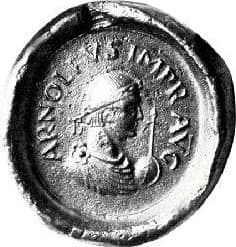
Arnulf of Carinthia
Emperor · Medieval
51.1Total
Basic Information
Born
601
850
Died
661
899
Era
Medieval
Medieval
Nationality
Rashidun Caliphate
East Francia
Occupation
Emperor
Emperor
Civilization
Middle Eastern
Western
Score Comparison
Military (10%)
60.0
20.0
Political (20%)
45.0
46.6
Influence (20%)
71.0
53.3
Legacy (20%)
71.4
46.7
Leadership (15%)
64.0
74.0
Strategy (15%)
68.1
60.0
TOTAL
64.8
51.1
Ali ibn Abi Talib — Complete Timeline
656 AD
Battle of the CamelWar◆ Major
Ali defeated a coalition led by Aisha, Talha, and Zubayr near Basra. The battle, named after Aisha's camel, was the first major conflict between Muslims. It resulted in the deaths of many prominent Companions and deepened the rift in the community.
First FitnaBattleRashidun
Impact: regionaltragic
Caliphate of AliPolitical Action◆ Major
Ali ibn Abi Talib became the fourth caliph after Uthman's assassination. His reign was marked by internal conflicts, including the Battle of the Camel and the Battle of Siffin, as he struggled to assert authority over a divided Muslim community.
CaliphateCivil WarRashidun
Impact: global
657 AD
Battle of SiffinWar
Ali's forces fought Muawiyah's army at Siffin in Syria. The battle ended in a stalemate when Muawiyah's troops raised copies of the Quran, calling for arbitration. Ali agreed, leading to a split among his supporters and the emergence of the Kharijites.
First FitnaBattleArbitration
Impact: global
658 AD
Arbitration of AdhruhPolitical Action◆ Major
The arbitration between Ali and Muawiyah at Adhruh resulted in a decision that undermined Ali's claim to the caliphate. The outcome alienated many of Ali's supporters, leading to the Kharijite rebellion and weakening his position.
First FitnaArbitrationRashidun
Impact: regional
661 AD
Assassination of AliPolitical Action
Ali was assassinated by a Kharijite named Ibn Muljam while praying at the mosque in Kufa. His death ended the Rashidun Caliphate and led to the establishment of the Umayyad dynasty under Muawiyah, cementing the Sunni-Shia split.
AssassinationKharijiteRashidun
Impact: globaltragic
Arnulf of Carinthia — Complete Timeline
887 AD
Deposition of Charles the FatPolitical Action
Arnulf played a key role in the deposition of his uncle, Charles the Fat, in 887. As the illegitimate son of Carloman, Arnulf was elected King of East Francia by the nobles, ending the unified Carolingian rule and establishing his own dynasty.
DepositionAccessionEast Francia
Impact: regional
891 AD
Battle of the Dyle (891)War◆ Major
Arnulf of Carinthia led an East Frankish army to victory against Viking raiders at the Battle of the Dyle in present-day Belgium. This victory halted Viking incursions into East Francia and demonstrated Arnulf's military capability, boosting his prestige.
BattleVikingsVictory
Impact: regionalconstructive
892 AD
Campaign against the MagyarsWar◆ Major
Arnulf allied with the Magyars (Hungarians) against the Moravian Empire, inviting them into Central Europe. This decision backfired, as the Magyars later turned on East Francia, launching devastating raids. Arnulf's short-term strategy had long-term negative consequences.
AllianceMagyarsRaids
Impact: regionaldestructive
896 AD
Imperial Coronation (896)Cultural◆ Major
Arnulf was crowned Holy Roman Emperor by Pope Formosus on February 22, 896, in Rome. He had marched into Italy to support the pope against rival factions. His coronation was brief, as he suffered a stroke soon after and returned to East Francia.
CoronationEmperorItaly
Impact: regional
899 AD
Death of Arnulf of CarinthiaOther
Arnulf died on December 8, 899, likely from a stroke. He was succeeded by his young son, Louis the Child, whose weak rule led to further fragmentation and vulnerability to Magyar attacks. Arnulf's reign was marked by military successes but also strategic errors.
DeathSuccessionDecline
Impact: regionaltragic
Expert Analysis
Origins
Ali ibn Abi Talib was born around 600 CE in Mecca, a member of the Banu Hashim clan of the Quraysh tribe. He was the first cousin of the Prophet Muhammad and was raised in Muhammad's household after his father Abu Talib's financial difficulties. Ali accepted Islam at age 10, becoming one of the first believers. He married Muhammad's daughter Fatima and fathered Hasan and Husayn, central figures in Shia Islam. His early life was marked by close association with Muhammad, participating in all major expeditions except Tabuk.
Arnulf of Carinthia was born around 850 CE, the illegitimate son of Carloman, King of Bavaria. His mother was likely a noblewoman, but details are obscure. Arnulf grew up in the Carolingian court during a period of dynastic fragmentation. He was made Duke of Carinthia (southeastern Bavaria) by his father, gaining experience in frontier defense against Slavs and Moravians. His illegitimate birth initially limited his prospects, but he proved a capable military leader.
Rise to Power
Ali's rise to power came after the assassination of Caliph Uthman in 656 CE. Ali was elected caliph in Medina, but his reign was immediately contested. Aisha, Talha, and al-Zubayr raised an army demanding justice for Uthman's death, leading to the Battle of the Camel in December 656. Ali won decisively, but opposition from Muawiyah, Uthman's kinsman and governor of Syria, escalated. The Battle of Siffin in 657 ended in stalemate and arbitration, which weakened Ali's position. The arbitration at Adhruh (658) declared both Ali and Muawiyah illegitimate, but Muawiyah gained recognition in Syria and Egypt.
Arnulf's rise began when he deposed his uncle, Emperor Charles the Fat, in November 887. Charles had failed to repel Viking raids and was seen as weak. Arnulf was elected King of East Francia by the nobility, though he faced rivals. He consolidated power by defeating Viking forces at the Battle of the Dyle in 891, halting their invasions. In 894, he marched into Italy to support Pope Formosus against rival factions, and was crowned Holy Roman Emperor on February 22, 896. His authority, however, was limited to East Francia and parts of Italy.
Leadership & Governance
Ali's leadership was religiously inspired but politically divisive. He attempted to rule according to Islamic principles, removing corrupt governors and redistributing wealth equally. However, his strictness alienated powerful figures like Muawiyah and the Quraysh elite. He moved the capital from Medina to Kufa to gain support from Iraqi tribes, but failed to unify the Muslim community. His governance score of 45.0 reflects his inability to manage the first Fitna (civil war).
Arnulf ruled as a pragmatic Carolingian king, relying on alliances with local nobles and the Church. He delegated authority to dukes and counts, strengthening the East Frankish kingdom. He used the Magyars as mercenaries against the Moravians, but this backfired when the Magyars later raided his lands. His political score of 46.6 indicates moderate effectiveness; he preserved the kingdom but failed to centralize power.
Triumph & Tragedy
Ali's triumphs include his early role in Islam, his bravery in battles (e.g., Badr, Uhud), and his intellectual contributions as a judge and theologian. His military score of 60.0 reflects victories at the Battle of the Camel and early successes at Siffin. His greatest tragedy was the civil war; his reign was consumed by conflict, and he was assassinated by a Kharijite while praying in Kufa mosque on January 27, 661. His death ended the Rashidun Caliphate and led to the Umayyad dynasty.
Arnulf's triumph was the Battle of the Dyle (891), where he crushed Viking raiders, securing his reputation. His imperial coronation in 896 was a high point. His tragedy was his alliance with the Magyars; he invited them into Central Europe in 892 to fight the Moravians, but after his death in 899, they became a persistent threat, raiding Italy and Germany. His military score of 20.0 is low, partly due to this strategic error.
Character & Destiny
Ali was known for his piety, eloquence, and courage. He was a complex figure: a warrior poet who valued justice but struggled with political maneuvering. His character is revered by Shia Muslims as the rightful successor to Muhammad. His destiny was shaped by his uncompromising principles, which alienated pragmatists. The arbitration at Siffin, which he accepted reluctantly, undermined his authority and led to his assassination.
Arnulf was a pragmatic and opportunistic ruler, willing to use any means to secure power. His illegitimacy drove him to prove himself militarily. He was decisive but short-sighted, as seen in the Magyar alliance. His death from a stroke at age 49 left a minor heir, Louis the Child, leading to East Francia's fragmentation. His character reflects the turbulent Carolingian era, where survival often trumped long-term planning.
Legacy
Ali's legacy is immense. For Shia Muslims, he is the first Imam and the rightful successor to Muhammad; for Sunnis, he is the fourth Rashidun caliph. His sayings and sermons are compiled in the Nahj al-Balagha. His influence score of 71.0 and legacy score of 71.4 reflect his central role in Islamic theology and history. The Battle of Karbala (680), where his son Husayn was martyred, further cemented his legacy.
Arnulf's legacy is more limited. He is remembered as a king who defended East Francia from Vikings and temporarily restored imperial authority. However, his Magyar alliance had long-term negative consequences. The East Frankish kingdom he preserved eventually evolved into the Holy Roman Empire, but his direct impact is overshadowed by later Ottonian rulers. His legacy score of 46.7 reflects this modest influence.
Conclusion
Ali ibn Abi Talib had a greater impact on history than Arnulf of Carinthia. Ali's total score of 64.8 versus Arnulf's 51.1 reflects his higher influence and legacy. Ali's religious and political role shaped the development of Islam, dividing the Muslim world into Sunni and Shia branches that persist today. Arnulf, while competent, was a transitional figure in Carolingian decline. His victories were temporary, and his strategic errors invited new enemies. Ali's assassination and the subsequent Umayyad Caliphate altered the course of Islamic civilization, while Arnulf's death led to fragmentation that was reversed by later rulers. The data supports Ali's greater historical significance.
Rankings
🥇
Ali ibn Abi TalibLeader
Mil: 60.0Pol: 45.0Inf: 71.0
64.8
🥈
Arnulf of Carinthia
Mil: 20.0Pol: 46.6Inf: 53.3
51.1
+13.7 behind
How This Comparison Works
Algorithm
Each figure is scored on 6 dimensions (0—100 scale) based on structured historical data: Military (10%), Political (20%), Influence (20%), Legacy (20%), Leadership (15%), Strategy (15%). The weighted total produces the final ranking.
Data Sources
Scores are computed from structured sub-indicators in the database. Scale factors adjust for era (Ancient ×0.85, Modern ×1.0) and civilization size (Eastern ×1.05, Other ×0.80) to account for differences in population and military scale.
Maximum 3 Figures
Comparisons are limited to 2—3 figures to ensure readability and statistical meaningfulness.
Error Margins
±5 points per dimension — Sub-scores are derived from historical records with inherent uncertainty. Two figures within 5 points on a dimension should be considered roughly equivalent in that area.
Total Score Accuracy
±3 points overall — The weighted combination of 6 dimensions produces a total score with approximately ±3 points of uncertainty. Differences of less than 3 points are not statistically significant— the figures are effectively tied.
Known Limitations
- Historical records are incomplete and uneven across civilizations
- Figures from oral-tradition societies may be underrepresented
- Occupation labels can misclassify multi-role figures
- Scores measure capability and impact, not moral character
- Quantitative scoring is a comparison tool, not absolute truth
Capability Radar
Military (10%) — Battles & Warfare
Battles
75
45
Win Rate
70
40
Expansion
65
40
Political (20%) — Governance & Reform
Reform
70
35
Diplomacy
60
55
Economy
65
40
Influence (20%) — Cultural & Global Reach
Cultural
95
30
Global
90
30
Legacy (20%) — Historical Impact
Historical
95
45
Longevity
95
35
Leadership (15%) — Power & Stability
Tenure
55
60
Stability
40
45
Strategy (15%) — Tactics & Innovation
Strategy
80
55
Tactics
85
50
Reform
60
30
Similar Comparisons
Comments & Discussion
No comments yet. Be the first to share your thoughts!