Loading...
Alladi Krishnaswamy Iyer vs Roman Dmowski
Alladi Krishnaswamy Iyer leads by 4.1 pts · 2 figures compared
…
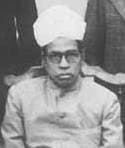
Alladi Krishnaswamy Iyer
Politician · Modern
67.4Total

Roman Dmowski
Politician · Modern
63.3Total
Basic Information
Born
1886
1864
Died
1953
1939
Era
Modern
Modern
Nationality
India
Poland
Occupation
Politician
Politician
Civilization
Indian
Western
Score Comparison
Military (10%)
49.9
49.4
Political (20%)
70.0
55.0
Influence (20%)
82.0
72.0
Legacy (20%)
55.0
68.0
Leadership (15%)
78.0
72.0
Strategy (15%)
60.0
43.2
TOTAL
67.4
63.3
Alladi Krishnaswamy Iyer — Complete Timeline
1947 AD
Role in Drafting the Indian ConstitutionPolitical Action◆ Major
Alladi Krishnaswamy Iyer was a key member of the Constituent Assembly's Drafting Committee. He contributed significantly to the framing of the Indian Constitution, particularly on issues of fundamental rights, federalism, and the judiciary, drawing on his legal expertise.
ConstitutionDrafting CommitteeFundamental Rights
Impact: nationalconstructive
Roman Dmowski — Complete Timeline
1897 AD
Founding of the National Democratic PartyPolitical Action◆ Major
Dmowski co-founded the National Democratic Party (Endecja) in 1897, which became the leading Polish nationalist movement. The party advocated for Polish independence through gradual cultural and economic development, opposing both socialism and the romantic insurrectionist tradition.
Political PartyNationalismEndecja
Impact: nationalconstructive
1917 AD
Leadership of the Polish National Committee in ParisPolitical Action◆ Major
Dmowski led the Polish National Committee in Paris, recognized by the Allies as the official representative of Polish interests during World War I. He lobbied for Polish independence, organized the Blue Army of Polish volunteers in France, and shaped Allied policy toward Poland.
DiplomacyWorld War IIndependence
Impact: globalconstructive
1919 AD
Presentation of Polish demands at the Treaty of VersaillesPolitical Action
Dmowski presented the Polish case at the Paris Peace Conference in 1919, arguing for the restoration of an independent Polish state with access to the Baltic Sea. His memorandum and testimony influenced the Treaty of Versailles, which granted Poland independence and the Polish Corridor.
VersaillesIndependenceDiplomacy
Impact: globalconstructive
1921 AD
Signing of the Treaty of RigaPolitical Action◆ Major
Dmowski was a signatory to the Treaty of Riga on March 18, 1921, which ended the Polish-Soviet War. The treaty established the Polish-Soviet border, granting Poland substantial territories in the east. Dmowski's nationalist vision influenced the territorial settlement.
TreatyPolish-Soviet WarBorder
Impact: regionalconstructive
Expert Analysis
Origins
Alladi Krishnaswamy Iyer was born in 1883 in the Madras Presidency, British India, into a Brahmin family with a strong legal tradition. He studied law at Madras Law College and practiced under renowned lawyers, developing expertise in constitutional law. His early career was shaped by the Indian independence movement, but he focused on legal and constitutional avenues rather than mass agitation.
Roman Dmowski was born in 1864 in Kamionek, then part of the Russian Empire, into a noble but impoverished family. He studied at the University of Warsaw, where he became involved in nationalist politics. His formative experiences included the repressive policies of the Russian Empire, which fueled his commitment to Polish independence. Unlike Iyer, Dmowski's background was in political activism and ideological development.
Rise to Power
Alladi Krishnaswamy Iyer rose to prominence through his legal acumen. He was elected to the Madras Legislative Council in 1916 and later served as Advocate-General of Madras. His key turning point came in 1946 when he was elected to the Constituent Assembly of India. He was appointed to the Drafting Committee, where he worked alongside B.R. Ambedkar. Iyer's influence grew as he articulated constitutional principles, earning respect across political divides.
Roman Dmowski's rise was through nationalist organizing. He co-founded the National Democratic Party (Endecja) in 1897, which became the leading Polish nationalist movement. His turning point was World War I, when he led the Polish National Committee in Paris, recognized by the Allies as the official representative of Polish interests. In 1919, he presented Polish demands at the Treaty of Versailles, arguing for an independent Poland with access to the sea. His political score of 55.0 reflects his effectiveness in diplomacy, though he was less successful in military matters (49.4).
Leadership & Governance
Alladi Krishnaswamy Iyer's leadership style was deliberative and legalistic. In the Constituent Assembly, he emphasized federalism, fundamental rights, and a strong judiciary. He argued for a balanced distribution of powers between the center and states, and for the inclusion of Directive Principles. His governance approach was rooted in consensus-building, often mediating between different factions. His leadership score of 78.0 and strategy score of 60.0 reflect his methodical approach.
Roman Dmowski's governance was ideological and confrontational. As leader of the National Democratic Party, he advocated for a homogenous Polish nation-state, opposing ethnic minorities and promoting assimilation. His strategy score of 43.2 indicates a less flexible approach. During the Paris Peace Conference, he successfully secured territorial gains for Poland, but his intransigence on minority rights drew criticism. His political score of 55.0 and leadership score of 72.0 show his effectiveness in mobilizing support, but his governance was divisive.
Triumph & Tragedy
Alladi Krishnaswamy Iyer's greatest triumph was his role in drafting the Indian Constitution, which established a democratic framework for the world's largest democracy. His contributions to fundamental rights and federalism have endured. However, his tragedy was that his work is often overshadowed by more prominent figures like Ambedkar. He also failed to secure a more prominent political role after independence, retiring from active politics. His legacy score of 55.0 reflects this relative obscurity.
Roman Dmowski's triumph was achieving Polish independence at Versailles, a dream realized after over a century of partition. His diplomatic efforts were crucial in shaping the new Polish state. His tragedy was the failure of his vision for an ethnically pure Poland, as the country became multi-ethnic and his nationalist policies contributed to tensions. The Treaty of Riga (1921), which he signed, established borders but also sowed seeds for future conflicts. His legacy score of 68.0 indicates a more lasting impact, though controversial.
Character & Destiny
Alladi Krishnaswamy Iyer was known for his intellect, patience, and dedication to constitutionalism. He was a consensus-builder, often working behind the scenes. His character shaped his destiny as a key architect but not a front-line leader. His influence score of 82.0 reflects his impact on India's constitutional framework, but his overall total of 67.4 is modest due to lower military and legacy scores.
Roman Dmowski was pragmatic, driven, and uncompromising. His character led him to prioritize national interest over individual rights, earning him both admirers and critics. His destiny was to be a founding father of modern Poland, but his legacy is tainted by his association with authoritarian and anti-Semitic elements. His total score of 63.3 is lower than Iyer's, reflecting a narrower base of influence.
Legacy
Alladi Krishnaswamy Iyer's legacy is the Indian Constitution itself, a living document that has guided India for over seven decades. His ideas on federalism and fundamental rights remain central to Indian governance. However, his personal recognition is limited, with his legacy score of 55.0 reflecting this.
Roman Dmowski's legacy is more complex. He is remembered as a key figure in Polish independence, but his nationalist ideology influenced later right-wing movements. The Polish National Committee and his diplomatic work are foundational to modern Poland. His legacy score of 68.0 is higher than Iyer's, indicating broader historical recognition.
Conclusion
Comparing Alladi Krishnaswamy Iyer and Roman Dmowski reveals two figures who shaped their nations' foundational moments. Iyer scored 67.4 overall versus Dmowski's 63.3, with higher scores in political (70.0 vs 55.0), influence (82.0 vs 72.0), and leadership (78.0 vs 72.0). Dmowski led in legacy (68.0 vs 55.0) and strategy (43.2 vs 60.0, though Iyer's strategy is higher). Iyer's impact on India's constitutional democracy is more enduring and positive, providing a framework for pluralism and rights. Dmowski's legacy, while significant for Polish statehood, is marred by exclusionary nationalism. Therefore, Alladi Krishnaswamy Iyer had a greater impact, as his work continues to benefit over a billion people through a stable democratic system.
Rankings
🥇
Alladi Krishnaswamy IyerLeader
Mil: 49.9Pol: 70.0Inf: 82.0
67.4
🥈
Roman Dmowski
Mil: 49.4Pol: 55.0Inf: 72.0
63.3
+4.1 behind
How This Comparison Works
Algorithm
Each figure is scored on 6 dimensions (0—100 scale) based on structured historical data: Military (10%), Political (20%), Influence (20%), Legacy (20%), Leadership (15%), Strategy (15%). The weighted total produces the final ranking.
Data Sources
Scores are computed from structured sub-indicators in the database. Scale factors adjust for era (Ancient ×0.85, Modern ×1.0) and civilization size (Eastern ×1.05, Other ×0.80) to account for differences in population and military scale.
Maximum 3 Figures
Comparisons are limited to 2—3 figures to ensure readability and statistical meaningfulness.
Error Margins
±5 points per dimension — Sub-scores are derived from historical records with inherent uncertainty. Two figures within 5 points on a dimension should be considered roughly equivalent in that area.
Total Score Accuracy
±3 points overall — The weighted combination of 6 dimensions produces a total score with approximately ±3 points of uncertainty. Differences of less than 3 points are not statistically significant— the figures are effectively tied.
Known Limitations
- Historical records are incomplete and uneven across civilizations
- Figures from oral-tradition societies may be underrepresented
- Occupation labels can misclassify multi-role figures
- Scores measure capability and impact, not moral character
- Quantitative scoring is a comparison tool, not absolute truth
Capability Radar
Military (10%) — Battles & Warfare
Battles
45
29
Win Rate
45
34
Expansion
47
34
Political (20%) — Governance & Reform
Reform
85
75
Diplomacy
70
85
Economy
30
40
Influence (20%) — Cultural & Global Reach
Cultural
55
65
Global
55
60
Legacy (20%) — Historical Impact
Historical
70
80
Longevity
65
70
Leadership (15%) — Power & Stability
Tenure
60
60
Stability
65
50
Strategy (15%) — Tactics & Innovation
Strategy
51
40
Tactics
54
38
Reform
61
46
Similar Comparisons
Comments & Discussion
No comments yet. Be the first to share your thoughts!