Loading...
Roman Dmowski vs Timothy Harris
Roman Dmowski leads by 12.8 pts · 2 figures compared
…

Roman Dmowski
Politician · Modern
63.3Total
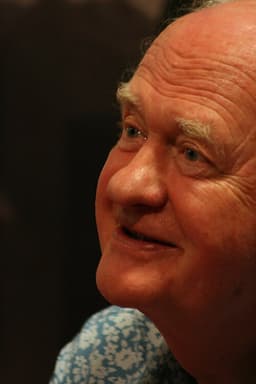
Timothy Harris
Politician · Modern
50.5Total
Basic Information
Born
1864
1964
Died
1939
—
Era
Modern
Modern
Nationality
Poland
Saint Kitts and Nevis
Occupation
Politician
Politician
Civilization
Western
Other
Score Comparison
Military (10%)
49.4
33.6
Political (20%)
55.0
68.0
Influence (20%)
72.0
50.2
Legacy (20%)
68.0
40.8
Leadership (15%)
72.0
68.0
Strategy (15%)
43.2
39.9
TOTAL
63.3
50.5
Roman Dmowski — Complete Timeline
1897 AD
Founding of the National Democratic PartyPolitical Action◆ Major
Dmowski co-founded the National Democratic Party (Endecja) in 1897, which became the leading Polish nationalist movement. The party advocated for Polish independence through gradual cultural and economic development, opposing both socialism and the romantic insurrectionist tradition.
Political PartyNationalismEndecja
Impact: nationalconstructive
1917 AD
Leadership of the Polish National Committee in ParisPolitical Action◆ Major
Dmowski led the Polish National Committee in Paris, recognized by the Allies as the official representative of Polish interests during World War I. He lobbied for Polish independence, organized the Blue Army of Polish volunteers in France, and shaped Allied policy toward Poland.
DiplomacyWorld War IIndependence
Impact: globalconstructive
1919 AD
Presentation of Polish demands at the Treaty of VersaillesPolitical Action
Dmowski presented the Polish case at the Paris Peace Conference in 1919, arguing for the restoration of an independent Polish state with access to the Baltic Sea. His memorandum and testimony influenced the Treaty of Versailles, which granted Poland independence and the Polish Corridor.
VersaillesIndependenceDiplomacy
Impact: globalconstructive
1921 AD
Signing of the Treaty of RigaPolitical Action◆ Major
Dmowski was a signatory to the Treaty of Riga on March 18, 1921, which ended the Polish-Soviet War. The treaty established the Polish-Soviet border, granting Poland substantial territories in the east. Dmowski's nationalist vision influenced the territorial settlement.
TreatyPolish-Soviet WarBorder
Impact: regionalconstructive
Timothy Harris — Complete Timeline
2013 AD
Formed Team Unity CoalitionPolitical Action◆ Major
Harris helped form the Team Unity coalition, uniting the People's Labour Party, the Concerned Citizens' Movement, and the People's Action Movement. This alliance aimed to defeat the incumbent Labour Party.
CoalitionSaint KittsPolitics
Impact: nationalconstructive
2015 AD
Elected Prime Minister of Saint Kitts and NevisPolitical Action◆ Major
Timothy Harris led the Team Unity coalition to victory in the 2015 general election, becoming prime minister. The coalition ended 20 years of Denzil Douglas's rule.
ElectionSaint KittsCoalition
Impact: nationalconstructive
2016 AD
Implemented Citizenship by Investment ReformsReform◆ Major
Harris's government reformed the Citizenship by Investment Program, increasing transparency and oversight. The program became a major source of revenue for Saint Kitts and Nevis.
CBIEconomicReform
Impact: nationalconstructive
2022 AD
Lost 2022 General ElectionPolitical Action◆ Major
Harris's Team Unity coalition was defeated by the Saint Kitts and Nevis Labour Party in the 2022 general election. He stepped down as prime minister after one term.
ElectionSaint KittsDefeat
Impact: national
Expert Analysis
Origins
Roman Dmowski was born on August 9, 1864, in Kamionek, near Warsaw, in the Russian partition of Poland. His family belonged to the minor nobility, and he grew up under the repressive policies of the Russian Empire. He studied biology and zoology at the University of Warsaw, where he became involved in student nationalist movements. Dmowski was influenced by positivist ideas and Social Darwinism, shaping his pragmatic and anti-romantic nationalism. In contrast, Timothy Harris was born on December 19, 1964, in Tabernacle, Saint Kitts and Nevis. He came from a modest background and pursued higher education at the University of the West Indies, earning a degree in economics and accounting. Harris later obtained a law degree from the University of Windsor in Canada. His early career included teaching and working as a financial controller, before entering politics as a member of the People's Labour Party.
Rise to Power
Dmowski rose to prominence as a co-founder of the National Democratic Party (Endecja) in 1897, which became the leading Polish nationalist movement. He argued for a modern Polish nation based on ethnic identity rather than the romantic insurrections of the past. During World War I, Dmowski moved to the West and established the Polish National Committee in Paris, recognized by the Allies as the official representative of Polish interests. His key turning point was the 1919 Paris Peace Conference, where he presented the Polish case, successfully arguing for an independent Poland with access to the Baltic Sea. Harris's political ascent began as a senator and minister in the government of Denzil Douglas. He broke away from the ruling party to form the People's Labour Party in 2012. Harris then forged the Team Unity coalition, uniting his party with the Concerned Citizens' Movement and the People's Action Movement. The coalition won the 2015 general election, defeating the long-governing SKN Labour Party, and Harris became prime minister.
Leadership & Governance
Dmowski's leadership was characterized by a centralized, authoritarian nationalism. He prioritized building a strong Polish state, often at the expense of minority rights. His governance emphasized ethnic Polish identity, anti-German and anti-Russian sentiment, and a cautious foreign policy. He opposed Józef Piłsudski's federalist vision, advocating instead for a homogeneous nation-state. Dmowski's influence on the Second Polish Republic's constitution and policies was significant, but his intransigence sometimes hindered political compromise. Harris, by contrast, focused on coalition governance and economic development. His administration reformed the Citizenship by Investment Program, increasing transparency and revenue, which funded infrastructure and social programs. Harris's leadership style was more inclusive, maintaining a fragile coalition among three parties. He scored 68.0 in leadership, reflecting his ability to manage diverse interests, while Dmowski scored 72.0, indicating his decisive but divisive approach.
Triumph & Tragedy
Dmowski's greatest triumph was the restoration of Polish independence in 1918 and the securing of favorable borders at Versailles. His diplomatic efforts ensured Poland's recognition and territorial gains, including the Polish Corridor. However, his greatest failure was the Treaty of Riga (1921), which ended the Polish-Soviet War with a compromise border that many Poles saw as a betrayal of maximalist goals. Dmowski's endorsement of the treaty alienated many supporters. Harris's triumph was the formation of the Team Unity coalition and his successful governance, which saw economic growth through the CBI program. His tragedy was the loss of the 2022 general election, partly due to corruption allegations and voter fatigue. He stepped down as prime minister, leaving his coalition in opposition.
Character & Destiny
Dmowski was pragmatic, disciplined, and intellectually rigorous. His character was shaped by a deep-seated belief in ethnic nationalism and a distrust of romantic idealism. He was a skilled organizer and propagandist but lacked charisma and the ability to compromise. His destiny was to be a founding father of modern Poland, yet his divisive legacy meant he never held supreme power, overshadowed by Piłsudski. Harris, described as calm and analytical, was a coalition builder who prioritized stability. His character allowed him to navigate the complex politics of Saint Kitts, but his reliance on a fragile coalition ultimately led to his downfall. Both men's scores in strategy—Dmowski 43.2, Harris 39.9—reflect their limitations in long-term planning.
Legacy
Dmowski's legacy is monumental: he is remembered as a father of Polish independence and a key architect of the Polish state. His ideas influenced Polish nationalism for decades, though his ethnic exclusivism also contributed to tensions with minorities. He scored 68.0 in legacy, reflecting his enduring impact on Polish identity. Harris's legacy is more modest: he is recognized for ending a long political dynasty and reforming the CBI program, which boosted the economy. However, his coalition's collapse and the return of the Labour Party limit his long-term influence. His legacy score of 40.8 reflects this.
Conclusion
Roman Dmowski had a greater impact on history than Timothy Harris. Dmowski's actions shaped the fate of a nation of 30 million people, securing its independence and influencing its borders for a century. Harris, while effective in a small island state, affected a population of around 50,000. Dmowski's total score of 63.3 against Harris's 50.5 underscores this disparity. Dmowski's influence (72.0) and legacy (68.0) far exceed Harris's (50.2 and 40.8). While Harris demonstrated leadership in coalition-building, his achievements were confined to a specific time and place. Dmowski's role in the rebirth of Poland places him among the most consequential nationalists of the 20th century.
Rankings
🥇
Roman DmowskiLeader
Mil: 49.4Pol: 55.0Inf: 72.0
63.3
🥈
Timothy Harris
Mil: 33.6Pol: 68.0Inf: 50.2
50.5
+12.8 behind
How This Comparison Works
Algorithm
Each figure is scored on 6 dimensions (0—100 scale) based on structured historical data: Military (10%), Political (20%), Influence (20%), Legacy (20%), Leadership (15%), Strategy (15%). The weighted total produces the final ranking.
Data Sources
Scores are computed from structured sub-indicators in the database. Scale factors adjust for era (Ancient ×0.85, Modern ×1.0) and civilization size (Eastern ×1.05, Other ×0.80) to account for differences in population and military scale.
Maximum 3 Figures
Comparisons are limited to 2—3 figures to ensure readability and statistical meaningfulness.
Error Margins
±5 points per dimension — Sub-scores are derived from historical records with inherent uncertainty. Two figures within 5 points on a dimension should be considered roughly equivalent in that area.
Total Score Accuracy
±3 points overall — The weighted combination of 6 dimensions produces a total score with approximately ±3 points of uncertainty. Differences of less than 3 points are not statistically significant— the figures are effectively tied.
Known Limitations
- Historical records are incomplete and uneven across civilizations
- Figures from oral-tradition societies may be underrepresented
- Occupation labels can misclassify multi-role figures
- Scores measure capability and impact, not moral character
- Quantitative scoring is a comparison tool, not absolute truth
Capability Radar
Military (10%) — Battles & Warfare
Battles
29
26
Win Rate
34
24
Expansion
34
32
Political (20%) — Governance & Reform
Reform
75
40
Diplomacy
85
50
Economy
40
45
Influence (20%) — Cultural & Global Reach
Cultural
65
20
Global
60
20
Legacy (20%) — Historical Impact
Historical
80
25
Longevity
70
20
Leadership (15%) — Power & Stability
Tenure
60
55
Stability
50
50
Strategy (15%) — Tactics & Innovation
Strategy
40
34
Tactics
38
35
Reform
46
35
Similar Comparisons
Comments & Discussion
No comments yet. Be the first to share your thoughts!