Loading...
Amadeo I of Spain vs Jaber al-Ahmad al-Sabah
Jaber al-Ahmad al-Sabah leads by 8.2 pts · 2 figures compared
…

Amadeo I of Spain
Emperor · Modern
37.2Total
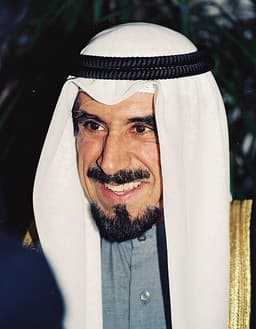
Jaber al-Ahmad al-Sabah
Emperor · Modern
45.4Total
Basic Information
Born
1845
1926
Died
1890
—
Era
Modern
Modern
Nationality
Spain
Kuwait
Occupation
Emperor
Emperor
Civilization
Western
Middle Eastern
Score Comparison
Military (10%)
20.2
12.2
Political (20%)
25.0
68.0
Influence (20%)
47.1
56.4
Legacy (20%)
35.8
44.2
Leadership (15%)
31.2
40.0
Strategy (15%)
60.0
28.2
TOTAL
37.2
45.4
Amadeo I of Spain — Complete Timeline
1870 AD
Election as King of SpainPolitical Action◆ Major
Amadeo I was elected King of Spain by the Cortes after the deposition of Queen Isabella II. He was chosen as a compromise candidate from the Italian House of Savoy, aiming to stabilize the country after the Glorious Revolution.
ElectionMonarchySavoy
Impact: national
Assassination of General PrimPolitical Action◆ Major
General Juan Prim, the main political supporter of Amadeo I, was assassinated shortly before the king's arrival. This event deprived Amadeo of his key ally and left him without a strong political base, contributing to the failure of his reign.
AssassinationPrimPolitical Crisis
Impact: nationaltragic
1871 AD
Arrival in SpainPolitical Action
Amadeo I arrived in Spain to assume the throne. His reign was immediately challenged by political instability, including opposition from republicans, Carlists, and factions within the monarchy, making his position precarious from the start.
ArrivalReignInstability
Impact: national
1873 AD
Abdication of Amadeo IPolitical Action
Amadeo I abdicated the Spanish throne, citing the impossibility of ruling due to constant political turmoil and lack of support. His abdication led to the proclamation of the First Spanish Republic, ending the brief Savoyard monarchy.
AbdicationRepublicEnd of Reign
Impact: national
Jaber al-Ahmad al-Sabah — Complete Timeline
1990 AD
Iraqi Invasion of KuwaitWar◆ Major
Iraqi forces invaded and occupied Kuwait under Saddam Hussein. Jaber al-Ahmad al-Sabah fled to Saudi Arabia and established a government-in-exile. The invasion led to the Gulf War and a seven-month occupation of Kuwait.
Gulf WarIraqi InvasionKuwaiti Occupation
Impact: globaltragic
1991 AD
Liberation of KuwaitWar◆ Major
A US-led coalition launched Operation Desert Storm, liberating Kuwait from Iraqi occupation. Jaber al-Ahmad al-Sabah returned to Kuwait as emir. The liberation restored Kuwaiti sovereignty but left the country with extensive damage and environmental destruction.
Gulf WarKuwaiti LiberationCoalition
Impact: globalconstructive
Reconstruction of Kuwait After Gulf WarReform◆ Major
Jaber al-Ahmad al-Sabah oversaw the massive reconstruction of Kuwait's infrastructure, oil fields, and economy after the Gulf War. The rebuilding cost billions of dollars and restored Kuwait's status as a major oil exporter. He also restored the National Assembly.
ReconstructionPost-War RecoveryKuwaiti Economy
Impact: nationalconstructive
Expert Analysis
Origins
Amadeo I of Spain was born on May 30, 1845, in Turin, as the second son of King Victor Emmanuel II of Italy. He was raised in the House of Savoy, receiving a military education typical for a prince. His father unified Italy, and Amadeo served as a general in the Italian army. He had little exposure to Spanish politics before his election. In contrast, Jaber al-Ahmad al-Sabah was born on June 29, 1926, in Kuwait City, into the ruling al-Sabah dynasty. He was educated at the Mubarakiyya School and later in various subjects including politics and economics. He became involved in government early, serving as head of the Department of Public Security and later as Minister of Finance and Economy. His formative years were shaped by Kuwait's transformation from a pearl-diving economy to an oil-rich state.
Rise to Power
Amadeo I's rise was abrupt and external. After the Spanish Revolution of 1868 deposed Queen Isabella II, the Cortes sought a new monarch. They chose Amadeo, a Catholic Italian prince, as a compromise candidate. He was elected in November 1870, but his key supporter, General Juan Prim, was assassinated three days before Amadeo's arrival in Madrid in January 1871. This deprived him of crucial political backing. Jaber al-Ahmad al-Sabah's rise was gradual and internal. He was appointed Minister of Finance in 1963, and later Prime Minister in 1965. He became Crown Prince in 1966. On December 31, 1977, he succeeded his cousin Sabah al-Salim al-Sabah as Emir of Kuwait. His rise was smooth, supported by the ruling family and the merchant elite.
Leadership & Governance
Amadeo I attempted to rule as a constitutional monarch, but faced relentless opposition. Republicans, Carlists, and even some monarchists rejected him. He lacked the political skill to navigate the fragmented parliament. His governance was paralyzed; he dissolved the Cortes twice, but new elections failed to produce stability. He scored only 25.0 in political leadership. Jaber al-Ahmad al-Sabah, in contrast, scored 68.0 politically. He ruled with a firm but consultative style, balancing the interests of the royal family, merchants, and tribal leaders. He oversaw Kuwait's economic development, investing oil revenues in infrastructure and social welfare. However, his governance faced a severe test with the Iraqi invasion in 1990. He fled to Saudi Arabia and led a government-in-exile, coordinating with the US-led coalition. After liberation, he managed the reconstruction, allocating over $5 billion to rebuild the country.
Triumph & Tragedy
Amadeo I's greatest triumph was his peaceful abdication in 1873, avoiding civil war. He famously stated, "I would be a mad king if I continued to rule." His tragedy was the complete failure of his reign: he never gained acceptance, and his departure led to the First Spanish Republic. Jaber al-Ahmad al-Sabah's greatest triumph was the liberation of Kuwait in 1991 and the subsequent reconstruction. He returned to a country devastated by Iraqi forces, which had set fire to 700 oil wells. Within two years, oil production was restored. His tragedy was the invasion itself, which he could not prevent. Despite intelligence warnings, he underestimated Saddam Hussein's intentions. The occupation cost Kuwait over $30 billion in damages.
Character & Destiny
Amadeo I was dutiful but indecisive. He lacked the charisma and political acumen to command respect. His destiny was shaped by forces beyond his control: the assassination of Prim, the hostility of the Spanish elite, and his own reluctance to assert power. Historians rate his leadership at 31.2. Jaber al-Ahmad al-Sabah was pragmatic and resilient. He showed patience during the exile, refusing to abdicate or compromise with Iraq. His leadership score of 40.0 reflects his ability to maintain unity. His destiny was tied to Kuwait's survival as a state; he became a symbol of national continuity.
Legacy
Amadeo I left a minimal legacy. He is remembered as a footnote in Spanish history, a failed king who abdicated after two years. His reign demonstrated the difficulty of establishing a stable monarchy in a polarized country. He scored 35.8 in legacy. Jaber al-Ahmad al-Sabah's legacy is substantial. He ruled for 29 years and guided Kuwait through its greatest crisis. He is remembered as the "Emir of the Reconstruction." His policies modernized Kuwait, and his role in the Gulf War cemented his place in history. He scored 44.2 in legacy. The rebuilding of Kuwait's economy and infrastructure, including the restoration of the oil sector, is a lasting achievement.
Conclusion
Jaber al-Ahmad al-Sabah had a greater impact than Amadeo I. His total score of 45.4 versus Amadeo's 37.2 reflects this. Amadeo I's reign was brief and ineffective; he failed to govern or leave a mark. Jaber al-Ahmad al-Sabah, despite the catastrophic invasion, led his country through recovery and maintained stability. His political skill and resilience outweighed Amadeo's theoretical constitutionalism. Taking a clear stance, Jaber al-Ahmad al-Sabah is the more consequential figure.
Rankings
🥇
Jaber al-Ahmad al-SabahLeader
Mil: 12.2Pol: 68.0Inf: 56.4
45.4
🥈
Amadeo I of Spain
Mil: 20.2Pol: 25.0Inf: 47.1
37.2
+8.2 behind
How This Comparison Works
Algorithm
Each figure is scored on 6 dimensions (0—100 scale) based on structured historical data: Military (10%), Political (20%), Influence (20%), Legacy (20%), Leadership (15%), Strategy (15%). The weighted total produces the final ranking.
Data Sources
Scores are computed from structured sub-indicators in the database. Scale factors adjust for era (Ancient ×0.85, Modern ×1.0) and civilization size (Eastern ×1.05, Other ×0.80) to account for differences in population and military scale.
Maximum 3 Figures
Comparisons are limited to 2—3 figures to ensure readability and statistical meaningfulness.
Error Margins
±5 points per dimension — Sub-scores are derived from historical records with inherent uncertainty. Two figures within 5 points on a dimension should be considered roughly equivalent in that area.
Total Score Accuracy
±3 points overall — The weighted combination of 6 dimensions produces a total score with approximately ±3 points of uncertainty. Differences of less than 3 points are not statistically significant— the figures are effectively tied.
Known Limitations
- Historical records are incomplete and uneven across civilizations
- Figures from oral-tradition societies may be underrepresented
- Occupation labels can misclassify multi-role figures
- Scores measure capability and impact, not moral character
- Quantitative scoring is a comparison tool, not absolute truth
Capability Radar
Military (10%) — Battles & Warfare
Battles
35
3
Win Rate
36
10
Expansion
45
13
Political (20%) — Governance & Reform
Reform
5
40
Diplomacy
15
55
Economy
5
50
Influence (20%) — Cultural & Global Reach
Cultural
5
30
Global
5
50
Legacy (20%) — Historical Impact
Historical
10
45
Longevity
5
30
Leadership (15%) — Power & Stability
Tenure
10
60
Stability
5
35
Strategy (15%) — Tactics & Innovation
Strategy
45
12
Tactics
51
18
Reform
50
23
Similar Comparisons
Comments & Discussion
No comments yet. Be the first to share your thoughts!