Loading...
Amadeo I of Spain vs Ulrika Eleonora
Ulrika Eleonora leads by 1.4 pts · 2 figures compared
…

Amadeo I of Spain
Emperor · Modern
37.2Total
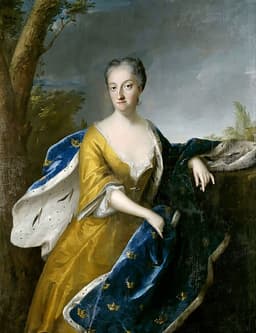
Ulrika Eleonora
Emperor · Modern
38.6Total
Basic Information
Born
1845
1688
Died
1890
1741
Era
Modern
Modern
Nationality
Spain
Sweden
Occupation
Emperor
Emperor
Civilization
Western
Western
Score Comparison
Military (10%)
20.2
45.7
Political (20%)
25.0
30.7
Influence (20%)
47.1
45.5
Legacy (20%)
35.8
33.3
Leadership (15%)
31.2
31.2
Strategy (15%)
60.0
50.7
TOTAL
37.2
38.6
Amadeo I of Spain — Complete Timeline
1870 AD
Election as King of SpainPolitical Action◆ Major
Amadeo I was elected King of Spain by the Cortes after the deposition of Queen Isabella II. He was chosen as a compromise candidate from the Italian House of Savoy, aiming to stabilize the country after the Glorious Revolution.
ElectionMonarchySavoy
Impact: national
Assassination of General PrimPolitical Action◆ Major
General Juan Prim, the main political supporter of Amadeo I, was assassinated shortly before the king's arrival. This event deprived Amadeo of his key ally and left him without a strong political base, contributing to the failure of his reign.
AssassinationPrimPolitical Crisis
Impact: nationaltragic
1871 AD
Arrival in SpainPolitical Action
Amadeo I arrived in Spain to assume the throne. His reign was immediately challenged by political instability, including opposition from republicans, Carlists, and factions within the monarchy, making his position precarious from the start.
ArrivalReignInstability
Impact: national
1873 AD
Abdication of Amadeo IPolitical Action
Amadeo I abdicated the Spanish throne, citing the impossibility of ruling due to constant political turmoil and lack of support. His abdication led to the proclamation of the First Spanish Republic, ending the brief Savoyard monarchy.
AbdicationRepublicEnd of Reign
Impact: national
Ulrika Eleonora — Complete Timeline
1719 AD
Coronation of Ulrika EleonoraPolitical Action◆ Major
Ulrika Eleonora was crowned Queen of Sweden after the death of her brother Charles XII. Her coronation was conditional on accepting a new constitution that limited royal power, marking the start of the Age of Liberty.
CoronationConstitutionAge of Liberty
Impact: national
1720 AD
Abdication of Ulrika EleonoraPolitical Action◆ Major
Ulrika Eleonora abdicated the throne in favor of her husband, Frederick I, after only one year as queen. She did so to allow him to become king, as she had no children and the Riksdag preferred a male monarch.
AbdicationSuccessionFrederick I
Impact: national
1721 AD
Signing of the Treaty of NystadPolitical Action◆ Major
As queen, Ulrika Eleonora oversaw the conclusion of the Great Northern War with the Treaty of Nystad. Sweden ceded Livonia, Estonia, and Ingria to Russia, ending its status as a major European power.
TreatyGreat Northern WarTerritorial Loss
Impact: regionaldestructive
1741 AD
Death of Ulrika EleonoraOther
Ulrika Eleonora died in Stockholm at age 53. Her death ended the life of Sweden's only reigning queen regnant, who had abdicated after a brief reign.
Death
Impact: national
Expert Analysis
Origins
Amadeo I of Spain was born on May 30, 1845, in Turin, Italy, as the second son of King Victor Emmanuel II of Italy. He was raised in the House of Savoy, receiving a military education and serving in the Italian army. His background as a foreign prince shaped his detachment from Spanish politics.
Ulrika Eleonora was born on January 23, 1688, in Stockholm, Sweden, as the youngest child of King Charles XI. She was raised in the Swedish royal court, educated in statecraft but overshadowed by her brother Charles XII. Her upbringing instilled a sense of duty but also deference to male authority.
Rise to Power
Amadeo I was elected King of Spain by the Cortes in November 1870 after the deposition of Queen Isabella II in 1868. He was a compromise candidate supported by General Juan Prim, who orchestrated the election. However, Prim was assassinated on December 30, 1870, just days before Amadeo arrived in Spain in January 1871. This deprived Amadeo of his key ally, leaving him vulnerable to opposition from republicans, Carlists, and aristocrats.
Ulrika Eleonora became queen regnant after her brother Charles XII died without an heir in December 1718. She was proclaimed queen in 1719, but her accession was conditional on accepting a new constitution that transferred power from the monarchy to the Riksdag (parliament). This constitution, drafted by the nobility, drastically reduced royal authority, making her a figurehead.
Leadership & Governance
Amadeo I attempted to rule as a constitutional monarch, but faced constant political turmoil. He struggled to form stable governments, with six cabinets during his two-year reign. His lack of Spanish roots and inability to navigate factional politics led to isolation. He scored 25.0 in political acumen, reflecting his ineffectiveness.
Ulrika Eleonora ruled for less than a year before abdicating. She accepted the new constitution, which limited her powers, and focused on ending the Great Northern War. She oversaw the signing of the Treaty of Nystad in 1721, which ceded Baltic territories to Russia but ended the costly war. Her political score of 30.7 indicates slightly better handling of constraints.
Triumph & Tragedy
Amadeo I's greatest success was being elected king, but his tragedy was the inability to govern. He abdicated on February 11, 1873, citing the impossibility of ruling due to constant conflict. His reign ended with the proclamation of the First Spanish Republic.
Ulrika Eleonora's triumph was concluding the Treaty of Nystad, which brought peace after 21 years of war. However, her abdication in 1720 to allow her husband Frederick I to become king was a personal failure. She agreed to step down to satisfy her husband's ambition, effectively ending her own reign. She scored 45.7 in military, reflecting her role in the war's end.
Character & Destiny
Amadeo I was described as dutiful but aloof, lacking political skill. His decision to abdicate showed realism but also a lack of perseverance. He returned to Italy and lived quietly, dying in 1890. His character was ill-suited for Spain's turbulent politics.
Ulrika Eleonora was seen as submissive and overly influenced by her husband. She abdicated despite being the rightful queen, prioritizing family over power. Her character shaped a destiny of obscurity, as she faded into the background after abdication. Historical assessments note her as a weak ruler.
Legacy
Amadeo I's legacy is that of a failed experiment in constitutional monarchy. His brief reign highlighted Spain's deep divisions and led to the short-lived republic. He is largely forgotten, with his reign a footnote in Spanish history.
Ulrika Eleonora's legacy is mixed. She was Sweden's only reigning queen regnant but abdicated after a year. The Treaty of Nystad marked the end of Sweden's era as a great power. Her abdication set a precedent for constitutional monarchy, but her personal legacy is overshadowed by her husband. She scored 33.3 in legacy, slightly below Amadeo's 35.8.
Conclusion
Ulrika Eleonora had a greater impact than Amadeo I, despite a lower legacy score. Her reign ended a major war and solidified Sweden's shift to constitutionalism. Amadeo's reign was a failed experiment with no lasting change. The score gap of 1.4 points (Ulrika Eleonora 38.6 vs Amadeo 37.2) reflects her slightly better political and military scores. However, both had minimal long-term influence.
Rankings
🥇
Ulrika EleonoraLeader
Mil: 45.7Pol: 30.7Inf: 45.5
38.6
🥈
Amadeo I of Spain
Mil: 20.2Pol: 25.0Inf: 47.1
37.2
+1.4 behind
How This Comparison Works
Algorithm
Each figure is scored on 6 dimensions (0—100 scale) based on structured historical data: Military (10%), Political (20%), Influence (20%), Legacy (20%), Leadership (15%), Strategy (15%). The weighted total produces the final ranking.
Data Sources
Scores are computed from structured sub-indicators in the database. Scale factors adjust for era (Ancient ×0.85, Modern ×1.0) and civilization size (Eastern ×1.05, Other ×0.80) to account for differences in population and military scale.
Maximum 3 Figures
Comparisons are limited to 2—3 figures to ensure readability and statistical meaningfulness.
Error Margins
±5 points per dimension — Sub-scores are derived from historical records with inherent uncertainty. Two figures within 5 points on a dimension should be considered roughly equivalent in that area.
Total Score Accuracy
±3 points overall — The weighted combination of 6 dimensions produces a total score with approximately ±3 points of uncertainty. Differences of less than 3 points are not statistically significant— the figures are effectively tied.
Known Limitations
- Historical records are incomplete and uneven across civilizations
- Figures from oral-tradition societies may be underrepresented
- Occupation labels can misclassify multi-role figures
- Scores measure capability and impact, not moral character
- Quantitative scoring is a comparison tool, not absolute truth
Capability Radar
Military (10%) — Battles & Warfare
Battles
35
25
Win Rate
36
28
Expansion
45
31
Political (20%) — Governance & Reform
Reform
5
5
Diplomacy
15
10
Economy
5
5
Influence (20%) — Cultural & Global Reach
Cultural
5
5
Global
5
5
Legacy (20%) — Historical Impact
Historical
10
5
Longevity
5
5
Leadership (15%) — Power & Stability
Tenure
10
10
Stability
5
5
Strategy (15%) — Tactics & Innovation
Strategy
45
34
Tactics
51
36
Reform
50
37
Similar Comparisons
Comments & Discussion
No comments yet. Be the first to share your thoughts!