Loading...
Ulrika Eleonora vs Vimaladharmasuriya I
Vimaladharmasuriya I leads by 11.6 pts · 2 figures compared
…
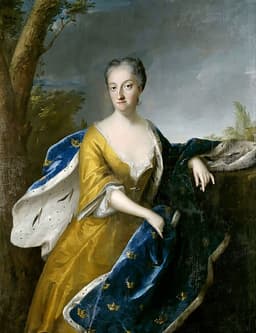
Ulrika Eleonora
Emperor · Modern
38.6Total
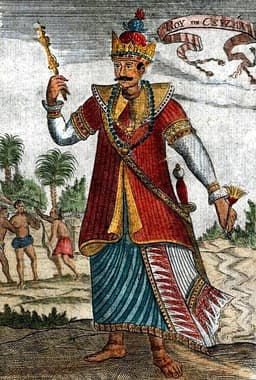
Vimaladharmasuriya I
Emperor · Modern
50.2Total
Basic Information
Born
1688
1592
Died
1741
1604
Era
Modern
Modern
Nationality
Sweden
Sri Lanka
Occupation
Emperor
Emperor
Civilization
Western
Indian
Score Comparison
Military (10%)
45.7
30.0
Political (20%)
30.7
54.7
Influence (20%)
45.5
51.8
Legacy (20%)
33.3
41.7
Leadership (15%)
31.2
64.0
Strategy (15%)
50.7
60.0
TOTAL
38.6
50.2
Ulrika Eleonora — Complete Timeline
1719 AD
Coronation of Ulrika EleonoraPolitical Action◆ Major
Ulrika Eleonora was crowned Queen of Sweden after the death of her brother Charles XII. Her coronation was conditional on accepting a new constitution that limited royal power, marking the start of the Age of Liberty.
CoronationConstitutionAge of Liberty
Impact: national
1720 AD
Abdication of Ulrika EleonoraPolitical Action◆ Major
Ulrika Eleonora abdicated the throne in favor of her husband, Frederick I, after only one year as queen. She did so to allow him to become king, as she had no children and the Riksdag preferred a male monarch.
AbdicationSuccessionFrederick I
Impact: national
1721 AD
Signing of the Treaty of NystadPolitical Action◆ Major
As queen, Ulrika Eleonora oversaw the conclusion of the Great Northern War with the Treaty of Nystad. Sweden ceded Livonia, Estonia, and Ingria to Russia, ending its status as a major European power.
TreatyGreat Northern WarTerritorial Loss
Impact: regionaldestructive
1741 AD
Death of Ulrika EleonoraOther
Ulrika Eleonora died in Stockholm at age 53. Her death ended the life of Sweden's only reigning queen regnant, who had abdicated after a brief reign.
Death
Impact: national
Vimaladharmasuriya I — Complete Timeline
1592 AD
Establishment of Kandy as CapitalPolitical Action◆ Major
Vimaladharmasuriya I established Kandy as the capital of the Sinhalese kingdom. He fortified the city and made it the center of resistance against Portuguese expansion.
CapitalFoundationResistance
Impact: nationalconstructive
1594 AD
Battle of DantureWar
Vimaladharmasuriya I's forces ambushed and defeated a Portuguese army at Danture. The Portuguese commander, Pedro Lopes de Sousa, was killed, and the Kandyan kingdom secured its independence.
BattlePortugueseIndependence
Impact: regional
1595 AD
Restoration of Buddhism in KandyPolitical Action◆ Major
Vimaladharmasuriya I restored Buddhism as the state religion in the Kandyan kingdom. He brought the Tooth Relic of the Buddha to Kandy and built a temple to house it, reviving Buddhist traditions.
BuddhismRestorationRelic
Impact: nationalconstructive
Construction of the Temple of the Tooth in KandyCultural◆ Major
Vimaladharmasuriya I built the first Temple of the Tooth in Kandy to house the sacred Tooth Relic. This established Kandy as the primary Buddhist center in Sri Lanka.
ArchitectureBuddhismRelic
Impact: nationalconstructive
Expert Analysis
Origins
Ulrika Eleonora, born in 1688 in Stockholm, was the youngest child of King Charles XI of Sweden and Ulrika Eleonora of Denmark. Her upbringing was marked by the strict Lutheran court and the shadow of her brother Charles XII, who became king in 1697. She received a typical princess education, focusing on languages and religion, with little preparation for governance.
Vimaladharmasuriya I, born around 1550, was a prince of the Kandyan Kingdom in Sri Lanka. His early life is obscure, but he was likely trained in military arts and Buddhist teachings. He rose from obscurity to claim the throne after the death of King Karalliyadde Bandara, leveraging his marriage to the king's daughter and his opposition to Portuguese influence.
Rise to Power
Ulrika Eleonora's rise was accidental. After Charles XII died in 1718 without heirs, she claimed the throne, but the Swedish Riksdag imposed a new constitution that stripped the monarchy of power. She was crowned in 1719 as a constitutional monarch, but her reign was brief. In 1720, she abdicated in favor of her husband, Frederick I, to satisfy his ambition and to stabilize the succession.
Vimaladharmasuriya I seized power in 1590 after a period of chaos. He defeated rival claimants and consolidated control over the Kandyan highlands. His major turning point was the Battle of Danture in 1594, where his forces ambushed and annihilated a Portuguese expedition. This victory secured his throne and established Kandy as a formidable resistance center.
Leadership & Governance
Ulrika Eleonora's leadership was constrained by the new constitution. She had little real authority, with power concentrated in the Riksdag. Her main act was signing the Treaty of Nystad in 1721, ending the Great Northern War. Sweden ceded Livonia, Estonia, and Ingria to Russia, marking the end of Sweden's era as a great power. Her governance score of 30.7 reflects her limited impact.
Vimaladharmasuriya I was a strong, independent ruler. He centralized power in Kandy, fortified the city, and made it the capital. He restored Buddhism as the state religion, bringing the Tooth Relic to Kandy and building the Temple of the Tooth. His political score of 54.7 and leadership score of 64.0 indicate effective governance despite constant Portuguese threats.
Triumph & Tragedy
Ulrika Eleonora's triumph was her role in ending the Great Northern War, albeit through territorial losses. Her tragedy was her abdication—she gave up her throne after only one year, making her reign a footnote. Her influence score of 45.5 is modest, and her legacy score of 33.3 reflects her short, constrained rule.
Vimaladharmasuriya I's greatest triumph was the Battle of Danture, where he scored a military victory against a superior Portuguese force. He also successfully established Kandy as a Buddhist stronghold. His tragedy was the constant warfare and the eventual Portuguese retaliation after his death. His military score of 30.0 is low relative to his victory, but his strategy score of 60.0 shows his tactical acumen.
Character & Destiny
Ulrika Eleonora was dutiful but passive. She accepted the constitutional limitations and abdicated without protest. Her character shaped her fate: she was a placeholder rather than a ruler. Historical assessments often note her lack of ambition.
Vimaladharmasuriya I was decisive and strategic. He used marriage, military cunning, and religious legitimacy to secure his rule. His character—bold and resilient—enabled him to resist Portuguese colonization. His total score of 50.2 reflects a balanced but effective leader.
Legacy
Ulrika Eleonora's legacy is minimal. She is remembered as Sweden's first reigning queen regnant but one who abdicated. The Treaty of Nystad shifted the Baltic balance of power. Her legacy score of 33.3 is low.
Vimaladharmasuriya I's legacy is profound. He preserved Kandyan independence for over a century, made Kandy a cultural and religious center, and the Temple of the Tooth remains a UNESCO site. His legacy score of 41.7 is higher, and his influence endures in Sri Lankan national identity.
Conclusion
Vimaladharmasuriya I had greater impact. His total score of 50.2 exceeds Ulrika Eleonora's 38.6. While she ended a war through cession, he won a war and built a lasting kingdom. His political, leadership, and strategy scores are all higher. Ulrika Eleonora's reign was a brief constitutional interlude; Vimaladharmasuriya I's reign defined a nation's resistance.
Rankings
🥇
Vimaladharmasuriya ILeader
Mil: 30.0Pol: 54.7Inf: 51.8
50.2
🥈
Ulrika Eleonora
Mil: 45.7Pol: 30.7Inf: 45.5
38.6
+11.6 behind
How This Comparison Works
Algorithm
Each figure is scored on 6 dimensions (0—100 scale) based on structured historical data: Military (10%), Political (20%), Influence (20%), Legacy (20%), Leadership (15%), Strategy (15%). The weighted total produces the final ranking.
Data Sources
Scores are computed from structured sub-indicators in the database. Scale factors adjust for era (Ancient ×0.85, Modern ×1.0) and civilization size (Eastern ×1.05, Other ×0.80) to account for differences in population and military scale.
Maximum 3 Figures
Comparisons are limited to 2—3 figures to ensure readability and statistical meaningfulness.
Error Margins
±5 points per dimension — Sub-scores are derived from historical records with inherent uncertainty. Two figures within 5 points on a dimension should be considered roughly equivalent in that area.
Total Score Accuracy
±3 points overall — The weighted combination of 6 dimensions produces a total score with approximately ±3 points of uncertainty. Differences of less than 3 points are not statistically significant— the figures are effectively tied.
Known Limitations
- Historical records are incomplete and uneven across civilizations
- Figures from oral-tradition societies may be underrepresented
- Occupation labels can misclassify multi-role figures
- Scores measure capability and impact, not moral character
- Quantitative scoring is a comparison tool, not absolute truth
Capability Radar
Military (10%) — Battles & Warfare
Battles
25
45
Win Rate
28
60
Expansion
31
25
Political (20%) — Governance & Reform
Reform
5
35
Diplomacy
10
45
Economy
5
30
Influence (20%) — Cultural & Global Reach
Cultural
5
30
Global
5
20
Legacy (20%) — Historical Impact
Historical
5
35
Longevity
5
25
Leadership (15%) — Power & Stability
Tenure
10
40
Stability
5
35
Strategy (15%) — Tactics & Innovation
Strategy
34
50
Tactics
36
55
Reform
37
30
Similar Comparisons
Comments & Discussion
No comments yet. Be the first to share your thoughts!