Loading...
An Lushan vs Raymond of Toulouse
An Lushan leads by 4.1 pts · 2 figures compared
…

An Lushan
General · Medieval
55.6Total
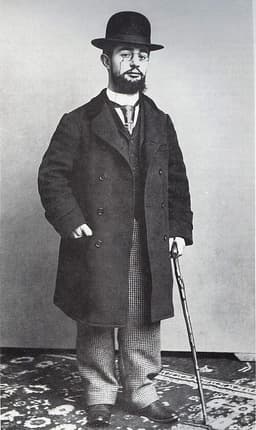
Raymond of Toulouse
General · Medieval
51.5Total
Basic Information
Born
703
1041
Died
757
1105
Era
Medieval
Medieval
Nationality
China
France
Occupation
General
General
Civilization
Eastern
Western
Score Comparison
Military (10%)
76.0
70.0
Political (20%)
43.7
40.8
Influence (20%)
54.1
51.0
Legacy (20%)
49.2
44.2
Leadership (15%)
57.6
62.0
Strategy (15%)
70.0
52.5
TOTAL
55.6
51.5
An Lushan — Complete Timeline
742 AD
Appointed as Military Governor of FanyangPolitical Action◆ Major
An Lushan was appointed military governor (jiedushi) of Fanyang, one of the most powerful frontier commands. He built a personal army composed of Han Chinese, Khitan, and other ethnic groups, amassing significant military power.
Tang DynastyMilitary CommandFrontier
Impact: regional
755 AD
Launched the An Lushan RebellionWar
An Lushan declared rebellion against Emperor Xuanzong, claiming he was removing the corrupt chancellor Yang Guozhong. He led his army south from Fanyang, capturing Luoyang and declaring himself Emperor of the Great Yan dynasty.
Tang DynastyRebellionGreat Yan
Impact: globaldestructive
756 AD
Captured Chang'anWar◆ Major
After defeating Tang forces at Tong Pass, An Lushan's army captured the Tang capital Chang'an. Emperor Xuanzong fled to Sichuan, and the city was looted. This marked the peak of An Lushan's power.
Tang DynastyCapital FallLooting
Impact: nationaldestructive
757 AD
Assassinated by His SonPolitical Action◆ Major
An Lushan was assassinated by his son An Qingxu and a eunuch named Li Zhu'er. His failing health and erratic behavior had alienated his inner circle, leading to the coup. An Qingxu succeeded him as emperor of Yan.
Tang DynastyAssassinationSuccession
Impact: nationaltragic
Raymond of Toulouse — Complete Timeline
1096 AD
Leadership of the First CrusadeWar◆ Major
Raymond of Toulouse was a principal leader of the First Crusade, commanding a large army from southern France. He participated in the siege of Nicaea and the Battle of Dorylaeum, and was a key figure in the capture of Antioch in 1098.
CrusadeMilitary Campaign
Impact: regional
1098 AD
Siege of AntiochWar◆ Major
Raymond played a leading role in the siege of Antioch, which lasted from October 1097 to June 1098. After the city's capture, he claimed the citadel but was outmaneuvered by Bohemond, who became Prince of Antioch.
CrusadeSiege
Impact: regional
1099 AD
Refusal of the Crown of JerusalemPolitical Action◆ Major
After the capture of Jerusalem in July 1099, Raymond was offered the crown but refused, reportedly out of piety. Godfrey of Bouillon was elected instead, taking the title 'Advocate of the Holy Sepulchre.'
Crusader StatesPolitics
Impact: regional
1102 AD
Siege of TripoliWar◆ Major
Raymond began the siege of Tripoli in 1102, establishing a fortified camp called Mount Pilgrim. He died in 1105 before the city fell, but his efforts laid the groundwork for the creation of the County of Tripoli under his son.
CrusadeSiegeCrusader States
Impact: regional
Expert Analysis
Origins
An Lushan (c. 703–757) was born in the Tang Empire to a Sogdian father and a Turkic mother, a mixed heritage that shaped his outsider status. Growing up in the frontier region of Yingzhou (modern Chaoyang, Liaoning), he learned multiple languages and became a merchant and interpreter, giving him a deep understanding of the multicultural borderlands. His early career in the Tang military began as a scout and petty officer, where his boldness and linguistic skills caught the attention of officials.
Raymond of Toulouse (c. 1041–1105) was born into the powerful House of Toulouse, ruling over the County of Toulouse in southern France. As the eldest son of Count Pons of Toulouse and Almodis de la Marche, he inherited a wealthy and strategically important territory. His upbringing was steeped in feudal politics and military training, preparing him for leadership in an era of religious fervor and territorial expansion.
Rise to Power
An Lushan rose through a combination of military prowess and political maneuvering. By 742, he was appointed military governor (jiedushi) of Fanyang, one of the three frontier commands of the northeast. He cultivated favor with Emperor Xuanzong and his consort Yang Guifei, even being adopted by Yang Guifei as a son. By 755, he commanded a formidable army of 150,000 troops, blending Han Chinese, Khitan, and other steppe warriors. His rebellion began on December 16, 755, when he declared his intent to remove the corrupt chancellor Yang Guozhong, marching south from Fanyang with 100,000 men.
Raymond of Toulouse rose to prominence as a leading noble in the First Crusade, called by Pope Urban II in 1095. Already a powerful count, Raymond was among the first to take the cross, motivated by piety and ambition. He led the largest contingent from southern France, numbering perhaps 10,000–15,000 men. His experience and wealth made him a natural leader during the march to Constantinople in 1096–1097, where he emerged as a key figure among the crusader princes.
Leadership & Governance
An Lushan's governance was autocratic and militaristic. As the self-proclaimed Emperor of Yan in 756, he ruled captured territories through fear and force. He maintained control by rewarding loyalists and brutally suppressing dissent. However, his leadership was undermined by poor health—he suffered from obesity, diabetes, and possibly a skin condition—leading to erratic behavior and reliance on his inner circle. This contrasted with his earlier effectiveness as a military governor, where he had maintained order and built a loyal army.
Raymond of Toulouse led through a combination of religious authority and feudal hierarchy. He was deeply pious, often prioritizing the crusade's spiritual goals over personal gain. At the Siege of Antioch (1097–1098), he advocated for a disciplined approach and later claimed the citadel, but his refusal to accept the crown of Jerusalem in 1099 showed his humility. However, his stubbornness and pride often caused friction with other leaders, such as Bohemond of Taranto, limiting his political influence.
Triumph & Tragedy
An Lushan's greatest triumph was the capture of the Tang capital Chang'an in 756, forcing Emperor Xuanzong to flee. His rebellion at its peak controlled much of northern China. However, his tragedy was his assassination by his own son An Qingxu in 757, after his health declined and he became paranoid. The rebellion continued for years, devastating the empire and leaving millions dead, but An Lushan did not live to see its end. His military score of 76.0 reflects his initial successes, but political score of 43.7 shows his failure to consolidate power.
Raymond's triumph was his role in capturing Jerusalem in 1099, a key victory for the First Crusade. His leadership during the Siege of Antioch and his refusal of the crown enhanced his reputation for piety. Yet his tragedy was dying in 1105 before completing the Siege of Tripoli, a project he had pursued for years. Despite his efforts, the city fell to others, and his legacy as a crusader was somewhat overshadowed by Godfrey of Bouillon. His military score of 70.0 and political score of 40.8 reflect solid but not exceptional performance.
Character & Destiny
An Lushan was ambitious, cunning, and ruthless. His ability to navigate Tang politics and build a multi-ethnic army showed strategic acumen (Strategy score 70.0). However, his arrogance and physical decline led to his downfall. Historical accounts describe him as obese and unable to walk in his final years, relying on eunuchs. His character—a blend of charm and cruelty—ultimately isolated him, leading to his murder.
Raymond was devout, stubborn, and principled. His piety earned him respect but also made him inflexible. He often clashed with other crusader leaders over strategy and authority, such as his dispute with Bohemond over Antioch. His refusal of the Jerusalem crown, while noble, may have been a miscalculation, as it reduced his political influence. His character was shaped by his faith, which both drove his crusading zeal and limited his pragmatic choices.
Legacy
An Lushan's legacy is defined by the An Lushan Rebellion (755–763), one of the deadliest conflicts in history, with casualties estimated at 13–36 million. The rebellion permanently weakened the Tang dynasty, leading to the rise of regional military governors and the eventual fragmentation of the empire. It also caused a demographic shift southward and economic decline. An Lushan is remembered as a rebel who nearly toppled a golden age, with a Legacy score of 49.2.
Raymond of Toulouse's legacy is tied to the First Crusade and the establishment of the Crusader states. His role in capturing Jerusalem and his failed siege of Tripoli laid the groundwork for the County of Tripoli, eventually founded by his son. He is remembered as a key crusader leader, but his refusal of the crown and early death limited his direct impact. His Legacy score of 44.2 reflects a significant but secondary role in crusading history.
Conclusion
An Lushan had a greater impact on history than Raymond of Toulouse, despite their similar total scores (55.6 vs 51.5). The An Lushan Rebellion fundamentally altered the trajectory of the Tang dynasty and Chinese history, causing demographic and economic shifts that resonated for centuries. Raymond, while important to the First Crusade, was one of several leaders and did not shape the long-term outcomes as profoundly. An Lushan's rebellion was a transformative event, whereas Raymond's crusade was part of a larger movement. Therefore, An Lushan's influence, measured by the scale of his rebellion and its consequences, outweighs Raymond's contributions to the Crusades.
Rankings
🥇
An LushanLeader
Mil: 76.0Pol: 43.7Inf: 54.1
55.6
🥈
Raymond of Toulouse
Mil: 70.0Pol: 40.8Inf: 51.0
51.5
+4.1 behind
How This Comparison Works
Algorithm
Each figure is scored on 6 dimensions (0—100 scale) based on structured historical data: Military (10%), Political (20%), Influence (20%), Legacy (20%), Leadership (15%), Strategy (15%). The weighted total produces the final ranking.
Data Sources
Scores are computed from structured sub-indicators in the database. Scale factors adjust for era (Ancient ×0.85, Modern ×1.0) and civilization size (Eastern ×1.05, Other ×0.80) to account for differences in population and military scale.
Maximum 3 Figures
Comparisons are limited to 2—3 figures to ensure readability and statistical meaningfulness.
Error Margins
±5 points per dimension — Sub-scores are derived from historical records with inherent uncertainty. Two figures within 5 points on a dimension should be considered roughly equivalent in that area.
Total Score Accuracy
±3 points overall — The weighted combination of 6 dimensions produces a total score with approximately ±3 points of uncertainty. Differences of less than 3 points are not statistically significant— the figures are effectively tied.
Known Limitations
- Historical records are incomplete and uneven across civilizations
- Figures from oral-tradition societies may be underrepresented
- Occupation labels can misclassify multi-role figures
- Scores measure capability and impact, not moral character
- Quantitative scoring is a comparison tool, not absolute truth
Capability Radar
Military (10%) — Battles & Warfare
Battles
75
55
Win Rate
65
50
Expansion
70
50
Political (20%) — Governance & Reform
Reform
30
30
Diplomacy
65
55
Economy
40
40
Influence (20%) — Cultural & Global Reach
Cultural
45
40
Global
50
35
Legacy (20%) — Historical Impact
Historical
70
55
Longevity
55
40
Leadership (15%) — Power & Stability
Tenure
60
60
Stability
20
45
Strategy (15%) — Tactics & Innovation
Strategy
70
60
Tactics
80
45
Reform
55
20
Similar Comparisons
Comments & Discussion
No comments yet. Be the first to share your thoughts!