Loading...
This comparison has not been analyzed yet.
One-time AI generation (~1 minute). Scores and timeline are already available below.
Andrew Jackson vs Mohamed Abdel Ghani el-Gamasy
Andrew Jackson leads by 4.5 pts · 2 figures compared
…

Andrew Jackson
General · Modern
62.7Total
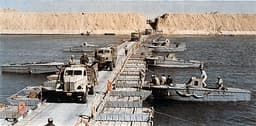
Mohamed Abdel Ghani el-Gamasy
General · Modern
58.2Total
Basic Information
Born
1767
1921
Died
1845
—
Era
Modern
Modern
Nationality
United States
Egypt
Occupation
General
General
Civilization
Western
Middle Eastern
Score Comparison
Military (10%)
70.0
70.0
Political (20%)
72.0
46.6
Influence (20%)
65.0
60.0
Legacy (20%)
55.0
50.0
Leadership (15%)
66.0
64.5
Strategy (15%)
50.0
70.0
TOTAL
62.7
58.2
Andrew Jackson — Complete Timeline
1806 AD
Assassination Attempt and Duel with Charles DickinsonOther
Jackson killed Charles Dickinson in a duel after Dickinson insulted his wife. Jackson was wounded but survived. This event reinforced his reputation for violence and honor in early American politics.
DuelPersonal LifeHonor
destructive
1815 AD
Battle of New OrleansWar◆ Major
Jackson commanded US forces to a decisive victory against the British at the Battle of New Orleans. This victory, occurring after the Treaty of Ghent was signed, made Jackson a national hero and boosted American morale.
War of 1812BattleUS Military
Impact: national
1830 AD
Indian Removal ActPolitical Action
Jackson signed the Indian Removal Act, authorizing the forced relocation of Native American tribes from the southeastern US to lands west of the Mississippi. This led to the Trail of Tears and the displacement of thousands.
Indian RemovalTrail of TearsNative American Policy
Impact: nationaldestructive
1832 AD
Nullification CrisisPolitical Action◆ Major
Jackson faced the Nullification Crisis when South Carolina declared federal tariffs null and void. Jackson threatened military force to enforce federal law, leading to a compromise tariff that defused the crisis.
Nullification CrisisStates' RightsFederal Authority
Impact: national
Bank War and Veto of the Second Bank RecharterPolitical Action◆ Major
Jackson vetoed the recharter of the Second Bank of the United States, arguing it was unconstitutional and favored elites. He then removed federal deposits, leading to the bank's demise and economic instability.
Bank WarEconomic PolicyPresidential Power
Impact: nationaldestructive
Mohamed Abdel Ghani el-Gamasy — Complete Timeline
1973 AD
1973 October War CommandWar◆ Major
Gamasy served as a senior commander in the Egyptian Second Army during the October War. He directed operations on the northern sector of the Suez Canal front.
October WarMilitary CommandEgypt
Impact: regional
1974 AD
Chief of Staff of Egyptian Armed ForcesPolitical Action
Gamasy was appointed Chief of Staff of the Egyptian Armed Forces after the October War. He oversaw the post-war reorganization and modernization of the military.
Military AppointmentPost-WarEgypt
Impact: national
Sinai Disengagement NegotiationsPolitical Action◆ Major
Gamasy led the Egyptian military delegation in the disengagement talks with Israel. The negotiations resulted in the Sinai I and II agreements, reducing tensions.
DiplomacySinaiDisengagement
Impact: regionalconstructive
This comparison has not been analyzed yet.
One-time AI generation (~1 minute). Scores and timeline are already available below.
Rankings
🥇
Andrew JacksonLeader
Mil: 70.0Pol: 72.0Inf: 65.0
62.7
🥈
Mohamed Abdel Ghani el-Gamasy
Mil: 70.0Pol: 46.6Inf: 60.0
58.2
+4.5 behind
How This Comparison Works
Algorithm
Each figure is scored on 6 dimensions (0—100 scale) based on structured historical data: Military (10%), Political (20%), Influence (20%), Legacy (20%), Leadership (15%), Strategy (15%). The weighted total produces the final ranking.
Data Sources
Scores are computed from structured sub-indicators in the database. Scale factors adjust for era (Ancient ×0.85, Modern ×1.0) and civilization size (Eastern ×1.05, Other ×0.80) to account for differences in population and military scale.
Maximum 3 Figures
Comparisons are limited to 2—3 figures to ensure readability and statistical meaningfulness.
Error Margins
±5 points per dimension — Sub-scores are derived from historical records with inherent uncertainty. Two figures within 5 points on a dimension should be considered roughly equivalent in that area.
Total Score Accuracy
±3 points overall — The weighted combination of 6 dimensions produces a total score with approximately ±3 points of uncertainty. Differences of less than 3 points are not statistically significant— the figures are effectively tied.
Known Limitations
- Historical records are incomplete and uneven across civilizations
- Figures from oral-tradition societies may be underrepresented
- Occupation labels can misclassify multi-role figures
- Scores measure capability and impact, not moral character
- Quantitative scoring is a comparison tool, not absolute truth
Capability Radar
Military (10%) — Battles & Warfare
Battles
45
70
Win Rate
70
75
Expansion
60
30
Political (20%) — Governance & Reform
Reform
65
30
Diplomacy
55
50
Economy
50
20
Influence (20%) — Cultural & Global Reach
Cultural
65
30
Global
60
40
Legacy (20%) — Historical Impact
Historical
70
55
Longevity
65
40
Leadership (15%) — Power & Stability
Tenure
70
40
Stability
45
30
Strategy (15%) — Tactics & Innovation
Strategy
55
85
Tactics
65
80
Reform
40
70
Similar Comparisons
Comments & Discussion
No comments yet. Be the first to share your thoughts!