Loading...
Andrew Johnson vs Ban Ki-moon
Ban Ki-moon leads by 8.7 pts · 2 figures compared
…

Andrew Johnson
Politician · Modern
44.5Total
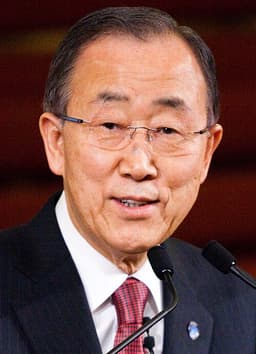
Ban Ki-moon
Politician · Modern
53.2Total
Basic Information
Born
1808
1944
Died
1875
—
Era
Modern
Modern
Nationality
United States
Korea
Occupation
Politician
Politician
Civilization
Western
Eastern
Score Comparison
Military (10%)
22.7
15.2
Political (20%)
29.3
68.0
Influence (20%)
48.6
58.0
Legacy (20%)
45.0
46.7
Leadership (15%)
67.0
72.0
Strategy (15%)
44.0
44.8
TOTAL
44.5
53.2
Andrew Johnson — Complete Timeline
1865 AD
Succeeded to the PresidencyPolitical Action◆ Major
Upon Abraham Lincoln's assassination, Johnson became the 17th president. He took office during the final stages of the Civil War and faced the challenge of Reconstruction.
Presidential SuccessionReconstructionLincoln Assassination
Impact: national
Announced Reconstruction PlanPolitical Action◆ Major
Johnson issued a proclamation granting amnesty to most former Confederates and allowing Southern states to rejoin the Union quickly. His lenient plan excluded African Americans from political participation.
ReconstructionAmnestySouthern States
Impact: nationaldestructive
1866 AD
Vetoed the Civil Rights Act of 1866Political Action◆ Major
Johnson vetoed the Civil Rights Act, which granted citizenship and equal rights to African Americans. Congress overrode his veto, marking the first major override of a presidential veto on a major bill.
Civil RightsVetoReconstruction
Impact: nationaldestructive
1867 AD
Signed the Alaska PurchasePolitical Action◆ Major
Johnson approved the purchase of Alaska from Russia for $7.2 million. The acquisition added 586,412 square miles to U.S. territory, though it was initially criticized as 'Seward's Folly'.
Territorial ExpansionAlaskaDiplomacy
Impact: globalconstructive
1868 AD
Impeachment by the House of RepresentativesPolitical Action◆ Major
The House impeached Johnson for violating the Tenure of Office Act by removing Secretary of War Edwin Stanton. He was the first U.S. president to be impeached.
ImpeachmentTenure of Office ActStanton
Impact: nationaldestructive
Acquitted by the SenatePolitical Action◆ Major
Johnson was acquitted by the Senate by one vote, falling short of the two-thirds majority needed for conviction. He remained in office but was politically weakened.
Impeachment TrialAcquittalSenate
Impact: national
Ban Ki-moon — Complete Timeline
2007 AD
Elected Secretary-General of the United NationsPolitical Action◆ Major
Ban Ki-moon became the eighth Secretary-General of the United Nations, succeeding Kofi Annan. His election was seen as a consensus choice, and he focused on climate change, peacekeeping, and UN reform.
UN Secretary-GeneralLeadershipGlobal Governance
Impact: globalconstructive
2011 AD
Launched the Sustainable Energy for All initiativeReform◆ Major
Ban launched the Sustainable Energy for All initiative, aiming to achieve universal energy access, double energy efficiency, and double renewable energy use by 2030. The initiative mobilized governments and private sector partners.
EnergySustainabilityClimate Change
Impact: globalconstructive
Oversaw UN response to the Syrian Civil WarPolitical Action◆ Major
Ban Ki-moon led UN efforts to address the Syrian Civil War, including humanitarian aid and peace negotiations. The UN faced criticism for failing to stop the conflict, which killed hundreds of thousands and displaced millions.
SyriaHumanitarian CrisisUN Failure
Impact: globaltragic
2015 AD
Adopted the Sustainable Development GoalsReform◆ Major
Ban oversaw the adoption of the 2030 Agenda for Sustainable Development, including 17 Sustainable Development Goals to end poverty, protect the planet, and ensure prosperity for all by 2030.
SDGsDevelopmentGlobal Goals
Impact: globalconstructive
Adopted the Paris Agreement on climate changePolitical Action◆ Major
Ban played a key role in the adoption of the Paris Agreement at COP21, a global treaty to limit global warming to well below 2
Climate ChangeParis AgreementCOP21
Impact: globalconstructive
Expert Analysis
Origins
Andrew Johnson was born in 1808 in Raleigh, North Carolina, into extreme poverty. His father died when he was three, and he was apprenticed to a tailor at age ten. He never attended school; his wife Eliza taught him to read and write. Johnson moved to Greeneville, Tennessee, where he established a successful tailoring business and entered politics as a Democrat, championing the common white man.
Ban Ki-moon was born in 1946 in Eumseong, South Korea, during a period of post-war recovery. His father was a businessman, and the family moved to Seoul when Ban was young. He excelled academically, winning a competition that earned him a trip to the United States in 1962, where he met President John F. Kennedy—an experience that inspired his diplomatic career. Ban studied international relations at Seoul National University and later earned a master's degree from Harvard's Kennedy School.
Rise to Power
Johnson rose through Tennessee politics: he served as mayor of Greeneville, state legislator, U.S. Representative, and Governor. In 1857, he was elected to the U.S. Senate. Despite being a Southerner and slaveholder, he remained loyal to the Union during the Civil War, the only Southern senator to do so. Lincoln appointed him military governor of Tennessee in 1862, and in 1864, Lincoln chose him as vice president to balance the ticket. After Lincoln's assassination in April 1865, Johnson became president.
Ban Ki-moon entered South Korea's foreign ministry in 1970 and rose through the ranks over three decades. He served as ambassador to Austria and as foreign policy advisor to President Roh Moo-hyun. In 2004, he became Foreign Minister. His reputation as a skilled diplomat led to his election as UN Secretary-General in 2006, succeeding Kofi Annan. He was re-elected in 2011.
Leadership & Governance
Johnson's leadership style was confrontational and inflexible. He attempted to implement his own Reconstruction plan, which was lenient toward the South and hostile to freedmen's rights. He vetoed the Civil Rights Act of 1866 and the Freedmen's Bureau Bill, arguing they infringed on states' rights. Congress overrode his vetoes, marking the first major legislative defeats of a president. Johnson's stubbornness led to a breakdown with Congress and ultimately his impeachment in 1868 for violating the Tenure of Office Act. His political score of 29.3 reflects his inability to govern effectively.
Ban Ki-moon's leadership was characterized by consensus-building and quiet diplomacy. As Secretary-General, he focused on climate change, sustainable development, and human rights. He launched the Sustainable Energy for All initiative and played a key role in the adoption of the Paris Agreement in 2015. He oversaw the adoption of the 2030 Agenda for Sustainable Development, including 17 Sustainable Development Goals. However, his approach was often criticized as too cautious, especially regarding the Syrian Civil War, where the UN failed to stop the conflict. His leadership score of 72.0 indicates a more effective, if not always decisive, governance style.
Triumph & Tragedy
Johnson's greatest triumph was his acquittal by the Senate in 1868, which allowed him to finish his term. However, his legacy is marred by his failure to protect freedmen's rights. His lenient Reconstruction policies enabled the rise of Black Codes and Jim Crow laws, setting back racial equality for a century. His impeachment was a direct consequence of his defiance of Congress.
Ban Ki-moon's greatest triumph was the Paris Agreement, a landmark global accord to combat climate change. He also advanced the Sustainable Development Goals, shaping international development priorities. His tragedy was the UN's inability to prevent the humanitarian catastrophe in Syria. Despite his efforts, the conflict continued, and the UN faced accusations of paralysis. His influence score of 58.0 reflects his impact on global norms, but his legacy is mixed due to Syria.
Character & Destiny
Johnson was stubborn, racist, and deeply committed to a states' rights ideology. His belief in white supremacy and his animosity toward the Republican Congress doomed his presidency. His character made him unwilling to compromise, leading to his political isolation. Historians rank him among the worst U.S. presidents.
Ban Ki-moon was patient, diplomatic, and consensus-oriented. His quiet style earned him respect but also criticism for lacking boldness. He was seen as a manager rather than a visionary. His character helped him navigate the UN's complex politics but limited his ability to address crises like Syria. His legacy is that of a steady hand during a period of global challenges.
Legacy
Johnson's legacy is largely negative. He is remembered as a racist president who obstructed Reconstruction and was impeached. His actions contributed to the long struggle for civil rights in the United States. His total score of 44.5 reflects his poor performance.
Ban Ki-moon's legacy is more positive. He is credited with elevating climate change and sustainable development on the global agenda. The Paris Agreement and SDGs are enduring achievements. However, his tenure also highlighted the UN's limitations. His total score of 53.2 is higher than Johnson's, reflecting a broader impact on international cooperation.
Conclusion
Ban Ki-moon had greater impact than Andrew Johnson. Johnson's domestic failures and obstruction of racial progress left a harmful legacy, while Ban's contributions to global governance—particularly the Paris Agreement—have positive, lasting effects. Ban's total score of 53.2 surpasses Johnson's 44.5, underscoring his more effective leadership and influence. While Johnson's impeachment is a historical milestone, Ban's achievements in climate and development are more consequential for the modern world.
Rankings
🥇
Ban Ki-moonLeader
Mil: 15.2Pol: 68.0Inf: 58.0
53.2
🥈
Andrew Johnson
Mil: 22.7Pol: 29.3Inf: 48.6
44.5
+8.7 behind
How This Comparison Works
Algorithm
Each figure is scored on 6 dimensions (0—100 scale) based on structured historical data: Military (10%), Political (20%), Influence (20%), Legacy (20%), Leadership (15%), Strategy (15%). The weighted total produces the final ranking.
Data Sources
Scores are computed from structured sub-indicators in the database. Scale factors adjust for era (Ancient ×0.85, Modern ×1.0) and civilization size (Eastern ×1.05, Other ×0.80) to account for differences in population and military scale.
Maximum 3 Figures
Comparisons are limited to 2—3 figures to ensure readability and statistical meaningfulness.
Error Margins
±5 points per dimension — Sub-scores are derived from historical records with inherent uncertainty. Two figures within 5 points on a dimension should be considered roughly equivalent in that area.
Total Score Accuracy
±3 points overall — The weighted combination of 6 dimensions produces a total score with approximately ±3 points of uncertainty. Differences of less than 3 points are not statistically significant— the figures are effectively tied.
Known Limitations
- Historical records are incomplete and uneven across civilizations
- Figures from oral-tradition societies may be underrepresented
- Occupation labels can misclassify multi-role figures
- Scores measure capability and impact, not moral character
- Quantitative scoring is a comparison tool, not absolute truth
Capability Radar
Military (10%) — Battles & Warfare
Battles
25
16
Win Rate
27
16
Expansion
29
18
Political (20%) — Governance & Reform
Reform
15
40
Diplomacy
20
75
Economy
20
30
Influence (20%) — Cultural & Global Reach
Cultural
10
20
Global
20
60
Legacy (20%) — Historical Impact
Historical
40
40
Longevity
30
30
Leadership (15%) — Power & Stability
Tenure
60
65
Stability
10
60
Strategy (15%) — Tactics & Innovation
Strategy
29
25
Tactics
32
28
Reform
37
31
Similar Comparisons
Comments & Discussion
No comments yet. Be the first to share your thoughts!