Loading...
Andronikos I Komnenos vs Emperor Kanmu
Emperor Kanmu leads by 19.1 pts · 2 figures compared
…
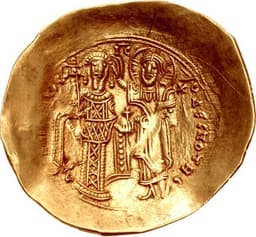
Andronikos I Komnenos
Emperor · Medieval
42.6Total
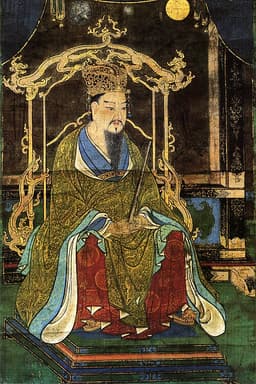
Emperor Kanmu
Emperor · Medieval
61.7Total
Basic Information
Born
1118
737
Died
1185
806
Era
Medieval
Medieval
Nationality
Byzantine Empire
Japan
Occupation
Emperor
Emperor
Civilization
Western
Eastern
Score Comparison
Military (10%)
50.0
22.6
Political (20%)
27.9
72.0
Influence (20%)
47.1
72.0
Legacy (20%)
39.2
65.0
Leadership (15%)
39.0
72.0
Strategy (15%)
60.0
35.7
TOTAL
42.6
61.7
Andronikos I Komnenos — Complete Timeline
1182 AD
Seizure of the regency and murder of Alexios IIPolitical Action◆ Major
Andronikos I Komnenos led a revolt against the regency of Empress Maria of Antioch, entering Constantinople with popular support. He had the empress imprisoned and later executed, and then had the young emperor Alexios II strangled, making himself sole ruler.
CoupRegicideDynastic Violence
Impact: nationaldestructive
Massacre of the Latins in ConstantinoplePolitical Action◆ Major
Andronikos I instigated a massacre of Latin (Western European) residents in Constantinople, targeting merchants and their families. The violence killed thousands and severely damaged Byzantine relations with the West, contributing to the later Fourth Crusade.
MassacreAnti-Western ViolenceDiplomatic Crisis
Impact: regionaldestructive
1183 AD
Execution of political opponents and noblesPolitical Action
Andronikos I initiated a reign of terror, executing numerous aristocrats and officials he suspected of disloyalty. His purges weakened the Byzantine nobility and military leadership, creating widespread fear and instability within the empire.
PurgePolitical RepressionTerror
Impact: nationaldestructive
1185 AD
Overthrow and death by mob violencePolitical Action◆ Major
Andronikos I was overthrown by a popular uprising in Constantinople led by Isaac II Angelos. He was captured while trying to flee, and the mob subjected him to three days of torture, including having his hand cut off and an eye gouged out, before he was killed in the Hippodrome.
UprisingExecutionPopular Revolt
Impact: nationaltragic
Emperor Kanmu — Complete Timeline
784 AD
Abandonment of Nagaoka-kyoPolitical Action
Emperor Kanmu abandoned the new capital at Nagaoka-kyo after only ten years, following a series of disasters and political intrigues, including the assassination of the chief architect. The move to Heian-kyo was motivated by a desire for a fresh start.
Nagaoka-kyoAbandonmentCapital
Impact: national
789 AD
Campaigns Against the EmishiWar◆ Major
Emperor Kanmu launched military campaigns to subdue the Emishi tribes in northern Honshu. Led by generals like Sakanoue no Tamuramaro, the campaigns expanded Japanese control into the Tohoku region. The Emishi were eventually defeated or assimilated.
EmishiNorthern ExpansionTohoku
Impact: national
794 AD
Transfer of the Capital to Heian-kyoPolitical Action◆ Major
Emperor Kanmu moved the imperial capital from Nagaoka-kyo to Heian-kyo (modern Kyoto). The new city was laid out on a grid pattern modeled after Chang'an. This move established Kyoto as the imperial capital for over a thousand years.
CapitalHeian-kyoKyoto
Impact: nationalconstructive
Expert Analysis
Origins
Andronikos I Komnenos (born c. 1118) was a member of the Byzantine imperial family, the Komnenoi. He spent much of his early life in exile, engaging in military campaigns and romantic scandals. His upbringing was marked by the court intrigues of the Byzantine Empire. Emperor Kanmu (born 737) was the 50th emperor of Japan, son of Emperor Konin. He was raised in the imperial court and ascended the throne in 781. His early reign focused on consolidating power and moving the capital to escape Buddhist influence.
Rise to Power
Andronikos I rose to power through a revolt against the regency of Empress Maria of Antioch in 1182. He entered Constantinople with popular support, seized the regency, and had Alexios II murdered. He then married Alexios' widow, Maria of Antioch, and was crowned co-emperor, later sole emperor. Emperor Kanmu became emperor after his father's abdication in 781. He quickly moved to centralize authority, relocating the capital from Nagaoka-kyo to Heian-kyo in 794. This move was a strategic effort to limit the power of Buddhist monasteries and old aristocratic families.
Leadership & Governance
Andronikos I's leadership was characterized by brutal repression. He initiated a reign of terror, executing numerous aristocrats and officials suspected of disloyalty. His political score of 27.9 reflects his ineffective governance. He also instigated the Massacre of the Latins in 1182, killing thousands of Western merchants. Emperor Kanmu, by contrast, scored 72.0 in political and leadership. He implemented administrative reforms, promoted Confucian principles, and supported the development of a centralized state. His relocation of the capital to Heian-kyo (modern Kyoto) created a stable political center that lasted over a millennium.
Triumph & Tragedy
Andronikos I's greatest success was his initial seizure of power, which satisfied the populace's anger against the regency. However, his greatest failure was his inability to maintain support. His purges weakened the Byzantine nobility, and his overthrow in 1185 by Isaac II Angelos led to his capture and death by mob violence. Emperor Kanmu's triumph was the successful relocation of the capital and the subjugation of the Emishi tribes through campaigns led by Sakanoue no Tamuramaro. His failure includes the abandonment of Nagaoka-kyo after only ten years due to disasters and political intrigues. Nonetheless, his overall influence score of 72.0 far exceeds Andronikos' 47.1.
Character & Destiny
Andronikos I was paranoid and ruthless, traits that led to his downfall. His character is summed up by his reputation as a "terrible old man" who was tortured and killed by a mob. His strategic score of 60.0 was not enough to overcome his political miscalculations. Emperor Kanmu was pragmatic and visionary. His decision to move the capital shaped Japan's history. His leadership score of 72.0 reflects his ability to implement long-term reforms.
Legacy
Andronikos I's legacy is largely negative; he is remembered as a tyrant whose reign hastened the decline of the Byzantine Empire. His actions contributed to the weakening of the state, and his total score is 42.6. Emperor Kanmu's legacy is immense: Heian-kyo became the imperial capital for over 1,000 years, and his policies laid the foundation for the Heian period, a golden age of Japanese culture. His total score of 61.7 reflects his enduring impact.
Conclusion
Emperor Kanmu had a far greater impact than Andronikos I Komnenos. Kanmu's political, influence, and legacy scores are all above 65, while Andronikos scores below 50 in most categories. Kanmu's establishment of Kyoto as the capital and his military campaigns against the Emishi shaped Japanese history for centuries. Andronikos I, despite a higher military score of 50.0, left a legacy of destruction and chaos. The score gap of 19.1 points clearly indicates Kanmu's superior governance and lasting contributions.
Rankings
🥇
Emperor KanmuLeader
Mil: 22.6Pol: 72.0Inf: 72.0
61.7
🥈
Andronikos I Komnenos
Mil: 50.0Pol: 27.9Inf: 47.1
42.6
+19.1 behind
How This Comparison Works
Algorithm
Each figure is scored on 6 dimensions (0—100 scale) based on structured historical data: Military (10%), Political (20%), Influence (20%), Legacy (20%), Leadership (15%), Strategy (15%). The weighted total produces the final ranking.
Data Sources
Scores are computed from structured sub-indicators in the database. Scale factors adjust for era (Ancient ×0.85, Modern ×1.0) and civilization size (Eastern ×1.05, Other ×0.80) to account for differences in population and military scale.
Maximum 3 Figures
Comparisons are limited to 2—3 figures to ensure readability and statistical meaningfulness.
Error Margins
±5 points per dimension — Sub-scores are derived from historical records with inherent uncertainty. Two figures within 5 points on a dimension should be considered roughly equivalent in that area.
Total Score Accuracy
±3 points overall — The weighted combination of 6 dimensions produces a total score with approximately ±3 points of uncertainty. Differences of less than 3 points are not statistically significant— the figures are effectively tied.
Known Limitations
- Historical records are incomplete and uneven across civilizations
- Figures from oral-tradition societies may be underrepresented
- Occupation labels can misclassify multi-role figures
- Scores measure capability and impact, not moral character
- Quantitative scoring is a comparison tool, not absolute truth
Capability Radar
Military (10%) — Battles & Warfare
Battles
30
10
Win Rate
25
10
Expansion
10
15
Political (20%) — Governance & Reform
Reform
30
75
Diplomacy
15
60
Economy
20
65
Influence (20%) — Cultural & Global Reach
Cultural
15
75
Global
5
60
Legacy (20%) — Historical Impact
Historical
25
80
Longevity
10
85
Leadership (15%) — Power & Stability
Tenure
20
70
Stability
5
70
Strategy (15%) — Tactics & Innovation
Strategy
35
15
Tactics
40
10
Reform
20
20
Similar Comparisons
Comments & Discussion
No comments yet. Be the first to share your thoughts!