Loading...
Andry Rajoelina vs Souvanna Phouma
Souvanna Phouma leads by 3.3 pts · 2 figures compared
…

Andry Rajoelina
Politician · Modern
46.2Total
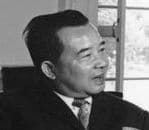
Souvanna Phouma
Politician · Modern
49.5Total
Basic Information
Born
1974
1901
Died
—
1984
Era
Modern
Modern
Nationality
Madagascar
Laos
Occupation
Politician
Politician
Civilization
Other
Eastern
Score Comparison
Military (10%)
19.6
11.1
Political (20%)
68.0
68.0
Influence (20%)
53.3
53.3
Legacy (20%)
42.5
45.0
Leadership (15%)
40.0
65.0
Strategy (15%)
41.0
38.9
TOTAL
46.2
49.5
Andry Rajoelina — Complete Timeline
2007 AD
Elected Mayor of AntananarivoPolitical Action◆ Major
Rajoelina was elected mayor of Madagascar's capital, Antananarivo, in December 2007. This position gave him a platform to challenge President Marc Ravalomanana, leading to a political crisis.
Mayoral ElectionPolitical Rise
Impact: national
2009 AD
Led 2009 Malagasy political crisisPolitical Action
Rajoelina led mass protests against President Ravalomanana in early 2009. The protests escalated into a coup d'
CoupPolitical CrisisPower Seizure
Impact: nationaldestructive
Became President of the High Transitional AuthorityPolitical Action◆ Major
In March 2009, Rajoelina was installed as President of the High Transitional Authority of Madagascar. His rule was not recognized by the African Union or SADC, leading to Madagascar's suspension from these organizations.
Transitional GovernmentInternational Isolation
Impact: national
Signed the Maputo AccordsPolitical Action
In August 2009, Rajoelina signed the Maputo Accords with other Malagasy political factions, agreeing to a power-sharing government. The accords collapsed within months due to disagreements over ministerial posts.
Peace AgreementFailed Power-Sharing
Impact: national
2013 AD
Elected President of Madagascar (2013)Political Action◆ Major
Rajoelina ran for president in the 2013 elections but was barred from standing by the electoral court due to his role in the 2009 coup. He supported a proxy candidate, Hery Rajaonarimampianina, who won.
ElectionPolitical Maneuvering
Impact: national
2018 AD
Elected President of Madagascar (2018)Political Action
Rajoelina won the 2018 presidential election in a runoff against Marc Ravalomanana, receiving 55.7% of the vote. His victory marked a return to power through democratic means, ending a decade of political instability.
Democratic ElectionReturn to Power
Impact: nationalconstructive
2023 AD
Re-elected President of Madagascar (2023)Political Action◆ Major
Rajoelina was re-elected in the first round of the 2023 presidential election with 58.9% of the vote. The election was boycotted by most opposition candidates, who alleged irregularities, leading to low voter turnout.
Re-electionOpposition Boycott
Impact: national
Souvanna Phouma — Complete Timeline
1951 AD
First term as Prime MinisterPolitical Action◆ Major
Souvanna Phouma became Prime Minister of Laos for the first time, leading a neutralist government. He sought to maintain Laos's neutrality in the Cold War, balancing between communist Pathet Lao and right-wing factions.
Prime MinisterNeutralityCold War
Impact: nationalconstructive
1962 AD
Geneva Accords of 1962Political Action◆ Major
Souvanna Phouma signed the Geneva Accords, which established Laos as a neutral state and created a coalition government. The agreement was intended to end the Laotian Civil War but ultimately failed to prevent further conflict.
Geneva AccordsNeutralityCoalition
Impact: regionalconstructive
1973 AD
Formation of coalition governmentPolitical Action◆ Major
Souvanna Phouma helped form a new coalition government with the Pathet Lao after the Vientiane Agreement. This government aimed to end the civil war but was short-lived as the Pathet Lao seized full power in 1975.
CoalitionCivil warVientiane Agreement
Impact: nationalconstructive
1975 AD
Resignation after Pathet Lao takeoverPolitical Action◆ Major
Souvanna Phouma resigned as Prime Minister after the Pathet Lao took control of Laos, ending the monarchy. He remained in Laos as an advisor to the new communist government until his death.
ResignationPathet LaoCommunist takeover
Impact: nationaltragic
Expert Analysis
Origins
Andry Rajoelina was born on May 30, 1974, in Antsirabe, Madagascar, to a family of modest means. He dropped out of school at age 16 to work as a disc jockey, later building a successful events and media business. His lack of traditional political background set him apart from Madagascar's elite. Souvanna Phouma was born on October 7, 1901, in Luang Prabang, Laos, into the royal family as a prince. He studied engineering in France and Paris, gaining exposure to Western political ideas. His education and lineage positioned him for leadership in Laos's complex political landscape.
Rise to Power
Rajoelina's rise began in 2007 when he was elected mayor of Antananarivo. Using his media platform, he launched fierce criticism of President Marc Ravalomanana, leading mass protests in early 2009. The crisis culminated in a coup in March 2009, with Rajoelina assuming power as President of the High Transitional Authority. Despite international condemnation and sanctions, he consolidated control. Souvanna Phouma first became Prime Minister in 1951, leading a neutralist government amid Laos's civil war. His key turning point was the 1962 Geneva Accords, which established Laos as neutral and formed a coalition government. He navigated between right-wing factions and the communist Pathet Lao, repeatedly forming and dissolving coalitions.
Leadership & Governance
Rajoelina's leadership style is populist and media-savvy. He focused on infrastructure projects, such as roads and hospitals, to boost his popularity. However, his governance was marked by instability: his 2009 coup led to economic sanctions, and his tenure saw frequent protests. He scored 40.0 in leadership and 41.0 in strategy. Souvanna Phouma, scoring 65.0 in leadership, pursued a policy of neutrality and coalition-building. He consistently sought to balance Cold War pressures, but his governments were fragile and short-lived. His strategy score of 38.9 reflects the difficulty of maintaining neutrality in a polarized conflict.
Triumph & Tragedy
Rajoelina's greatest success was winning the 2018 presidential election, returning to power democratically after years in opposition. He secured re-election in 2023 with 58.9% of the vote. However, his 2009 coup remains a stain, leading to Madagascar's suspension from the African Union. Economically, Madagascar saw modest growth but persistent poverty. Souvanna Phouma's triumph was the 1962 Geneva Accords, which temporarily stabilized Laos. His tragedy was the eventual collapse of neutrality: the Pathet Lao took full control in 1975, ending the monarchy and forcing his resignation. He remained in Laos as an advisor, but his vision of a neutral Laos failed.
Character & Destiny
Rajoelina is ambitious and opportunistic, using media and protest to gain power. His character drove him to seize power unconstitutionally, but also to return via elections. His resilience is evident in his political comebacks. Souvanna Phouma was a principled neutralist, committed to peace and coalition. His character made him a respected figure, but his inability to enforce neutrality led to his government's collapse. Historians note his dedication to Laos, but also his naivety in dealing with communist forces.
Legacy
Rajoelina's legacy is mixed: he restored democratic processes after the 2009 crisis, but his rule is associated with political instability and economic challenges. He scored 42.5 in legacy. Souvanna Phouma's legacy is as a symbol of neutralism in Cold War Southeast Asia. The Geneva Accords remain a reference point for Laotian diplomacy. He scored 45.0 in legacy. Both left incomplete projects: Rajoelina's Madagascar remains poor; Souvanna Phouma's neutral Laos was overtaken by communism.
Conclusion
Souvanna Phouma had a slightly higher total score (49.5 vs. 46.2) and greater leadership (65.0 vs. 40.0). However, Rajoelina's political score (68.0) matches Souvanna Phouma's, and he achieved a democratic return to power. Yet, Souvanna Phouma's impact on Laos's neutrality and his role in Cold War diplomacy have longer historical resonance. Rajoelina's influence is more localized and recent. Therefore, Souvanna Phouma had a greater impact by shaping his nation's destiny during a critical period, despite ultimate failure. His legacy of neutrality endures in Laos's foreign policy, while Rajoelina's legacy is still unfolding and uncertain.
Rankings
🥇
Souvanna PhoumaLeader
Mil: 11.1Pol: 68.0Inf: 53.3
49.5
🥈
Andry Rajoelina
Mil: 19.6Pol: 68.0Inf: 53.3
46.2
+3.3 behind
How This Comparison Works
Algorithm
Each figure is scored on 6 dimensions (0—100 scale) based on structured historical data: Military (10%), Political (20%), Influence (20%), Legacy (20%), Leadership (15%), Strategy (15%). The weighted total produces the final ranking.
Data Sources
Scores are computed from structured sub-indicators in the database. Scale factors adjust for era (Ancient ×0.85, Modern ×1.0) and civilization size (Eastern ×1.05, Other ×0.80) to account for differences in population and military scale.
Maximum 3 Figures
Comparisons are limited to 2—3 figures to ensure readability and statistical meaningfulness.
Error Margins
±5 points per dimension — Sub-scores are derived from historical records with inherent uncertainty. Two figures within 5 points on a dimension should be considered roughly equivalent in that area.
Total Score Accuracy
±3 points overall — The weighted combination of 6 dimensions produces a total score with approximately ±3 points of uncertainty. Differences of less than 3 points are not statistically significant— the figures are effectively tied.
Known Limitations
- Historical records are incomplete and uneven across civilizations
- Figures from oral-tradition societies may be underrepresented
- Occupation labels can misclassify multi-role figures
- Scores measure capability and impact, not moral character
- Quantitative scoring is a comparison tool, not absolute truth
Capability Radar
Military (10%) — Battles & Warfare
Battles
23
14
Win Rate
30
19
Expansion
33
22
Political (20%) — Governance & Reform
Reform
45
40
Diplomacy
50
55
Economy
40
30
Influence (20%) — Cultural & Global Reach
Cultural
30
25
Global
30
25
Legacy (20%) — Historical Impact
Historical
30
40
Longevity
25
30
Leadership (15%) — Power & Stability
Tenure
60
60
Stability
35
20
Strategy (15%) — Tactics & Innovation
Strategy
36
21
Tactics
39
28
Reform
43
29
Similar Comparisons
Comments & Discussion
No comments yet. Be the first to share your thoughts!