Loading...
Anedjib vs Julius Caesar
Julius Caesar leads by 46.1 pts · 2 figures compared
…
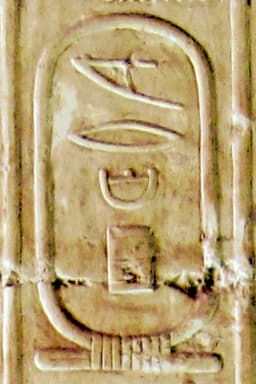
Anedjib
Emperor · Ancient
36.7Total

Julius Caesar
General · Ancient
82.8Total
Basic Information
Born
-2930
-100
Died
-2920
-44
Era
Ancient
Ancient
Nationality
Early Egypt
Roman Republic
Occupation
Emperor
General
Civilization
Middle Eastern
Western
Score Comparison
Military (10%)
10.2
88.0
Political (20%)
32.1
78.0
Influence (20%)
43.2
85.0
Legacy (20%)
32.5
82.0
Leadership (15%)
49.9
80.0
Strategy (15%)
45.0
85.0
TOTAL
36.7
82.8
Anedjib — Complete Timeline
2930 BC
Reigned During a Period of InstabilityPolitical Action◆ Major
Anedjib's reign was marked by internal strife and possible challenges to his authority. His tomb at Abydos is smaller and less elaborate than his predecessors, suggesting a decline in royal power.
InstabilityDeclineTomb
Impact: nationaldestructive
Built a Tomb at AbydosCultural
Anedjib constructed a tomb at Abydos, but it was smaller and less well-built than those of earlier pharaohs. The tomb contained few subsidiary burials, reflecting reduced resources or prestige.
TombAbydosReduced
Faced Rebellion or UsurpationPolitical Action◆ Major
Historical records suggest Anedjib faced a rebellion or usurpation attempt, possibly by Semerkhet. The Palermo Stone notes a 'year of fighting the northerners,' indicating conflict within Egypt.
RebellionConflictUsurpation
Impact: nationaldestructive
Julius Caesar — Complete Timeline
58 BC
Gallic WarsWar◆ Major
Caesar, as proconsul of Gaul, launched a series of campaigns that conquered all of Gaul (modern France, Belgium, and parts of Switzerland). He fought numerous battles, including against the Helvetii, the Belgae, and the Gallic chieftain Vercingetorix. The wars brought immense wealth and a loyal army to Caesar.
Gallic WarsConquestRoman Expansion
Impact: regional
49 BC
Crossing the RubiconPolitical Action◆ Major
Caesar led Legio XIII across the Rubicon River into Italy, defying the Roman Senate's order to disband his army. This act triggered a civil war against Pompey and the Optimates, ultimately leading to Caesar's dictatorship and the end of the Roman Republic.
Roman Civil WarEnd of RepublicPower Struggle
Impact: global
48 BC
Battle of PharsalusWar◆ Major
Caesar's outnumbered army defeated the larger forces of Pompey the Great at Pharsalus in Greece. Caesar's tactical use of a reserve line to counter Pompey's cavalry charge proved decisive. Pompey fled to Egypt, where he was assassinated, leaving Caesar as the undisputed master of the Roman world.
Roman Civil WarBattleDecisive Victory
Impact: regional
44 BC
Appointment as Dictator for LifePolitical Action◆ Major
The Roman Senate appointed Caesar dictator perpetuo (dictator for life), granting him unprecedented personal power. This move concentrated military, legislative, and judicial authority in one person, effectively ending the Roman Republic's traditional system of checks and balances and alarming many senators.
DictatorshipEnd of RepublicPower Consolidation
Impact: regionaldestructive
Assassination on the Ides of MarchPolitical Action◆ Major
A group of Roman senators, led by Marcus Junius Brutus and Gaius Cassius Longinus, stabbed Caesar to death at a meeting of the Senate in the Theatre of Pompey. The assassination was intended to restore the Republic, but instead triggered another civil war that led to the rise of the Roman Empire.
AssassinationRoman PoliticsEnd of Republic
Impact: globaldestructive
Expert Analysis
anedjib-vs-julius-caesar
The Ides of March and the Forgotten Pharaoh
Two men, separated by nearly three thousand years, stand as bookends to vastly different arcs of human ambition. One, Julius Caesar, strode across the stage of history with the force of a thunderstorm, his name forever echoing in the halls of power. The other, Anedjib, flickered like a guttering candle in the dim corridors of Egypt’s First Dynasty, his reign a whisper of instability and decline. What drove one to become the architect of an empire, and the other to be little more than a footnote in a tomb? The answer lies not merely in their actions, but in the worlds that shaped them and the choices they made within the unforgiving crucible of their times.
Origins
Julius Caesar was born into the twilight of the Roman Republic, a world of ruthless ambition, senatorial intrigue, and a military machine that had conquered the Mediterranean. His patrician family, the Julii, claimed descent from the goddess Venus, but their political influence had waned. From his youth, Caesar was forged in the fires of civil war and political vendetta. He learned early that survival meant mastering the arts of oratory, bribery, and military command. The Republic itself was a system cracking under its own weight, and men like Caesar saw opportunity in its fractures.
Anedjib, in contrast, emerged at the dawn of recorded history, around 2930 BCE, a ruler of a unified but fragile Egypt. His world was one of divine kingship, where the pharaoh was not merely a leader but a living god, the guarantor of cosmic order, or *ma'at*. Yet even this sacred role was not immune to earthly troubles. The First Dynasty had built the foundations of Egyptian civilization, but the power of the throne was still being tested. Anedjib inherited a system where the pharaoh’s authority was absolute in theory, but in practice, it depended on the loyalty of provincial officials and the priesthood. His reign, as the scant records suggest, was marked by internal strife, a possible rebellion, and even a usurpation attempt by a figure named Semerkhet. The Palermo Stone, a fragmentary chronicle of the time, hints at turmoil rather than triumph.
Rise to Power
Caesar’s path to dominance was a masterclass in calculated risk. He rose through the *cursus honorum*, the ladder of Roman political offices, but his true ascent began with his military command in Gaul. From 58 to 50 BCE, he conquered a vast territory, amassed a loyal army, and built a personal fortune. His crossing of the Rubicon River in 49 BCE was a deliberate act of treason, a gamble that the Senate’s forces under Pompey could not match his veteran legions. It was a move born of supreme confidence and a cold understanding that in the Republic, the man who controlled the sword controlled the state.
Anedjib’s rise to power is shrouded in the mists of prehistory. He likely succeeded his father, the pharaoh Den, a strong ruler whose reign had seen prosperity and monumental building. But Anedjib’s inheritance was not a stable throne. The evidence suggests his authority was contested almost from the beginning. He had no Gaul to conquer, no Senate to outmaneuver. His power was a birthright, but it was a fragile one, dependent on rituals, the Nile’s flood, and the goodwill of a nascent bureaucracy. Where Caesar seized his destiny, Anedjib seems to have been a man trying to hold onto a crown that was slipping from his grasp.
Leadership & Governance
Caesar governed with a blend of military genius and political ruthlessness. He reformed the calendar, granted citizenship to provincials, and initiated massive public works. His military strategy was legendary—swift, decisive, and adaptive. At the Battle of Alesia, he besieged a Gallic army while simultaneously defending against a relief force, a feat of tactical brilliance. Yet his political wisdom was more fragile. He centralized power, declared himself dictator for life, and alienated the senatorial elite who saw him as a tyrant. He was a reformer who broke the old system but failed to build a stable new one, a flaw that would cost him his life.
Anedjib governed in a world where the pharaoh’s role was primarily ceremonial and cosmic. He was the high priest of every god, the commander of the army, and the ultimate judge. But his tomb at Abydos, smaller and less well-built than those of his predecessors, is a telling symbol. It suggests a decline in royal resources and authority. He likely faced a rebellion that he may have suppressed, but the instability was such that his successor, Semerkhet, is recorded as having erased Anedjib’s name from some monuments—a damnatio memoriae that reduced his legacy to near invisibility.
Triumph & Tragedy
Caesar’s greatest moment was his triumph: the conquest of Gaul, the defeat of Pompey at Pharsalus, and his return to Rome as the undisputed master of the Mediterranean world. His tragedy was the Ides of March, 44 BCE, when a conspiracy of senators, men he had pardoned and promoted, stabbed him to death at the foot of Pompey’s theater. His last moments, as recorded by Plutarch, were a struggle to cover himself with his toga, a final, futile gesture of dignity.
Anedjib’s triumphs, if any, are lost to history. His tragedy was not a dramatic assassination but a slow erosion of power. He died around 2920 BCE, after a reign of perhaps a decade, leaving behind a diminished throne and a tomb that would be plundered and forgotten. Where Caesar’s fall was a spectacular implosion, Anedjib’s was a quiet collapse into the sands of time.
Character & Destiny
Caesar was a man of immense charisma, ambition, and a gambler’s heart. He was clement to his enemies, but his pride blinded him to the resentment he cultivated. He believed his destiny was to reshape Rome, and he was right—but he paid for that belief with his life. His character drove him to cross the Rubicon, to reject the crown offered by Mark Antony, and to ignore the warnings of soothsayers. He was a man who lived by his own rules and died by them.
Anedjib, by contrast, appears to have been a ruler trapped by circumstance. His character is a blank slate, but his fate suggests a man who lacked the political or military tools to stem the tide of instability. He was not a tragic hero but a victim of a system still finding its footing. His destiny was not to change the world but to be a cautionary tale of how even a god-king could falter.
Legacy
Caesar’s legacy is monumental. His name became synonymous with imperial power, inspiring the title “Caesar” for Roman emperors and later for rulers like the Kaiser and Tsar. His writings, *The Gallic Wars*, are studied as masterpieces of military history and propaganda. He transformed the Republic into an empire, setting the stage for centuries of Roman dominance. His assassination did not restore the Republic; it only accelerated its demise.
Anedjib’s legacy is a shadow. He is known only to Egyptologists and specialists, a name on a fragment of stone. His tomb, though modest, provides clues to the political upheavals of the First Dynasty. He represents the fragility of power in the ancient world, a reminder that even pharaohs could be forgotten.
Conclusion
The contrast between Caesar and Anedjib is not simply one of success versus failure. It is a reflection of how opportunity, personality, and the structure of power shape a leader’s fate. Caesar stood at the precipice of a new world and chose to leap. Anedjib stood at the dawn of civilization and was swept away by forces he could not control. One built an empire that would echo through millennia; the other built a tomb that would be buried by the desert. Yet both stories are essential—for in the rise of the great, we see the potential of human will, and in the fall of the forgotten, we see the relentless, indifferent passage of time.
Rankings
🥇
Julius CaesarLeader
Mil: 88.0Pol: 78.0Inf: 85.0
82.8
🥈
Anedjib
Mil: 10.2Pol: 32.1Inf: 43.2
36.7
+46.1 behind
How This Comparison Works
Algorithm
Each figure is scored on 6 dimensions (0—100 scale) based on structured historical data: Military (10%), Political (20%), Influence (20%), Legacy (20%), Leadership (15%), Strategy (15%). The weighted total produces the final ranking.
Data Sources
Scores are computed from structured sub-indicators in the database. Scale factors adjust for era (Ancient ×0.85, Modern ×1.0) and civilization size (Eastern ×1.05, Other ×0.80) to account for differences in population and military scale.
Maximum 3 Figures
Comparisons are limited to 2—3 figures to ensure readability and statistical meaningfulness.
Error Margins
±5 points per dimension — Sub-scores are derived from historical records with inherent uncertainty. Two figures within 5 points on a dimension should be considered roughly equivalent in that area.
Total Score Accuracy
±3 points overall — The weighted combination of 6 dimensions produces a total score with approximately ±3 points of uncertainty. Differences of less than 3 points are not statistically significant— the figures are effectively tied.
Known Limitations
- Historical records are incomplete and uneven across civilizations
- Figures from oral-tradition societies may be underrepresented
- Occupation labels can misclassify multi-role figures
- Scores measure capability and impact, not moral character
- Quantitative scoring is a comparison tool, not absolute truth
Capability Radar
Military (10%) — Battles & Warfare
Battles
5
95
Win Rate
5
92
Expansion
5
97
Political (20%) — Governance & Reform
Reform
10
90
Diplomacy
10
85
Economy
10
82
Influence (20%) — Cultural & Global Reach
Cultural
10
88
Global
5
94
Legacy (20%) — Historical Impact
Historical
10
95
Longevity
5
96
Leadership (15%) — Power & Stability
Tenure
10
75
Stability
5
60
Strategy (15%) — Tactics & Innovation
Strategy
5
94
Tactics
5
96
Reform
5
88
Similar Comparisons
Comments & Discussion
**LegionLuke**6/17/2026
Caesar conquered Gaul in eight years; Anedjib couldn't even hold his own dual tomb. Caesar was master of the battlefield, the Senate, and the calendar! His reforms echo today. Anedjib? He’s a zero—a blot on a clay seal. Don’t compare a hurricane to a dusty footprint.
**TombTroll44**6/17/2026
You revisionists love boosting forgotten pharaohs, but facts are stubborn. Anedjib’s reign screams failure: his tomb at Abydos is the smallest of his dynasty, shoddily built, with a tiny burial chamber. He likely fled Nubian raids. Caesar never ran from anyone. Stop romanticizing incompetence.
旧王朝侦探6/17/2026
别被骗了;安杰伊布的挫折就是法老软弱的证据。对比他在阿拜多斯的简陋坟墓和罗马的元老院:一个神王连自己的陵墓都保不住,而凯撒却重塑了一个文明。安杰伊布的“权杖”就是个玩具。给他这场对决?纯属历史骗局。
**DataDrill**6/17/2026
Let’s crunch the zeros: Anedjib ruled maybe 10 years, zero surviving monuments that matter, zero known military campaigns. His entire legacy fits on a single broken seal. Caesar left Gallic Wars, the Julian calendar, and a dynasty. Call it a fair fight? Only if you ignore the stats. Win to the Roman.
大祭司彭祖6/17/2026
宗教上,安杰伊布的统治暴露了致命弱点:他的“双重墓室”——一处在上埃及,一处在下埃及——就是耻辱的象征,证明他的权威连祖先荷尔-阿哈都不如。而凯撒死后却被封神?这就是差距,不是神力,是做人的成败。凯撒赢了,赢在行动。