Loading...
Anna Tibaijuka vs Nikita Khrushchev
Nikita Khrushchev leads by 9.4 pts · 2 figures compared
…

Anna Tibaijuka
Politician · Modern
55.2Total
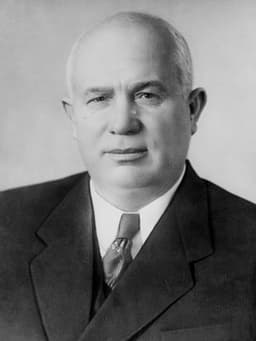
Nikita Khrushchev
Politician · Modern
64.6Total
Basic Information
Born
1950
1894
Died
—
1971
Era
Modern
Modern
Nationality
Tanzania
Russia
Occupation
Politician
Politician
Civilization
Other
Western
Score Comparison
Military (10%)
50.0
43.3
Political (20%)
60.0
70.0
Influence (20%)
60.0
82.0
Legacy (20%)
48.3
52.0
Leadership (15%)
66.0
72.0
Strategy (15%)
42.4
54.8
TOTAL
55.2
64.6
Anna Tibaijuka — Complete Timeline
2000 AD
Appointed Executive Director of UN-HABITATPolitical Action◆ Major
Anna Tibaijuka was appointed Executive Director of the United Nations Human Settlements Programme (UN-HABITAT) by UN Secretary-General Kofi Annan. She became the first African woman to lead a UN agency, focusing on sustainable urban development and housing.
United NationsUrban DevelopmentHousing
Impact: globalconstructive
2004 AD
Led UN-HABITAT Response to Post-Tsunami ReconstructionPolitical Action
Tibaijuka led UN-HABITAT's efforts in post-tsunami reconstruction in Southeast Asia after the 2004 Indian Ocean earthquake and tsunami. The programme focused on rebuilding housing and infrastructure in affected communities.
HumanitarianReconstructionTsunami
Impact: regionalconstructive
2005 AD
Appointed Minister of Lands, Housing and Human Settlements DevelopmentPolitical Action◆ Major
Tibaijuka was appointed Minister of Lands, Housing and Human Settlements Development by President Jakaya Kikwete. She oversaw land reform and housing policies in Tanzania, building on her UN experience.
Tanzanian PoliticsLand ReformHousing
Impact: nationalconstructive
Nikita Khrushchev — Complete Timeline
1956 AD
Secret Speech on the Cult of PersonalityPolitical Action
Khrushchev delivered a closed-session speech to the 20th Congress of the Communist Party, denouncing Stalin's cult of personality and crimes. This speech initiated de-Stalinization, leading to political reforms and the release of political prisoners.
De-StalinizationSpeechCommunist Party
Impact: globalconstructive
1957 AD
Launch of Sputnik 1Invention◆ Major
Under Khrushchev's leadership, the Soviet Union launched Sputnik 1, the first artificial satellite to orbit Earth. This achievement sparked the Space Race and demonstrated Soviet technological superiority at the time.
Space RaceSatelliteTechnology
Impact: globalconstructive
1958 AD
Berlin UltimatumPolitical Action◆ Major
Khrushchev issued an ultimatum demanding the withdrawal of Western forces from West Berlin within six months. The ultimatum escalated Cold War tensions but was eventually dropped after negotiations, leading to the Berlin Crisis of 1961.
Cold WarBerlinUltimatum
Impact: global
1962 AD
Cuban Missile CrisisWar
Khrushchev authorized the placement of Soviet nuclear missiles in Cuba, leading to a 13-day confrontation with the United States. The crisis ended with a negotiated withdrawal of missiles from both Cuba and Turkey, averting nuclear war.
Cold WarNuclear CrisisCuba
Impact: global
1964 AD
Ouster from PowerPolitical Action◆ Major
Khrushchev was removed from his positions as First Secretary and Premier by the Communist Party leadership, led by Leonid Brezhnev. The ouster was due to his erratic policies, the Cuban Missile Crisis fallout, and agricultural failures.
CoupBrezhnevSoviet Union
Impact: nationaltragic
Expert Analysis
Origins
Anna Tibaijuka was born in 1950 in Muleba, Tanzania, into a farming family. She earned a PhD in agricultural economics from the Swedish University of Agricultural Sciences in 1990, focusing on land tenure and rural development. Her background shaped her commitment to improving housing and human settlements.
Nikita Khrushchev was born in 1894 in Kalinovka, Russia, to a peasant family. He had little formal education, working as a metalworker before joining the Bolsheviks in 1918. He rose through party ranks, gaining experience in organizational and agricultural management.
Rise to Power
Tibaijuka's rise began in academia as a professor at the University of Dar es Salaam. In 1998, she became Director of the UN-HABITAT's Gender and Development Unit. In 2000, UN Secretary-General Kofi Annan appointed her Executive Director of UN-HABITAT, making her the first African woman to lead a UN agency. She later served as Tanzania's Minister of Lands, Housing and Human Settlements from 2006 to 2010.
Khrushchev's rise came through the Communist Party. He supported Stalin's purges but after Stalin's death in 1953, he emerged as First Secretary. In 1956, he delivered the "Secret Speech" denouncing Stalin's cult of personality, consolidating power. By 1958, he became Premier, holding both top positions.
Leadership & Governance
Tibaijuka's leadership focused on global urban policy. She spearheaded the UN-HABITAT's Global Campaign on Urban Governance and the Global Land Tool Network. She advocated for secure tenure and women's rights in housing. Her governance style was diplomatic, leveraging international partnerships. She scored 66.0 in leadership, reflecting her ability to manage a UN agency.
Khrushchev ruled the Soviet Union with a mix of liberalization and authoritarianism. He de-Stalinized the system, releasing political prisoners and relaxing censorship. He also pursued agricultural reforms, like the Virgin Lands Campaign, which initially increased grain production but later led to soil erosion. His leadership score of 72.0 reflects his decisive actions during crises, though his style was often impulsive.
Triumph & Tragedy
Tibaijuka's greatest success was leading UN-HABITAT's post-tsunami reconstruction in Southeast Asia after the 2004 Indian Ocean earthquake and tsunami. The program provided housing for thousands. However, her tenure saw criticism for insufficient progress on slum upgrading; the number of urban slum dwellers continued to rise globally. She scored 48.3 in legacy, indicating limited long-term impact.
Khrushchev's triumphs include launching Sputnik 1 in 1957, a major Space Race victory, and defusing the Cuban Missile Crisis in 1962 by agreeing to remove missiles from Cuba. His tragedy was the Berlin Ultimatum of 1958, which increased tensions and led to the Berlin Wall's construction. His ouster in 1964 resulted from failed agricultural policies and foreign policy blunders like the Cuban Missile Crisis brinkmanship. He scored 52.0 in legacy.
Character & Destiny
Tibaijuka was known for her perseverance and diplomatic tact. Her background in economics informed her pragmatic approach to housing policy. She faced challenges in balancing donor interests with local needs. Her destiny was tied to the UN system, where she achieved high office but lacked the power to enforce global change.
Khrushchev was energetic and unpredictable, often making bold decisions without consulting allies. His personality led to both de-Stalinization and reckless gambles like placing missiles in Cuba. Historians assess him as a reformer who ultimately failed due to his inability to manage the Soviet bureaucracy. His character shaped his downfall: his impulsiveness alienated party elites.
Legacy
Tibaijuka's legacy is in urban development discourse. She raised awareness of land tenure and women's access to housing. The Global Land Tool Network continues her work. However, her impact is limited to policy frameworks; measurable improvements in global housing are modest. She scored 48.3 in legacy.
Khrushchev's legacy is mixed. He dismantled Stalin's terror, but his reforms were partial. The Space Race achievements boosted Soviet prestige. The Cuban Missile Crisis led to détente and arms control. Yet, his ouster marked a return to conservative rule. He scored 52.0 in legacy, reflecting a significant but incomplete transformation.
Conclusion
In comparing Anna Tibaijuka and Nikita Khrushchev, Khrushchev had a greater impact on global history. His actions during the Cold War—de-Stalinization, Sputnik, Cuban Missile Crisis—reshaped international relations. Tibaijuka's work, while important for urban policy, did not alter the course of world events. Khrushchev's total score of 64.6 exceeds Tibaijuka's 55.2, with higher political (70.0 vs. 60.0), influence (82.0 vs. 60.0), and leadership (72.0 vs. 66.0) scores. Although Khrushchev's legacy is flawed, his impact on the Cold War and Soviet society is undeniable. Tibaijuka's contributions are commendable but operate on a smaller scale.
Rankings
🥇
Nikita KhrushchevLeader
Mil: 43.3Pol: 70.0Inf: 82.0
64.6
🥈
Anna Tibaijuka
Mil: 50.0Pol: 60.0Inf: 60.0
55.2
+9.4 behind
How This Comparison Works
Algorithm
Each figure is scored on 6 dimensions (0—100 scale) based on structured historical data: Military (10%), Political (20%), Influence (20%), Legacy (20%), Leadership (15%), Strategy (15%). The weighted total produces the final ranking.
Data Sources
Scores are computed from structured sub-indicators in the database. Scale factors adjust for era (Ancient ×0.85, Modern ×1.0) and civilization size (Eastern ×1.05, Other ×0.80) to account for differences in population and military scale.
Maximum 3 Figures
Comparisons are limited to 2—3 figures to ensure readability and statistical meaningfulness.
Error Margins
±5 points per dimension — Sub-scores are derived from historical records with inherent uncertainty. Two figures within 5 points on a dimension should be considered roughly equivalent in that area.
Total Score Accuracy
±3 points overall — The weighted combination of 6 dimensions produces a total score with approximately ±3 points of uncertainty. Differences of less than 3 points are not statistically significant— the figures are effectively tied.
Known Limitations
- Historical records are incomplete and uneven across civilizations
- Figures from oral-tradition societies may be underrepresented
- Occupation labels can misclassify multi-role figures
- Scores measure capability and impact, not moral character
- Quantitative scoring is a comparison tool, not absolute truth
Capability Radar
Military (10%) — Battles & Warfare
Battles
22
5
Win Rate
24
10
Expansion
30
20
Political (20%) — Governance & Reform
Reform
65
80
Diplomacy
70
70
Economy
60
55
Influence (20%) — Cultural & Global Reach
Cultural
45
60
Global
55
70
Legacy (20%) — Historical Impact
Historical
50
75
Longevity
40
55
Leadership (15%) — Power & Stability
Tenure
60
75
Stability
55
50
Strategy (15%) — Tactics & Innovation
Strategy
31
15
Tactics
32
10
Reform
34
30
Similar Comparisons
Comments & Discussion
No comments yet. Be the first to share your thoughts!