Loading...
Anthony Eden vs Sergei Lavrov
Sergei Lavrov leads by 12.0 pts · 2 figures compared
…

Anthony Eden
Politician · Modern
47.8Total
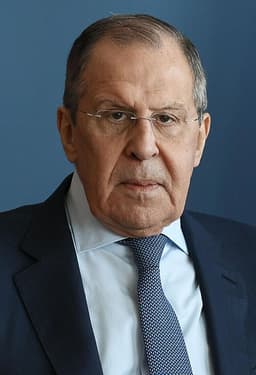
Sergei Lavrov
Politician · Modern
59.8Total
Basic Information
Born
1897
1950
Died
1977
—
Era
Modern
Modern
Nationality
United Kingdom
Russia
Occupation
Politician
Politician
Civilization
Western
Western
Score Comparison
Military (10%)
49.1
50.0
Political (20%)
42.3
68.0
Influence (20%)
52.5
62.0
Legacy (20%)
45.8
52.0
Leadership (15%)
51.9
80.0
Strategy (15%)
41.7
41.3
TOTAL
47.8
59.8
Anthony Eden — Complete Timeline
1953 AD
Anglo-Egyptian Agreement on SudanPolitical Action◆ Major
As Foreign Secretary, Eden negotiated the Anglo-Egyptian Agreement that granted self-government to Sudan, leading to its independence in 1956. This resolved a long-standing dispute between Britain and Egypt over the status of Sudan.
SudanDecolonizationDiplomacy
Impact: regionalconstructive
1954 AD
Geneva Conference on IndochinaPolitical Action◆ Major
As Foreign Secretary, Eden chaired the Geneva Conference that ended the First Indochina War. The conference resulted in the Geneva Accords, which temporarily divided Vietnam at the 17th parallel and established Laos and Cambodia as independent neutral states.
IndochinaDiplomacyVietnam
Impact: globalconstructive
1956 AD
Suez CrisisWar
As Prime Minister, Eden ordered British forces to invade Egypt after Nasser nationalized the Suez Canal. The operation was conducted in collusion with France and Israel. International condemnation, especially from the US, forced a humiliating withdrawal, damaging British prestige.
Suez CanalEgyptImperial Decline
Impact: globaldestructive
1957 AD
Resignation as Prime MinisterPolitical Action◆ Major
Eden resigned as Prime Minister in January 1957, citing ill health. The Suez Crisis had severely damaged his reputation and authority. He was succeeded by Harold Macmillan. Eden's resignation marked the end of a brief and controversial premiership.
ResignationSuez CrisisMacmillan
Impact: national
Sergei Lavrov — Complete Timeline
2004 AD
Appointed Russian Foreign MinisterPolitical Action◆ Major
Lavrov was appointed Minister of Foreign Affairs of the Russian Federation by President Vladimir Putin. He succeeded Igor Ivanov and became the longest-serving Russian foreign minister in the post-Soviet era.
Foreign PolicyPutin Era
Impact: global
2014 AD
Annexation of CrimeaPolitical Action◆ Major
Lavrov defended Russia's annexation of Crimea from Ukraine at the United Nations and in international forums. He argued that the move was legal under international law and protected ethnic Russians.
Ukraine CrisisTerritorial Dispute
Impact: global
2015 AD
Syrian Civil War InterventionWar◆ Major
Lavrov led diplomatic efforts to support the Assad government in Syria. He negotiated with the US and other powers, securing Russia's military intervention and shaping the political settlement process.
Syrian Civil WarDiplomacy
Impact: global
2022 AD
Full-Scale Invasion of UkraineWar◆ Major
Lavrov justified Russia's full-scale invasion of Ukraine to the international community. He faced widespread condemnation and sanctions, and Russia was isolated in many international organizations.
Ukraine WarSanctions
Impact: global
Expert Analysis
Origins
Anthony Eden (1897–1977) was born into the British aristocracy, the son of a baronet. He was educated at Eton and Oxford, and served in World War I, winning the Military Cross. His early career in the Foreign Office shaped his diplomatic worldview. Sergei Lavrov (born 1950) grew up in Moscow and Tbilisi, the son of an Armenian father and Russian mother. He studied international relations at the Moscow State Institute of International Relations (MGIMO), graduating in 1972. Lavrov's formative years were in the Soviet diplomatic service, where he learned the art of Cold War negotiation.
Rise to Power
Eden rose rapidly as a young MP, becoming Foreign Secretary at 38 in 1935. His opposition to appeasement of Nazi Germany made him a figure of integrity. At the 1954 Geneva Conference, Eden successfully negotiated an end to the First Indochina War, winning international acclaim and the Order of the Garter. Lavrov's ascent was steady: he served as Russia's UN ambassador from 1994 to 2004, where he gained a reputation for sharp rhetoric and legalistic defense of Russian positions. In 2004, President Putin appointed him Foreign Minister, a post he held for over two decades.
Leadership & Governance
Eden's leadership was marked by a blend of diplomatic finesse and impulsive decisiveness. As Prime Minister, he micromanaged the Suez operation, ignoring military advice and underestimating international backlash. His governance score of 51.9 reflects his mixed record. Lavrov, with a leadership score of 80.0, is a master of bureaucratic endurance. He has shaped Russian foreign policy through a combination of confrontational diplomacy and strategic ambiguity. Lavrov's style is aggressive yet controlled, using UN Security Council vetoes (more than 20) to shield allies like Syria.
Triumph & Tragedy
Eden's greatest triumph was the Geneva Accords of 1954, which temporarily stabilized Indochina. His tragedy was the Suez Crisis of 1956: a failed military intervention that led to international humiliation, a run on the pound, and his resignation. Eden's total score of 47.8 is dragged down by his political misjudgment. Lavrov's triumphs include the 2015 Syrian intervention, which saved the Assad regime and gave Russia a foothold in the Middle East. His tragedy is the full-scale invasion of Ukraine in 2022, which triggered sanctions and isolated Russia. Lavrov's legacy score of 52.0 reflects his role in a conflict that has damaged Russia's standing.
Character & Destiny
Eden was a charming diplomat with a temper. His vanity and poor health clouded his judgment during Suez. He believed in the power of personal diplomacy but failed to adapt to post-colonial realities. Lavrov is known for his sharp tongue, chain-smoking, and deep knowledge of international law. His character is that of a Soviet-style negotiator: unyielding, cynical, and tactically brilliant. Yet his destiny is tied to Putin's Russia, meaning his legacy depends on the outcome of the Ukraine war.
Legacy
Eden's legacy is the cautionary tale of the Suez Crisis, which marked the end of Britain's imperial pretensions. He is remembered as a failed prime minister, despite his earlier diplomatic successes. Lavrov's legacy is still unfolding. He has been the face of Russian resurgence, but also of its aggression. His influence score of 62.0 is higher than Eden's 52.5, reflecting his longer tenure and impact on global affairs. However, both men are defined by crises that exposed their limitations.
Conclusion
Sergei Lavrov has had greater impact than Anthony Eden, as reflected in his higher total score (59.8 vs 47.8). Lavrov's longevity (over 20 years as foreign minister) and his role in reshaping the post-Cold War order, even controversially, give him a weight that Eden's brief prime ministership lacks. Eden's Suez failure was a personal and national tragedy, but it did not alter global power structures as the Ukraine war has. Lavrov, despite his lower strategy score (41.3 vs Eden's 41.7), has been a key architect of Russia's assertive foreign policy. While Eden's diplomatic legacy is noble but faded, Lavrov's is active and transformative—for better or worse.
Rankings
🥇
Sergei LavrovLeader
Mil: 50.0Pol: 68.0Inf: 62.0
59.8
🥈
Anthony Eden
Mil: 49.1Pol: 42.3Inf: 52.5
47.8
+12.0 behind
How This Comparison Works
Algorithm
Each figure is scored on 6 dimensions (0—100 scale) based on structured historical data: Military (10%), Political (20%), Influence (20%), Legacy (20%), Leadership (15%), Strategy (15%). The weighted total produces the final ranking.
Data Sources
Scores are computed from structured sub-indicators in the database. Scale factors adjust for era (Ancient ×0.85, Modern ×1.0) and civilization size (Eastern ×1.05, Other ×0.80) to account for differences in population and military scale.
Maximum 3 Figures
Comparisons are limited to 2—3 figures to ensure readability and statistical meaningfulness.
Error Margins
±5 points per dimension — Sub-scores are derived from historical records with inherent uncertainty. Two figures within 5 points on a dimension should be considered roughly equivalent in that area.
Total Score Accuracy
±3 points overall — The weighted combination of 6 dimensions produces a total score with approximately ±3 points of uncertainty. Differences of less than 3 points are not statistically significant— the figures are effectively tied.
Known Limitations
- Historical records are incomplete and uneven across civilizations
- Figures from oral-tradition societies may be underrepresented
- Occupation labels can misclassify multi-role figures
- Scores measure capability and impact, not moral character
- Quantitative scoring is a comparison tool, not absolute truth
Capability Radar
Military (10%) — Battles & Warfare
Battles
30
30
Win Rate
29
32
Expansion
38
33
Political (20%) — Governance & Reform
Reform
30
40
Diplomacy
40
85
Economy
30
30
Influence (20%) — Cultural & Global Reach
Cultural
20
30
Global
35
70
Legacy (20%) — Historical Impact
Historical
45
60
Longevity
30
50
Leadership (15%) — Power & Stability
Tenure
25
85
Stability
20
50
Strategy (15%) — Tactics & Innovation
Strategy
35
35
Tactics
41
39
Reform
44
44
Similar Comparisons
Comments & Discussion
No comments yet. Be the first to share your thoughts!