Loading...
Anthony Eden vs Charles Helou
Anthony Eden leads by 3.6 pts · 2 figures compared
…

Anthony Eden
Politician · Modern
47.8Total
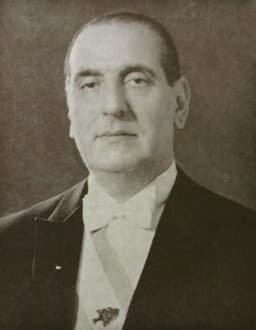
Charles Helou
Politician · Modern
44.2Total
Basic Information
Born
1897
1913
Died
1977
2001
Era
Modern
Modern
Nationality
United Kingdom
Lebanon
Occupation
Politician
Politician
Civilization
Western
Middle Eastern
Score Comparison
Military (10%)
49.1
44.7
Political (20%)
42.3
37.9
Influence (20%)
52.5
47.9
Legacy (20%)
45.8
38.3
Leadership (15%)
51.9
51.9
Strategy (15%)
41.7
47.4
TOTAL
47.8
44.2
Anthony Eden — Complete Timeline
1953 AD
Anglo-Egyptian Agreement on SudanPolitical Action◆ Major
As Foreign Secretary, Eden negotiated the Anglo-Egyptian Agreement that granted self-government to Sudan, leading to its independence in 1956. This resolved a long-standing dispute between Britain and Egypt over the status of Sudan.
SudanDecolonizationDiplomacy
Impact: regionalconstructive
1954 AD
Geneva Conference on IndochinaPolitical Action◆ Major
As Foreign Secretary, Eden chaired the Geneva Conference that ended the First Indochina War. The conference resulted in the Geneva Accords, which temporarily divided Vietnam at the 17th parallel and established Laos and Cambodia as independent neutral states.
IndochinaDiplomacyVietnam
Impact: globalconstructive
1956 AD
Suez CrisisWar
As Prime Minister, Eden ordered British forces to invade Egypt after Nasser nationalized the Suez Canal. The operation was conducted in collusion with France and Israel. International condemnation, especially from the US, forced a humiliating withdrawal, damaging British prestige.
Suez CanalEgyptImperial Decline
Impact: globaldestructive
1957 AD
Resignation as Prime MinisterPolitical Action◆ Major
Eden resigned as Prime Minister in January 1957, citing ill health. The Suez Crisis had severely damaged his reputation and authority. He was succeeded by Harold Macmillan. Eden's resignation marked the end of a brief and controversial premiership.
ResignationSuez CrisisMacmillan
Impact: national
Charles Helou — Complete Timeline
1964 AD
Elected President of LebanonPolitical Action◆ Major
Charles Helou was elected President of Lebanon by the Lebanese Parliament on August 18, 1964, succeeding Fouad Chehab. His presidency began with a focus on administrative reform and economic development, continuing the Chehabist policies of state-building and modernization.
PresidencyElectionLebanon
Impact: nationalconstructive
1967 AD
Presided during the Six-Day WarWar◆ Major
As president during the June 1967 Six-Day War between Israel and Arab states, Charles Helou maintained Lebanon's official neutrality while the conflict raged. However, the war's aftermath brought increased Palestinian militant activity in southern Lebanon and refugee flows, destabilizing the country and straining sectarian relations.
Six-Day WarNeutralityPalestinian Refugees
Impact: regional
1969 AD
Signed the Cairo AgreementPolitical Action◆ Major
In November 1969, Charles Helou's government signed the Cairo Agreement with the Palestine Liberation Organization (PLO), mediated by Egypt. The agreement granted Palestinian factions autonomy over refugee camps in Lebanon and legitimized their armed presence, a decision that significantly contributed to the erosion of Lebanese state sovereignty and the outbreak of the civil war in 1975.
Cairo AgreementPLOSovereignty
Impact: nationaldestructive
1970 AD
End of presidential termPolitical Action
Charles Helou's six-year presidential term ended in 1970. He was succeeded by Suleiman Frangieh after a closely contested election. Helou's presidency left a mixed legacy of attempted reforms but also the Cairo Agreement, which many historians view as a pivotal step toward Lebanon's descent into civil war.
Term EndLegacyLebanon
Impact: national
Expert Analysis
Origins
Anthony Eden was born on June 12, 1897, at Windlestone Hall, County Durham, England, into an aristocratic family. He was educated at Eton and Christ Church, Oxford, where he studied Oriental languages. His early exposure to diplomacy came during World War I, where he served with distinction as a captain in the King's Royal Rifle Corps, winning the Military Cross. After the war, he entered politics as a Conservative MP in 1923, quickly rising due to his expertise in foreign affairs.
Charles Helou was born on September 25, 1913, in Beirut, Lebanon, into a prominent Maronite Christian family. He studied at Saint Joseph University in Beirut and later at the Sorbonne in Paris, earning a law degree. Helou began his career as a journalist and diplomat, serving as Lebanon's ambassador to the Vatican in 1947. He was elected to parliament in 1951 and held various ministerial posts before becoming president.
Rise to Power
Eden's rise was meteoric. He became Foreign Secretary at age 38 in 1935, gaining international acclaim for his opposition to appeasement of Nazi Germany. He resigned in 1938 over differences with Neville Chamberlain but returned to government in 1940 under Winston Churchill. Eden was Churchill's designated successor, serving as Foreign Secretary again and becoming Prime Minister in 1955 after Churchill's retirement. His path to power was smooth, built on diplomatic achievements.
Helou's rise was more gradual. He was elected President of Lebanon on August 18, 1964, succeeding Fouad Chehab. His election was seen as a continuation of Chehab's reformist agenda. Helou had no military background and relied on his diplomatic and legal skills. His presidency began with a focus on economic development and maintaining Lebanon's delicate sectarian balance.
Leadership & Governance
Eden's leadership style was decisive but impulsive. As Prime Minister, he personally directed the Suez Crisis response in 1956, ordering British forces to invade Egypt after President Nasser nationalized the Suez Canal. He operated in secrecy, colluding with France and Israel without consulting his cabinet or the US. This unilateralism damaged Britain's international standing. Eden's governance score is 51.9, reflecting a strong, albeit flawed, command.
Helou's governance was consensus-driven. He maintained Lebanon's neutrality during the 1967 Six-Day War, despite pressure from Arab states. His administration signed the Cairo Agreement in 1969 with the PLO, allowing Palestinian militants to operate from Lebanese soil—a decision that later contributed to the Lebanese Civil War. Helou's leadership score is 51.9, equal to Eden's, but his political score is lower (37.9 vs 42.3) due to limited domestic reforms.
Triumph & Tragedy
Eden's greatest triumph was chairing the Geneva Conference on Indochina in 1954, which ended the First Indochina War and temporarily stabilized Vietnam. He also negotiated the Anglo-Egyptian Agreement on Sudan in 1953, granting self-government and leading to Sudan's independence. However, his tragedy was the Suez Crisis: the invasion was a military success but a political disaster, forcing his resignation in January 1957. His legacy score is 45.8, reflecting this mixed record.
Helou's triumph was preserving Lebanon's stability during the Six-Day War, avoiding direct involvement despite regional turmoil. He also advanced infrastructure projects. His tragedy was the Cairo Agreement, which gave the PLO autonomy in southern Lebanon, undermining state sovereignty and fueling sectarian tensions. Helou's legacy score is 38.3, the lowest among his scores.
Character & Destiny
Eden was proud and diplomatic, but his character flaws—arrogance and a tendency for secrecy—led to his downfall. He believed in British imperial strength but misjudged the post-war geopolitical reality. Historical assessments note his earlier brilliance as a diplomat, but his prime ministership is defined by Suez.
Helou was cautious and legalistic, aiming to balance Lebanon's factions. However, his indecisiveness and reliance on Chehab's legacy limited his impact. He lacked the force to prevent the PLO's entrenchment. Destiny placed him between regional wars and internal pressures he could not control.
Legacy
Eden's legacy is the Suez Crisis: it marked the end of Britain's status as a global power and highlighted the shift to US dominance. His earlier diplomatic work is overshadowed. Helou's legacy is the Cairo Agreement, which paved the way for the PLO's armed presence in Lebanon and the eventual civil war. Neither left enduring positive reforms. Eden's total score is 47.8, Helou's is 44.2, a gap of 3.6 points.
Conclusion
Anthony Eden had greater impact than Charles Helou, despite both being flawed leaders. Eden's decisions during the Suez Crisis fundamentally altered Britain's role in the world and accelerated decolonization. Helou's presidency, while navigating a crisis, did not produce comparable shifts. Eden's military (49.1) and political (42.3) scores slightly exceed Helou's (44.7 and 37.9), and his influence (52.5) and legacy (45.8) are higher. Thus, Eden's total of 47.8 surpasses Helou's 44.2, confirming his greater historical weight.
Rankings
🥇
Anthony EdenLeader
Mil: 49.1Pol: 42.3Inf: 52.5
47.8
🥈
Charles Helou
Mil: 44.7Pol: 37.9Inf: 47.9
44.2
+3.6 behind
How This Comparison Works
Algorithm
Each figure is scored on 6 dimensions (0—100 scale) based on structured historical data: Military (10%), Political (20%), Influence (20%), Legacy (20%), Leadership (15%), Strategy (15%). The weighted total produces the final ranking.
Data Sources
Scores are computed from structured sub-indicators in the database. Scale factors adjust for era (Ancient ×0.85, Modern ×1.0) and civilization size (Eastern ×1.05, Other ×0.80) to account for differences in population and military scale.
Maximum 3 Figures
Comparisons are limited to 2—3 figures to ensure readability and statistical meaningfulness.
Error Margins
±5 points per dimension — Sub-scores are derived from historical records with inherent uncertainty. Two figures within 5 points on a dimension should be considered roughly equivalent in that area.
Total Score Accuracy
±3 points overall — The weighted combination of 6 dimensions produces a total score with approximately ±3 points of uncertainty. Differences of less than 3 points are not statistically significant— the figures are effectively tied.
Known Limitations
- Historical records are incomplete and uneven across civilizations
- Figures from oral-tradition societies may be underrepresented
- Occupation labels can misclassify multi-role figures
- Scores measure capability and impact, not moral character
- Quantitative scoring is a comparison tool, not absolute truth
Capability Radar
Military (10%) — Battles & Warfare
Battles
30
20
Win Rate
29
24
Expansion
38
30
Political (20%) — Governance & Reform
Reform
30
20
Diplomacy
40
40
Economy
30
25
Influence (20%) — Cultural & Global Reach
Cultural
20
10
Global
35
15
Legacy (20%) — Historical Impact
Historical
45
20
Longevity
30
10
Leadership (15%) — Power & Stability
Tenure
25
30
Stability
20
15
Strategy (15%) — Tactics & Innovation
Strategy
35
28
Tactics
41
36
Reform
44
35
Similar Comparisons
Comments & Discussion
No comments yet. Be the first to share your thoughts!