Loading...
This comparison has not been analyzed yet.
One-time AI generation (~1 minute). Scores and timeline are already available below.
Anthony Eden vs Errol Barrow
Errol Barrow leads by 6.6 pts · 2 figures compared
…

Anthony Eden
Politician · Modern
47.8Total
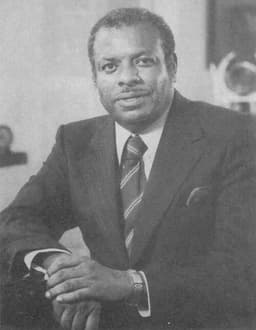
Errol Barrow
Politician · Modern
54.4Total
Basic Information
Born
1897
1920
Died
1977
—
Era
Modern
Modern
Nationality
United Kingdom
Barbados
Occupation
Politician
Politician
Civilization
Western
Western
Score Comparison
Military (10%)
49.1
14.1
Political (20%)
42.3
65.7
Influence (20%)
52.5
58.3
Legacy (20%)
45.8
52.0
Leadership (15%)
51.9
78.0
Strategy (15%)
41.7
38.9
TOTAL
47.8
54.4
Anthony Eden — Complete Timeline
1953 AD
Anglo-Egyptian Agreement on SudanPolitical Action◆ Major
As Foreign Secretary, Eden negotiated the Anglo-Egyptian Agreement that granted self-government to Sudan, leading to its independence in 1956. This resolved a long-standing dispute between Britain and Egypt over the status of Sudan.
SudanDecolonizationDiplomacy
Impact: regionalconstructive
1954 AD
Geneva Conference on IndochinaPolitical Action◆ Major
As Foreign Secretary, Eden chaired the Geneva Conference that ended the First Indochina War. The conference resulted in the Geneva Accords, which temporarily divided Vietnam at the 17th parallel and established Laos and Cambodia as independent neutral states.
IndochinaDiplomacyVietnam
Impact: globalconstructive
1956 AD
Suez CrisisWar
As Prime Minister, Eden ordered British forces to invade Egypt after Nasser nationalized the Suez Canal. The operation was conducted in collusion with France and Israel. International condemnation, especially from the US, forced a humiliating withdrawal, damaging British prestige.
Suez CanalEgyptImperial Decline
Impact: globaldestructive
1957 AD
Resignation as Prime MinisterPolitical Action◆ Major
Eden resigned as Prime Minister in January 1957, citing ill health. The Suez Crisis had severely damaged his reputation and authority. He was succeeded by Harold Macmillan. Eden's resignation marked the end of a brief and controversial premiership.
ResignationSuez CrisisMacmillan
Impact: national
Errol Barrow — Complete Timeline
1960 AD
Introduced Free Education and Social ReformsReform◆ Major
Barrow's government introduced free secondary education and expanded social services, including healthcare and housing. These reforms aimed to reduce inequality and improve living standards.
EducationSocial Reform
Impact: nationalconstructive
1961 AD
Elected Premier of BarbadosPolitical Action◆ Major
Barrow became Premier of Barbados in 1961, leading the Democratic Labour Party to victory. He focused on economic diversification and social reform, moving Barbados towards self-government.
ElectionSelf-Government
Impact: nationalconstructive
1966 AD
Led Barbados to IndependencePolitical Action
Barrow led Barbados to independence from the United Kingdom on November 30, 1966, becoming the first Prime Minister. He is widely regarded as the 'Father of Independence' for his role in the negotiations.
IndependenceDecolonization
Impact: nationalconstructive
1986 AD
Returned to Power as Prime MinisterPolitical Action◆ Major
Barrow returned to power in 1986 after a decade in opposition, winning a landslide election. His second term focused on economic recovery and regional integration.
ElectionComeback
Impact: national
1987 AD
Died in OfficeOther◆ Major
Barrow died in office on June 1, 1987, from a heart attack. His death was a major loss for Barbados, and he was given a state funeral. He is remembered as a founding father of the nation.
DeathEnd of Era
Impact: nationaltragic
This comparison has not been analyzed yet.
One-time AI generation (~1 minute). Scores and timeline are already available below.
Rankings
🥇
Errol BarrowLeader
Mil: 14.1Pol: 65.7Inf: 58.3
54.4
🥈
Anthony Eden
Mil: 49.1Pol: 42.3Inf: 52.5
47.8
+6.6 behind
How This Comparison Works
Algorithm
Each figure is scored on 6 dimensions (0—100 scale) based on structured historical data: Military (10%), Political (20%), Influence (20%), Legacy (20%), Leadership (15%), Strategy (15%). The weighted total produces the final ranking.
Data Sources
Scores are computed from structured sub-indicators in the database. Scale factors adjust for era (Ancient ×0.85, Modern ×1.0) and civilization size (Eastern ×1.05, Other ×0.80) to account for differences in population and military scale.
Maximum 3 Figures
Comparisons are limited to 2—3 figures to ensure readability and statistical meaningfulness.
Error Margins
±5 points per dimension — Sub-scores are derived from historical records with inherent uncertainty. Two figures within 5 points on a dimension should be considered roughly equivalent in that area.
Total Score Accuracy
±3 points overall — The weighted combination of 6 dimensions produces a total score with approximately ±3 points of uncertainty. Differences of less than 3 points are not statistically significant— the figures are effectively tied.
Known Limitations
- Historical records are incomplete and uneven across civilizations
- Figures from oral-tradition societies may be underrepresented
- Occupation labels can misclassify multi-role figures
- Scores measure capability and impact, not moral character
- Quantitative scoring is a comparison tool, not absolute truth
Capability Radar
Military (10%) — Battles & Warfare
Battles
30
20
Win Rate
29
25
Expansion
38
26
Political (20%) — Governance & Reform
Reform
30
75
Diplomacy
40
70
Economy
30
68
Influence (20%) — Cultural & Global Reach
Cultural
20
55
Global
35
55
Legacy (20%) — Historical Impact
Historical
45
60
Longevity
30
50
Leadership (15%) — Power & Stability
Tenure
25
65
Stability
20
72
Strategy (15%) — Tactics & Innovation
Strategy
35
29
Tactics
41
37
Reform
44
39
Similar Comparisons
Comments & Discussion
No comments yet. Be the first to share your thoughts!