Loading...
This comparison has not been analyzed yet.
One-time AI generation (~1 minute). Scores and timeline are already available below.
Anthony Ulrich of Brunswick vs Chatichai Choonhavan
Chatichai Choonhavan leads by 13.4 pts · 2 figures compared
…
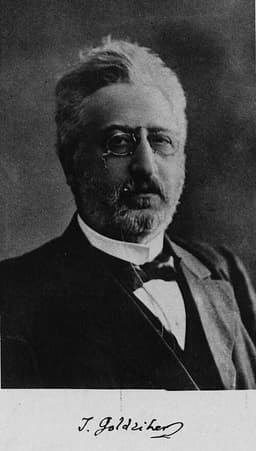
Anthony Ulrich of Brunswick
General · Modern
36.9Total

Chatichai Choonhavan
General · Modern
50.3Total
Basic Information
Born
1714
1920
Died
1774
—
Era
Modern
Modern
Nationality
Brunswick
Thailand
Occupation
General
General
Civilization
Western
Eastern
Score Comparison
Military (10%)
10.2
25.9
Political (20%)
27.9
72.0
Influence (20%)
50.2
52.5
Legacy (20%)
37.5
41.7
Leadership (15%)
35.4
62.0
Strategy (15%)
45.0
41.0
TOTAL
36.9
50.3
Anthony Ulrich of Brunswick — Complete Timeline
1740 AD
Appointed Generalissimo of Russian forcesPolitical Action◆ Major
After the death of Empress Anna, Anthony Ulrich was appointed Generalissimo of the Russian army during the brief reign of his infant son Ivan VI. He held supreme military command but lacked real power.
Military CommandRegency
Impact: national
1741 AD
Arrested and imprisoned by Empress ElizabethPolitical Action◆ Major
Following the coup that placed Elizabeth Petrovna on the throne, Anthony Ulrich was arrested along with his family. He was stripped of all titles and imprisoned in Kholmogory for the next 33 years.
CoupImprisonment
Impact: nationaltragic
1774 AD
Died in captivityOther◆ Major
Anthony Ulrich died in prison at Kholmogory after 33 years of confinement. He was buried in a simple grave, his death marking the end of the Brunswick line's claim to the Russian throne.
DeathImprisonment
Impact: nationaltragic
Chatichai Choonhavan — Complete Timeline
1988 AD
Economic Boom and 'Bubble Economy'Reform◆ Major
Chatichai's government pursued pro-business policies, deregulation, and foreign investment, fueling rapid economic growth. Thailand experienced a boom in real estate, manufacturing, and exports, but also saw rising corruption and asset bubbles.
Economic GrowthBubble EconomyDevelopment
Impact: nationalconstructive
Election as Prime MinisterPolitical Action◆ Major
Chatichai Choonhavan became Prime Minister of Thailand after his Chart Thai Party won the general election. He was the first elected prime minister in over a decade, marking a return to civilian rule after years of military dominance.
ElectionCivilian RuleDemocracy
Impact: nationalconstructive
1991 AD
Overthrow in the 1991 Thai Coup d'ÉtatPolitical Action◆ Major
General Suchinda Kraprayoon led a bloodless coup against Chatichai's government, citing corruption and political instability. Chatichai was arrested briefly, and the coup ended civilian rule, leading to a military junta.
CoupOverthrowMilitary Rule
Impact: nationaldestructive
This comparison has not been analyzed yet.
One-time AI generation (~1 minute). Scores and timeline are already available below.
Rankings
🥇
Chatichai ChoonhavanLeader
Mil: 25.9Pol: 72.0Inf: 52.5
50.3
🥈
Anthony Ulrich of Brunswick
Mil: 10.2Pol: 27.9Inf: 50.2
36.9
+13.4 behind
How This Comparison Works
Algorithm
Each figure is scored on 6 dimensions (0—100 scale) based on structured historical data: Military (10%), Political (20%), Influence (20%), Legacy (20%), Leadership (15%), Strategy (15%). The weighted total produces the final ranking.
Data Sources
Scores are computed from structured sub-indicators in the database. Scale factors adjust for era (Ancient ×0.85, Modern ×1.0) and civilization size (Eastern ×1.05, Other ×0.80) to account for differences in population and military scale.
Maximum 3 Figures
Comparisons are limited to 2—3 figures to ensure readability and statistical meaningfulness.
Error Margins
±5 points per dimension — Sub-scores are derived from historical records with inherent uncertainty. Two figures within 5 points on a dimension should be considered roughly equivalent in that area.
Total Score Accuracy
±3 points overall — The weighted combination of 6 dimensions produces a total score with approximately ±3 points of uncertainty. Differences of less than 3 points are not statistically significant— the figures are effectively tied.
Known Limitations
- Historical records are incomplete and uneven across civilizations
- Figures from oral-tradition societies may be underrepresented
- Occupation labels can misclassify multi-role figures
- Scores measure capability and impact, not moral character
- Quantitative scoring is a comparison tool, not absolute truth
Capability Radar
Military (10%) — Battles & Warfare
Battles
5
10
Win Rate
5
10
Expansion
5
10
Political (20%) — Governance & Reform
Reform
5
50
Diplomacy
5
55
Economy
5
55
Influence (20%) — Cultural & Global Reach
Cultural
5
25
Global
5
20
Legacy (20%) — Historical Impact
Historical
10
30
Longevity
5
20
Leadership (15%) — Power & Stability
Tenure
10
45
Stability
5
20
Strategy (15%) — Tactics & Innovation
Strategy
5
15
Tactics
5
15
Reform
5
20
Similar Comparisons
Comments & Discussion
No comments yet. Be the first to share your thoughts!