Loading...
Anthony Ulrich of Brunswick vs Napoleon Bonaparte
Napoleon Bonaparte leads by 34.0 pts · 2 figures compared
…
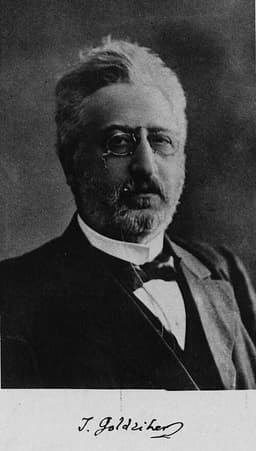
Anthony Ulrich of Brunswick
General · Modern
36.9Total

Napoleon Bonaparte
General · Modern
70.9Total
Basic Information
Born
1714
1769
Died
1774
1821
Era
Modern
Modern
Nationality
Brunswick
France
Occupation
General
General
Civilization
Western
Western
Score Comparison
Military (10%)
10.2
94.0
Political (20%)
27.9
72.0
Influence (20%)
50.2
40.0
Legacy (20%)
37.5
80.0
Leadership (15%)
35.4
78.0
Strategy (15%)
45.0
90.0
TOTAL
36.9
70.9
Anthony Ulrich of Brunswick — Complete Timeline
1740 AD
Appointed Generalissimo of Russian forcesPolitical Action◆ Major
After the death of Empress Anna, Anthony Ulrich was appointed Generalissimo of the Russian army during the brief reign of his infant son Ivan VI. He held supreme military command but lacked real power.
Military CommandRegency
Impact: national
1741 AD
Arrested and imprisoned by Empress ElizabethPolitical Action◆ Major
Following the coup that placed Elizabeth Petrovna on the throne, Anthony Ulrich was arrested along with his family. He was stripped of all titles and imprisoned in Kholmogory for the next 33 years.
CoupImprisonment
Impact: nationaltragic
1774 AD
Died in captivityOther◆ Major
Anthony Ulrich died in prison at Kholmogory after 33 years of confinement. He was buried in a simple grave, his death marking the end of the Brunswick line's claim to the Russian throne.
DeathImprisonment
Impact: nationaltragic
Napoleon Bonaparte — Complete Timeline
1799 AD
Coup of 18 BrumaireOther◆ Major
Napoleon Bonaparte, with support from his brother Lucien and key political figures, overthrew the Directory in a bloodless coup. He established the Consulate with himself as First Consul, effectively becoming the ruler of France. This event ended the French Revolution's most unstable period.
French RevolutionCoupRise to Power
Impact: regional
1804 AD
Promulgation of the Napoleonic CodeOther◆ Major
Napoleon enacted the Civil Code of the French, known as the Napoleonic Code, a comprehensive set of laws that replaced the fragmented feudal legal systems. The code established legal equality, protected property rights, and secularized law. It became the basis for legal systems in many European and world countries.
Legal ReformNapoleonic CodeCivil Law
Impact: globalconstructive
1805 AD
Battle of AusterlitzWar◆ Major
Napoleon's Grande Arm
Napoleonic WarsBattleDecisive Victory
Impact: global
1812 AD
Invasion of RussiaWar◆ Major
Napoleon led the Grande Arm
Napoleonic WarsInvasionDisaster
Impact: globaldestructive
1815 AD
Battle of WaterlooWar◆ Major
Napoleon's French army was defeated by the combined forces of the Duke of Wellington's Anglo-Allied army and Gebhard Leberecht von Bl
Napoleonic WarsBattleFinal Defeat
Impact: globaldestructive
Expert Analysis
anthony-ulrich-of-brunswick-vs-napoleon-bonaparte
# The Emperor and the Prisoner: Two Fates at the Crossroads of Power
On a frozen December morning in 1741, a young man in a generalissimo’s uniform watched helplessly as guards led his wife and infant son away from the Winter Palace. Anthony Ulrich of Brunswick, prince of a minor German duchy and once the most powerful military commander in Russia, was about to begin a journey that would last thirty-three years—not to a battlefield, but to a cell. Half a continent away and seven decades later, another young artillery officer would stand before the gates of Toulon, his eyes fixed on a future that would see him crowned emperor of Europe. Both men were born into an age of upheaval. One would conquer nations; the other would be consumed by them. Why did their paths diverge so violently?
Origins
Napoleon Bonaparte was born in 1769 on Corsica, an island that had just passed from Genoese to French control. His family was minor nobility, proud and resentful of their new French masters. Young Napoleon grew up speaking Italian-accented French, a perpetual outsider in the schools of mainland France. This marginality became his engine: he would prove himself not by birth but by brilliance. At the military academy of Brienne, he devoured history and mathematics, already dreaming of artillery barrages and strategic gambits.
Anthony Ulrich of Brunswick, born in 1714, came from one of Germany’s most ancient ruling houses. His family had supplied kings and generals to half the courts of Europe. But privilege came with a price: he was a pawn in the great game of dynastic marriage. In 1739, Empress Anna of Russia chose him as husband for her niece, Anna Leopoldovna. Anthony Ulrich, a quiet and unassuming man, was shipped east like a diplomatic gift. He arrived in St. Petersburg speaking no Russian, knowing no one, and holding no real power—only a title that would soon become a death warrant.
Rise to Power
Napoleon’s ascent was a masterpiece of timing and audacity. In 1793, at the siege of Toulon, a 24-year-old artillery captain saw an opportunity where others saw chaos. The British held the port; the revolutionary government was desperate. Napoleon’s plan was simple and devastating: place his guns on a promontory commanding the harbor, then blast the British fleet into retreat. He did so, and within months he was a brigadier general. The French Revolution had shattered every old hierarchy, and Napoleon climbed through the rubble.
Anthony Ulrich’s rise was an accident of biology and politics. In 1740, Empress Anna died, leaving the throne to her infant grandnephew, Ivan VI—Anthony Ulrich’s son. The baby emperor’s regent was Anthony Ulrich’s wife, Anna Leopoldovna. And so, by marriage and paternity, Anthony Ulrich was named Generalissimo of the Russian army. He was 26 years old, untested in war, and surrounded by scheming courtiers. He accepted the title not because he sought it, but because refusal would have been treason.
Leadership & Governance
Napoleon governed as he fought: through speed, clarity, and ruthless efficiency. The Napoleonic Code, enacted in 1804, standardized French law across a continent, abolishing feudal privileges and establishing merit-based advancement. His military genius lay in logistics and concentration—he moved armies faster than his enemies could think, striking at the seams of their coalitions. At Austerlitz in 1805, he crushed the combined forces of Austria and Russia in a single day, a victory so complete that it became a synonym for genius.
Anthony Ulrich’s leadership was defined by its absence. As Generalissimo, he commanded paper armies. His wife and her German advisor, Ernst Biron, made all real decisions. When a coup brought Empress Elizabeth to power in December 1741, Anthony Ulrich offered no resistance. He could have rallied loyal regiments; he could have fought. Instead, he surrendered. His character—gentle, cautious, overwhelmed—made him incapable of the violence that power demanded.
Triumph & Tragedy
Napoleon’s greatest moment was also the seed of his destruction. In 1812, he marched into Russia with the largest army Europe had ever seen—over 600,000 men. He reached Moscow, but the Russians burned the city rather than surrender. Winter came, and Napoleon retreated through snow and starvation. Of that grand army, fewer than 30,000 returned. His tragedy was not defeat, but the inability to stop: he could conquer but could not consolidate.
Anthony Ulrich’s tragedy was the opposite. He never fought a battle, never commanded a charge. His greatest moment was his arrest—a quiet, helpless scene in a palace corridor. For thirty-three years, he lived in a wooden house in Kholmogory, a village on the White Sea, allowed to see his children only through a window. When Empress Catherine the Great finally visited him in 1774, she found an old man who had forgotten how to speak. He died the same year, buried in an unmarked grave.
Character & Destiny
Napoleon’s character was a forge of will. He once said, “Impossible is a word to be found only in the dictionary of fools.” He believed that a man could shape history through sheer force of intellect and ambition. This belief made him emperor—and also made him unable to accept limits. He invaded Russia because he could not imagine failure.
Anthony Ulrich was a man of a different mold. He was not cowardly, but he was passive. He accepted his fate as a son of a minor German house accepts a diplomatic marriage: with quiet resignation. He never attempted escape, never plotted rebellion. His prison was not just physical but psychological. He had been raised to obey, not to command.
Legacy
Napoleon’s legacy is written in law codes, national borders, and the very concept of modern warfare. His name appears on streets, statues, and textbooks across the world. He reshaped Europe so thoroughly that the 19th century is often called the Napoleonic Age.
Anthony Ulrich of Brunswick left no monuments. His son, Ivan VI, was murdered in prison at age 23. His other children were released by Catherine the Great but forbidden to bear the Romanov name. The Brunswick line in Russia vanished like a footprint in snow. History remembers him, if at all, as a footnote—a prince who was given everything by birth and nothing by choice.
Conclusion
Standing at the end of their stories, one cannot help but wonder: was Napoleon’s greatness merely a matter of circumstance? He was born into revolution, when talent could topple thrones. Anthony Ulrich was born into a system where birth was destiny, and when that system collapsed, so did he. Yet character, too, played its part. Napoleon seized history by the throat; Anthony Ulrich let it slip through his fingers. In the end, the difference between an emperor and a prisoner is not just luck—it is the will to act when the door of fate swings open. One man kicked it down; the other waited for someone else to open it. And waited. And waited.
Rankings
🥇
Napoleon BonaparteLeader
Mil: 94.0Pol: 72.0Inf: 40.0
70.9
🥈
Anthony Ulrich of Brunswick
Mil: 10.2Pol: 27.9Inf: 50.2
36.9
+34.0 behind
How This Comparison Works
Algorithm
Each figure is scored on 6 dimensions (0—100 scale) based on structured historical data: Military (10%), Political (20%), Influence (20%), Legacy (20%), Leadership (15%), Strategy (15%). The weighted total produces the final ranking.
Data Sources
Scores are computed from structured sub-indicators in the database. Scale factors adjust for era (Ancient ×0.85, Modern ×1.0) and civilization size (Eastern ×1.05, Other ×0.80) to account for differences in population and military scale.
Maximum 3 Figures
Comparisons are limited to 2—3 figures to ensure readability and statistical meaningfulness.
Error Margins
±5 points per dimension — Sub-scores are derived from historical records with inherent uncertainty. Two figures within 5 points on a dimension should be considered roughly equivalent in that area.
Total Score Accuracy
±3 points overall — The weighted combination of 6 dimensions produces a total score with approximately ±3 points of uncertainty. Differences of less than 3 points are not statistically significant— the figures are effectively tied.
Known Limitations
- Historical records are incomplete and uneven across civilizations
- Figures from oral-tradition societies may be underrepresented
- Occupation labels can misclassify multi-role figures
- Scores measure capability and impact, not moral character
- Quantitative scoring is a comparison tool, not absolute truth
Capability Radar
Military (10%) — Battles & Warfare
Battles
5
95
Win Rate
5
90
Expansion
5
95
Political (20%) — Governance & Reform
Reform
5
95
Diplomacy
5
80
Economy
5
85
Influence (20%) — Cultural & Global Reach
Cultural
5
85
Global
5
90
Legacy (20%) — Historical Impact
Historical
10
95
Longevity
5
90
Leadership (15%) — Power & Stability
Tenure
10
85
Stability
5
70
Strategy (15%) — Tactics & Innovation
Strategy
5
95
Tactics
5
98
Reform
5
92
Similar Comparisons
Comments & Discussion
BrunoTheArtillerist6/17/2026
Napoleon wins this comparison not by destiny but by *agency*. Anthony Ulrich had a Reichsarmee title and a Russian throne—yet when the guard changed, he just stood there. Napoleon lost his empire, got exiled twice, and *still* died a legend. Stats don't lie: Napoleon fought over 60 battles; Anthony commanded maybe 3 real ones. Power isn't blood—it's nerve. Ulrich had the birthright. Napoleon *made* the right.
数据猎手老赵6/17/2026
你们都在比“谁更倒霉”,我比数据:拿破仑横跨欧洲二十年,战役数量是安东尼的二十倍,败仗也是他的五倍——这才叫真正的“大起大落”。安东尼输一次就关三十三年,拿破仑输两次还能回来再战。所谓“时代不同”只是借口,拿破仑敢拿身家性命反复豪赌,安东尼连赌一次都不敢。能力差异和运气无关,纯粹是胆量和路线判断的区别。
古典学人6/17/2026
安东尼·乌尔里希的故事其实是罗马式的悲剧:他像被命运凌迟的囚徒,拿破仑则是用剑劈开命运的暴君。安东尼的政治动荡是结构性的——俄罗斯宫廷本身就是绞肉机,而拿破仑却把全欧洲都变成了他的舞台。你们别忘了,安东尼是带兵去救伊凡六世失败的,他的忠诚绑死了他。拿破仑对谁忠诚?只对自我。
DoyenOfDossiers6/17/2026
The revisionist take: both men were systemically crushed, but only one rewrote the system. Napoleon came from nowhere *because* the Ancien Régime collapsed; Ulrich was born into order that betrayed him. Give Ulrich Napoleon's century, and he might have been a Prussian Wellington. Napoleon isn't inherently “greater”—he just surfed the Revolution's wave with a better PR team. Anthony had no Bastille to storm; he was trapped inside the Winter Palace itself.
逆流观察者6/17/2026
我偏要唱反调:拿破仑的伟大是后人编出来的花环,安东尼的失败反而更真实。拿破仑统治期间欧洲死了几百万士兵和平民,安东尼哪怕被关在霍尔斯滕堡三十多年,也没发动一场灭国级战争。谁的履历更“干净”?拿破仑赢了战役,输掉了和平。安东尼输了权力,却保全了余生。成功从来不只是征服者的游戏。