Loading...
This comparison has not been analyzed yet.
One-time AI generation (~1 minute). Scores and timeline are already available below.
Antigonus III Doson vs Ramesses II the Great
Ramesses II the Great leads by 15.9 pts · 2 figures compared
…
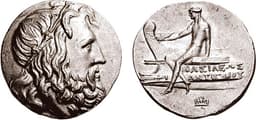
Antigonus III Doson
Emperor · Ancient
51.6Total
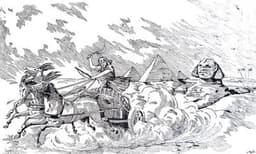
Ramesses II the Great
Emperor · Ancient
67.5Total
Basic Information
Born
-263
-1279
Died
-221
-1213
Era
Ancient
Ancient
Nationality
Macedon
New Kingdom Egypt
Occupation
Emperor
Emperor
Civilization
Western
Middle Eastern
Score Comparison
Military (10%)
61.7
82.0
Political (20%)
68.0
59.3
Influence (20%)
50.2
65.0
Legacy (20%)
42.5
68.0
Leadership (15%)
40.0
78.0
Strategy (15%)
60.7
55.0
TOTAL
51.6
67.5
Antigonus III Doson — Complete Timeline
229 BC
Regency for Philip VPolitical Action◆ Major
After Demetrius II's death, Antigonus III Doson became regent for the infant Philip V. He effectively ruled Macedon, stabilizing the kingdom after the defeat and death of his predecessor.
RegencyMacedonian Stability
Impact: nationalconstructive
222 BC
Battle of SellasiaWar◆ Major
Antigonus III Doson led a coalition of Greek states to defeat the Spartan king Cleomenes III at Sellasia. This victory ended the Cleomenean War, restored Macedonian hegemony over the Peloponnese, and forced Sparta into submission.
Cleomenean WarSpartaMacedonian Hegemony
Impact: regionalconstructive
221 BC
Death from illnessOther◆ Major
Antigonus III Doson died suddenly from an illness, possibly tuberculosis, while campaigning against the Illyrians. His death ended a successful regency and left the throne to the young Philip V, who would later challenge Rome.
SuccessionIllness
Impact: nationaltragic
Ramesses II the Great — Complete Timeline
1279 BC
Building of Pi-RamessesCultural◆ Major
Ramesses II established a new capital city, Pi-Ramesses, in the eastern Nile Delta. The city served as a military and administrative center, featuring grand palaces, temples, and storehouses. It became a symbol of his reign and facilitated control over trade routes to Asia.
CapitalUrban PlanningAdministration
Impact: nationalconstructive
1275 BC
Campaigns in Nubia and LibyaWar
Ramesses II conducted military campaigns to secure Egypt's southern border in Nubia and to repel Libyan incursions from the west. These campaigns resulted in the construction of fortresses and the extraction of tribute, reinforcing Egyptian control over these regions.
Military CampaignNubiaLibya
Impact: regional
1274 BC
Battle of KadeshWar◆ Major
Ramesses II led Egyptian forces against the Hittite Empire under Muwatalli II near the Orontes River. The battle ended in a tactical stalemate but was claimed as a great Egyptian victory. It led to the first recorded peace treaty in history, signed around 1258 BC.
BattleHittite-Egyptian WarPeace Treaty
Impact: regional
1264 BC
Construction of Abu SimbelCultural◆ Major
Ramesses II ordered the construction of two rock-cut temples at Abu Simbel in Nubia. The Great Temple was dedicated to Ra-Horakhty and Ramesses himself, with four colossal seated statues of the pharaoh at the entrance. The complex demonstrated Egyptian power and religious devotion.
ArchitectureMonumentNubia
Impact: regionalconstructive
1258 BC
Treaty of KadeshPolitical Action◆ Major
Ramesses II and Hittite king Hattusili III signed a peace treaty ending decades of conflict. The treaty established mutual defense, extradition of refugees, and trade agreements. A copy in Akkadian cuneiform was found at Hattusa, and an Egyptian version is inscribed at Karnak.
DiplomacyPeace TreatyInternational Relations
Impact: regionalconstructive
1250 BC
Construction of the RamesseumCultural
Ramesses II built his mortuary temple, the Ramesseum, on the west bank of the Nile at Thebes. The temple featured a colossal statue of the pharaoh, extensive reliefs depicting the Battle of Kadesh, and a large library. It served as a center for his cult after death.
ArchitectureMortuary TempleThebes
Impact: nationalconstructive
1213 BC
Long Reign and SuccessionPolitical Action◆ Major
Ramesses II died after a 66-year reign, one of the longest in Egyptian history. He was succeeded by his son Merneptah. His reign left a lasting legacy of monumental architecture, military campaigns, and diplomatic achievements, but also strained state resources.
ReignSuccessionLegacy
Impact: national
This comparison has not been analyzed yet.
One-time AI generation (~1 minute). Scores and timeline are already available below.
Rankings
🥇
Ramesses II the GreatLeader
Mil: 82.0Pol: 59.3Inf: 65.0
67.5
🥈
Antigonus III Doson
Mil: 61.7Pol: 68.0Inf: 50.2
51.6
+15.9 behind
How This Comparison Works
Algorithm
Each figure is scored on 6 dimensions (0—100 scale) based on structured historical data: Military (10%), Political (20%), Influence (20%), Legacy (20%), Leadership (15%), Strategy (15%). The weighted total produces the final ranking.
Data Sources
Scores are computed from structured sub-indicators in the database. Scale factors adjust for era (Ancient ×0.85, Modern ×1.0) and civilization size (Eastern ×1.05, Other ×0.80) to account for differences in population and military scale.
Maximum 3 Figures
Comparisons are limited to 2—3 figures to ensure readability and statistical meaningfulness.
Error Margins
±5 points per dimension — Sub-scores are derived from historical records with inherent uncertainty. Two figures within 5 points on a dimension should be considered roughly equivalent in that area.
Total Score Accuracy
±3 points overall — The weighted combination of 6 dimensions produces a total score with approximately ±3 points of uncertainty. Differences of less than 3 points are not statistically significant— the figures are effectively tied.
Known Limitations
- Historical records are incomplete and uneven across civilizations
- Figures from oral-tradition societies may be underrepresented
- Occupation labels can misclassify multi-role figures
- Scores measure capability and impact, not moral character
- Quantitative scoring is a comparison tool, not absolute truth
Capability Radar
Military (10%) — Battles & Warfare
Battles
65
75
Win Rate
70
60
Expansion
60
80
Political (20%) — Governance & Reform
Reform
50
70
Diplomacy
65
75
Economy
50
80
Influence (20%) — Cultural & Global Reach
Cultural
30
90
Global
30
80
Legacy (20%) — Historical Impact
Historical
40
85
Longevity
35
95
Leadership (15%) — Power & Stability
Tenure
55
95
Stability
60
85
Strategy (15%) — Tactics & Innovation
Strategy
65
70
Tactics
60
65
Reform
55
55
Similar Comparisons
Comments & Discussion
No comments yet. Be the first to share your thoughts!