Loading...
Khosrow I vs Ramesses II the Great
Khosrow I leads by 4.0 pts · 2 figures compared
…

Khosrow I
Emperor · Ancient
71.5Total
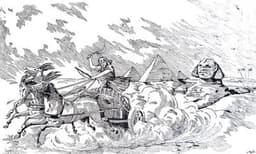
Ramesses II the Great
Emperor · Ancient
67.5Total
Basic Information
Born
-501
-1279
Died
—
-1213
Era
Ancient
Ancient
Nationality
Sassanid Empire
New Kingdom Egypt
Occupation
Emperor
Emperor
Civilization
Middle Eastern
Middle Eastern
Score Comparison
Military (10%)
72.0
82.0
Political (20%)
72.0
59.3
Influence (20%)
65.0
65.0
Legacy (20%)
72.0
68.0
Leadership (15%)
80.0
78.0
Strategy (15%)
72.0
55.0
TOTAL
71.5
67.5
Khosrow I — Complete Timeline
531 AD
Reign of Khosrow I (Anushirvan)Political Action◆ Major
Khosrow I ascended the throne after the death of his father Kavad I. His reign, lasting until 579, is considered the golden age of the Sassanid Empire, marked by administrative reforms, military expansion, and cultural flourishing.
ReignGolden AgeSassanid Empire
Impact: globalconstructive
540 AD
War with the Byzantine Empire (540-562)War◆ Major
Khosrow I invaded Byzantine Syria, sacking Antioch and other cities. The war continued for over two decades, ending with the Peace of 562, which required the Byzantines to pay annual tribute to Persia and recognized Sassanid control over Lazica.
Roman-Persian WarsByzantineSassanid Empire
Impact: regional
Administrative and Tax ReformsReform◆ Major
Khosrow I implemented a comprehensive reform of the tax system, replacing arbitrary levies with a fixed land tax and a poll tax. He also reorganized the bureaucracy and military, strengthening central control and increasing state revenue.
Tax ReformAdministrationSassanid Empire
Impact: nationalconstructive
550 AD
Patronage of Philosophy and ScienceCultural◆ Major
Khosrow I welcomed Greek philosophers and scholars fleeing the closure of the Academy of Athens. He sponsored translations of Greek and Indian works into Middle Persian, fostering a cultural renaissance that influenced later Islamic civilization.
PatronageTranslationSassanid Empire
Impact: globalconstructive
560 AD
Construction of the Great Wall of GorganOther
Khosrow I ordered the construction of the Great Wall of Gorgan, a massive defensive barrier in northeastern Persia. The wall, stretching over 195 km, protected the empire from nomadic incursions and demonstrated Sassanid engineering capabilities.
FortificationEngineeringSassanid Empire
Impact: regionalconstructive
Ramesses II the Great — Complete Timeline
1279 BC
Building of Pi-RamessesCultural◆ Major
Ramesses II established a new capital city, Pi-Ramesses, in the eastern Nile Delta. The city served as a military and administrative center, featuring grand palaces, temples, and storehouses. It became a symbol of his reign and facilitated control over trade routes to Asia.
CapitalUrban PlanningAdministration
Impact: nationalconstructive
1275 BC
Campaigns in Nubia and LibyaWar
Ramesses II conducted military campaigns to secure Egypt's southern border in Nubia and to repel Libyan incursions from the west. These campaigns resulted in the construction of fortresses and the extraction of tribute, reinforcing Egyptian control over these regions.
Military CampaignNubiaLibya
Impact: regional
1274 BC
Battle of KadeshWar◆ Major
Ramesses II led Egyptian forces against the Hittite Empire under Muwatalli II near the Orontes River. The battle ended in a tactical stalemate but was claimed as a great Egyptian victory. It led to the first recorded peace treaty in history, signed around 1258 BC.
BattleHittite-Egyptian WarPeace Treaty
Impact: regional
1264 BC
Construction of Abu SimbelCultural◆ Major
Ramesses II ordered the construction of two rock-cut temples at Abu Simbel in Nubia. The Great Temple was dedicated to Ra-Horakhty and Ramesses himself, with four colossal seated statues of the pharaoh at the entrance. The complex demonstrated Egyptian power and religious devotion.
ArchitectureMonumentNubia
Impact: regionalconstructive
1258 BC
Treaty of KadeshPolitical Action◆ Major
Ramesses II and Hittite king Hattusili III signed a peace treaty ending decades of conflict. The treaty established mutual defense, extradition of refugees, and trade agreements. A copy in Akkadian cuneiform was found at Hattusa, and an Egyptian version is inscribed at Karnak.
DiplomacyPeace TreatyInternational Relations
Impact: regionalconstructive
1250 BC
Construction of the RamesseumCultural
Ramesses II built his mortuary temple, the Ramesseum, on the west bank of the Nile at Thebes. The temple featured a colossal statue of the pharaoh, extensive reliefs depicting the Battle of Kadesh, and a large library. It served as a center for his cult after death.
ArchitectureMortuary TempleThebes
Impact: nationalconstructive
1213 BC
Long Reign and SuccessionPolitical Action◆ Major
Ramesses II died after a 66-year reign, one of the longest in Egyptian history. He was succeeded by his son Merneptah. His reign left a lasting legacy of monumental architecture, military campaigns, and diplomatic achievements, but also strained state resources.
ReignSuccessionLegacy
Impact: national
Expert Analysis
Origins
**Khosrow I** (born around 501 AD) was the son of King Kavad I of the Sassanid Empire. Little is known of his early life, but he received a thorough education in Persian governance and Zoroastrian traditions. His family background was steeped in the politics of a vast empire that had faced internal strife and external threats from Byzantium and nomadic tribes.
**Ramesses II** (born around 1303 BC) was the son of Pharaoh Seti I of the Nineteenth Dynasty of Egypt. From a young age, he was groomed for kingship, accompanying his father on military campaigns and learning the arts of war and administration. His family was committed to restoring Egyptian power after the Amarna period.
Rise to Power
Khosrow I ascended the throne in 531 AD after his father Kavad I's death, amid a succession crisis. He quickly consolidated power by eliminating rivals, including his brothers, and securing the loyalty of the nobility. His rise was marked by the suppression of the Mazdakite movement, a religious and social reformist sect that had gained influence under his father.
Ramesses II became pharaoh around 1279 BC at the age of about 25, following Seti I's death. He was already a seasoned commander and administrator. His rise was smooth, but he immediately faced the challenge of the Hittite Empire in Syria, which set the stage for his major military campaigns.
Leadership & Governance
Khosrow I is best known for his sweeping administrative and tax reforms. He replaced arbitrary levies with a fixed land tax based on land productivity and a poll tax, which stabilized the empire's finances and reduced corruption. He reorganized the army into a more professional force and established a system of provincial governors with checks and balances. His patronage of philosophy and science attracted scholars from across the world, including Greek Neoplatonists fleeing Justinian's closure of the Academy of Athens. He also commissioned translations of Indian and Greek works into Middle Persian, fostering a cultural renaissance.
Ramesses II was a prolific builder and propagandist. He constructed numerous temples, including the magnificent Abu Simbel temples, which were carved into a mountainside and oriented to align with the sun. He founded a new capital, Pi-Ramesses, which became a grand administrative and military hub. His governance relied heavily on monumental architecture to project power and divine favor. He also signed the first known peace treaty with the Hittites after the stalemate at Kadesh, which included mutual defense and extradition clauses.
Triumph & Tragedy
Khosrow I's greatest triumph was the Peace of 562 with the Byzantine Empire, which secured a 50-year peace and annual tribute, allowing him to focus on internal development. His reforms created a stable and prosperous empire. However, his later years saw renewed conflict with the Byzantines and the rise of the Göktürks in the east, which strained resources. His death in 579 left the empire vulnerable to future threats.
Ramesses II's triumph was his long reign of 66 years, which brought stability and monumental construction. The Battle of Kadesh, though a tactical draw, was turned into a propaganda victory through inscriptions and reliefs. His treaty with the Hittites secured peace in the region. However, his military campaigns were often costly and inconclusive, and his building projects placed heavy burdens on the economy. After his death, the empire gradually declined, partly due to the costs of his reign.
Character & Destiny
Khosrow I was known as "Anushirvan" (the Immortal Soul) for his wisdom and justice. He was a pragmatic reformer who valued knowledge and order. His character shaped a golden age, but his centralized reforms may have created a top-heavy system that struggled after his death. Historians like Procopius and later Persian sources praise his fairness.
Ramesses II was a master of self-promotion, often depicted as a warrior pharaoh. His character was grandiose and ambitious, which drove his building projects and military campaigns. However, his tendency to exaggerate victories (e.g., Kadesh) may have blinded him to strategic realities. His long reign ensured stability, but his successors lacked his charisma.
Legacy
Khosrow I's legacy is the Sassanid golden age and his administrative reforms that influenced later Islamic governance. The Great Wall of Gorgan, a 195 km defensive barrier, stands as a testament to his strategic vision. His patronage preserved Greek philosophy and Indian science, which later flowed into the Islamic world. His total score of 71.5 reflects a balanced but strong impact.
Ramesses II's legacy is monumental: Abu Simbel, the Ramesseum, and the treaty of Kadesh. He is often identified as the pharaoh of the Exodus in popular culture. His military score of 82.0 is high, but his political score of 59.3 is lower due to the burdens of his reign. His influence on art and architecture is immense, but his administrative impact was less innovative.
Conclusion
While Ramesses II's grandiose monuments and long reign are iconic, Khosrow I's reforms had a deeper and more lasting impact on governance and culture. Khosrow I scored 71.5 overall compared to Ramesses II's 67.5, reflecting superior political and strategic acumen. His tax system and patronage of learning shaped the Islamic Golden Age, whereas Ramesses II's legacy is more symbolic than structural. Khosrow I had greater impact on the course of history.
Rankings
🥇
Khosrow ILeader
Mil: 72.0Pol: 72.0Inf: 65.0
71.5
🥈
Ramesses II the Great
Mil: 82.0Pol: 59.3Inf: 65.0
67.5
+4.0 behind
How This Comparison Works
Algorithm
Each figure is scored on 6 dimensions (0—100 scale) based on structured historical data: Military (10%), Political (20%), Influence (20%), Legacy (20%), Leadership (15%), Strategy (15%). The weighted total produces the final ranking.
Data Sources
Scores are computed from structured sub-indicators in the database. Scale factors adjust for era (Ancient ×0.85, Modern ×1.0) and civilization size (Eastern ×1.05, Other ×0.80) to account for differences in population and military scale.
Maximum 3 Figures
Comparisons are limited to 2—3 figures to ensure readability and statistical meaningfulness.
Error Margins
±5 points per dimension — Sub-scores are derived from historical records with inherent uncertainty. Two figures within 5 points on a dimension should be considered roughly equivalent in that area.
Total Score Accuracy
±3 points overall — The weighted combination of 6 dimensions produces a total score with approximately ±3 points of uncertainty. Differences of less than 3 points are not statistically significant— the figures are effectively tied.
Known Limitations
- Historical records are incomplete and uneven across civilizations
- Figures from oral-tradition societies may be underrepresented
- Occupation labels can misclassify multi-role figures
- Scores measure capability and impact, not moral character
- Quantitative scoring is a comparison tool, not absolute truth
Capability Radar
Military (10%) — Battles & Warfare
Battles
85
75
Win Rate
80
60
Expansion
75
80
Political (20%) — Governance & Reform
Reform
95
70
Diplomacy
85
75
Economy
95
80
Influence (20%) — Cultural & Global Reach
Cultural
85
90
Global
70
80
Legacy (20%) — Historical Impact
Historical
80
85
Longevity
70
95
Leadership (15%) — Power & Stability
Tenure
90
95
Stability
85
85
Strategy (15%) — Tactics & Innovation
Strategy
85
70
Tactics
80
65
Reform
90
55
Similar Comparisons
Comments & Discussion
No comments yet. Be the first to share your thoughts!