Loading...
Ramesses II the Great vs Sargon of Akkad
Sargon of Akkad leads by 2.1 pts · 2 figures compared
…
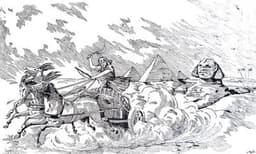
Ramesses II the Great
Emperor · Ancient
67.5Total
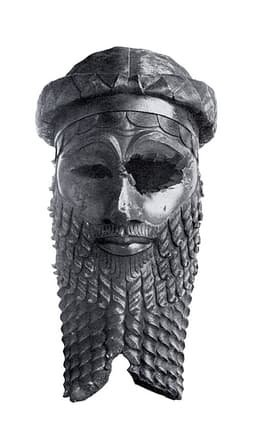
Sargon of Akkad
Emperor · Ancient
69.6Total
Basic Information
Born
-1279
-2334
Died
-1213
-2279
Era
Ancient
Ancient
Nationality
New Kingdom Egypt
Akkadian Empire
Occupation
Emperor
Emperor
Civilization
Middle Eastern
Middle Eastern
Score Comparison
Military (10%)
82.0
75.0
Political (20%)
59.3
72.0
Influence (20%)
65.0
65.0
Legacy (20%)
68.0
65.0
Leadership (15%)
78.0
79.8
Strategy (15%)
55.0
68.0
TOTAL
67.5
69.6
Ramesses II the Great — Complete Timeline
1279 BC
Building of Pi-RamessesCultural◆ Major
Ramesses II established a new capital city, Pi-Ramesses, in the eastern Nile Delta. The city served as a military and administrative center, featuring grand palaces, temples, and storehouses. It became a symbol of his reign and facilitated control over trade routes to Asia.
CapitalUrban PlanningAdministration
Impact: nationalconstructive
1275 BC
Campaigns in Nubia and LibyaWar
Ramesses II conducted military campaigns to secure Egypt's southern border in Nubia and to repel Libyan incursions from the west. These campaigns resulted in the construction of fortresses and the extraction of tribute, reinforcing Egyptian control over these regions.
Military CampaignNubiaLibya
Impact: regional
1274 BC
Battle of KadeshWar◆ Major
Ramesses II led Egyptian forces against the Hittite Empire under Muwatalli II near the Orontes River. The battle ended in a tactical stalemate but was claimed as a great Egyptian victory. It led to the first recorded peace treaty in history, signed around 1258 BC.
BattleHittite-Egyptian WarPeace Treaty
Impact: regional
1264 BC
Construction of Abu SimbelCultural◆ Major
Ramesses II ordered the construction of two rock-cut temples at Abu Simbel in Nubia. The Great Temple was dedicated to Ra-Horakhty and Ramesses himself, with four colossal seated statues of the pharaoh at the entrance. The complex demonstrated Egyptian power and religious devotion.
ArchitectureMonumentNubia
Impact: regionalconstructive
1258 BC
Treaty of KadeshPolitical Action◆ Major
Ramesses II and Hittite king Hattusili III signed a peace treaty ending decades of conflict. The treaty established mutual defense, extradition of refugees, and trade agreements. A copy in Akkadian cuneiform was found at Hattusa, and an Egyptian version is inscribed at Karnak.
DiplomacyPeace TreatyInternational Relations
Impact: regionalconstructive
1250 BC
Construction of the RamesseumCultural
Ramesses II built his mortuary temple, the Ramesseum, on the west bank of the Nile at Thebes. The temple featured a colossal statue of the pharaoh, extensive reliefs depicting the Battle of Kadesh, and a large library. It served as a center for his cult after death.
ArchitectureMortuary TempleThebes
Impact: nationalconstructive
1213 BC
Long Reign and SuccessionPolitical Action◆ Major
Ramesses II died after a 66-year reign, one of the longest in Egyptian history. He was succeeded by his son Merneptah. His reign left a lasting legacy of monumental architecture, military campaigns, and diplomatic achievements, but also strained state resources.
ReignSuccessionLegacy
Impact: national
Sargon of Akkad — Complete Timeline
2334 BC
Conquest of SumerWar
Sargon of Akkad conquered the Sumerian city-states, including Uruk and Ur, unifying Mesopotamia under his rule. This marked the creation of the world's first empire, the Akkadian Empire.
ConquestEmpireMesopotamia
Impact: global
Foundation of AkkadOther◆ Major
Sargon established the city of Akkad as his capital, likely near modern Baghdad. The city became the administrative and cultural center of the Akkadian Empire, though its exact location remains unknown.
City FoundationCapitalAkkad
Impact: regionalconstructive
2330 BC
Campaigns into AnatoliaWar◆ Major
Sargon led military campaigns into Anatolia (modern Turkey), reaching the Taurus Mountains and the Mediterranean coast. These expeditions expanded Akkadian influence and secured trade routes for timber and metals.
Military CampaignAnatoliaTrade
Impact: regional
2325 BC
Suppression of revoltsWar◆ Major
Sargon faced widespread revolts across his empire in his later years. He suppressed rebellions in Sumer, Elam, and other regions, but the unrest foreshadowed the empire's eventual collapse after his death.
RevoltEmpireInstability
Impact: regionaldestructive
Expert Analysis
Origins
Ramesses II (c. 1303–1213 BCE) was born into the 19th Dynasty of Egypt. His father, Seti I, was a pharaoh who restored Egyptian power after the Amarna period. Ramesses was trained as a warrior from youth, accompanying his father on campaigns. He likely received education in statecraft, religion, and military tactics. Sargon of Akkad (c. 2334–2279 BCE) had a more obscure origin. According to later legend, he was born to a priestess who set him adrift on the Euphrates; he was found by a gardener and later rose to become cupbearer to the king of Kish. His humble beginnings contrast sharply with Ramesses's royal lineage.
Rise to Power
Ramesses II became pharaoh around 1279 BCE at age 25, inheriting a stable kingdom. His early reign focused on consolidating power and launching campaigns to secure Egypt's borders. The pivotal moment was the Battle of Kadesh (c. 1274 BCE), where he faced the Hittite king Muwatalli II. Although the battle ended in a stalemate, Ramesses used propaganda to present it as a great victory, bolstering his reputation. Sargon's rise was more revolutionary. He overthrew King Ur-Zababa of Kish and then embarked on a series of conquests that unified Sumer under a single ruler. He defeated the powerful city-state of Uruk and its leader Lugal-zage-si, thus creating the world's first empire. His military campaigns extended into Elam and Anatolia, demonstrating his strategic ambition.
Leadership & Governance
Ramesses II ruled as an autocratic pharaoh, centralizing power and using monumental architecture to project authority. He commissioned temples at Abu Simbel, the Ramesseum, and a new capital, Pi-Ramesses, which served as a military and administrative hub. His governance relied on a bureaucracy of viziers and priests. He also signed the first recorded peace treaty with the Hittites (c. 1258 BCE), showing diplomatic pragmatism. Sargon's governance was more innovative for his time. He established a centralized administration, appointed governors loyal to him, and created a professional army. He standardized weights and measures, and fostered trade. However, his empire faced constant revolts, suggesting his control was less secure than Ramesses's. Sargon scored higher in Political (72.0 vs 59.3) and Leadership (79.8 vs 78.0), indicating his more adaptive governance style.
Triumph & Tragedy
Ramesses II's greatest triumphs include the construction of Abu Simbel and the peace treaty with the Hittites, which ensured stability. His 66-year reign brought prosperity and monumental building. His failures include the Battle of Kadesh, which, while portrayed as a victory, was a tactical draw, and his reliance on propaganda may have obscured military shortcomings. He also outlived many of his heirs, leading to succession issues. Sargon's triumph was the creation of the Akkadian Empire, uniting Mesopotamia and establishing a model for future empires. His campaigns reached the Mediterranean. His tragedy was the empire's fragility; revolts plagued his later years, and after his death, the empire collapsed. His dynasty lasted only about 150 years. Sargon scored 75.0 in Military vs Ramesses's 82.0, but Ramesses's military achievements were more about consolidation than expansion.
Character & Destiny
Ramesses II was ambitious, self-promoting, and extremely long-lived. He had over 100 children and ensured his legacy through monuments and inscriptions. His character was that of a builder and propagandist, which shaped his destiny as a pharaoh remembered for grandeur. Sargon was a conqueror and innovator, with a reputation for ruthlessness and strategic brilliance. His character—driven, adaptable, and perhaps paranoid—led him to suppress revolts harshly. Historical assessments often view Sargon as a visionary founder, while Ramesses is seen as a consolidator who excelled at self-glorification.
Legacy
Ramesses II's legacy is visible in the monuments that survive, including Abu Simbel and the Ramesseum. The peace treaty with the Hittites is a milestone in diplomacy. He influenced later pharaohs and became a symbol of Egyptian power. His overall Legacy score is 68.0. Sargon's legacy is more abstract but profound: he created the first empire, setting a precedent for imperial rule in Mesopotamia and beyond. The Akkadian language and administration influenced subsequent civilizations. His Legacy score is 65.0. However, Sargon's impact on political organization arguably outweighs Ramesses's monumental but more localized influence.
Conclusion
While Ramesses II built impressive structures and maintained a long reign, Sargon of Akkad fundamentally changed the course of history by inventing the concept of empire. Sargon's military and political innovations—centralized administration, professional army, imperial ideology—had a more transformative effect on world history. Ramesses's achievements were largely within the existing framework of Egyptian civilization. Therefore, Sargon of Akkad had greater long-term impact, despite his lower total score (69.6 vs 67.5). The score gap of 2.1 points reflects Sargon's higher Political and Leadership scores, which are more indicative of systemic change.
Rankings
🥇
Sargon of AkkadLeader
Mil: 75.0Pol: 72.0Inf: 65.0
69.6
🥈
Ramesses II the Great
Mil: 82.0Pol: 59.3Inf: 65.0
67.5
+2.1 behind
How This Comparison Works
Algorithm
Each figure is scored on 6 dimensions (0—100 scale) based on structured historical data: Military (10%), Political (20%), Influence (20%), Legacy (20%), Leadership (15%), Strategy (15%). The weighted total produces the final ranking.
Data Sources
Scores are computed from structured sub-indicators in the database. Scale factors adjust for era (Ancient ×0.85, Modern ×1.0) and civilization size (Eastern ×1.05, Other ×0.80) to account for differences in population and military scale.
Maximum 3 Figures
Comparisons are limited to 2—3 figures to ensure readability and statistical meaningfulness.
Error Margins
±5 points per dimension — Sub-scores are derived from historical records with inherent uncertainty. Two figures within 5 points on a dimension should be considered roughly equivalent in that area.
Total Score Accuracy
±3 points overall — The weighted combination of 6 dimensions produces a total score with approximately ±3 points of uncertainty. Differences of less than 3 points are not statistically significant— the figures are effectively tied.
Known Limitations
- Historical records are incomplete and uneven across civilizations
- Figures from oral-tradition societies may be underrepresented
- Occupation labels can misclassify multi-role figures
- Scores measure capability and impact, not moral character
- Quantitative scoring is a comparison tool, not absolute truth
Capability Radar
Military (10%) — Battles & Warfare
Battles
75
85
Win Rate
60
90
Expansion
80
90
Political (20%) — Governance & Reform
Reform
70
85
Diplomacy
75
75
Economy
80
80
Influence (20%) — Cultural & Global Reach
Cultural
90
85
Global
80
85
Legacy (20%) — Historical Impact
Historical
85
90
Longevity
95
95
Leadership (15%) — Power & Stability
Tenure
95
80
Stability
85
70
Strategy (15%) — Tactics & Innovation
Strategy
70
85
Tactics
65
80
Reform
55
75
Similar Comparisons
Comments & Discussion
No comments yet. Be the first to share your thoughts!