Loading...
Antiochus III the Great vs Julius Caesar
Julius Caesar leads by 24.4 pts · 2 figures compared
…
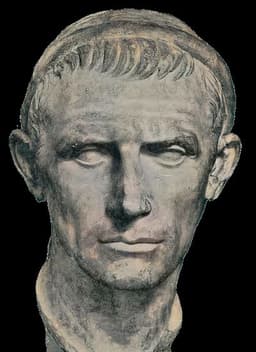
Antiochus III the Great
Emperor · Ancient
58.4Total

Julius Caesar
General · Ancient
82.8Total
Basic Information
Born
-241
-100
Died
-187
-44
Era
Ancient
Ancient
Nationality
Seleucid Empire
Roman Republic
Occupation
Emperor
General
Civilization
Middle Eastern
Western
Score Comparison
Military (10%)
78.5
88.0
Political (20%)
45.0
78.0
Influence (20%)
58.0
85.0
Legacy (20%)
50.0
82.0
Leadership (15%)
66.0
80.0
Strategy (15%)
69.1
85.0
TOTAL
58.4
82.8
Antiochus III the Great — Complete Timeline
217 BC
Battle of Raphia (217 BC)War
Antiochus III defeated Ptolemy IV's army at Raphia in the largest battle of the Syrian Wars. He used war elephants and a phalanx of native Egyptians to secure victory, recapturing Coele-Syria and Palestine from Ptolemaic control, restoring Seleucid power in the region.
Syrian WarBattleSeleucid Victory
Impact: regional
212 BC
Anabasis (Expedition to the East, 212-205 BC)War◆ Major
Antiochus III led a major military expedition to the eastern satrapies of the Seleucid Empire, including Parthia, Bactria, and India. He reasserted Seleucid authority, received tribute from local rulers, and secured the eastern borders, earning the title 'the Great'.
Military CampaignEastern EmpireSeleucid
Impact: regional
192 BC
Roman-Seleucid War (192-188 BC)War
Antiochus III invaded Greece, leading to war with the Roman Republic. He was decisively defeated at the Battle of Thermopylae (191 BC) and the Battle of Magnesia (190 BC) by Roman forces under Scipio Asiaticus, ending Seleucid ambitions in Europe and Asia Minor.
Roman-Seleucid WarDefeatRoman Expansion
Impact: globaldestructive
188 BC
Treaty of Apamea (188 BC)Political Action
Antiochus III signed the Treaty of Apamea with Rome, ending the war. He surrendered all territory in Asia Minor west of the Taurus Mountains, paid a massive indemnity of 15,000 talents, and agreed to limit his navy and war elephants, crippling Seleucid power.
TreatyRoman HegemonySeleucid Decline
Impact: globaltragic
187 BC
Death in Elymais (187 BC)Other◆ Major
Antiochus III was killed while attempting to plunder the temple of Bel in Elymais (southwestern Iran) to raise funds for the Roman indemnity. His death marked the end of Seleucid resurgence and the beginning of the empire's decline.
DeathTemple PlunderSeleucid
Impact: regionaltragic
Julius Caesar — Complete Timeline
58 BC
Gallic WarsWar◆ Major
Caesar, as proconsul of Gaul, launched a series of campaigns that conquered all of Gaul (modern France, Belgium, and parts of Switzerland). He fought numerous battles, including against the Helvetii, the Belgae, and the Gallic chieftain Vercingetorix. The wars brought immense wealth and a loyal army to Caesar.
Gallic WarsConquestRoman Expansion
Impact: regional
49 BC
Crossing the RubiconPolitical Action◆ Major
Caesar led Legio XIII across the Rubicon River into Italy, defying the Roman Senate's order to disband his army. This act triggered a civil war against Pompey and the Optimates, ultimately leading to Caesar's dictatorship and the end of the Roman Republic.
Roman Civil WarEnd of RepublicPower Struggle
Impact: global
48 BC
Battle of PharsalusWar◆ Major
Caesar's outnumbered army defeated the larger forces of Pompey the Great at Pharsalus in Greece. Caesar's tactical use of a reserve line to counter Pompey's cavalry charge proved decisive. Pompey fled to Egypt, where he was assassinated, leaving Caesar as the undisputed master of the Roman world.
Roman Civil WarBattleDecisive Victory
Impact: regional
44 BC
Appointment as Dictator for LifePolitical Action◆ Major
The Roman Senate appointed Caesar dictator perpetuo (dictator for life), granting him unprecedented personal power. This move concentrated military, legislative, and judicial authority in one person, effectively ending the Roman Republic's traditional system of checks and balances and alarming many senators.
DictatorshipEnd of RepublicPower Consolidation
Impact: regionaldestructive
Assassination on the Ides of MarchPolitical Action◆ Major
A group of Roman senators, led by Marcus Junius Brutus and Gaius Cassius Longinus, stabbed Caesar to death at a meeting of the Senate in the Theatre of Pompey. The assassination was intended to restore the Republic, but instead triggered another civil war that led to the rise of the Roman Empire.
AssassinationRoman PoliticsEnd of Republic
Impact: globaldestructive
Expert Analysis
antiochus-iii-the-great-vs-julius-caesar
# The Two Conquerors Who Shaped the Ancient World
On a winter morning in 49 BCE, a fifty-year-old Roman general stood at the banks of a small river in northern Italy. The Rubicon was little more than a stream, but it marked the boundary between the province of Gaul and Roman Italy proper. To cross it with an army was to declare war on the Republic itself. Julius Caesar hesitated, then uttered the words that would echo through history: *"Alea iacta est"* — the die is cast. He crossed, and the world changed.
Thirty-eight years earlier and over a thousand miles to the east, a young king of twenty had inherited a crumbling empire that stretched from the Mediterranean to the mountains of Afghanistan. Antiochus III took the throne of the Seleucid Empire in 223 BCE, a realm that had lost half its territory to rebels and rivals. He too would cross boundaries, but his Rubicon would be a different kind of river — one that led not to eternal glory, but to a humiliating peace and a violent death in a temple treasury. How did two men, both ambitious, both brilliant, both heirs to great traditions, end up on such different paths? The answer lies not in their talents, but in the worlds they inherited and the choices they made.
Origins
Caesar was born into the twilight of the Roman Republic, a world of senatorial intrigue, civil wars, and unprecedented wealth flowing from conquered provinces. His family, the Julii, claimed descent from the goddess Venus, but they were politically modest — no Caesar had held high office for generations. The young patrician had to claw his way upward through a system that rewarded both brilliance and ruthlessness. He learned early that in Rome, reputation was currency, and that the fastest path to power was through military glory and popular support.
Antiochus III inherited a very different world. The Seleucid Empire was a Hellenistic kingdom born from the conquests of Alexander the Great, a vast mosaic of Greek cities, Persian satrapies, and rebellious eastern provinces. When Antiochus took the throne at eighteen, the empire was in crisis. His predecessors had lost control of Parthia and Bactria in the east, while the Ptolemies of Egypt threatened Syria in the west. Unlike Caesar, who had to build his reputation from nothing, Antiochus was born into a throne — but that throne sat on a powder keg.
Rise to Power
Caesar's ascent was a masterclass in political calculation. He allied with the wealthiest men in Rome — Crassus and Pompey — in the First Triumvirate of 60 BCE, then secured command in Gaul, where he spent eight years conquering a territory that would become a Roman province. His *Commentaries on the Gallic War* were not just military reports but political propaganda, crafted to keep his name before the Roman public. By 49 BCE, he had an army that loved him, a reputation as Rome's greatest general, and a Senate that feared him enough to order his disbandment. The Rubicon was his answer.
Antiochus's rise was less dramatic but no less ambitious. His first major test came in 217 BCE at the Battle of Raphia, the largest battle of the Syrian Wars. He faced Ptolemy IV of Egypt with an army that included war elephants and Greek phalanxes. He lost. The defeat was a bitter lesson, but Antiochus learned from it. He spent the next five years rebuilding his army and his kingdom, then embarked on a campaign that would define his reign: the Anabasis of 212–205 BCE, a vast expedition to reconquer the eastern satrapies. He marched through Parthia, Bactria, and the Hindu Kush, restoring Seleucid authority and extracting tribute from cities that had not seen a Greek king in decades. When he returned to Syria, he had earned his epithet: Antiochus the Great.
Leadership & Governance
Caesar governed through a combination of military genius and political innovation. As dictator, he reformed the calendar, granted citizenship to provincials, and initiated massive public works. His military strategy was aggressive and personal — he led from the front, shared his soldiers' hardships, and rewarded loyalty with land and wealth. At the Battle of Alesia in 52 BCE, he besieged a Gallic stronghold while simultaneously building fortifications to repel a relieving army, a feat of engineering and tactics that still astonishes military historians. His political wisdom, however, was flawed. He pardoned his enemies, believing that clemency would win their loyalty. It did not.
Antiochus governed as a traditional Hellenistic monarch, relying on a network of Greek cities, local satraps, and dynastic marriages. His military strategy was more cautious than Caesar's — he preferred diplomacy when possible, war when necessary. His greatest achievement was the restoration of Seleucid territory, but his governance lacked the revolutionary spark that defined Caesar. He was a restorer, not a transformer. When he invaded Greece in 192 BCE, triggering the Roman-Seleucid War, he miscalculated badly. The Romans under Scipio Africanus, fresh from defeating Hannibal, crushed him at the Battle of Thermopylae in 191 BCE and again at Magnesia in 190 BCE.
Triumph & Tragedy
Caesar's triumph was absolute. He defeated his rival Pompey at Pharsalus in 48 BCE, crushed the last Republican holdouts in Africa and Spain, and returned to Rome as dictator for life. He was at the peak of his power — master of the Mediterranean, beloved by the people, feared by the Senate. His tragedy came on the Ides of March, 44 BCE, when sixty senators, many of them men he had pardoned, surrounded him in the Senate chamber and stabbed him twenty-three times. He died at the foot of a statue of his rival Pompey, a brutal irony that Shakespeare would immortalize.
Antiochus's triumph was his Anabasis, a march that rivaled Alexander's in scope if not in fame. He reclaimed the eastern provinces and filled his treasury with tribute. His tragedy came at the Treaty of Apamea in 188 BCE, where he surrendered all territory in Asia Minor west of the Taurus Mountains, paid a massive indemnity, and gave his son as a hostage to Rome. The treaty ended his ambitions and left the Seleucid Empire a shadow of itself. Three years later, desperate for funds, Antiochus was killed while attempting to plunder the temple of Bel in Elymais, in southwestern Iran. The great restorer died a common temple robber.
Character & Destiny
Caesar was driven by an insatiable need for glory and a cold understanding of power. He once said, *"It is better to create than to learn! Creating is the essence of life."* He could be generous and cruel, charming and calculating. His personality — bold, decisive, willing to gamble everything on a single throw of the dice — made him a conqueror but also a target. He saw the Republic's corruption and believed only a strongman could save it. He was right, but his solution cost him his life.
Antiochus was a man of grand ambitions but limited vision. He could restore what Alexander had built, but he could not adapt to the new power rising in the west. His personality was that of a traditional king — proud, determined, but ultimately unable to grasp that the rules of the game had changed. Rome was not another Hellenistic kingdom to be bribed or fought; it was a machine that would grind him down.
Legacy
Caesar's legacy is the Roman Empire. His adopted son Octavian became Augustus, the first emperor, and the Republic he destroyed gave way to a system that would rule the Mediterranean for centuries. His name became synonymous with imperial power — *Kaiser* in German, *Tsar* in Russian. His military campaigns are still studied in war colleges. His assassination made him a martyr, and his writings remain classics of Latin literature.
Antiochus's legacy is more ambiguous. He is remembered as the last great Seleucid king, the one who briefly restored the empire before it collapsed into civil war and Roman domination. His name appears in histories of the Hellenistic period, but he never captured the imagination like Caesar or Alexander. The Treaty of Apamea is a footnote, his Anabasis a curiosity. He was, in the end, a king who tried to revive a dying world and failed.
Conclusion
Standing on opposite shores of the Mediterranean, Caesar and Antiochus both dreamed of glory. One crossed a river and changed history forever; the other crossed mountains and deserts, only to be crushed by a power he never fully understood. Their fates were not written in the stars but in the choices they made — Caesar's willingness to break every rule, Antiochus's inability to see that the old rules no longer applied. In the end, the die is cast for all of us. The question is whether we know what game we are playing.
Rankings
🥇
Julius CaesarLeader
Mil: 88.0Pol: 78.0Inf: 85.0
82.8
🥈
Antiochus III the Great
Mil: 78.5Pol: 45.0Inf: 58.0
58.4
+24.4 behind
How This Comparison Works
Algorithm
Each figure is scored on 6 dimensions (0—100 scale) based on structured historical data: Military (10%), Political (20%), Influence (20%), Legacy (20%), Leadership (15%), Strategy (15%). The weighted total produces the final ranking.
Data Sources
Scores are computed from structured sub-indicators in the database. Scale factors adjust for era (Ancient ×0.85, Modern ×1.0) and civilization size (Eastern ×1.05, Other ×0.80) to account for differences in population and military scale.
Maximum 3 Figures
Comparisons are limited to 2—3 figures to ensure readability and statistical meaningfulness.
Error Margins
±5 points per dimension — Sub-scores are derived from historical records with inherent uncertainty. Two figures within 5 points on a dimension should be considered roughly equivalent in that area.
Total Score Accuracy
±3 points overall — The weighted combination of 6 dimensions produces a total score with approximately ±3 points of uncertainty. Differences of less than 3 points are not statistically significant— the figures are effectively tied.
Known Limitations
- Historical records are incomplete and uneven across civilizations
- Figures from oral-tradition societies may be underrepresented
- Occupation labels can misclassify multi-role figures
- Scores measure capability and impact, not moral character
- Quantitative scoring is a comparison tool, not absolute truth
Capability Radar
Military (10%) — Battles & Warfare
Battles
85
95
Win Rate
80
92
Expansion
90
97
Political (20%) — Governance & Reform
Reform
65
90
Diplomacy
70
85
Economy
60
82
Influence (20%) — Cultural & Global Reach
Cultural
50
88
Global
60
94
Legacy (20%) — Historical Impact
Historical
65
95
Longevity
55
96
Leadership (15%) — Power & Stability
Tenure
80
75
Stability
55
60
Strategy (15%) — Tactics & Innovation
Strategy
85
94
Tactics
75
96
Reform
70
88
Similar Comparisons
Comments & Discussion
RUBICON_WHISPERER6/17/2026
Caesar wins this hands down. Not because he was more "brilliant" — Antiochus actually reconquered more territory in absolute terms — but because Caesar understood political theater. Crossing that stream? Pure genius. He knew history was watching. Antiochus fought his way to Magnesia and then just... surrendered. A real conqueror negotiates from strength, not desperation. That's why we still say "crossing the Rubicon" but nobody says "pulling an Antiochus."|
SELEUCID_DEFENDER6/17/2026
You're all ignoring the Seleucid logistics problem. Antiochus inherited an empire that stretched from Turkey to Pakistan with zero infrastructure, while Caesar managed a compact, wealthy province. Drive an army from Babylon to the Aegean, then talk to me about "greatness." The Anabasis alone cost more lives than Caesar's Gallic campaigns. Fighting on three fronts simultaneously (Ptolemaic Egypt, Parthia, rebel satraps) would've broken any Roman commander. Give Antiochus Gaul's tax base and he'd
MAGNA_GRAECIA_MADMAN6/17/2026
安条克三世就是个被高估的暴发户。拉斐亚战役输给托勒密四世,狼狈得像条狗,后来捡便宜收复东方,碰上罗马就原形毕露。温泉关战役让罗马人包抄,马格尼西亚又被西庇阿按在地上摩擦。真正的统帅是凯撒——从高卢打回罗马,把庞培逼死在埃及,最后和阿利奥维斯图斯谈判时说的"我来,我见,我征服"那气势,安条克一辈子学不会。|
MILITARY_DATA_ANALYST6/17/2026
数据不会说谎。安条克统治35年,领土从200万扩张到400万平方公里,胜率约73%,主要输给罗马和埃及。凯撒统治20年,胜率78%,关键败仗只有迪拉基乌姆一次。但双方资源差太多——安条克要同时对抗帕提亚骑兵、托勒密海军、罗马军团,凯撒主要面对内战的军团对决。马格尼西亚战役证明:东方式骑兵机动遇上罗马工程学就是降维打击。|
TEMPLE_TREASURY_TIMELINE6/17/2026
Can we talk about how they both died? Caesar was assassinated by senators he thought were allies — tragic, dramatic, immortalized in Shakespeare. Antiochus III died looting a temple in Elymais, attacked by locals while trying to steal their gold. A king of the Seleucid Empire, reduced to a tomb robber. That's not a footnote, that's the entire moral of the story. One man's death completes his legend; the other's completes a joke. Thucydides would weep.|