Loading...
Antonio de Oliveira Salazar vs Lord Linlithgow
Antonio de Oliveira Salazar leads by 5.4 pts · 2 figures compared
…

Antonio de Oliveira Salazar
Politician · Modern
56.1Total
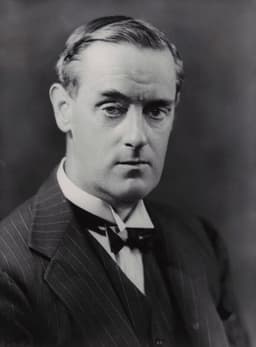
Lord Linlithgow
Politician · Modern
50.7Total
Basic Information
Born
1889
1887
Died
1970
1952
Era
Modern
Modern
Nationality
Portugal
United Kingdom
Occupation
Politician
Politician
Civilization
Western
Western
Score Comparison
Military (10%)
10.0
49.3
Political (20%)
75.0
42.3
Influence (20%)
59.0
51.8
Legacy (20%)
50.0
45.0
Leadership (15%)
85.0
74.0
Strategy (15%)
38.3
41.1
TOTAL
56.1
50.7
Antonio de Oliveira Salazar — Complete Timeline
1926 AD
Appointed Minister of FinancePolitical Action◆ Major
After the May 28, 1926 coup, Salazar was appointed Minister of Finance by President
Portuguese PoliticsFinancial ReformRise to Power
Impact: national
1933 AD
Established the Estado Novo RegimeReform◆ Major
Salazar oversaw the promulgation of a new constitution on April 11, 1933, creating the Estado Novo (New State). This corporatist, authoritarian regime replaced the unstable First Republic, concentrating power in Salazar's hands as Prime Minister and suppressing political opposition, trade unions, and free press.
AuthoritarianismConstitutionPolitical System
Impact: nationaldestructive
1939 AD
Maintained Portuguese Neutrality in World War IIOther◆ Major
Throughout World War II (1939-1945), Salazar kept Portugal officially neutral while leaning toward the Allies. He allowed the Allies to use bases in the Azores from 1943, while continuing to sell tungsten to Germany. This policy preserved Portuguese sovereignty and avoided invasion.
World War IINeutralityDiplomacy
Impact: global
1961 AD
Refused to Decolonize Portuguese AfricaOther◆ Major
When anti-colonial wars erupted in Angola (1961), Guinea-Bissau (1963), and Mozambique (1964), Salazar refused to grant independence, declaring Portugal's African territories as 'overseas provinces.' This decision led to the Portuguese Colonial War, lasting until 1974 and draining Portuguese resources.
Colonial WarDecolonizationAfrican Policy
Impact: globaldestructive
1968 AD
Suffered a Stroke and Lost PowerOther◆ Major
In September 1968, Salazar suffered a severe stroke that left him incapacitated. President Am
End of EraHealthSuccession Crisis
Impact: nationaldestructive
Lord Linlithgow — Complete Timeline
1936 AD
Appointed Viceroy of IndiaPolitical Action◆ Major
Lord Linlithgow was appointed Viceroy and Governor-General of India, a position he held until 1943. His tenure became the longest in the history of the British Raj, covering the critical period of World War II.
British RajViceroyaltyWorld War II
Impact: regional
1939 AD
Declared India a belligerent in WWIIPolitical Action◆ Major
Without consulting Indian political leaders, Linlithgow declared India at war with Germany on behalf of the British Empire. This unilateral decision provoked outrage among Indian nationalists and led to the resignation of Congress ministries in protest.
World War IIIndian NationalismBritish Empire
Impact: regionaldestructive
1940 AD
Launched the August OfferPolitical Action
Linlithgow proposed the August Offer, promising dominion status after the war and a constituent assembly. The offer was rejected by both the Indian National Congress and the Muslim League for not providing immediate self-government.
Constitutional ReformIndian IndependenceBritish Raj
Impact: regional
1942 AD
Ordered the Quit India Movement crackdownPolitical Action
Following the Quit India Resolution, Linlithgow ordered the mass arrest of Congress leaders including Gandhi, Nehru, and Patel. The crackdown led to widespread unrest and was a turning point in British-Indian relations.
Quit India MovementRepressionIndian Independence
Impact: regionaldestructive
Presided over the Cripps Mission failurePolitical Action◆ Major
Linlithgow facilitated the Cripps Mission, which offered India dominion status after the war. The mission failed when Congress rejected the offer due to lack of immediate self-rule and the provision for partition.
Cripps MissionIndian IndependencePartition
Impact: regional
Expert Analysis
Origins
Antonio de Oliveira Salazar was born on April 28, 1889, in Vimieiro, Portugal, to a modest rural family. His father was a small landowner and his mother a devout Catholic. Salazar excelled academically, studying law at the University of Coimbra and becoming a professor of political economy. His Catholic, conservative upbringing shaped his corporatist and anti-communist worldview.
Lord Linlithgow, Victor Hope, was born on September 24, 1887, in Edinburgh, Scotland, into an aristocratic family. His father was the 1st Marquess of Linlithgow, and he inherited the title in 1908. Educated at Eton and Oxford, he served in the British Army during World War I and later entered politics as a Conservative MP. His background epitomized the British imperial elite.
Rise to Power
Salazar rose to prominence through financial expertise. In 1926, after the military coup that overthrew the First Portuguese Republic, President Óscar Carmona appointed Salazar as Minister of Finance in 1928. Salazar demanded and received veto power over all government spending, stabilizing Portugal's economy by balancing budgets and reducing debt. His success led to his de facto control over policy, and in 1933, he oversaw the creation of the Estado Novo constitution, establishing an authoritarian corporatist state. He became Prime Minister in 1932 and ruled until 1968.
Linlithgow's rise was through aristocratic and political connections. He served as a junior minister in the 1920s and was appointed Viceroy of India in 1936, a position he held until 1943—the longest tenure. His appointment reflected British imperial strategy: a trusted figure to manage India during a period of rising nationalism and global tension. His rise was not based on personal achievement but on lineage and party loyalty.
Leadership & Governance
Salazar's leadership was technocratic and authoritarian. He centralized power, suppressed opposition through the PIDE secret police, and controlled media. His Estado Novo banned political parties and enforced Catholic social doctrine. Economically, he pursued autarky and protectionism, leading to slow growth but stability. His governance scored 85.0 in leadership, reflecting his tight control, but his strategy score was 38.3, indicating a lack of adaptive planning.
Linlithgow's governance was colonial and reactive. He ruled India through the British Raj, relying on bureaucracy and military force. His leadership score of 74.0 reflects his firm hand during WWII, but his political score of 42.3 shows his failure to engage Indian leaders. He declared India a belligerent in WWII without consulting anyone, alienating the Indian National Congress. He also presided over the failed Cripps Mission and the August Offer, which offered limited concessions but were rejected. His approach was rigid and dismissive of Indian aspirations.
Triumph & Tragedy
Salazar's greatest triumph was keeping Portugal neutral in World War II while aiding the Allies, preserving Portuguese sovereignty and avoiding destruction. He also stabilized Portugal's finances after years of chaos. His greatest tragedy was his refusal to decolonize Portuguese Africa, leading to costly colonial wars (1961-1974) that drained resources and eventually led to the Carnation Revolution in 1974, which overthrew the Estado Novo. His policies left Portugal isolated and impoverished.
Linlithgow's triumph was maintaining British control over India during WWII, despite the Quit India Movement. He ordered the crackdown that arrested Congress leaders, suppressing rebellion. His tragedy was his unilateralism, which deepened distrust between Britain and Indian nationalists. The failure of the Cripps Mission and his refusal to negotiate contributed to the eventual partition and violence. His legacy is tainted by the 1943 Bengal famine, which killed millions; his government's response was criticized as inadequate.
Character & Destiny
Salazar was ascetic, reclusive, and meticulous. He shunned personal publicity and lived modestly. His character was rigid and dogmatic, believing in his own infallibility. This led to his refusal to adapt to decolonization pressures, sealing his regime's fate. Historians note his intelligence but also his inability to reform.
Linlithgow was aristocratic, aloof, and imperious. He viewed Indian nationalism as a threat to empire and dismissed Congress as unrepresentative. His character reflected the British imperial mindset: convinced of his duty but oblivious to changing realities. His destiny was to be the viceroy who lost India, as his policies accelerated the end of British rule.
Legacy
Salazar's legacy is mixed. In Portugal, he is remembered as a dictator who kept the country stable but backward. His Estado Novo lasted until 1974, and his economic policies left Portugal underdeveloped. Internationally, he is a symbol of authoritarian corporatism. His influence score is 59.0, and legacy 50.0.
Linlithgow's legacy is largely negative in India, where he is seen as a symbol of colonial oppression. His handling of the Quit India Movement and the Bengal famine are condemned. In Britain, he is a footnote, overshadowed by Mountbatten. His influence score is 51.8, legacy 45.0.
Conclusion
Salazar had a greater impact than Linlithgow. Although both were authoritarian figures, Salazar shaped Portugal for nearly four decades, creating a regime that outlasted him and influenced other dictatorships. Linlithgow, while serving longer than any viceroy, was essentially a caretaker who failed to adapt to inevitable change. Salazar's total score of 56.1 surpasses Linlithgow's 50.7, and his political and leadership scores are higher. In terms of lasting institutional change, Salazar's Estado Novo was a more coherent system than Linlithgow's reactive colonial administration. Therefore, Salazar had greater historical impact.
Rankings
🥇
Antonio de Oliveira SalazarLeader
Mil: 10.0Pol: 75.0Inf: 59.0
56.1
🥈
Lord Linlithgow
Mil: 49.3Pol: 42.3Inf: 51.8
50.7
+5.4 behind
How This Comparison Works
Algorithm
Each figure is scored on 6 dimensions (0—100 scale) based on structured historical data: Military (10%), Political (20%), Influence (20%), Legacy (20%), Leadership (15%), Strategy (15%). The weighted total produces the final ranking.
Data Sources
Scores are computed from structured sub-indicators in the database. Scale factors adjust for era (Ancient ×0.85, Modern ×1.0) and civilization size (Eastern ×1.05, Other ×0.80) to account for differences in population and military scale.
Maximum 3 Figures
Comparisons are limited to 2—3 figures to ensure readability and statistical meaningfulness.
Error Margins
±5 points per dimension — Sub-scores are derived from historical records with inherent uncertainty. Two figures within 5 points on a dimension should be considered roughly equivalent in that area.
Total Score Accuracy
±3 points overall — The weighted combination of 6 dimensions produces a total score with approximately ±3 points of uncertainty. Differences of less than 3 points are not statistically significant— the figures are effectively tied.
Known Limitations
- Historical records are incomplete and uneven across civilizations
- Figures from oral-tradition societies may be underrepresented
- Occupation labels can misclassify multi-role figures
- Scores measure capability and impact, not moral character
- Quantitative scoring is a comparison tool, not absolute truth
Capability Radar
Military (10%) — Battles & Warfare
Battles
0
26
Win Rate
0
34
Expansion
0
37
Political (20%) — Governance & Reform
Reform
75
30
Diplomacy
70
40
Economy
80
30
Influence (20%) — Cultural & Global Reach
Cultural
40
10
Global
45
30
Legacy (20%) — Historical Impact
Historical
55
40
Longevity
50
20
Leadership (15%) — Power & Stability
Tenure
85
70
Stability
85
20
Strategy (15%) — Tactics & Innovation
Strategy
0
37
Tactics
0
41
Reform
10
41
Similar Comparisons
Comments & Discussion
No comments yet. Be the first to share your thoughts!