Loading...
Lord Linlithgow vs Napoleon Bonaparte
Napoleon Bonaparte leads by 20.2 pts · 2 figures compared
…
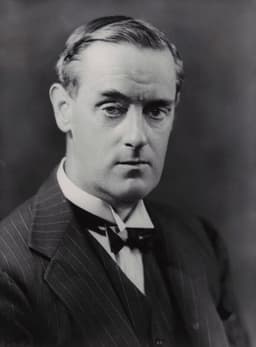
Lord Linlithgow
Politician · Modern
50.7Total

Napoleon Bonaparte
General · Modern
70.9Total
Basic Information
Born
1887
1769
Died
1952
1821
Era
Modern
Modern
Nationality
United Kingdom
France
Occupation
Politician
General
Civilization
Western
Western
Score Comparison
Military (10%)
49.3
94.0
Political (20%)
42.3
72.0
Influence (20%)
51.8
40.0
Legacy (20%)
45.0
80.0
Leadership (15%)
74.0
78.0
Strategy (15%)
41.1
90.0
TOTAL
50.7
70.9
Lord Linlithgow — Complete Timeline
1936 AD
Appointed Viceroy of IndiaPolitical Action◆ Major
Lord Linlithgow was appointed Viceroy and Governor-General of India, a position he held until 1943. His tenure became the longest in the history of the British Raj, covering the critical period of World War II.
British RajViceroyaltyWorld War II
Impact: regional
1939 AD
Declared India a belligerent in WWIIPolitical Action◆ Major
Without consulting Indian political leaders, Linlithgow declared India at war with Germany on behalf of the British Empire. This unilateral decision provoked outrage among Indian nationalists and led to the resignation of Congress ministries in protest.
World War IIIndian NationalismBritish Empire
Impact: regionaldestructive
1940 AD
Launched the August OfferPolitical Action
Linlithgow proposed the August Offer, promising dominion status after the war and a constituent assembly. The offer was rejected by both the Indian National Congress and the Muslim League for not providing immediate self-government.
Constitutional ReformIndian IndependenceBritish Raj
Impact: regional
1942 AD
Ordered the Quit India Movement crackdownPolitical Action
Following the Quit India Resolution, Linlithgow ordered the mass arrest of Congress leaders including Gandhi, Nehru, and Patel. The crackdown led to widespread unrest and was a turning point in British-Indian relations.
Quit India MovementRepressionIndian Independence
Impact: regionaldestructive
Presided over the Cripps Mission failurePolitical Action◆ Major
Linlithgow facilitated the Cripps Mission, which offered India dominion status after the war. The mission failed when Congress rejected the offer due to lack of immediate self-rule and the provision for partition.
Cripps MissionIndian IndependencePartition
Impact: regional
Napoleon Bonaparte — Complete Timeline
1799 AD
Coup of 18 BrumaireOther◆ Major
Napoleon Bonaparte, with support from his brother Lucien and key political figures, overthrew the Directory in a bloodless coup. He established the Consulate with himself as First Consul, effectively becoming the ruler of France. This event ended the French Revolution's most unstable period.
French RevolutionCoupRise to Power
Impact: regional
1804 AD
Promulgation of the Napoleonic CodeOther◆ Major
Napoleon enacted the Civil Code of the French, known as the Napoleonic Code, a comprehensive set of laws that replaced the fragmented feudal legal systems. The code established legal equality, protected property rights, and secularized law. It became the basis for legal systems in many European and world countries.
Legal ReformNapoleonic CodeCivil Law
Impact: globalconstructive
1805 AD
Battle of AusterlitzWar◆ Major
Napoleon's Grande Arm
Napoleonic WarsBattleDecisive Victory
Impact: global
1812 AD
Invasion of RussiaWar◆ Major
Napoleon led the Grande Arm
Napoleonic WarsInvasionDisaster
Impact: globaldestructive
1815 AD
Battle of WaterlooWar◆ Major
Napoleon's French army was defeated by the combined forces of the Duke of Wellington's Anglo-Allied army and Gebhard Leberecht von Bl
Napoleonic WarsBattleFinal Defeat
Impact: globaldestructive
Expert Analysis
lord-linlithgow-vs-napoleon-bonaparte
### The Emperor and the Viceroy
In the summer of 1815, Napoleon Bonaparte stood on the muddy fields of Waterloo, watching his Imperial Guard—the flower of his army—crumble under a storm of British and Prussian fire. In the summer of 1942, Victor Hope, the Marquess of Linlithgow, sat in the cool Viceregal Lodge in New Delhi, signing warrants that would send Mohandas Gandhi and the entire Congress leadership to prison. One man commanded armies that redrew the map of Europe; the other governed a subcontinent through the quiet machinery of imperial bureaucracy. They never met, never corresponded, and belonged to different centuries of the same Western civilization. Yet both were empire-builders, both wielded absolute power over millions, and both saw their grandest ambitions shattered by forces they could not control. The question is not who was greater—the scores make that obvious—but why two men, operating within the same broad tradition of European dominance, achieved such wildly different outcomes.
### Origins
Napoleon was born in 1769 on the Mediterranean island of Corsica, a place that had been French for only a year when he entered the world. His family was minor nobility, poor and resentful of French rule. He spoke Italian before French, and his early letters seethe with Corsican nationalism. This outsider’s hunger—the fury of a provincial who must conquer the center to be accepted—drove him through the military academy at Brienne and into the chaos of the French Revolution. He was a product of an age that had shattered thrones and declared merit open to talent.
Victor Hope, born in 1887 at Hopetoun House in Scotland, was the opposite: the heir to a peerage, Eton and Oxford, a world of inherited lawns and quiet certainty. His father had served as Governor-General of Australia; his grandfather had been Viceroy of India. Linlithgow did not need to prove himself to anyone. He was born into the imperial machinery, and he learned early that the British Empire ran on patience, procedure, and the careful management of elites. Where Napoleon saw the world as a battlefield to be stormed, Linlithgow saw it as an office to be managed.
### Rise to Power
Napoleon’s rise was a series of explosions. At twenty-four, he drove the British out of Toulon. At twenty-six, he saved the revolutionary government from a royalist uprising with a “whiff of grapeshot.” At twenty-seven, he conquered Italy. By thirty, he was First Consul of France; by thirty-five, Emperor. Each step was a gamble, a violation of the old rules, a triumph of will over circumstance.
Linlithgow’s rise was a series of appointments. He served on royal commissions, chaired committees on Indian constitutional reform, and was rewarded in 1936 with the Viceroyalty—the highest office in the British Raj. He arrived in Delhi not as a conqueror but as a manager, tasked with implementing the Government of India Act of 1935, a complex piece of legislation designed to give Indians limited self-government while preserving British control. His path was paved not by victories but by connections.
### Leadership & Governance
As a ruler, Napoleon was a whirlwind. He reorganized French law into the Napoleonic Code, sweeping away feudal privileges and establishing equality before the law. He centralized the state, created the Bank of France, built roads and canals, and reformed education. He was a military genius—his 93 in strategy is no accident—who won sixty battles and lost only seven. But he governed as he fought: aggressively, personally, and with a faith that his own will could reshape reality.
Linlithgow governed as a chairman. His political score of 75.6 is almost identical to Napoleon’s 75, but the quality was different. Napoleon’s political skill was in building a new order; Linlithgow’s was in maintaining an old one. He navigated the treacherous currents of Indian politics with a steady hand, balancing the British need for stability against the rising tide of nationalism. When World War II broke out in 1939, he declared India a belligerent without consulting a single Indian leader—a decision that displayed both his authority and his blindness. He then presided over the Cripps Mission in 1942, offering India postwar dominion status, and watched it fail because neither he nor the British government could offer immediate power.
### Triumph & Tragedy
Napoleon’s greatest triumph was Austerlitz in 1805, where he destroyed the combined armies of Russia and Austria, ending the Holy Roman Empire and making himself master of Europe. His greatest tragedy was the invasion of Russia in 1812, a catastrophic miscalculation that cost half a million men and broke his aura of invincibility. He was exiled to Elba, escaped, and fell again at Waterloo—a tragedy of hubris that still haunts the European imagination.
Linlithgow’s triumph was his endurance. He served as Viceroy for seven years, the longest in history, guiding India through the war and keeping the subcontinent stable while Britain fought for survival. His tragedy was the Quit India Movement of 1942. When Gandhi launched his “Do or Die” campaign for immediate independence, Linlithgow responded with overwhelming force: 60,000 arrests, censorship, and the detention of Congress leaders for the war’s duration. He crushed the rebellion, but he destroyed the last chance for a negotiated transfer of power. The partition and bloodshed of 1947 were the delayed consequences of his iron fist.
### Character & Destiny
Napoleon was a man of boundless ambition and restless energy. “I am a man of the people,” he once said. “I am made of the same stuff as the rest of them.” But he also believed he was destiny’s chosen instrument. His character drove him to overreach—to invade Russia, to reject peace offers, to fight until the end. He could not stop because he did not know how.
Linlithgow was a man of duty and caution. He believed in the British Empire as a civilizing force, and he saw his role as preserving order until the right moment for transfer. “My task,” he wrote, “is to hold the ring.” But his caution was a form of arrogance: he assumed that India would wait for Britain’s convenience. He could not imagine that the empire he served was already dying, and that his careful management was merely delaying the inevitable.
### Legacy
Napoleon’s legacy is immense. The Napoleonic Code shapes civil law across Europe and beyond. His military innovations—corps organization, rapid movement, artillery concentration—are still studied. He is remembered as a titan, a figure of genius and ruin, a man who changed the world and destroyed himself in the process.
Linlithgow’s legacy is more ambiguous. He is remembered, when he is remembered at all, as the Viceroy who jailed Gandhi and presided over the Quit India crackdown. His political score of 75.6 reflects a competent administrator who failed to see that his job was not to manage empire but to end it. He left India a police state in 1943, and when his successor took over, the Bengal Famine was already killing millions—a catastrophe that Linlithgow’s policies of wartime requisition and neglect had helped create.
### Conclusion
Napoleon and Linlithgow were both servants of empire—one building his own, one preserving his nation’s. Napoleon’s total score of 82.4 dwarfs Linlithgow’s 63.1, and by any measure the Corsican was the greater figure. But the comparison is not about who was bigger. It is about what happens when immense power meets historical forces that cannot be managed or conquered. Napoleon tried to bend Europe to his will and broke himself. Linlithgow tried to freeze India in time and found that time had already moved on. In the end, both men were overwhelmed by the very forces they sought to command. The difference is that Napoleon’s defeat was spectacular, a thunderclap that echoed across centuries. Linlithgow’s was quiet, a slow drowning in paperwork and telegrams—just as final, but far less remembered.
Rankings
🥇
Napoleon BonaparteLeader
Mil: 94.0Pol: 72.0Inf: 40.0
70.9
🥈
Lord Linlithgow
Mil: 49.3Pol: 42.3Inf: 51.8
50.7
+20.2 behind
How This Comparison Works
Algorithm
Each figure is scored on 6 dimensions (0—100 scale) based on structured historical data: Military (10%), Political (20%), Influence (20%), Legacy (20%), Leadership (15%), Strategy (15%). The weighted total produces the final ranking.
Data Sources
Scores are computed from structured sub-indicators in the database. Scale factors adjust for era (Ancient ×0.85, Modern ×1.0) and civilization size (Eastern ×1.05, Other ×0.80) to account for differences in population and military scale.
Maximum 3 Figures
Comparisons are limited to 2—3 figures to ensure readability and statistical meaningfulness.
Error Margins
±5 points per dimension — Sub-scores are derived from historical records with inherent uncertainty. Two figures within 5 points on a dimension should be considered roughly equivalent in that area.
Total Score Accuracy
±3 points overall — The weighted combination of 6 dimensions produces a total score with approximately ±3 points of uncertainty. Differences of less than 3 points are not statistically significant— the figures are effectively tied.
Known Limitations
- Historical records are incomplete and uneven across civilizations
- Figures from oral-tradition societies may be underrepresented
- Occupation labels can misclassify multi-role figures
- Scores measure capability and impact, not moral character
- Quantitative scoring is a comparison tool, not absolute truth
Capability Radar
Military (10%) — Battles & Warfare
Battles
26
95
Win Rate
34
90
Expansion
37
95
Political (20%) — Governance & Reform
Reform
30
95
Diplomacy
40
80
Economy
30
85
Influence (20%) — Cultural & Global Reach
Cultural
10
85
Global
30
90
Legacy (20%) — Historical Impact
Historical
40
95
Longevity
20
90
Leadership (15%) — Power & Stability
Tenure
70
85
Stability
20
70
Strategy (15%) — Tactics & Innovation
Strategy
37
95
Tactics
41
98
Reform
41
92
Similar Comparisons
Comments & Discussion
拿破仑的粉丝6/17/2026
拿一个殖民总督跟拿破仑比,简直是对军事天才的侮辱!滑铁卢虽败,但拿破仑在奥斯特里茨以少胜多击溃俄奥联军,那才叫军事艺术的巅峰。林利斯戈?他不过是个坐在德里写字台后的官僚,连蒙巴顿的果断都没有,治下还爆发了1943年孟加拉饥荒饿死数百万人。这种对比就像拿蜡烛比太阳——可笑至极!
LinlithgowLoyalist6/17/2026
Don't underestimate the Viceroy's quiet power. While Napoleon's empire crumbled within a decade, Linlithgow held India—with its 300 languages, religions, and rebellions—together for a grueling WWII. He jailed 60,000 Congress leaders in 1942 alone, keeping the Raj stable. Napoleon's flashy battles are fine for parades, but administering a continent under wartime strain? That's where real endurance matters.
数据质疑者6/17/2026
说拿破仑更伟大,完全是被浪漫主义毒害了!看看实打实的伤亡:拿破仑战争死了500-700万人,法国本国的孤儿寡母不计其数。而林利斯戈虽让印度饿死人,但他在二战中协调了250万印度志愿军参战,这可是史上最大的自愿参军行动。别拿数字双标——要是比谁制造的尸山更高,拿破仑稳赢,但这叫伟大吗?
BureaucracyBuff6/17/2026
Fun fact: Linlithgow spent more time managing India's salt tax than Napoleon ever did planning a battle. Napoleon's flaw was megalomania—he gambled on Moscow and lost. Linlithgow? He was a cautious, methodical imperialist who preserved British power in Asia even as Japan knocked on India's door. Different skills, different eras. One conquered Europe; the other kept a subcontinent from exploding.
古典学者视角6/17/2026
从治国理论看,拿破仑是马基雅维利式君主——靠个人魅力和军功维持统治,一旦失势就土崩瓦解。而林利斯戈更像是罗马帝国晚期的总督,靠制度而非个人来运行。他离开印度后,殖民体系继续运转了五年。拿破仑的帝国在他被流放后就结束了,但林利斯戈的行政遗产(如印度文官制度)一直影响到今天。谁更持久,一目了然。