Loading...
Antonio Gramsci vs Jean-Jacques Rousseau
Jean-Jacques Rousseau leads by 1.4 pts · 2 figures compared
…

Antonio Gramsci
Philosopher · Modern
42.1Total
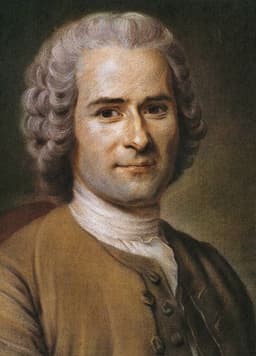
Jean-Jacques Rousseau
Philosopher · Modern
43.5Total
Basic Information
Born
1891
1712
Died
1937
1778
Era
Modern
Modern
Nationality
Italy
France
Occupation
Philosopher
Philosopher
Civilization
Western
Western
Score Comparison
Military (10%)
9.0
9.1
Political (20%)
35.0
33.8
Influence (20%)
56.7
65.0
Legacy (20%)
52.0
40.0
Leadership (15%)
27.2
45.4
Strategy (15%)
46.6
44.4
TOTAL
42.1
43.5
Antonio Gramsci — Complete Timeline
1921 AD
Co-founding of the Italian Communist PartyPolitical Action◆ Major
Gramsci co-founded the Italian Communist Party (PCI) in Livorno, splitting from the Socialist Party. He became a leading theorist, advocating for a Marxist revolution in Italy and opposing Fascism.
Communist PartyMarxismItaly
Impact: nationalprogressive
1926 AD
Arrest and Imprisonment by FascistsPolitical Action◆ Major
Gramsci was arrested by Mussolini's Fascist regime and sentenced to 20 years in prison. Despite his poor health, he used his imprisonment to write the Prison Notebooks, a foundational work of Marxist theory.
FascismImprisonmentPolitical Repression
Impact: nationaltragic
1929 AD
Writing of the Prison NotebooksCultural
While in prison, Gramsci began writing the Prison Notebooks, a collection of essays on hegemony, ideology, and political theory. The notebooks, smuggled out and published posthumously, became a cornerstone of Western Marxism.
Prison NotebooksMarxist TheoryHegemony
Impact: globalconstructive
1937 AD
Death from Illness in PrisonOther◆ Major
Gramsci died in a Rome clinic shortly after his release from prison, due to complications from tuberculosis and other ailments. His death cut short his intellectual work, but his ideas continued to influence leftist thought globally.
DeathImprisonmentIntellectual Legacy
Impact: globaltragic
Jean-Jacques Rousseau — Complete Timeline
1755 AD
Publication of Discourse on the Origin and Basis of Inequality Among MenCultural◆ Major
Rousseau argued that human inequality originated with the establishment of private property and civil society, corrupting natural human goodness. This work challenged Enlightenment optimism about progress and laid the groundwork for Romanticism and critiques of modern civilization.
InequalityPhilosophyRomanticism
Impact: globalconstructive
1762 AD
Publication of The Social ContractCultural
Rousseau published his political treatise arguing that legitimate political authority rests on a social contract formed by the general will of the people. The work's ideas of popular sovereignty and direct democracy influenced the French Revolution and modern democratic theory.
Political PhilosophySocial ContractGeneral Will
Impact: globalconstructive
Publication of Émile, or On EducationCultural◆ Major
Rousseau published a treatise on education advocating for natural development and learning through experience rather than rote instruction. The book was condemned by the Paris Parliament and the Catholic Church for its religious views, and Rousseau fled France to avoid arrest.
EducationPhilosophyCensorship
Impact: globalconstructive
1766 AD
Exile in EnglandPolitical Action
After the condemnation of
ExileEnglandParanoia
Impact: nationaltragic
Expert Analysis
Origins
Antonio Gramsci was born on January 22, 1891, in Ales, Sardinia, into a lower-middle-class family. His father, Francesco Gramsci, was a civil servant who faced financial difficulties and was imprisoned for fraud, plunging the family into poverty. Gramsci suffered from a spinal deformity (Pott's disease) that stunted his growth and left him frail. He excelled academically, winning a scholarship to the University of Turin in 1911, where he studied linguistics and literature. His early experiences with poverty and regional inequality shaped his Marxist convictions.
Jean-Jacques Rousseau was born on June 28, 1712, in Geneva, Switzerland, to a watchmaker father and a mother who died shortly after his birth. He was largely self-taught, leaving Geneva at 16 and wandering through Savoy, where he was taken in by Madame de Warens. Rousseau's education was informal, heavily influenced by reading Enlightenment thinkers. His early life was marked by instability, apprenticeships, and a conversion to Catholicism, which later shaped his critique of civilization.
Both thinkers emerged from modest backgrounds and developed radical critiques of existing social orders, though Gramsci's formation was more academic and political, while Rousseau's was experiential and philosophical.
Rise to Power
Gramsci's rise began in Turin's socialist circles. He joined the Italian Socialist Party (PSI) in 1913 and became a journalist for socialist newspapers. In 1919, he co-founded the newspaper *L'Ordine Nuovo*, advocating for factory councils as a model for workers' democracy. His leadership during the 1920 factory occupations brought him national attention. In 1921, he co-founded the Italian Communist Party (PCI) and became its general secretary in 1924. He was elected to parliament in 1924, but his political ascent was cut short by his arrest in 1926 under Mussolini's fascist regime.
Rousseau's rise was slower and more literary. He gained fame in 1750 by winning the Academy of Dijon's essay contest with his *Discourse on the Arts and Sciences*, arguing that civilization corrupts natural virtue. His 1755 *Discourse on Inequality* further established his reputation as a radical critic of property and society. The publication of *The Social Contract* (1762) and *Émile* (1762) made him a central figure of the Enlightenment, but also brought condemnation from French authorities, forcing him into exile.
Gramsci's rise was driven by direct political action; Rousseau's by philosophical provocation. Both faced state repression.
Leadership & Governance
Gramsci's leadership was intellectual and organizational. He emphasized building a counter-hegemonic culture through education and alliances with non-proletarian groups. His concept of hegemony argues that the ruling class maintains power not only through force but through cultural and ideological dominance, gaining consent from subordinate classes. He advocated for a "war of position"—a slow, strategic struggle for cultural influence—rather than a direct assault on the state. His governance approach was democratic centralist, but his practical leadership was limited by imprisonment.
Rousseau's governance philosophy centered on the "general will"—the collective interest of the people that should guide state action. He advocated for direct democracy in small states and criticized representative government. In *The Social Contract*, he argued that legitimate authority arises from a social contract where individuals surrender their natural rights to the community. His ideas influenced revolutionary leaders, but he never held political office. His personal life was chaotic, marked by paranoia and conflict with fellow philosophers.
Gramsci scored 27.2 in leadership, reflecting his limited practical governance; Rousseau scored 45.4, higher due to his direct influence on revolutionary thought. However, Gramsci's strategic thinking (46.6) slightly edged Rousseau's (44.4).
Triumph & Tragedy
Gramsci's greatest triumph was the *Prison Notebooks*, written between 1929 and 1935. These 33 notebooks developed concepts like cultural hegemony, passive revolution, and organic intellectuals, which became foundational for Western Marxism and cultural studies. His greatest tragedy was his death at age 46 in 1937, shortly after his release from prison, due to tuberculosis. He left behind a fragmented but highly influential body of work. His political failure—the defeat of the Italian left under fascism—was offset by his intellectual legacy.
Rousseau's triumph was the profound impact of *The Social Contract* and *Émile*. His ideas on popular sovereignty, the general will, and natural education inspired the French Revolution and Romanticism. His tragedy was his personal isolation and persecution: his books were banned, he fled into exile, and he spent his final years in paranoia and poverty, dying in 1778 at age 66. He also fathered five children whom he placed in foundling homes, a fact that contradicted his educational philosophy.
Both suffered persecution and early death, but their ideas survived and thrived.
Character & Destiny
Gramsci was disciplined, analytical, and resilient. Despite severe health problems—he was a hunchback with chronic illness—he produced a massive body of work in prison. His character was marked by a deep commitment to Marxist theory and a belief in the transformative power of culture. His destiny was shaped by his political engagement: his arrest allowed him the time to write, but also shortened his life.
Rousseau was emotional, suspicious, and contradictory. He was a moral philosopher who struggled with personal morality, a champion of freedom who felt persecuted. His character led to conflicts with other Enlightenment thinkers like Voltaire and Hume. His destiny was that of an outsider whose ideas reshaped society but who never found peace. Historians often note his paranoia and sensitivity.
Gramsci's discipline allowed him to create a systematic theory; Rousseau's passion drove him to challenge conventions but also isolated him.
Legacy
Gramsci's legacy is strongest in political theory and cultural studies. His concept of hegemony is used by scholars to analyze media, education, and power. His influence score is 56.7, and his legacy score 52.0. The *Prison Notebooks* are essential reading in Marxist theory. He influenced thinkers like Stuart Hall, Ernesto Laclau, and the Birmingham School. His ideas on organic intellectuals remain relevant in discussions of political activism.
Rousseau's legacy is broader and more pervasive. His influence on the French Revolution is direct: the Jacobins invoked the general will. His educational ideas shaped progressive education. His critique of inequality influenced socialism and anarchism. Rousseau's influence score is 65.0, and his legacy score 40.0. He is considered a father of modern political philosophy, alongside Hobbes and Locke.
Gramsci's legacy is more specialized; Rousseau's is foundational for modern democracy and education.
Conclusion
Jean-Jacques Rousseau had a greater overall impact than Antonio Gramsci. Rousseau's total score is 43.5, slightly above Gramsci's 42.1. More importantly, Rousseau's ideas directly shaped political revolutions and modern educational systems, while Gramsci's influence is largely confined to academic Marxism. Rousseau's concepts of popular sovereignty and the social contract are embedded in democratic theory, whereas Gramsci's hegemony is a tool for analyzing power, not a blueprint for revolution. Gramsci's work is a refinement of Marxism; Rousseau's is a radical departure from Enlightenment thought. Thus, Rousseau's broader and more foundational influence gives him the edge. However, Gramsci's insights into cultural power remain vital for understanding modern societies, and his strategic thinking (46.6) offers a nuanced alternative to revolutionary romanticism.
Rankings
🥇
Jean-Jacques RousseauLeader
Mil: 9.1Pol: 33.8Inf: 65.0
43.5
🥈
Antonio Gramsci
Mil: 9.0Pol: 35.0Inf: 56.7
42.1
+1.4 behind
How This Comparison Works
Algorithm
Each figure is scored on 6 dimensions (0—100 scale) based on structured historical data: Military (10%), Political (20%), Influence (20%), Legacy (20%), Leadership (15%), Strategy (15%). The weighted total produces the final ranking.
Data Sources
Scores are computed from structured sub-indicators in the database. Scale factors adjust for era (Ancient ×0.85, Modern ×1.0) and civilization size (Eastern ×1.05, Other ×0.80) to account for differences in population and military scale.
Maximum 3 Figures
Comparisons are limited to 2—3 figures to ensure readability and statistical meaningfulness.
Error Margins
±5 points per dimension — Sub-scores are derived from historical records with inherent uncertainty. Two figures within 5 points on a dimension should be considered roughly equivalent in that area.
Total Score Accuracy
±3 points overall — The weighted combination of 6 dimensions produces a total score with approximately ±3 points of uncertainty. Differences of less than 3 points are not statistically significant— the figures are effectively tied.
Known Limitations
- Historical records are incomplete and uneven across civilizations
- Figures from oral-tradition societies may be underrepresented
- Occupation labels can misclassify multi-role figures
- Scores measure capability and impact, not moral character
- Quantitative scoring is a comparison tool, not absolute truth
Capability Radar
Military (10%) — Battles & Warfare
Battles
14
18
Win Rate
20
21
Expansion
21
19
Political (20%) — Governance & Reform
Reform
40
60
Diplomacy
20
64
Economy
30
67
Influence (20%) — Cultural & Global Reach
Cultural
70
85
Global
65
75
Legacy (20%) — Historical Impact
Historical
70
80
Longevity
75
85
Leadership (15%) — Power & Stability
Tenure
10
53
Stability
10
69
Strategy (15%) — Tactics & Innovation
Strategy
24
24
Tactics
30
25
Reform
33
32
Similar Comparisons
Comments & Discussion
No comments yet. Be the first to share your thoughts!