Loading...
Jean-Jacques Rousseau vs Qin Shi Huang
Qin Shi Huang leads by 41.7 pts · 2 figures compared
…
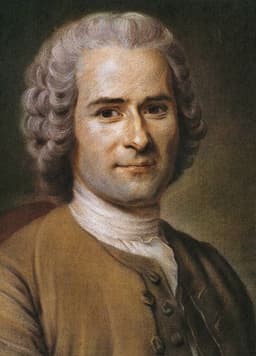
Jean-Jacques Rousseau
Philosopher · Modern
43.5Total
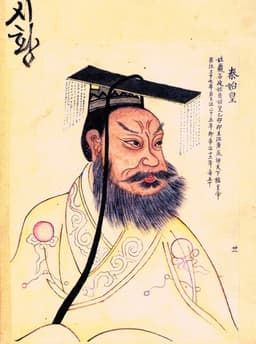
Qin Shi Huang
Emperor · Ancient
85.2Total
Basic Information
Born
1712
-259
Died
1778
-210
Era
Modern
Ancient
Nationality
France
China
Occupation
Philosopher
Emperor
Civilization
Western
Eastern
Score Comparison
Military (10%)
9.1
80.0
Political (20%)
33.8
90.0
Influence (20%)
65.0
85.0
Legacy (20%)
40.0
90.0
Leadership (15%)
45.4
78.0
Strategy (15%)
44.4
82.0
TOTAL
43.5
85.2
Jean-Jacques Rousseau — Complete Timeline
1755 AD
Publication of Discourse on the Origin and Basis of Inequality Among MenCultural◆ Major
Rousseau argued that human inequality originated with the establishment of private property and civil society, corrupting natural human goodness. This work challenged Enlightenment optimism about progress and laid the groundwork for Romanticism and critiques of modern civilization.
InequalityPhilosophyRomanticism
Impact: globalconstructive
1762 AD
Publication of The Social ContractCultural
Rousseau published his political treatise arguing that legitimate political authority rests on a social contract formed by the general will of the people. The work's ideas of popular sovereignty and direct democracy influenced the French Revolution and modern democratic theory.
Political PhilosophySocial ContractGeneral Will
Impact: globalconstructive
Publication of Émile, or On EducationCultural◆ Major
Rousseau published a treatise on education advocating for natural development and learning through experience rather than rote instruction. The book was condemned by the Paris Parliament and the Catholic Church for its religious views, and Rousseau fled France to avoid arrest.
EducationPhilosophyCensorship
Impact: globalconstructive
1766 AD
Exile in EnglandPolitical Action
After the condemnation of
ExileEnglandParanoia
Impact: nationaltragic
Qin Shi Huang — Complete Timeline
246 BC
Construction of the Mausoleum and Terracotta ArmyOther◆ Major
Qin Shi Huang commissioned a vast mausoleum complex near Xi'an, guarded by thousands of life-sized terracotta soldiers, horses, and chariots. The project employed hundreds of thousands of workers and reflected his obsession with immortality and imperial power.
Impact: global
230 BC
Conquest of the Six Warring StatesWar
From 230 to 221 BCE, Ying Zheng led the Qin state in a series of campaigns that conquered the Han, Zhao, Wei, Chu, Yan, and Qi states. This unified China under a single ruler for the first time, ending the Warring States period.
Impact: global
221 BC
Standardization of Writing, Currency, and MeasurementsReform◆ Major
Qin Shi Huang ordered the standardization of Chinese script, currency, and weights and measures across the unified empire. This facilitated administration, trade, and cultural integration, laying a foundation for future dynasties.
Impact: globalconstructive
Proclamation of the Qin DynastyPolitical Action
After conquering the last independent state, Ying Zheng declared himself Shi Huangdi (First Emperor), founding the Qin Dynasty. He adopted a new title to signify his supreme authority and initiated centralized imperial rule.
Impact: global
214 BC
Initiation of the Great Wall ConstructionOther◆ Major
Qin Shi Huang ordered the connection and extension of existing northern fortifications to create a unified defensive wall against nomadic Xiongnu raids. This project involved massive conscripted labor and became the precursor to the later Great Wall.
Impact: regional
213 BC
Burning of Books and Burying of ScholarsPolitical Action◆ Major
On the advice of Li Si, Qin Shi Huang ordered the burning of historical records and philosophical texts not aligned with Legalist doctrine. He also had 460 Confucian scholars buried alive to suppress dissent and consolidate ideological control.
Impact: nationaldestructive
Expert Analysis
jean-jacques-rousseau-vs-qin-shi-huang
### The Emperor and the Philosopher: How Power and Ideas Shaped Two Worlds
On a cold winter morning in 221 BC, a young king named Ying Zheng stood before the walls of the last independent state in ancient China. His armies had crushed the Han, Zhao, Wei, Chu, Yan, and Qi kingdoms in a relentless series of campaigns that began in 230 BC. Now, at the age of thirty-eight, he declared himself *Shi Huangdi*—the First Emperor. Across the globe, nearly two thousand years later, in 1762, a solitary Genevan philosopher named Jean-Jacques Rousseau published a pamphlet titled *The Social Contract*. His words, printed on paper and smuggled across borders, would shake the thrones of Europe. One man built an empire with iron and blood; the other forged a revolution with ink and ideas. What drove these two figures to such different fates? The answer lies not merely in their actions, but in the worlds they inherited and the choices they made.
**Origins**
Qin Shi Huang was born in 259 BC into a violent, fragmented China. The Warring States period had raged for centuries, a brutal contest of survival where states devoured one another. His father was a king, but his mother was a concubine, and his early life was a web of palace intrigue. He learned that power was a weapon to be seized, not a gift to be received. His world demanded ruthlessness. Rousseau, by contrast, entered Geneva in 1712, a city of clockmakers and Calvinist discipline. His mother died days after his birth, and his father, a watchmaker, abandoned him. He was a wanderer, an autodidact, a man who felt perpetually out of place. Where Qin Shi Huang was forged in the furnace of war, Rousseau was shaped by the loneliness of exile. The emperor saw chaos and believed order must be imposed; the philosopher saw inequality and believed society must be reformed.
**Rise to Power**
Qin Shi Huang’s rise was a military conquest. At thirteen, he inherited the throne of Qin, a state already hardened by Legalist reforms. By 230 BC, he began his campaign to unify the six kingdoms. It was not a rebellion but a systematic annexation, a project of annihilation and assimilation. His path was clear: victory or death. Rousseau’s rise was intellectual and accidental. He was a late bloomer, winning a prize in 1750 for an essay arguing that the arts and sciences had corrupted humanity. He did not lead armies; he led arguments. His *Discourse on the Origin and Basis of Inequality Among Men* (1755) shocked readers by blaming private property for human misery. He did not seize a throne; he seized a conversation. The emperor’s power was absolute because he commanded soldiers; Rousseau’s power was dangerous because he commanded ideas.
**Leadership & Governance**
As emperor, Qin Shi Huang ruled with an iron hand. He standardized writing, currency, and weights and measures across his vast domain—a reform ordered in 221 BC that would outlast his dynasty. He connected northern fortifications into what would become the Great Wall, beginning construction in 214 BC. But his governance was also terror. On the advice of his chancellor Li Si, he ordered the burning of historical records and philosophical texts not aligned with Legalist doctrine in 213 BC, and buried scholars alive who resisted. He believed unity required uniformity. Rousseau, who never governed a nation, imagined a different kind of rule. In *The Social Contract* (1762), he argued that legitimate authority rests on the “general will”—the collective consent of the people. He championed individual freedom, yet his ideas could be twisted to justify tyranny. Where the emperor crushed dissent, the philosopher dreamed of a society where citizens would be “forced to be free.” Their leadership styles could not be more opposite: one demanded obedience, the other demanded participation.
**Triumph & Tragedy**
Qin Shi Huang’s greatest triumph was the unification of China—a feat that created a template for imperial rule that would last for two millennia. His greatest tragedy was his obsession with immortality. He sent expeditions for the elixir of life, built a vast mausoleum guarded by the Terracotta Army (commissioned in 246 BC), and died in 210 BC at the age of forty-nine, possibly from mercury poisoning. His dynasty collapsed within four years of his death. Rousseau’s triumph was the publication of *Émile, or On Education* (1762), a treatise that revolutionized how we think about childhood. His tragedy was the backlash. Both *Émile* and *The Social Contract* were condemned by the French authorities, and Rousseau fled to England in 1766, a fugitive from his own country. He died in 1778, impoverished and paranoid. One emperor’s empire crumbled; the philosopher’s ideas ignited a revolution he did not live to see.
**Character & Destiny**
Qin Shi Huang was paranoid, obsessive, and supremely confident—a man who believed he could command the heavens. He traveled constantly, fearing assassination, and built roads and palaces to project his power. His personality was a reflection of his era: a time when survival meant domination. Rousseau was sensitive, contradictory, and deeply suspicious of others. He quarreled with friends, abandoned his children to an orphanage, and yet wrote passionately about love and education. His personality was shaped by his perpetual outsider status. Their destinies mirrored their characters: the emperor died alone, chasing an impossible dream; the philosopher died alone, misunderstood and exiled. Both were haunted by the worlds they tried to remake.
**Legacy**
Qin Shi Huang’s legacy is monumental. He is remembered as the First Emperor, the man who gave China its name and its administrative bones. The Terracotta Army, discovered in 1974, is a symbol of his ambition and his mortality. Yet he is also reviled as a tyrant who burned books and buried scholars. Rousseau’s legacy is equally contradictory. He inspired the French Revolution, the Romantic movement, and modern democratic thought. His concept of the general will influenced everything from the Declaration of the Rights of Man to the totalitarian regimes of the twentieth century. He is both a hero of liberty and a cautionary tale about the dangers of abstract ideals.
**Conclusion**
Standing at the extremes of human experience, Qin Shi Huang and Jean-Jacques Rousseau illuminate a fundamental truth: power and ideas are two sides of the same coin. The emperor built a wall; the philosopher built a dream. One sought to control the body; the other sought to liberate the mind. Yet both failed in their own ways—the emperor’s empire crumbled, the philosopher’s ideas were twisted. Their stories remind us that greatness is never simple, and that the most ambitious attempts to shape the world often leave the deepest scars. In the end, the First Emperor and the solitary thinker share a common fate: they are remembered not for what they achieved, but for what they dared to imagine.
Rankings
🥇
Qin Shi HuangLeader
Mil: 80.0Pol: 90.0Inf: 85.0
85.2
🥈
Jean-Jacques Rousseau
Mil: 9.1Pol: 33.8Inf: 65.0
43.5
+41.7 behind
How This Comparison Works
Algorithm
Each figure is scored on 6 dimensions (0—100 scale) based on structured historical data: Military (10%), Political (20%), Influence (20%), Legacy (20%), Leadership (15%), Strategy (15%). The weighted total produces the final ranking.
Data Sources
Scores are computed from structured sub-indicators in the database. Scale factors adjust for era (Ancient ×0.85, Modern ×1.0) and civilization size (Eastern ×1.05, Other ×0.80) to account for differences in population and military scale.
Maximum 3 Figures
Comparisons are limited to 2—3 figures to ensure readability and statistical meaningfulness.
Error Margins
±5 points per dimension — Sub-scores are derived from historical records with inherent uncertainty. Two figures within 5 points on a dimension should be considered roughly equivalent in that area.
Total Score Accuracy
±3 points overall — The weighted combination of 6 dimensions produces a total score with approximately ±3 points of uncertainty. Differences of less than 3 points are not statistically significant— the figures are effectively tied.
Known Limitations
- Historical records are incomplete and uneven across civilizations
- Figures from oral-tradition societies may be underrepresented
- Occupation labels can misclassify multi-role figures
- Scores measure capability and impact, not moral character
- Quantitative scoring is a comparison tool, not absolute truth
Capability Radar
Military (10%) — Battles & Warfare
Battles
18
85
Win Rate
21
90
Expansion
19
90
Political (20%) — Governance & Reform
Reform
60
95
Diplomacy
64
75
Economy
67
90
Influence (20%) — Cultural & Global Reach
Cultural
85
95
Global
75
85
Legacy (20%) — Historical Impact
Historical
80
95
Longevity
85
95
Leadership (15%) — Power & Stability
Tenure
53
70
Stability
69
65
Strategy (15%) — Tactics & Innovation
Strategy
24
85
Tactics
25
80
Reform
32
95
Similar Comparisons
Comments & Discussion
CenturionOfChaos6/17/2026
As a military historian, I see Qin Shi Huang as the ultimate pragmatist. He unified China through sheer force—his standardization of chariot axles and script wasn't just administrative genius; it was logistics that let his armies move faster than any rival. Rousseau's *Social Contract* is just pretty words that spawned the Terror. Give me the Terracotta Army over a pamphlet any day.
DataSkepticSteve6/17/2026
The analysis romanticizes Qin Shi Huang's body count—millions died building those walls and roads. Rousseau's ideas, for all their flaws, actually empowered people to question authority in measurable ways: think the Haitian Revolution or modern democratic indices. The Emperor's legacy is a bronze age despot who left little but ruins, while Rousseau's ink sparked system-wide change we can still track in voting patterns today. Facts over folklore.
古典文献控6/17/2026
我不同意!《论语》早就奠定了中国思想,秦始皇焚书坑儒简直是文化断层。法家那套严刑峻法,跟卢梭的“公意”根本不能比——卢梭至少给了公民一个理想,秦始皇给的是连坐法和活人陪葬。读过《孟子》都知道,民贵君轻才是正道,暴秦不过二世而亡,早就说明问题了。
EpicureanHistorian6/17/2026
Rousseau's *Discourse on Inequality* nailed it: civilization corrupts. Qin Shi Huang's great wall and standardized measures? Just tools to control. Rousseau predicted that centralized power—whether emperor or assembly—alienates from true nature. As a classicist, I'd rather walk with Diogenes than march with Qin's conscripts or Rousseau's legislator. Both men dreamed big, but only the Greek cynic understood freedom isn't a state project.
江湖策士6/17/2026
卢梭是个幻想家,写《社会契约论》时连日内瓦城都搞不定,还敢谈教育?看看秦始皇,修郑国渠、建驰道、统一度量衡,全是实干才能强国。卢梭的“天赋人权”是空中楼阁,没有铁腕管理者,哪来秩序?管仲、商鞅才是真榜样。别被西方文人的花言巧语骗了,治国靠的是实力不是诗意。