Loading...
Jean-Jacques Rousseau vs Napoleon Bonaparte
Napoleon Bonaparte leads by 27.4 pts · 2 figures compared
…
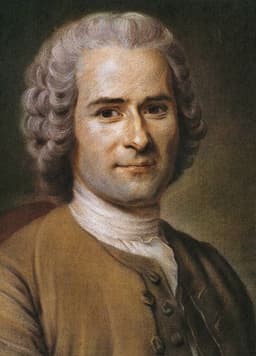
Jean-Jacques Rousseau
Philosopher · Modern
43.5Total

Napoleon Bonaparte
General · Modern
70.9Total
Basic Information
Born
1712
1769
Died
1778
1821
Era
Modern
Modern
Nationality
France
France
Occupation
Philosopher
General
Civilization
Western
Western
Score Comparison
Military (10%)
9.1
94.0
Political (20%)
33.8
72.0
Influence (20%)
65.0
40.0
Legacy (20%)
40.0
80.0
Leadership (15%)
45.4
78.0
Strategy (15%)
44.4
90.0
TOTAL
43.5
70.9
Jean-Jacques Rousseau — Complete Timeline
1755 AD
Publication of Discourse on the Origin and Basis of Inequality Among MenCultural◆ Major
Rousseau argued that human inequality originated with the establishment of private property and civil society, corrupting natural human goodness. This work challenged Enlightenment optimism about progress and laid the groundwork for Romanticism and critiques of modern civilization.
InequalityPhilosophyRomanticism
Impact: globalconstructive
1762 AD
Publication of The Social ContractCultural
Rousseau published his political treatise arguing that legitimate political authority rests on a social contract formed by the general will of the people. The work's ideas of popular sovereignty and direct democracy influenced the French Revolution and modern democratic theory.
Political PhilosophySocial ContractGeneral Will
Impact: globalconstructive
Publication of Émile, or On EducationCultural◆ Major
Rousseau published a treatise on education advocating for natural development and learning through experience rather than rote instruction. The book was condemned by the Paris Parliament and the Catholic Church for its religious views, and Rousseau fled France to avoid arrest.
EducationPhilosophyCensorship
Impact: globalconstructive
1766 AD
Exile in EnglandPolitical Action
After the condemnation of
ExileEnglandParanoia
Impact: nationaltragic
Napoleon Bonaparte — Complete Timeline
1799 AD
Coup of 18 BrumaireOther◆ Major
Napoleon Bonaparte, with support from his brother Lucien and key political figures, overthrew the Directory in a bloodless coup. He established the Consulate with himself as First Consul, effectively becoming the ruler of France. This event ended the French Revolution's most unstable period.
French RevolutionCoupRise to Power
Impact: regional
1804 AD
Promulgation of the Napoleonic CodeOther◆ Major
Napoleon enacted the Civil Code of the French, known as the Napoleonic Code, a comprehensive set of laws that replaced the fragmented feudal legal systems. The code established legal equality, protected property rights, and secularized law. It became the basis for legal systems in many European and world countries.
Legal ReformNapoleonic CodeCivil Law
Impact: globalconstructive
1805 AD
Battle of AusterlitzWar◆ Major
Napoleon's Grande Arm
Napoleonic WarsBattleDecisive Victory
Impact: global
1812 AD
Invasion of RussiaWar◆ Major
Napoleon led the Grande Arm
Napoleonic WarsInvasionDisaster
Impact: globaldestructive
1815 AD
Battle of WaterlooWar◆ Major
Napoleon's French army was defeated by the combined forces of the Duke of Wellington's Anglo-Allied army and Gebhard Leberecht von Bl
Napoleonic WarsBattleFinal Defeat
Impact: globaldestructive
Expert Analysis
jean-jacques-rousseau-vs-napoleon-bonaparte
# The Pen and the Sword: Rousseau’s Ideas, Napoleon’s Empire
On a chilly December morning in 1804, Napoleon Bonaparte placed a crown upon his own head in Notre-Dame Cathedral, an act that scandalized Europe and declared that he owed his throne to no pope, no king, no dynasty—only to himself. Forty-two years earlier, a frail, paranoid philosopher named Jean-Jacques Rousseau had published *The Social Contract*, arguing that legitimate authority could only come from the collective will of the people. Napoleon would claim to embody that will, and Rousseau’s ghost would haunt his every triumph and tragedy. Yet the two men never met, and their lives unfolded in opposite directions: one dreamed of a new society, the other built an empire that collapsed under its own weight. Why did Rousseau’s ideas outlast Napoleon’s armies? The answer lies not in their shared nationality, but in the chasm between thought and action.
Origins
Rousseau was born in 1712 in Geneva, a city of clockmakers and Calvinists, to a watchmaker father who abandoned him early. His mother died days after his birth. He drifted through apprenticeships, petty thefts, and conversions between Catholicism and Protestantism, never quite belonging anywhere. This rootlessness shaped his lifelong suspicion of civilization’s artificial hierarchies. “Man is born free, and everywhere he is in chains,” he would write—a line that resonated because he felt those chains himself.
Napoleon, born in 1769 on the island of Corsica, came from minor nobility in a land recently annexed by France. His family scraped to send him to military school in mainland France, where his thick accent and poverty marked him as an outsider. Where Rousseau turned inward, Napoleon turned outward. He devoured history and strategy, not philosophy. By age sixteen, he was a second lieutenant, already calculating how to climb a ladder that Rousseau spent his life denouncing.
Rise to Power
Rousseau’s rise was intellectual, not political. His 1755 *Discourse on the Origin and Basis of Inequality Among Men* argued that private property created inequality and corrupted humanity’s natural goodness. The essay made him famous, but fame brought persecution. When *The Social Contract* and *Émile* appeared in 1762, both were condemned by the French parliament and the Catholic Church. Rousseau fled to England in 1766 under the protection of philosopher David Hume, only to descend into paranoid delusions that Hume was plotting against him. His power came from words, not armies, and words could not protect him.
Napoleon’s rise was the opposite: swift, violent, and visible. In 1795, he scattered royalist rebels with a “whiff of grapeshot” in Paris—a brutal, decisive act that won him command of the Army of Italy. By 1796, at twenty-seven, he was conquering northern Italy, forcing Austria to sue for peace. His campaigns were masterpieces of speed, deception, and logistics. Where Rousseau wrote about the general will, Napoleon made himself its embodiment. In 1799, he staged a coup and became First Consul. Five years later, he crowned himself Emperor.
Leadership & Governance
As ruler, Napoleon was a reformer, not a revolutionary. His Napoleonic Code (1804) standardized French law, protected property rights, and enshrined equality before the law—but also restored slavery in the colonies and subordinated women to husbands. He built lycées, established the Bank of France, and negotiated the Concordat with the Pope to stabilize religion. His military genius was undeniable: scores of 94 for military and 93 for strategy reflect campaigns from Austerlitz (1805) to Jena (1806) that crushed coalitions and redrew the map of Europe.
Rousseau never governed anything. His political score of 62 reflects a thinker whose ideas shaped governance, not a man who practiced it. His concept of the “general will” was vague and easily abused—as Napoleon would prove. When Rousseau argued that citizens must be “forced to be free,” he provided a justification for tyranny that later dictators, including Napoleon, exploited. Rousseau’s *Émile* advocated education through experience, not rote learning, but he himself failed as a parent, abandoning all five of his children to orphanages.
Triumph & Tragedy
Napoleon’s greatest triumph was Austerlitz in 1805, where he lured the combined Russian and Austrian armies into a trap and shattered them. His greatest tragedy was the 1812 invasion of Russia: 600,000 men marched east; fewer than 100,000 returned. The disaster broke his aura of invincibility. Exiled to Elba in 1814, he escaped and ruled for a hundred days before Waterloo in 1815 ended it all. He died in 1821 on Saint Helena, a British prisoner, dictating memoirs that shaped his legend.
Rousseau’s triumph was his influence: his ideas inspired the French Revolution’s leaders, from Robespierre to Saint-Just, who quoted *The Social Contract* as they guillotined kings. His tragedy was personal: he spent his final years in poverty and paranoia, convinced the world was conspiring against him. He died in 1778, eleven years before the revolution his books helped ignite.
Character & Destiny
Napoleon was driven by ambition, energy, and an iron will. “Impossible is a word to be found only in the dictionary of fools,” he said. He trusted his own judgment above all, micromanaging armies and empires. Rousseau, by contrast, was driven by a need for authenticity and a deep distrust of power. “I would rather be a man of paradoxes than a man of prejudices,” he wrote. His paranoia and sensitivity made him a terrible friend and a brilliant critic of society.
Their characters sealed their fates. Napoleon could not stop conquering; peace bored him. Rousseau could not stop writing; solitude consumed him. One died alone on a remote island, the other died alone in a cottage. Both, in the end, were prisoners of their own natures.
Legacy
Napoleon’s legacy is visible: the Napoleonic Code, the metric system, the modern French state, and the borders of Europe. His influence score of 82 and legacy of 78 reflect a man who reshaped institutions but left a trail of war and destruction. Rousseau’s legacy is invisible but deeper: his ideas about democracy, education, and the social contract echo in every modern constitution. His influence score of 65 and legacy of 72 understate his reach, for he changed how we think about freedom, inequality, and childhood.
Conclusion
Napoleon once said, “What is history but a fable agreed upon?” Rousseau might have answered: “What is power but a fiction we choose to obey?” The general conquered Europe with cannons; the philosopher conquered minds with arguments. One built an empire that crumbled in a generation. The other wrote books that still unsettle us. In the end, the pen proved mightier than the sword—not because it won battles, but because it outlasted them.
Rankings
🥇
Napoleon BonaparteLeader
Mil: 94.0Pol: 72.0Inf: 40.0
70.9
🥈
Jean-Jacques Rousseau
Mil: 9.1Pol: 33.8Inf: 65.0
43.5
+27.4 behind
How This Comparison Works
Algorithm
Each figure is scored on 6 dimensions (0—100 scale) based on structured historical data: Military (10%), Political (20%), Influence (20%), Legacy (20%), Leadership (15%), Strategy (15%). The weighted total produces the final ranking.
Data Sources
Scores are computed from structured sub-indicators in the database. Scale factors adjust for era (Ancient ×0.85, Modern ×1.0) and civilization size (Eastern ×1.05, Other ×0.80) to account for differences in population and military scale.
Maximum 3 Figures
Comparisons are limited to 2—3 figures to ensure readability and statistical meaningfulness.
Error Margins
±5 points per dimension — Sub-scores are derived from historical records with inherent uncertainty. Two figures within 5 points on a dimension should be considered roughly equivalent in that area.
Total Score Accuracy
±3 points overall — The weighted combination of 6 dimensions produces a total score with approximately ±3 points of uncertainty. Differences of less than 3 points are not statistically significant— the figures are effectively tied.
Known Limitations
- Historical records are incomplete and uneven across civilizations
- Figures from oral-tradition societies may be underrepresented
- Occupation labels can misclassify multi-role figures
- Scores measure capability and impact, not moral character
- Quantitative scoring is a comparison tool, not absolute truth
Capability Radar
Military (10%) — Battles & Warfare
Battles
18
95
Win Rate
21
90
Expansion
19
95
Political (20%) — Governance & Reform
Reform
60
95
Diplomacy
64
80
Economy
67
85
Influence (20%) — Cultural & Global Reach
Cultural
85
85
Global
75
90
Legacy (20%) — Historical Impact
Historical
80
95
Longevity
85
90
Leadership (15%) — Power & Stability
Tenure
53
85
Stability
69
70
Strategy (15%) — Tactics & Innovation
Strategy
24
95
Tactics
25
98
Reform
32
92
Similar Comparisons
Comments & Discussion
No comments yet. Be the first to share your thoughts!