Loading...
This comparison has not been analyzed yet.
One-time AI generation (~1 minute). Scores and timeline are already available below.
Antonio Guzman Blanco vs Monte Melkonian
Antonio Guzman Blanco leads by 11.2 pts · 2 figures compared
…

Antonio Guzman Blanco
General · Modern
55.8Total
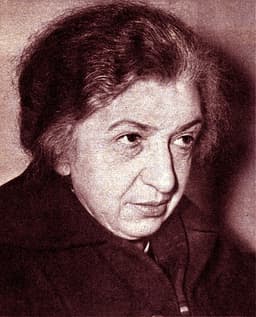
Monte Melkonian
General · Modern
44.6Total
Basic Information
Born
1829
1957
Died
1899
—
Era
Modern
Modern
Nationality
Venezuela
Armenia
Occupation
General
General
Civilization
Western
Western
Score Comparison
Military (10%)
30.0
40.0
Political (20%)
72.0
32.2
Influence (20%)
56.7
56.4
Legacy (20%)
50.0
45.0
Leadership (15%)
62.0
40.4
Strategy (15%)
60.0
43.3
TOTAL
55.8
44.6
Antonio Guzman Blanco — Complete Timeline
1870 AD
Establishment of the Guzmán Blanco DictatorshipPolitical Action◆ Major
Guzmán Blanco seized power in Venezuela, beginning a period of authoritarian rule. He centralized the government, suppressed opposition, and initiated a program of modernization and infrastructure development.
DictatorshipModernizationVenezuela
Impact: national
1873 AD
Construction of the Caracas-Valencia RailwayReform◆ Major
Guzmán Blanco oversaw the construction of the Caracas-Valencia railway, a major infrastructure project. The railway improved transportation and trade between the capital and the interior, boosting economic development.
InfrastructureRailwayModernization
Impact: nationalconstructive
1874 AD
Abolition of Church PrivilegesReform◆ Major
Guzmán Blanco implemented anti-clerical reforms, including the abolition of church privileges and the seizure of church property. These measures reduced the power of the Catholic Church in Venezuela and promoted secularism.
Anti-ClericalismSecularismChurch-State Relations
Impact: nationalconstructive
1875 AD
Promotion of Education and CultureCultural◆ Major
Guzmán Blanco promoted education and culture, founding schools, libraries, and museums. He also supported the arts, commissioning public works and monuments that reflected his vision of a modern Venezuela.
EducationCulturePublic Works
Impact: nationalconstructive
1887 AD
Exile and Return to PowerPolitical Action◆ Major
After a period of exile in Europe, Guzm
ExileReturn to PowerAuthoritarianism
Impact: national
Monte Melkonian — Complete Timeline
1975 AD
Participation in the Lebanese Civil WarWar◆ Major
Melkonian fought in the Lebanese Civil War as a member of the Armenian Secret Army for the Liberation of Armenia (ASALA) and other leftist groups. He was involved in guerrilla operations against Turkish targets.
Lebanese Civil WarASALAGuerrilla Warfare
Impact: regionaldestructive
1985 AD
Imprisonment in FranceOther
Melkonian was arrested in France in 1985 and sentenced to six years in prison for possession of explosives and false documents. He was released in 1989 and subsequently moved to Armenia.
ImprisonmentLegalActivism
destructive
1991 AD
Leadership in the First Nagorno-Karabakh WarWar◆ Major
Melkonian served as a commander in the Nagorno-Karabakh Defense Army during the First Nagorno-Karabakh War. He led Armenian forces in several key battles, including the capture of Shusha in May 1992.
Nagorno-Karabakh WarMilitary CommandBattle of Shusha
Impact: regionalconstructive
1993 AD
Death in battle at MerziliWar
Melkonian was killed in action on June 12, 1993, near the village of Merzili in Nagorno-Karabakh, during a battle with Azerbaijani forces. His death made him a national hero in Armenia and Karabakh.
Death in BattleNagorno-Karabakh WarHero
Impact: regionaltragic
This comparison has not been analyzed yet.
One-time AI generation (~1 minute). Scores and timeline are already available below.
Rankings
🥇
Antonio Guzman BlancoLeader
Mil: 30.0Pol: 72.0Inf: 56.7
55.8
🥈
Monte Melkonian
Mil: 40.0Pol: 32.2Inf: 56.4
44.6
+11.2 behind
How This Comparison Works
Algorithm
Each figure is scored on 6 dimensions (0—100 scale) based on structured historical data: Military (10%), Political (20%), Influence (20%), Legacy (20%), Leadership (15%), Strategy (15%). The weighted total produces the final ranking.
Data Sources
Scores are computed from structured sub-indicators in the database. Scale factors adjust for era (Ancient ×0.85, Modern ×1.0) and civilization size (Eastern ×1.05, Other ×0.80) to account for differences in population and military scale.
Maximum 3 Figures
Comparisons are limited to 2—3 figures to ensure readability and statistical meaningfulness.
Error Margins
±5 points per dimension — Sub-scores are derived from historical records with inherent uncertainty. Two figures within 5 points on a dimension should be considered roughly equivalent in that area.
Total Score Accuracy
±3 points overall — The weighted combination of 6 dimensions produces a total score with approximately ±3 points of uncertainty. Differences of less than 3 points are not statistically significant— the figures are effectively tied.
Known Limitations
- Historical records are incomplete and uneven across civilizations
- Figures from oral-tradition societies may be underrepresented
- Occupation labels can misclassify multi-role figures
- Scores measure capability and impact, not moral character
- Quantitative scoring is a comparison tool, not absolute truth
Capability Radar
Military (10%) — Battles & Warfare
Battles
45
35
Win Rate
55
40
Expansion
20
25
Political (20%) — Governance & Reform
Reform
75
15
Diplomacy
65
25
Economy
70
10
Influence (20%) — Cultural & Global Reach
Cultural
50
30
Global
45
20
Legacy (20%) — Historical Impact
Historical
55
35
Longevity
40
25
Leadership (15%) — Power & Stability
Tenure
70
20
Stability
40
15
Strategy (15%) — Tactics & Innovation
Strategy
50
40
Tactics
40
45
Reform
30
20
Similar Comparisons
Comments & Discussion
No comments yet. Be the first to share your thoughts!