Loading...
Monte Melkonian vs Omar Torrijos
Omar Torrijos leads by 13.5 pts · 2 figures compared
…
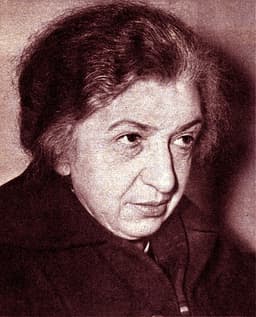
Monte Melkonian
General · Modern
44.6Total

Omar Torrijos
General · Modern
58.1Total
Basic Information
Born
1957
1929
Died
—
—
Era
Modern
Modern
Nationality
Armenia
Panama
Occupation
General
General
Civilization
Western
Western
Score Comparison
Military (10%)
40.0
10.2
Political (20%)
32.2
78.0
Influence (20%)
56.4
72.0
Legacy (20%)
45.0
52.0
Leadership (15%)
40.4
72.0
Strategy (15%)
43.3
35.7
TOTAL
44.6
58.1
Monte Melkonian — Complete Timeline
1975 AD
Participation in the Lebanese Civil WarWar◆ Major
Melkonian fought in the Lebanese Civil War as a member of the Armenian Secret Army for the Liberation of Armenia (ASALA) and other leftist groups. He was involved in guerrilla operations against Turkish targets.
Lebanese Civil WarASALAGuerrilla Warfare
Impact: regionaldestructive
1985 AD
Imprisonment in FranceOther
Melkonian was arrested in France in 1985 and sentenced to six years in prison for possession of explosives and false documents. He was released in 1989 and subsequently moved to Armenia.
ImprisonmentLegalActivism
destructive
1991 AD
Leadership in the First Nagorno-Karabakh WarWar◆ Major
Melkonian served as a commander in the Nagorno-Karabakh Defense Army during the First Nagorno-Karabakh War. He led Armenian forces in several key battles, including the capture of Shusha in May 1992.
Nagorno-Karabakh WarMilitary CommandBattle of Shusha
Impact: regionalconstructive
1993 AD
Death in battle at MerziliWar
Melkonian was killed in action on June 12, 1993, near the village of Merzili in Nagorno-Karabakh, during a battle with Azerbaijani forces. His death made him a national hero in Armenia and Karabakh.
Death in BattleNagorno-Karabakh WarHero
Impact: regionaltragic
Omar Torrijos — Complete Timeline
1968 AD
1968 Panamanian coup d'étatPolitical Action◆ Major
Torrijos, as a lieutenant colonel, co-led a military coup that overthrew President Arnulfo Arias. The National Guard took power, and Torrijos emerged as the de facto leader of Panama, establishing a military government.
CoupMilitary RulePanama
Impact: nationaldestructive
1969 AD
Implementation of agrarian reformReform
Torrijos initiated an agrarian reform program that redistributed land to peasant families. The reform aimed to reduce rural poverty and inequality, but its implementation was uneven and faced opposition from large landowners.
Land ReformSocial PolicyRural Development
Impact: nationalprogressive
1977 AD
Negotiation of the Torrijos-Carter TreatiesPolitical Action
Torrijos negotiated treaties with U.S. President Jimmy Carter that established the gradual transfer of the Panama Canal from U.S. to Panamanian control by 1999. The treaties were ratified by Panama in a 1977 referendum and by the U.S. Senate in 1978.
Panama CanalTreatySovereignty
Impact: globalconstructive
1981 AD
Death in plane crashOther◆ Major
Torrijos died when his De Havilland Twin Otter aircraft crashed in the mountains of Penonom
DeathAccidentConspiracy
Impact: nationaltragic
Expert Analysis
Origins
Monte Melkonian was born on November 25, 1957, in Visalia, California, to Armenian-American parents. His family moved frequently, and he spent part of his youth in Iran, where he became immersed in Armenian culture. He studied at the University of California, Berkeley, but left to join the Armenian revolutionary movement. In contrast, Omar Torrijos was born on February 13, 1929, in Santiago de Veraguas, Panama, into a modest family. He attended the Escuela Normal de Santiago and later the Military Academy of El Salvador. Torrijos's early career was in the Panamanian National Guard, where he rose through the ranks. While Melkonian's background was shaped by diaspora politics and armed struggle, Torrijos's was rooted in institutional military service.
Rise to Power
Melkonian's rise began with his involvement in the Armenian Secret Army for the Liberation of Armenia (ASALA) in the late 1970s. He participated in the Lebanese Civil War, fighting alongside leftist and Armenian militias. His reputation grew as a skilled fighter and ideologue. In 1985, he was arrested in France and imprisoned until 1989. Upon release, he moved to Armenia and joined the Nagorno-Karabakh conflict. By 1993, he had become a field commander in the Karabakh Defense Army. Torrijos's rise was more conventional: he co-led the 1968 coup that overthrew President Arnulfo Arias. As a lieutenant colonel, he consolidated power within the National Guard, becoming its commander and de facto leader of Panama. His major turning point was the negotiation of the Torrijos-Carter Treaties in 1977, which secured the eventual return of the Panama Canal to Panama, boosting his domestic and international standing.
Leadership & Governance
Melkonian's leadership was on the battlefield. He commanded troops with a focus on discipline and ideological commitment. He was known for leading from the front, which ultimately contributed to his death. His governance experience was limited to military organization. Torrijos, by contrast, governed a nation. He implemented social reforms, including agrarian reform that redistributed land, and invested in infrastructure and education. He also maintained a populist image, connecting with rural communities. However, his regime was authoritarian, suppressing political opposition. While Melkonian's leadership was tactical and revolutionary, Torrijos's was strategic and state-building. Scores reflect this: Melkonian scored 40.4 in leadership, Torrijos 72.0.
Triumph & Tragedy
Melkonian's greatest success was his role in the Armenian victory in the Nagorno-Karabakh War, particularly in the capture of the town of Martuni. His death in battle at Merzili on June 12, 1993, was both a personal tragedy and a loss for Armenian forces. He became a martyr figure. Torrijos's triumph was the Torrijos-Carter Treaties, a diplomatic achievement that fulfilled a key Panamanian aspiration. His tragedy was his death in a plane crash on July 31, 1981, under suspicious circumstances, which cut short his rule. While Melkonian's death was in combat, Torrijos's was likely an accident or assassination, but both ended their influence prematurely.
Character & Destiny
Melkonian was idealistic, driven by nationalist fervor, and willing to sacrifice personal safety for his cause. He scored 43.3 in strategy, reflecting tactical acumen but perhaps a lack of broader political vision. Torrijos was pragmatic, charismatic, and politically astute. His 78.0 political score indicates mastery of governance and negotiation. Melkonian's character led him to a martyr's death; Torrijos's to a leader's ambiguous end. Both were shaped by their environments: Melkonian by the diaspora and war, Torrijos by Cold War geopolitics.
Legacy
Melkonian is remembered as a national hero in Armenia, with streets and monuments named after him. His legacy inspires Armenian nationalism and the Nagorno-Karabakh cause. Torrijos's legacy is more concrete: the Panama Canal is now under Panamanian control, a direct result of his efforts. He is revered in Panama as a champion of sovereignty. However, his authoritarian tendencies are also noted. In terms of lasting impact, Torrijos's total score of 58.1 versus Melkonian's 44.6 reflects the broader scale of his achievements.
Conclusion
While Melkonian's military role in a regional conflict was significant, Torrijos's negotiation of the Panama Canal treaties had global implications. Torrijos's political and influence scores (78.0 and 72.0) dwarf Melkonian's (32.2 and 56.4). Torrijos changed the geopolitical landscape, while Melkonian's impact was more localized. Thus, Omar Torrijos had greater overall impact. The data supports this: a 13.5-point gap in total scores is decisive.
Rankings
🥇
Omar TorrijosLeader
Mil: 10.2Pol: 78.0Inf: 72.0
58.1
🥈
Monte Melkonian
Mil: 40.0Pol: 32.2Inf: 56.4
44.6
+13.5 behind
How This Comparison Works
Algorithm
Each figure is scored on 6 dimensions (0—100 scale) based on structured historical data: Military (10%), Political (20%), Influence (20%), Legacy (20%), Leadership (15%), Strategy (15%). The weighted total produces the final ranking.
Data Sources
Scores are computed from structured sub-indicators in the database. Scale factors adjust for era (Ancient ×0.85, Modern ×1.0) and civilization size (Eastern ×1.05, Other ×0.80) to account for differences in population and military scale.
Maximum 3 Figures
Comparisons are limited to 2—3 figures to ensure readability and statistical meaningfulness.
Error Margins
±5 points per dimension — Sub-scores are derived from historical records with inherent uncertainty. Two figures within 5 points on a dimension should be considered roughly equivalent in that area.
Total Score Accuracy
±3 points overall — The weighted combination of 6 dimensions produces a total score with approximately ±3 points of uncertainty. Differences of less than 3 points are not statistically significant— the figures are effectively tied.
Known Limitations
- Historical records are incomplete and uneven across civilizations
- Figures from oral-tradition societies may be underrepresented
- Occupation labels can misclassify multi-role figures
- Scores measure capability and impact, not moral character
- Quantitative scoring is a comparison tool, not absolute truth
Capability Radar
Military (10%) — Battles & Warfare
Battles
35
5
Win Rate
40
5
Expansion
25
5
Political (20%) — Governance & Reform
Reform
15
70
Diplomacy
25
85
Economy
10
60
Influence (20%) — Cultural & Global Reach
Cultural
30
50
Global
20
65
Legacy (20%) — Historical Impact
Historical
35
65
Longevity
25
55
Leadership (15%) — Power & Stability
Tenure
20
65
Stability
15
55
Strategy (15%) — Tactics & Innovation
Strategy
40
15
Tactics
45
10
Reform
20
20
Similar Comparisons
Comments & Discussion
No comments yet. Be the first to share your thoughts!