Loading...
Monte Melkonian vs Napoleon Bonaparte
Napoleon Bonaparte leads by 26.3 pts · 2 figures compared
…
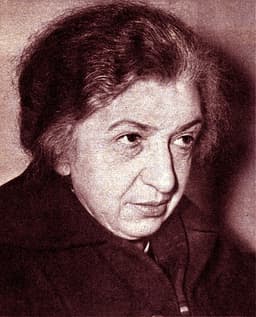
Monte Melkonian
General · Modern
44.6Total

Napoleon Bonaparte
General · Modern
70.9Total
Basic Information
Born
1957
1769
Died
—
1821
Era
Modern
Modern
Nationality
Armenia
France
Occupation
General
General
Civilization
Western
Western
Score Comparison
Military (10%)
40.0
94.0
Political (20%)
32.2
72.0
Influence (20%)
56.4
40.0
Legacy (20%)
45.0
80.0
Leadership (15%)
40.4
78.0
Strategy (15%)
43.3
90.0
TOTAL
44.6
70.9
Monte Melkonian — Complete Timeline
1975 AD
Participation in the Lebanese Civil WarWar◆ Major
Melkonian fought in the Lebanese Civil War as a member of the Armenian Secret Army for the Liberation of Armenia (ASALA) and other leftist groups. He was involved in guerrilla operations against Turkish targets.
Lebanese Civil WarASALAGuerrilla Warfare
Impact: regionaldestructive
1985 AD
Imprisonment in FranceOther
Melkonian was arrested in France in 1985 and sentenced to six years in prison for possession of explosives and false documents. He was released in 1989 and subsequently moved to Armenia.
ImprisonmentLegalActivism
destructive
1991 AD
Leadership in the First Nagorno-Karabakh WarWar◆ Major
Melkonian served as a commander in the Nagorno-Karabakh Defense Army during the First Nagorno-Karabakh War. He led Armenian forces in several key battles, including the capture of Shusha in May 1992.
Nagorno-Karabakh WarMilitary CommandBattle of Shusha
Impact: regionalconstructive
1993 AD
Death in battle at MerziliWar
Melkonian was killed in action on June 12, 1993, near the village of Merzili in Nagorno-Karabakh, during a battle with Azerbaijani forces. His death made him a national hero in Armenia and Karabakh.
Death in BattleNagorno-Karabakh WarHero
Impact: regionaltragic
Napoleon Bonaparte — Complete Timeline
1799 AD
Coup of 18 BrumaireOther◆ Major
Napoleon Bonaparte, with support from his brother Lucien and key political figures, overthrew the Directory in a bloodless coup. He established the Consulate with himself as First Consul, effectively becoming the ruler of France. This event ended the French Revolution's most unstable period.
French RevolutionCoupRise to Power
Impact: regional
1804 AD
Promulgation of the Napoleonic CodeOther◆ Major
Napoleon enacted the Civil Code of the French, known as the Napoleonic Code, a comprehensive set of laws that replaced the fragmented feudal legal systems. The code established legal equality, protected property rights, and secularized law. It became the basis for legal systems in many European and world countries.
Legal ReformNapoleonic CodeCivil Law
Impact: globalconstructive
1805 AD
Battle of AusterlitzWar◆ Major
Napoleon's Grande Arm
Napoleonic WarsBattleDecisive Victory
Impact: global
1812 AD
Invasion of RussiaWar◆ Major
Napoleon led the Grande Arm
Napoleonic WarsInvasionDisaster
Impact: globaldestructive
1815 AD
Battle of WaterlooWar◆ Major
Napoleon's French army was defeated by the combined forces of the Duke of Wellington's Anglo-Allied army and Gebhard Leberecht von Bl
Napoleonic WarsBattleFinal Defeat
Impact: globaldestructive
Expert Analysis
monte-melkonian-vs-napoleon-bonaparte
### Two Warriors, Two Worlds
On a June morning in 1815, near a small Belgian village called Waterloo, the fate of Europe hung on a single, desperate assault. Across the Atlantic, in a very different time and place, another commander was born into a world of quiet privilege. One man reshaped an entire continent; the other fought for a sliver of land most of the world had never heard of. Both were warriors, but their stories could not be more different. Why did Napoleon Bonaparte conquer an empire while Monte Melkonian died fighting for a mountain village? The answer lies in the soil of their origins, the scale of their ambition, and the cold calculus of history.
### Origins: Corsican Rock and Californian Soil
Napoleon was born in 1769 on the island of Corsica, a rugged land only recently annexed by France. His family was minor nobility, poor but proud. He spoke French with a thick Italian accent, an outsider in a nation he would one day rule. The French Revolution, which erupted when he was twenty, tore down the old order and opened a path for talent. For a young artillery officer with a ferocious will, it was a ladder to the stars.
Monte Melkonian, born in 1957, was the son of Armenian-American immigrants in California. He grew up in the comfortable suburbs of the United States, a world away from the blood-soaked fields of Europe. Yet his family’s history—the Armenian Genocide of 1915—was a ghost that never left. While Napoleon was shaped by the Enlightenment and the chaos of revolution, Melkonian was shaped by a sense of ancestral loss. One man sought to build a new order; the other sought to reclaim an old homeland.
### Rise to Power: The Cannon and the Cell
Napoleon’s rise was a masterpiece of speed and audacity. In 1793, at the age of twenty-four, he drove the British out of the port of Toulon with a brilliant use of artillery. By 1796, he was commanding the French army in Italy, where his lightning campaigns forced Austria to sue for peace. He was a general who led from the front, whose soldiers adored him, and whose political instincts were razor-sharp. In 1799, he seized power in a coup. He was thirty years old.
Melkonian’s path was far darker and more obscure. In 1975, as a teenager, he left his California home to join the Lebanese Civil War. He fought with the Armenian Secret Army for the Liberation of Armenia (ASALA), a militant group that used violence to draw attention to the Armenian cause. It was a shadow war of bombings and assassinations, far from the grand battlefields of Europe. In 1985, he was arrested in France and sentenced to six years in prison for possession of explosives. While Napoleon was rewriting the laws of France, Melkonian was reading Marxist theory in a French jail.
### Leadership & Governance: Empire vs. Enclave
As Emperor of the French, Napoleon was a titan of administration. He consolidated the gains of the Revolution into the Napoleonic Code, a system of laws that emphasized merit, property rights, and secular governance. It spread across Europe and still influences legal systems today. His military genius was unmatched: he won over sixty battles, from Austerlitz in 1805 to Jena in 1806. He reorganized Germany, created the Confederation of the Rhine, and installed his brothers on thrones. His leadership style was charismatic, ruthless, and micromanaging. He believed in glory, in destiny, in the power of one man to shape history.
Melkonian, by contrast, was a commander of a tiny, desperate struggle. In 1991, during the First Nagorno-Karabakh War, he led Armenian forces against Azerbaijani troops. He was not building an empire but defending a mountainous enclave. His strategic score of 61.2 and military score of 27.4 reflect a man who fought in a guerrilla war, not a continental campaign. He was a tactician of the hills, an organizer of local defense. He did not reform a nation; he fought for a village. His leadership was personal, intimate, and fatal.
### Triumph & Tragedy: Waterloo and Merzili
Napoleon’s greatest triumph was Austerlitz, where he destroyed a combined Russian and Austrian army. His greatest tragedy was the invasion of Russia in 1812, where he lost half a million men to the snow and the Cossacks. He was exiled to Elba, returned, and then faced final defeat at Waterloo in 1815. He died in 1821, a prisoner on the remote island of Saint Helena. His fall was as grand as his rise.
Melkonian’s triumph was the defense of the Armenian positions in Nagorno-Karabakh. His tragedy came on June 12, 1993, near the village of Merzili. He was killed in action during a battle with Azerbaijani forces. He died not on a throne, but in the mud, fighting for a small patch of land. His death was a turning point for the Armenian cause, a martyrdom that galvanized his people. But his story is a footnote in world history, a local tragedy.
### Character & Destiny: The Will to Power and the Will to Survive
Napoleon was driven by an insatiable ambition. He once said, “Impossible is a word to be found only in the dictionary of fools.” He believed he could reshape the world. His personality—arrogant, brilliant, relentless—pushed him to conquer Europe. But it also pushed him too far. His invasion of Russia was a hubristic gamble. His character created his destiny: glory and ruin.
Melkonian was driven by a different force: the need to restore justice for his people. He was not seeking personal glory. He was a revolutionary, an idealist. His personality was serious, disciplined, and committed. He did not overreach because he had no room to. His destiny was not empire but sacrifice. He died as he lived, fighting for a cause larger than himself.
### Legacy: The Lawgiver and the Martyr
Napoleon left behind the Napoleonic Code, the modern French state, and a legend that still haunts Europe. His legacy score of 78.0 reflects a man who changed the course of history. He is remembered as a genius and a tyrant, a reformer and a conqueror.
Melkonian left behind a memory. In Armenia and the diaspora, he is a hero, a symbol of resistance. His legacy score of 61.8 is modest, but it is deep in the soil of his people. He is not studied in military academies, but his name is whispered in Armenian homes.
### Conclusion
One man fought for a continent; the other fought for a corner of a mountain. Napoleon Bonaparte commanded armies of hundreds of thousands; Monte Melkonian led a few hundred. Yet both were warriors shaped by their times. Napoleon was a creature of revolution and empire; Melkonian was a child of genocide and diaspora. Their differences are not just in scale but in kind. History remembers the emperor; memory holds the martyr. And in the end, perhaps both are necessary—one to remind us of what power can achieve, and the other to remind us of what the powerless will endure.
Rankings
🥇
Napoleon BonaparteLeader
Mil: 94.0Pol: 72.0Inf: 40.0
70.9
🥈
Monte Melkonian
Mil: 40.0Pol: 32.2Inf: 56.4
44.6
+26.3 behind
How This Comparison Works
Algorithm
Each figure is scored on 6 dimensions (0—100 scale) based on structured historical data: Military (10%), Political (20%), Influence (20%), Legacy (20%), Leadership (15%), Strategy (15%). The weighted total produces the final ranking.
Data Sources
Scores are computed from structured sub-indicators in the database. Scale factors adjust for era (Ancient ×0.85, Modern ×1.0) and civilization size (Eastern ×1.05, Other ×0.80) to account for differences in population and military scale.
Maximum 3 Figures
Comparisons are limited to 2—3 figures to ensure readability and statistical meaningfulness.
Error Margins
±5 points per dimension — Sub-scores are derived from historical records with inherent uncertainty. Two figures within 5 points on a dimension should be considered roughly equivalent in that area.
Total Score Accuracy
±3 points overall — The weighted combination of 6 dimensions produces a total score with approximately ±3 points of uncertainty. Differences of less than 3 points are not statistically significant— the figures are effectively tied.
Known Limitations
- Historical records are incomplete and uneven across civilizations
- Figures from oral-tradition societies may be underrepresented
- Occupation labels can misclassify multi-role figures
- Scores measure capability and impact, not moral character
- Quantitative scoring is a comparison tool, not absolute truth
Capability Radar
Military (10%) — Battles & Warfare
Battles
35
95
Win Rate
40
90
Expansion
25
95
Political (20%) — Governance & Reform
Reform
15
95
Diplomacy
25
80
Economy
10
85
Influence (20%) — Cultural & Global Reach
Cultural
30
85
Global
20
90
Legacy (20%) — Historical Impact
Historical
35
95
Longevity
25
90
Leadership (15%) — Power & Stability
Tenure
20
85
Stability
15
70
Strategy (15%) — Tactics & Innovation
Strategy
40
95
Tactics
45
98
Reform
20
92
Similar Comparisons
Comments & Discussion
数据怀疑论者6/17/2026
所谓“拿破仑征服欧洲”其实是军事宣传。他的军队在俄罗斯损失了50万人,最后只剩几万逃回来。Melkonian在山区用AK-47打游击,战果被夸大成了“英雄史诗”。数据不会说谎:拿破仑输掉过战争,Melkonian也没赢过战略胜利。历史书都是胜利者的自传,连比例尺都被篡改过。别信这套史诗叙事。
ClassicsScholar6/17/2026
Compare a man who studied Caesar and Alexander at military academies to a geology PhD who read Che Guevara. Napoleon knew siegecraft from Polybius; Melkonian improvised with Soviet maps. The former rebuilt Europe’s legal codes; the latter left a few bullet-riddled houses. It’s not moral judgment—it’s intellectual scale. You don’t put a doctoral thesis next to the Iliad and call them equal epics.
历史爱好狂6/17/2026
拿破仑在滑铁卢用错了元帅——格鲁希瞎追普鲁士人,要是换成达武,历史就重写了。Melkonian倒是在1993年战术上赢了马尔达凯特战役,但那只是局部胜利。两人都是“将才”,不是“帅才”。拿破仑死于圣赫勒拿岛时53岁,Melkonian死于战场时36岁。都是悲剧英雄,但舞台差了几个数量级。
RevisionistCritic6/17/2026
Stop the martyr worship. Melkonian was a middle-class kid playing revolution in someone else’s country. Napoleon at least owned his imperial arrogance by writing the Napoleonic Code that still governs half of Europe. One built systems that outlasted him; the other died for a cause that collapsed into corruption. History doesn't reward good intentions—it records results. And the results here are laughably unequal.
Chronicler42326/17/2026
Napoleon’s artillery tactics at Austerlitz were flawless—he used the sun to blind the enemy. Melkonian’s guerrilla ambushes in Karabakh were clever, but he never commanded more than a few hundred men. Scale matters. One guy reshaped Europe; the other died for a village. That’s not a comparison—it’s a category error. Don’t romanticize the small when the big changed everything.