Loading...
This comparison has not been analyzed yet.
One-time AI generation (~1 minute). Scores and timeline are already available below.
Arthur Balfour vs Lee Teng-hui
Lee Teng-hui leads by 0.7 pts · 2 figures compared
…

Arthur Balfour
Politician · Modern
55.9Total
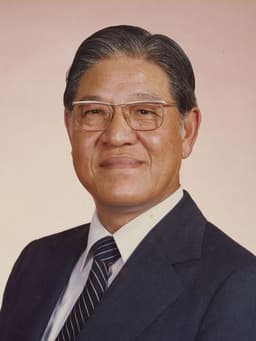
Lee Teng-hui
Politician · Modern
56.6Total
Basic Information
Born
1848
1923
Died
1930
—
Era
Modern
Modern
Nationality
United Kingdom
China
Occupation
Politician
Politician
Civilization
Western
Eastern
Score Comparison
Military (10%)
50.0
14.3
Political (20%)
72.0
78.0
Influence (20%)
60.0
55.0
Legacy (20%)
40.0
58.0
Leadership (15%)
72.0
78.0
Strategy (15%)
43.3
35.3
TOTAL
55.9
56.6
Arthur Balfour — Complete Timeline
1902 AD
Passed the Education Act 1902Reform◆ Major
Balfour's government passed the Education Act, which established local education authorities and created a system of secondary education. The act was controversial, particularly among Nonconformists who opposed funding for Church schools.
Education ActReformSchools
Impact: nationalconstructive
Became Prime Minister of the United KingdomPolitical Action◆ Major
Arthur Balfour became Prime Minister after the resignation of his uncle, Lord Salisbury. His premiership focused on education reform, tariff reform, and military reorganization. He led the Conservative Party until 1905.
Prime MinisterConservative PartyGovernment
Impact: national
1905 AD
Resigned as Prime MinisterPolitical Action◆ Major
Balfour resigned as Prime Minister after internal party divisions over tariff reform and a series of by-election defeats. He was succeeded by Henry Campbell-Bannerman, leading to a Liberal landslide in the 1906 general election.
ResignationConservative PartyTariff reform
Impact: nationaltragic
1916 AD
Served as Foreign Secretary during World War IPolitical Action◆ Major
Balfour served as Foreign Secretary in David Lloyd George's coalition government. He oversaw British foreign policy during the latter part of World War I, including the Balfour Declaration and the Sykes-Picot Agreement.
Foreign SecretaryWorld War IDiplomacy
Impact: global
1917 AD
Issued the Balfour DeclarationPolitical Action
As Foreign Secretary, Arthur Balfour issued the Balfour Declaration, a letter to Lord Rothschild stating British support for a 'national home for the Jewish people' in Palestine. The declaration had lasting impact on the Middle East.
Balfour DeclarationZionismPalestine
Impact: globalconstructive
Lee Teng-hui — Complete Timeline
1987 AD
End of martial law and democratizationPolitical Action◆ Major
As president, Lee Teng-hui oversaw the lifting of martial law in Taiwan, ending 38 years of military rule. This allowed for the formation of opposition parties and expanded political freedoms.
Martial LawDemocratization
Impact: nationalprogressive
1996 AD
First direct presidential electionPolitical Action◆ Major
Lee Teng-hui won Taiwan's first direct presidential election, a landmark in the island's democratization. China conducted missile tests near Taiwan during the campaign to intimidate voters.
ElectionDemocratization
Impact: nationalprogressive
1999 AD
Special state-to-state relations statementPolitical Action◆ Major
Lee described cross-strait relations as 'special state-to-state relations,' implying Taiwan's separate sovereignty. This statement angered China and heightened tensions across the Taiwan Strait.
Cross-Strait RelationsSovereignty
Impact: regionaldestructive
This comparison has not been analyzed yet.
One-time AI generation (~1 minute). Scores and timeline are already available below.
Rankings
🥇
Lee Teng-huiLeader
Mil: 14.3Pol: 78.0Inf: 55.0
56.6
🥈
Arthur Balfour
Mil: 50.0Pol: 72.0Inf: 60.0
55.9
+0.7 behind
How This Comparison Works
Algorithm
Each figure is scored on 6 dimensions (0—100 scale) based on structured historical data: Military (10%), Political (20%), Influence (20%), Legacy (20%), Leadership (15%), Strategy (15%). The weighted total produces the final ranking.
Data Sources
Scores are computed from structured sub-indicators in the database. Scale factors adjust for era (Ancient ×0.85, Modern ×1.0) and civilization size (Eastern ×1.05, Other ×0.80) to account for differences in population and military scale.
Maximum 3 Figures
Comparisons are limited to 2—3 figures to ensure readability and statistical meaningfulness.
Error Margins
±5 points per dimension — Sub-scores are derived from historical records with inherent uncertainty. Two figures within 5 points on a dimension should be considered roughly equivalent in that area.
Total Score Accuracy
±3 points overall — The weighted combination of 6 dimensions produces a total score with approximately ±3 points of uncertainty. Differences of less than 3 points are not statistically significant— the figures are effectively tied.
Known Limitations
- Historical records are incomplete and uneven across civilizations
- Figures from oral-tradition societies may be underrepresented
- Occupation labels can misclassify multi-role figures
- Scores measure capability and impact, not moral character
- Quantitative scoring is a comparison tool, not absolute truth
Capability Radar
Military (10%) — Battles & Warfare
Battles
27
16
Win Rate
33
15
Expansion
32
20
Political (20%) — Governance & Reform
Reform
60
85
Diplomacy
75
70
Economy
55
75
Influence (20%) — Cultural & Global Reach
Cultural
30
60
Global
70
60
Legacy (20%) — Historical Impact
Historical
80
70
Longevity
75
55
Leadership (15%) — Power & Stability
Tenure
65
75
Stability
60
65
Strategy (15%) — Tactics & Innovation
Strategy
39
22
Tactics
42
25
Reform
44
30
Similar Comparisons
Comments & Discussion
No comments yet. Be the first to share your thoughts!