Loading...
Heungseon Daewongun vs Lee Teng-hui
Lee Teng-hui leads by 7.8 pts · 2 figures compared
…

Heungseon Daewongun
Politician · Modern
48.8Total
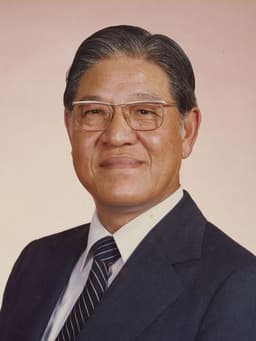
Lee Teng-hui
Politician · Modern
56.6Total
Basic Information
Born
1820
1923
Died
1898
—
Era
Modern
Modern
Nationality
Korea
China
Occupation
Politician
Politician
Civilization
Eastern
Eastern
Score Comparison
Military (10%)
13.5
14.3
Political (20%)
61.3
78.0
Influence (20%)
54.9
55.0
Legacy (20%)
46.7
58.0
Leadership (15%)
62.2
78.0
Strategy (15%)
35.3
35.3
TOTAL
48.8
56.6
Heungseon Daewongun — Complete Timeline
1864 AD
Regency for King GojongPolitical Action◆ Major
Heungseon Daewongun became regent for his young son King Gojong, effectively ruling Joseon. He implemented isolationist policies, suppressing Christianity and resisting foreign trade and influence.
RegencyIsolationismJoseon
Impact: national
1865 AD
Construction of Gyeongbokgung PalaceCultural◆ Major
Heungseon Daewongun initiated the reconstruction of Gyeongbokgung Palace, which had been destroyed during the Japanese invasions. The project drained state finances but restored a symbol of royal authority.
PalaceReconstructionArchitecture
Impact: nationalconstructive
1866 AD
French Campaign against KoreaWar◆ Major
In response to the persecution of Catholics, a French naval force attacked Ganghwa Island. Heungseon Daewongun's forces repelled the French, leading to a Korean victory and reinforcing isolationist policies.
FranceGanghwaVictory
Impact: regionalconstructive
Persecution of CatholicsPolitical Action◆ Major
Heungseon Daewongun ordered a widespread persecution of Roman Catholics in Joseon, executing thousands of converts and French missionaries. This led to the French campaign against Korea in 1866.
PersecutionChristianityFrance
Impact: nationaldestructive
Lee Teng-hui — Complete Timeline
1987 AD
End of martial law and democratizationPolitical Action◆ Major
As president, Lee Teng-hui oversaw the lifting of martial law in Taiwan, ending 38 years of military rule. This allowed for the formation of opposition parties and expanded political freedoms.
Martial LawDemocratization
Impact: nationalprogressive
1996 AD
First direct presidential electionPolitical Action◆ Major
Lee Teng-hui won Taiwan's first direct presidential election, a landmark in the island's democratization. China conducted missile tests near Taiwan during the campaign to intimidate voters.
ElectionDemocratization
Impact: nationalprogressive
1999 AD
Special state-to-state relations statementPolitical Action◆ Major
Lee described cross-strait relations as 'special state-to-state relations,' implying Taiwan's separate sovereignty. This statement angered China and heightened tensions across the Taiwan Strait.
Cross-Strait RelationsSovereignty
Impact: regionaldestructive
Expert Analysis
Origins
Heungseon Daewongun (born 1821) was a member of the Joseon royal clan, the son of Prince Namyeon. He grew up amid factional strife and foreign threats, which shaped his conservative and isolationist worldview. He received a traditional Confucian education and lived through the decline of Joseon power.
Lee Teng-hui (born 1923) was born in a small farming village in Japanese-ruled Taiwan. He studied agricultural economics at Kyoto Imperial University and later at Cornell University, earning a PhD. His background as a technocrat and his experience under Japanese colonial rule and later under the Kuomintang's authoritarian regime influenced his push for democracy.
Rise to Power
Heungseon Daewongun became regent in 1864 when his son, King Gojong, ascended the throne at age 12. He wielded absolute power for a decade, centralizing authority and suppressing rival factions. His rise was due to his political maneuvering and the unexpected death of the previous king.
Lee Teng-hui rose through the ranks of the Kuomintang (KMT) after serving as a technocrat. He became mayor of Taipei in 1978, then governor of Taiwan Province in 1981. In 1988, he succeeded Chiang Ching-kuo as president after the latter's death. He consolidated power by outmaneuvering KMT hardliners and building alliances with native Taiwanese.
Leadership & Governance
Heungseon Daewongun ruled as an isolationist autocrat. He persecuted Catholics, executing thousands, and rebuilt Gyeongbokgung Palace at great cost. He rejected Western trade and diplomacy, leading to conflicts like the French Campaign against Korea in 1866. His governance was reactionary and aimed at preserving traditional Confucian order.
Lee Teng-hui led a democratic transition. He ended martial law in 1987, legalized opposition parties, and held Taiwan's first direct presidential election in 1996. He promoted Taiwanization, empowering native Taiwanese in politics. His 'special state-to-state relations' statement in 1999 asserted Taiwan's separate sovereignty. His political score of 78.0 reflects his effective democratic reforms.
Triumph & Tragedy
Heungseon Daewongun's triumph was repelling the French invasion in 1866 and the U.S. expedition in 1871, temporarily preserving Joseon's independence. His tragedy was his isolationist policy that left Korea technologically backward, leading to eventual Japanese colonization. His reconstruction of Gyeongbokgung Palace drained the treasury and caused social unrest.
Lee Teng-hui's triumph was overseeing Taiwan's peaceful democratization and achieving the first direct presidential election. His tragedy was the increased cross-strait tensions and China's missile tests in 1996. His 'special state-to-state' remarks isolated Taiwan diplomatically. His legacy score of 58.0 reflects mixed outcomes.
Character & Destiny
Heungseon Daewongun was stubborn and xenophobic, believing Confucian orthodoxy could resist foreign influence. His character led to short-term successes but long-term failure. He was eventually sidelined by his own son after a power struggle.
Lee Teng-hui was pragmatic and strategic, often called 'the father of Taiwanese democracy.' He carefully navigated between Taiwanese independence and KMT conservatism. His character enabled democratic reforms but also provoked China. His leadership score of 78.0 indicates effectiveness.
Legacy
Heungseon Daewongun is remembered as a failed isolationist who accelerated Joseon's decline. His policies are criticized for leaving Korea vulnerable. However, his anti-foreign stance is sometimes viewed as patriotic. His influence score of 54.9 reflects limited lasting impact.
Lee Teng-hui is celebrated as a democratizer who transformed Taiwan. His political reforms laid the foundation for Taiwan's current democracy. He is also a controversial figure for his stance on sovereignty. His legacy score of 58.0 and influence of 55.0 show significant but contested impact.
Conclusion
Lee Teng-hui had greater impact due to his successful democratic transition and long-term political changes. He scored 56.6 overall compared to Heungseon Daewongun's 48.8. While Daewongun defended Korea in the short term, his isolationism ultimately failed. Lee's democratization reshaped Taiwan and influenced global views on democracy. The data supports that Lee's political legacy is more enduring.
Rankings
🥇
Lee Teng-huiLeader
Mil: 14.3Pol: 78.0Inf: 55.0
56.6
🥈
Heungseon Daewongun
Mil: 13.5Pol: 61.3Inf: 54.9
48.8
+7.8 behind
How This Comparison Works
Algorithm
Each figure is scored on 6 dimensions (0—100 scale) based on structured historical data: Military (10%), Political (20%), Influence (20%), Legacy (20%), Leadership (15%), Strategy (15%). The weighted total produces the final ranking.
Data Sources
Scores are computed from structured sub-indicators in the database. Scale factors adjust for era (Ancient ×0.85, Modern ×1.0) and civilization size (Eastern ×1.05, Other ×0.80) to account for differences in population and military scale.
Maximum 3 Figures
Comparisons are limited to 2—3 figures to ensure readability and statistical meaningfulness.
Error Margins
±5 points per dimension — Sub-scores are derived from historical records with inherent uncertainty. Two figures within 5 points on a dimension should be considered roughly equivalent in that area.
Total Score Accuracy
±3 points overall — The weighted combination of 6 dimensions produces a total score with approximately ±3 points of uncertainty. Differences of less than 3 points are not statistically significant— the figures are effectively tied.
Known Limitations
- Historical records are incomplete and uneven across civilizations
- Figures from oral-tradition societies may be underrepresented
- Occupation labels can misclassify multi-role figures
- Scores measure capability and impact, not moral character
- Quantitative scoring is a comparison tool, not absolute truth
Capability Radar
Military (10%) — Battles & Warfare
Battles
14
16
Win Rate
16
15
Expansion
21
20
Political (20%) — Governance & Reform
Reform
65
85
Diplomacy
30
70
Economy
35
75
Influence (20%) — Cultural & Global Reach
Cultural
40
60
Global
20
60
Legacy (20%) — Historical Impact
Historical
50
70
Longevity
30
55
Leadership (15%) — Power & Stability
Tenure
40
75
Stability
20
65
Strategy (15%) — Tactics & Innovation
Strategy
23
22
Tactics
29
25
Reform
26
30
Similar Comparisons
Comments & Discussion
No comments yet. Be the first to share your thoughts!