Loading...
Borges de Medeiros vs Lee Teng-hui
Lee Teng-hui leads by 1.5 pts · 2 figures compared
…
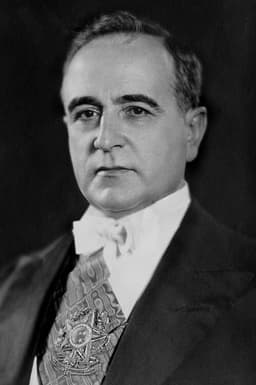
Borges de Medeiros
Politician · Modern
55.1Total
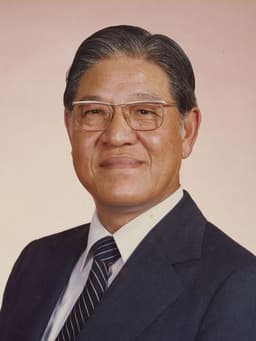
Lee Teng-hui
Politician · Modern
56.6Total
Basic Information
Born
1863
1923
Died
1961
—
Era
Modern
Modern
Nationality
Brazil
China
Occupation
Politician
Politician
Civilization
Western
Eastern
Score Comparison
Military (10%)
47.1
14.3
Political (20%)
68.0
78.0
Influence (20%)
51.8
55.0
Legacy (20%)
45.8
58.0
Leadership (15%)
78.0
78.0
Strategy (15%)
40.5
35.3
TOTAL
55.1
56.6
Borges de Medeiros — Complete Timeline
1893 AD
Led the Federalist RevolutionWar◆ Major
Borges de Medeiros was a leader of the Federalist Revolution in Rio Grande do Sul, a rebellion against the central government. The revolt was eventually suppressed, but it established his reputation as a political and military leader.
RebellionFederalismCivil War
Impact: regional
1898 AD
Elected President of Rio Grande do SulPolitical Action◆ Major
Borges de Medeiros was elected President of the state of Rio Grande do Sul. He would hold this position for 25 years, becoming one of the longest-serving state leaders in Brazilian history. His rule was marked by stability and modernization.
State GovernmentRio Grande do SulLong Tenure
Impact: regional
1900 AD
Implemented the 'Borgismo' Political MachinePolitical Action◆ Major
Borges de Medeiros established a powerful political machine known as 'Borgismo' in Rio Grande do Sul. This system used patronage, electoral manipulation, and control of state institutions to maintain his power for decades.
Political MachinePatronagePower
Impact: regional
1930 AD
Supported the 1930 RevolutionPolitical Action◆ Major
Borges de Medeiros initially supported the Liberal Alliance and Get
RevolutionPolitical SupportVargas
Impact: national
Lee Teng-hui — Complete Timeline
1987 AD
End of martial law and democratizationPolitical Action◆ Major
As president, Lee Teng-hui oversaw the lifting of martial law in Taiwan, ending 38 years of military rule. This allowed for the formation of opposition parties and expanded political freedoms.
Martial LawDemocratization
Impact: nationalprogressive
1996 AD
First direct presidential electionPolitical Action◆ Major
Lee Teng-hui won Taiwan's first direct presidential election, a landmark in the island's democratization. China conducted missile tests near Taiwan during the campaign to intimidate voters.
ElectionDemocratization
Impact: nationalprogressive
1999 AD
Special state-to-state relations statementPolitical Action◆ Major
Lee described cross-strait relations as 'special state-to-state relations,' implying Taiwan's separate sovereignty. This statement angered China and heightened tensions across the Taiwan Strait.
Cross-Strait RelationsSovereignty
Impact: regionaldestructive
Expert Analysis
Origins
Borges de Medeiros was born on August 19, 1863, in the city of Caçapava do Sul, Rio Grande do Sul, Brazil. His family was part of the local agrarian elite. He studied law at the Faculty of Law of São Paulo, graduating in 1886. His early career was as a lawyer and journalist, and he became involved in politics through the Republican Party of Rio Grande do Sul.
Lee Teng-hui was born on January 15, 1923, in Sanzhi Township, Taipei Prefecture, Taiwan (then under Japanese rule). His family was Hakka, and his father was a farmer. He studied at the Taihoku Imperial University (now National Taiwan University), earning a degree in agricultural economics. He later earned a Ph.D. from Cornell University in the United States. His early career was as an agricultural economist and professor.
Rise to Power
Borges de Medeiros rose to prominence as a leader of the Federalist Revolution (1893-1895) in Rio Grande do Sul, a rebellion against the central government. He was elected President of Rio Grande do Sul in 1898, taking office on January 25, 1899. He was re-elected multiple times, holding power until 1928. His political machine, known as 'Borgismo', relied on patronage and electoral manipulation, ensuring his dominance.
Lee Teng-hui rose through the ranks of the Kuomintang (KMT) in Taiwan. He served as mayor of Taipei (1978-1981) and then as governor of Taiwan Province (1981-1984). He was elected Vice President of the Republic of China (Taiwan) in 1984 under President Chiang Ching-kuo. Upon Chiang's death in 1988, Lee succeeded him as president. He quickly consolidated power, becoming chairman of the KMT and leading the party's reformist wing.
Leadership & Governance
Borges de Medeiros governed Rio Grande do Sul with an iron grip. He implemented a system of patronage and electoral fraud to maintain power. He supported the 1930 Revolution that brought Getúlio Vargas to power but later opposed Vargas's centralization. His leadership score is 78.0, reflecting his ability to control the state for 25 years. However, his military score is 47.1, indicating limited military involvement.
Lee Teng-hui oversaw a peaceful transition from authoritarian rule to democracy. He lifted martial law in 1987, allowed the formation of opposition parties, and held Taiwan's first direct presidential election in 1996, which he won. He promoted Taiwanese identity and described cross-strait relations as 'special state-to-state relations,' a stance that angered China. His political score is 78.0, matching Borges in leadership but with a far more progressive agenda.
Triumph & Tragedy
Borges de Medeiros's greatest success was maintaining power for 25 years, a testament to his political machine. He also modernized the state's infrastructure and public finances. However, his greatest failure was the erosion of democratic institutions; his system of patronage and fraud set back political development in Rio Grande do Sul. He also failed to adapt to the rise of Getúlio Vargas, eventually losing influence.
Lee Teng-hui's triumph was the democratization of Taiwan, a peaceful transition from martial law to a multi-party democracy. He also strengthened Taiwan's international profile and economic growth. However, his 'special state-to-state' statement provoked a major crisis with China, leading to missile tests and increased military tension. Critics argue that his policies exacerbated cross-strait tensions and left a mixed legacy on national identity.
Character & Destiny
Borges de Medeiros was a pragmatic and authoritarian leader, skilled in political manipulation. He was cautious and conservative, preferring gradual change. His character led him to build a durable political machine but also to resist necessary reforms. He died in 1952, long after his political relevance had faded.
Lee Teng-hui was a reformer and democrat, willing to challenge the status quo. He was intellectually inclined, with a Ph.D. in agricultural economics. His character drove him to push for democracy and Taiwanese identity, but his outspokenness on sovereignty created international friction. He died in 2020, leaving a deeply polarized legacy in Taiwan.
Legacy
Borges de Medeiros's legacy is mixed. He is remembered as a regional strongman who dominated Rio Grande do Sul for a quarter-century. His 'Borgismo' system influenced Brazilian state politics, but it also exemplified the flaws of coronelismo (political bossism). His legacy score is 45.8, reflecting limited national impact.
Lee Teng-hui's legacy is transformative. He is widely regarded as the 'father of Taiwanese democracy' for ending martial law and holding free elections. He also shaped Taiwan's identity as a distinct entity. His legacy score is 58.0, indicating significant influence. However, his stance on sovereignty remains controversial, with China viewing him as a separatist.
Conclusion
Lee Teng-hui had a greater impact than Borges de Medeiros. Despite a narrow total score gap of 1.5 points (55.1 vs 56.6), Lee's democratization of Taiwan was a historic shift from authoritarian rule to a free society, affecting millions. Borges, while effective in maintaining power, left a legacy of political manipulation and limited reform. Lee's influence extends beyond his era, shaping Taiwan's political identity and international relations. Therefore, Lee Teng-hui is the more significant figure.
Rankings
🥇
Lee Teng-huiLeader
Mil: 14.3Pol: 78.0Inf: 55.0
56.6
🥈
Borges de Medeiros
Mil: 47.1Pol: 68.0Inf: 51.8
55.1
+1.5 behind
How This Comparison Works
Algorithm
Each figure is scored on 6 dimensions (0—100 scale) based on structured historical data: Military (10%), Political (20%), Influence (20%), Legacy (20%), Leadership (15%), Strategy (15%). The weighted total produces the final ranking.
Data Sources
Scores are computed from structured sub-indicators in the database. Scale factors adjust for era (Ancient ×0.85, Modern ×1.0) and civilization size (Eastern ×1.05, Other ×0.80) to account for differences in population and military scale.
Maximum 3 Figures
Comparisons are limited to 2—3 figures to ensure readability and statistical meaningfulness.
Error Margins
±5 points per dimension — Sub-scores are derived from historical records with inherent uncertainty. Two figures within 5 points on a dimension should be considered roughly equivalent in that area.
Total Score Accuracy
±3 points overall — The weighted combination of 6 dimensions produces a total score with approximately ±3 points of uncertainty. Differences of less than 3 points are not statistically significant— the figures are effectively tied.
Known Limitations
- Historical records are incomplete and uneven across civilizations
- Figures from oral-tradition societies may be underrepresented
- Occupation labels can misclassify multi-role figures
- Scores measure capability and impact, not moral character
- Quantitative scoring is a comparison tool, not absolute truth
Capability Radar
Military (10%) — Battles & Warfare
Battles
31
16
Win Rate
33
15
Expansion
38
20
Political (20%) — Governance & Reform
Reform
60
85
Diplomacy
55
70
Economy
50
75
Influence (20%) — Cultural & Global Reach
Cultural
30
60
Global
20
60
Legacy (20%) — Historical Impact
Historical
40
70
Longevity
35
55
Leadership (15%) — Power & Stability
Tenure
75
75
Stability
65
65
Strategy (15%) — Tactics & Innovation
Strategy
37
22
Tactics
38
25
Reform
42
30
Similar Comparisons
Comments & Discussion
No comments yet. Be the first to share your thoughts!