Loading...
Arthur Harris vs Rana Pratap
Arthur Harris leads by 5.1 pts · 2 figures compared
…
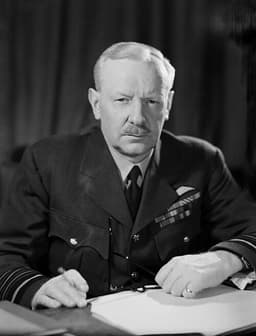
Arthur Harris
General · Modern
59.5Total
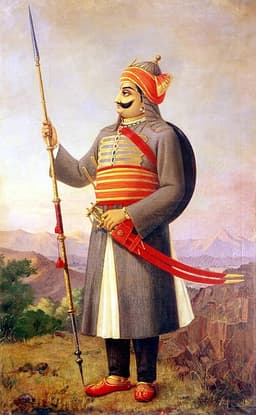
Rana Pratap
General · Modern
54.4Total
Basic Information
Born
1892
1540
Died
1984
1597
Era
Modern
Modern
Nationality
United Kingdom
India
Occupation
General
General
Civilization
Western
Indian
Score Comparison
Military (10%)
67.3
40.0
Political (20%)
43.7
43.7
Influence (20%)
65.0
60.0
Legacy (20%)
52.0
54.0
Leadership (15%)
65.0
62.2
Strategy (15%)
72.0
60.0
TOTAL
59.5
54.4
Arthur Harris — Complete Timeline
1942 AD
Appointed Commander-in-Chief of Bomber CommandPolitical Action◆ Major
Harris was appointed Commander-in-Chief of RAF Bomber Command. He implemented the area bombing directive, targeting German cities to destroy civilian morale and industrial capacity, a strategy that remained controversial.
World War IIBombingRoyal Air Force
Impact: global
1943 AD
Battle of the RuhrWar◆ Major
Harris directed a sustained bombing campaign against the Ruhr industrial region, using new tactics like the 'Oboe' navigation system. The campaign damaged German war production but also caused heavy bomber losses.
World War IIStrategic BombingGermany
Impact: regionaldestructive
Bombing of Hamburg (Operation Gomorrah)War◆ Major
Harris ordered a series of raids on Hamburg that created a firestorm, killing an estimated 37,000 civilians and destroying much of the city. The operation used 'Window' (chaff) to confuse German radar, reducing bomber losses.
World War IIStrategic BombingCivilian Casualties
Impact: regionaldestructive
1945 AD
Bombing of DresdenWar◆ Major
Harris ordered the bombing of Dresden, resulting in a firestorm that killed an estimated 25,000 civilians. The raid became a symbol of the moral controversy surrounding area bombing, though its military necessity was debated.
World War IIStrategic BombingCivilian Casualties
Impact: regionaldestructive
Rana Pratap — Complete Timeline
1576 AD
Battle of HaldighatiWar◆ Major
Rana Pratap led Rajput forces against the Mughal army commanded by Raja Man Singh near Haldighati. Though defeated, Pratap escaped and continued guerrilla resistance. The battle became a symbol of Rajput defiance against Mughal expansion.
Mughal-Rajput WarsBattleResistance
Impact: regional
1577 AD
Alliance with the Bhil TribePolitical Action
Rana Pratap formed an alliance with the Bhil tribal chieftains, securing their support for his guerrilla campaign against the Mughals. This alliance provided him with local knowledge and resources.
AllianceGuerrilla WarfareTribal
constructive
1585 AD
Recapture of Chittor FortWar◆ Major
After years of guerrilla warfare, Rana Pratap recaptured the Chittor Fort from Mughal control. This victory restored Mewar's independence and solidified his legacy as a symbol of Rajput resistance.
MewarFortressIndependence
Impact: regionalconstructive
Expert Analysis
Origins
Arthur Harris was born on April 13, 1892, in Cheltenham, England, into a middle-class family. He attended public school but left at 16 to seek adventure in Southern Rhodesia, where he worked as a farmer and gold miner. This rugged experience shaped his resilience. He joined the Royal Flying Corps in 1915 during World War I, transitioning from ground support to bomber pilot. His early exposure to colonial warfare and aerial combat forged a pragmatic, ruthless approach to war.
Maharana Pratap (Rana Pratap) was born on May 9, 1540, in Kumbhalgarh, Rajasthan, into the Sisodia Rajput clan. His father, Maharana Udai Singh II, founded Udaipur. Pratap was trained in martial arts, horse riding, and swordsmanship from childhood. He inherited a tradition of fierce independence and resistance against external domination, particularly the expanding Mughal Empire under Akbar.
Rise to Power
Harris rose through the RAF ranks in the interwar period, advocating for strategic bombing. In 1942, he was appointed Commander-in-Chief of Bomber Command, with a mandate to take the war to Germany. His key turning point was the Area Bombing Directive of February 1942, which authorized the bombing of German civilian populations to destroy morale and industry. He implemented new technologies like the Pathfinder force and Oboe navigation system.
Rana Pratap became the Maharana of Mewar in 1572, following his father's death. He refused to accept Mughal suzerainty, unlike many other Rajput rulers. His defiance led to the Battle of Haldighati on June 18, 1576, where he led a smaller Rajput force against the Mughal army commanded by Raja Man Singh. Though defeated, he escaped and waged a guerrilla campaign from the Aravalli hills.
Leadership & Governance
Harris commanded Bomber Command with an iron will. He micromanaged operations, insisting on maximum effort raids. His leadership style was confrontational; he argued bitterly with other service chiefs and the Air Ministry to prioritize bombing. He implemented the "dehousing" strategy, aiming to destroy German homes and workers' morale. For example, the Battle of the Ruhr (March-July 1943) targeted industrial cities, but Harris's focus on area bombing rather than precision attacks on specific factories showed his adherence to attritional thinking.
Rana Pratap led by example, personally fighting in battles. He maintained the loyalty of his clan and allied tribes through charisma and shared sacrifice. After Haldighati, he retreated to the hills, living in poverty with his family. He refused Akbar's offers of alliance, choosing independence over comfort. His governance was decentralized, relying on local chieftains like the Bhil tribe, who provided shelter and fighters. This guerrilla approach allowed him to survive for years despite Mughal pressure.
Triumph & Tragedy
Harris's greatest success was the bombing campaign that contributed to the weakening of Germany's war economy. The Hamburg raids (Operation Gomorrah) in July 1943 killed 37,000 civilians and destroyed 60% of the city. The firestorm tactic was devastating. However, his greatest failure was the high cost in bomber crews: 55,573 killed, nearly 50% of those who served. Morally, the bombing of Dresden in February 1945, where 25,000 died, became a symbol of unnecessary destruction. Post-war, Harris was criticized for continuing area bombing when Germany was already defeated.
Rana Pratap's triumph was recapturing the Chittor Fort around 1585 after years of guerrilla warfare. This restored Mewar's independence and inspired Rajput resistance. His tragedy was the loss at Haldighati, where his forces were outnumbered 10,000 to 80,000. Many of his family members were killed or captured. He died in 1597, having spent most of his reign in hiding and hardship, never fully liberating his kingdom.
Character & Destiny
Harris was stubborn, single-minded, and unapologetic. He believed area bombing was the only way to win, ignoring intelligence that German morale did not collapse. His character led to a post-war legacy of controversy; he was denied a peerage and lived in relative obscurity. He scored 72.0 in strategy, reflecting his tactical innovations, but his political score of 43.7 shows his poor relationship with superiors.
Rana Pratap was a symbol of resistance and honor. His refusal to submit, despite overwhelming odds, made him a folk hero. His leadership score of 62.2 reflects his ability to inspire loyalty. However, his military score of 40.0 indicates his conventional defeats. His destiny was to become a symbol rather than a conqueror.
Legacy
Harris's legacy is the doctrine of strategic bombing, which influenced Cold War nuclear strategies. Bomber Command's role in WWII is studied in military academies. However, the moral questions around area bombing continue to spark debate. His total score of 59.5 places him as a controversial but impactful figure.
Rana Pratap's legacy is immense in Indian culture. He is celebrated as a warrior who fought for freedom. The annual festival of Maharana Pratap Jayanti honors him. His guerrilla tactics influenced later resistance movements. His legacy score of 54.0 reflects his enduring symbolic power, though limited territorial impact.
Conclusion
Arthur Harris had a greater impact on history, as measured by his total score of 59.5 versus Rana Pratap's 54.4. Harris's strategic decisions directly affected the outcome of World War II, killing hundreds of thousands and shaping air power doctrine. While Rana Pratap's resistance is culturally significant, his military and political achievements were limited to a small region and did not alter the course of empires. Harris's legacy, though controversial, is more globally influential.
Rankings
🥇
Arthur HarrisLeader
Mil: 67.3Pol: 43.7Inf: 65.0
59.5
🥈
Rana Pratap
Mil: 40.0Pol: 43.7Inf: 60.0
54.4
+5.1 behind
How This Comparison Works
Algorithm
Each figure is scored on 6 dimensions (0—100 scale) based on structured historical data: Military (10%), Political (20%), Influence (20%), Legacy (20%), Leadership (15%), Strategy (15%). The weighted total produces the final ranking.
Data Sources
Scores are computed from structured sub-indicators in the database. Scale factors adjust for era (Ancient ×0.85, Modern ×1.0) and civilization size (Eastern ×1.05, Other ×0.80) to account for differences in population and military scale.
Maximum 3 Figures
Comparisons are limited to 2—3 figures to ensure readability and statistical meaningfulness.
Error Margins
±5 points per dimension — Sub-scores are derived from historical records with inherent uncertainty. Two figures within 5 points on a dimension should be considered roughly equivalent in that area.
Total Score Accuracy
±3 points overall — The weighted combination of 6 dimensions produces a total score with approximately ±3 points of uncertainty. Differences of less than 3 points are not statistically significant— the figures are effectively tied.
Known Limitations
- Historical records are incomplete and uneven across civilizations
- Figures from oral-tradition societies may be underrepresented
- Occupation labels can misclassify multi-role figures
- Scores measure capability and impact, not moral character
- Quantitative scoring is a comparison tool, not absolute truth
Capability Radar
Military (10%) — Battles & Warfare
Battles
75
45
Win Rate
70
30
Expansion
60
25
Political (20%) — Governance & Reform
Reform
40
30
Diplomacy
30
35
Economy
20
25
Influence (20%) — Cultural & Global Reach
Cultural
55
60
Global
65
30
Legacy (20%) — Historical Impact
Historical
70
55
Longevity
50
50
Leadership (15%) — Power & Stability
Tenure
60
40
Stability
20
20
Strategy (15%) — Tactics & Innovation
Strategy
80
40
Tactics
85
55
Reform
90
20
Similar Comparisons
Comments & Discussion
No comments yet. Be the first to share your thoughts!