Loading...
Arturo Alessandri vs Maumoon Abdul Gayoom
Arturo Alessandri leads by 1.7 pts · 2 figures compared
…
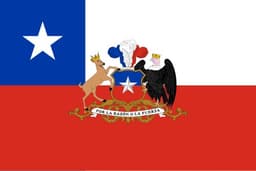
Arturo Alessandri
Politician · Modern
57.3Total
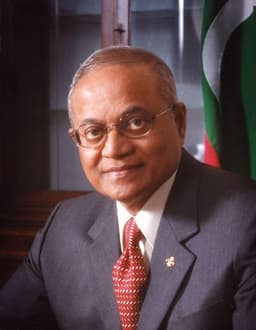
Maumoon Abdul Gayoom
Politician · Modern
55.6Total
Basic Information
Born
1868
1937
Died
1950
—
Era
Modern
Modern
Nationality
Chile
Maldives
Occupation
Politician
Politician
Civilization
Western
Indian
Score Comparison
Military (10%)
50.0
40.3
Political (20%)
72.0
68.0
Influence (20%)
57.2
53.3
Legacy (20%)
48.3
45.0
Leadership (15%)
72.0
72.0
Strategy (15%)
43.6
60.0
TOTAL
57.3
55.6
Arturo Alessandri — Complete Timeline
1920 AD
Alessandri becomes President of ChilePolitical Action◆ Major
Arturo Alessandri was elected President of Chile as a liberal reformer, winning a narrow victory. His presidency marked the beginning of a period of social and political change, challenging the conservative oligarchy.
PresidencyLiberal Reform1920
Impact: national
1924 AD
Alessandri's social legislation and labor reformsReform◆ Major
Alessandri pushed through a series of social laws including the eight-hour workday, regulation of child labor, and the right to unionize. These reforms were opposed by conservative forces but improved conditions for the working class.
Labor ReformSocial Legislation1924
Impact: nationalprogressive
Alessandri's first resignation and exilePolitical Action◆ Major
Facing a military coup led by conservative officers, Alessandri resigned and went into exile in the United States. His resignation marked a setback for reform and led to a period of military rule in Chile.
ResignationMilitary CoupExile
Impact: nationaltragic
1925 AD
Alessandri's second presidency and the 1925 ConstitutionReform
Alessandri returned from exile and was reinstated as president, overseeing the drafting and approval of a new constitution. The 1925 Constitution established a strong presidential system, separation of church and state, and social rights.
ConstitutionPolitical Reform1925
Impact: nationalconstructive
1932 AD
Alessandri's third presidency and conservative turnPolitical Action◆ Major
Alessandri was elected to a third term as president, this time as a conservative candidate. His government focused on restoring order and economic stability after the chaos of the Socialist Republic, suppressing leftist movements.
Third TermConservatism1932
Impact: national
Maumoon Abdul Gayoom — Complete Timeline
1978 AD
Became President of the MaldivesPolitical Action◆ Major
Maumoon Abdul Gayoom was elected President of the Maldives, succeeding Ibrahim Nasir. He would go on to rule for 30 years, the longest tenure in the country's history, initially with popular support but later facing increasing authoritarianism.
PresidencyLongest-servingMaldives
Impact: national
1979 AD
Introduced the tourism-based economic modelReform◆ Major
Gayoom's government expanded the Maldives' tourism industry, opening numerous resorts and promoting the country as a luxury destination. This policy transformed the economy, making tourism the dominant sector and driving significant economic growth, but also creating environmental pressures.
TourismEconomic developmentMaldives
Impact: nationalconstructive
1988 AD
Survived a coup attemptPolitical Action◆ Major
A coup attempt by Sri Lankan Tamil mercenaries and Maldivian dissidents was thwarted with military assistance from India. The failed coup led to increased security measures and closer ties between the Maldives and India, while Gayoom's grip on power tightened.
Coup attemptIndia-Maldives relationsSecurity
Impact: national
2004 AD
Declared a state of emergencyPolitical Action◆ Major
Following the 2004 Indian Ocean tsunami, Gayoom declared a state of emergency. The disaster devastated the Maldives, killing over 100 people and causing massive economic damage. The government's response was criticized for being slow and inadequate.
TsunamiDisaster responseEmergency
Impact: nationaltragic
2008 AD
Lost the first multi-party presidential electionPolitical Action
After 30 years in power, Gayoom was defeated in the Maldives' first multi-party presidential election by Mohamed Nasheed. The peaceful transfer of power was a landmark for Maldivian democracy, ending Gayoom's authoritarian rule.
ElectionDemocracyTransition
Impact: national
Expert Analysis
Origins
Arturo Alessandri Palma was born on December 20, 1868, in Longaví, Chile, into a wealthy landowning family of Italian and Basque descent. He studied law at the University of Chile, graduating in 1891, and entered politics early as a member of the Liberal Party. His father was a farmer and politician, providing Alessandri with a privileged upbringing that facilitated his political ambitions.
Maumoon Abdul Gayoom was born on December 29, 1937, in Malé, Maldives, into a modest family. He studied at al-Azhar University in Cairo, Egypt, earning degrees in Islamic law and jurisprudence. He also studied at the American University of Beirut. His background as a scholar and civil servant shaped his conservative approach to governance.
Rise to Power
Alessandri rose to prominence as a fiery orator, earning the nickname "Lion of Tarapacá." He was elected to the Chamber of Deputies in 1897 and later served as a senator. His liberal reformist platform gained traction among the working class. In 1920, he won the presidency by a narrow margin, defeating conservative candidate Luis Barros Borgoño. His first term was marked by social reforms but also political turmoil, leading to his resignation and exile in 1924 after a military coup.
Gayoom became president on November 11, 1978, succeeding Ibrahim Nasir. He was initially appointed by the Majlis (parliament) and later confirmed by referendum. His rise was aided by his reputation as a religious scholar and his lack of involvement in the previous administration's corruption scandals. He consolidated power through a centralized political system and controlled media.
Leadership & Governance
Alessandri's leadership style was confrontational and reformist. During his first presidency, he pushed through labor laws including the eight-hour workday, regulation of child labor, and the right to unionize. These reforms scored him a Political score of 72.0 and Leadership of 72.0. However, his second presidency (1925) focused on drafting a new constitution that strengthened presidential powers and separated church and state. His third term (1932-1938) saw a conservative pivot, emphasizing economic stability and order.
Gayoom's governance was authoritarian and centralized. He ruled for 30 years, the longest tenure in Maldivian history, with a Leadership score of 72.0. He introduced a tourism-based economic model that transformed the Maldives from a poor fishing economy to a middle-income country. However, he suppressed political dissent and human rights, declaring a state of emergency after the 2004 tsunami. His Strategy score of 60.0 reflects his ability to maintain power through a blend of economic development and political control.
Triumph & Tragedy
Alessandri's greatest triumph was the 1925 Constitution, which established a secular, presidential system that endured for decades. His social legislation laid the foundation for Chile's welfare state. However, his tragedy was the failure to maintain reform momentum; his conservative third term alienated his base, and his political legacy became contested.
Gayoom's triumph was the economic transformation of the Maldives through tourism, raising living standards significantly. The peaceful transfer of power after losing the 2008 election was a landmark for democracy. His tragedy was the suppression of freedoms; his regime was marked by corruption and human rights abuses, and he was later convicted on corruption charges in 2018.
Character & Destiny
Alessandri was charismatic, combative, and pragmatic. His "Lion" nickname reflected his fierce oratory and determination. His character drove him to push reforms but also led to conflicts that forced his exile. He later adapted to political realities, showing flexibility that extended his career.
Gayoom was reserved, calculating, and resilient. He survived a 1988 coup attempt with Indian military assistance. His ability to maintain power for three decades indicates strategic patience, but his reluctance to democratize eventually led to his electoral defeat. His character prioritized stability over freedom.
Legacy
Alessandri's legacy is the 1925 Constitution, which shaped Chile's political system until the 1973 coup. His social laws influenced later reforms. He scored 48.3 in Legacy, reflecting a mixed but foundational impact.
Gayoom's legacy is the modern Maldivian economy based on tourism. His authoritarian rule left institutions weak, but the democratic transition in 2008 was a positive step. His Legacy score of 45.0 is slightly lower due to the controversy over his human rights record.
Conclusion
Arturo Alessandri had a greater impact on his nation's political development than Maumoon Abdul Gayoom. Alessandri's 1925 Constitution provided a durable framework for governance, and his social reforms improved workers' rights. Despite his conservative turn, his contributions to Chilean state-building were foundational. Gayoom transformed the Maldives economically but left a mixed legacy of authoritarianism. Alessandri's TOTAL score of 57.3 edges Gayoom's 55.6, reflecting his more significant political and institutional influence. While both were skilled leaders, Alessandri's reforms had a deeper structural impact on Chile's trajectory.
Rankings
🥇
Arturo AlessandriLeader
Mil: 50.0Pol: 72.0Inf: 57.2
57.3
🥈
Maumoon Abdul Gayoom
Mil: 40.3Pol: 68.0Inf: 53.3
55.6
+1.7 behind
How This Comparison Works
Algorithm
Each figure is scored on 6 dimensions (0—100 scale) based on structured historical data: Military (10%), Political (20%), Influence (20%), Legacy (20%), Leadership (15%), Strategy (15%). The weighted total produces the final ranking.
Data Sources
Scores are computed from structured sub-indicators in the database. Scale factors adjust for era (Ancient ×0.85, Modern ×1.0) and civilization size (Eastern ×1.05, Other ×0.80) to account for differences in population and military scale.
Maximum 3 Figures
Comparisons are limited to 2—3 figures to ensure readability and statistical meaningfulness.
Error Margins
±5 points per dimension — Sub-scores are derived from historical records with inherent uncertainty. Two figures within 5 points on a dimension should be considered roughly equivalent in that area.
Total Score Accuracy
±3 points overall — The weighted combination of 6 dimensions produces a total score with approximately ±3 points of uncertainty. Differences of less than 3 points are not statistically significant— the figures are effectively tied.
Known Limitations
- Historical records are incomplete and uneven across civilizations
- Figures from oral-tradition societies may be underrepresented
- Occupation labels can misclassify multi-role figures
- Scores measure capability and impact, not moral character
- Quantitative scoring is a comparison tool, not absolute truth
Capability Radar
Military (10%) — Battles & Warfare
Battles
27
42
Win Rate
34
46
Expansion
33
52
Political (20%) — Governance & Reform
Reform
70
60
Diplomacy
60
55
Economy
55
50
Influence (20%) — Cultural & Global Reach
Cultural
40
30
Global
35
30
Legacy (20%) — Historical Impact
Historical
50
40
Longevity
40
30
Leadership (15%) — Power & Stability
Tenure
65
85
Stability
45
40
Strategy (15%) — Tactics & Innovation
Strategy
39
54
Tactics
41
54
Reform
46
60
Similar Comparisons
Comments & Discussion
No comments yet. Be the first to share your thoughts!