Loading...
Ashikaga Yoshimitsu vs Raynald of Chatillon
Ashikaga Yoshimitsu leads by 18.6 pts · 2 figures compared
…

Ashikaga Yoshimitsu
General · Medieval
56.1Total
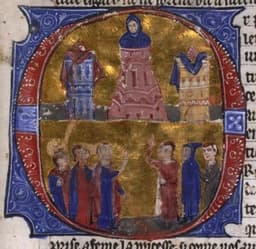
Raynald of Chatillon
General · Medieval
37.5Total
Basic Information
Born
1358
1125
Died
1408
1187
Era
Medieval
Medieval
Nationality
Japan
Jerusalem
Occupation
General
General
Civilization
Eastern
Western
Score Comparison
Military (10%)
25.0
25.0
Political (20%)
68.0
35.0
Influence (20%)
57.2
46.3
Legacy (20%)
49.2
37.5
Leadership (15%)
72.0
30.0
Strategy (15%)
60.0
43.3
TOTAL
56.1
37.5
Ashikaga Yoshimitsu — Complete Timeline
1392 AD
Unification of the Northern and Southern CourtsPolitical Action
Ashikaga Yoshimitsu negotiated the end of the Nanboku-cho period by persuading the Southern Court's Emperor Go-Kameyama to abdicate in favor of the Northern Court's Emperor Go-Komatsu. This reunified the imperial line under a single throne, ending decades of civil war and stabilizing Japan.
UnificationNanboku-cho PeriodImperial Court
Impact: nationalconstructive
1394 AD
Retirement and Assumption of Power as Cloistered ShogunPolitical Action◆ Major
Ashikaga Yoshimitsu formally retired as shogun but continued to wield effective power from his retirement villa, a practice known as cloistered rule. He controlled the shogunate's affairs and the imperial court, demonstrating a concentration of power unprecedented for a retired shogun.
GovernancePower ConsolidationMuromachi Period
Impact: national
1397 AD
Construction of Kinkaku-ji (Golden Pavilion)Cultural◆ Major
Ashikaga Yoshimitsu built the Kinkaku-ji, a Zen Buddhist temple in Kyoto covered in gold leaf, as his retirement villa. This structure became a symbol of the Kitayama culture and the Muromachi period's artistic flourishing. It remains a UNESCO World Heritage Site and a major cultural icon.
ArchitectureZen BuddhismCultural Heritage
Impact: globalconstructive
1401 AD
Establishment of Trade with Ming ChinaPolitical Action◆ Major
Ashikaga Yoshimitsu sent an embassy to the Ming court of Emperor Jianwen, formally establishing tributary trade relations. This opened lucrative trade routes for Japanese goods, especially swords and copper, in exchange for Chinese silk and coins. It also enhanced Yoshimitsu's prestige.
TradeDiplomacyMing Dynasty
Impact: regionalconstructive
Raynald of Chatillon — Complete Timeline
1160 AD
Capture and imprisonment by Nur ad-DinWar◆ Major
Raynald of Chatillon was captured by Nur ad-Din Zengi during a raid in the Beqaa Valley. He was imprisoned in Aleppo for 16 years, during which time his lands were confiscated and his family struggled.
CaptureImprisonmentCrusader States
Impact: regionaltragic
1176 AD
Release from prisonPolitical Action
Raynald was released from prison after a ransom was paid, possibly by the Knights Hospitaller. He returned to the Kingdom of Jerusalem and was granted the lordship of Oultrejordain through marriage to Stephanie of Milly.
ReleaseRansomCrusader States
Impact: regional
1182 AD
Raid on the Red SeaWar◆ Major
Raynald built a fleet of ships and launched a raid on the Red Sea, attacking Muslim ports and threatening the holy cities of Mecca and Medina. This act provoked outrage in the Islamic world and was a major factor in Saladin's call for jihad.
RaidRed SeaJihadProvocation
Impact: regionaldestructive
1186 AD
Attack on a Muslim caravanWar◆ Major
Raynald attacked a large Muslim caravan traveling from Cairo to Damascus, violating a truce between Saladin and the Kingdom of Jerusalem. He refused to compensate the merchants, leading Saladin to declare war and invade the kingdom.
Truce ViolationProvocationCrusader States
Impact: regionaldestructive
1187 AD
Execution by Saladin after the Battle of HattinWar◆ Major
After the Battle of Hattin, Saladin personally executed Raynald of Chatillon for his raids and violations of truces. This act was a major propaganda victory for Saladin and symbolized the end of crusader dominance in the region.
ExecutionBattle of HattinSaladin
Impact: regionaltragic
Expert Analysis
Origins
Ashikaga Yoshimitsu was born in 1358 into the Ashikaga clan, a powerful samurai family that had established the Muromachi shogunate. His father, Ashikaga Yoshiakira, was the second shogun, and his grandfather, Ashikaga Takauji, founded the shogunate. Yoshimitsu became shogun at age 10 after his father's death, with initial regency support. He received a traditional education in governance, poetry, and Zen Buddhism, which shaped his later cultural pursuits.
Raynald of Chatillon was born around 1125 in France, likely to a minor noble family. He traveled to the Crusader states in the 1140s and entered the service of Prince Raymond of Antioch. Through marriage to Constance of Antioch in 1153, he became Prince of Antioch, though his lack of royal blood caused tension. His early life was marked by ambition and a reputation for violence, which defined his career.
Rise to Power
Yoshimitsu consolidated power by the 1370s, suppressing rival samurai clans and asserting shogunal authority. His key turning point was the unification of the Northern and Southern Courts in 1392. He negotiated with Emperor Go-Kameyama of the Southern Court, securing his abdication and the return of the imperial regalia to the Northern Court. This ended decades of civil war and unified Japan under the Muromachi shogunate. Yoshimitsu also allied with powerful shugo lords and controlled the imperial court through strategic marriages and appointments.
Raynald rose to prominence through marriage and military aggression. As Prince of Antioch, he attacked Byzantine Cyprus in 1156, and was captured by Nur ad-Din in 1160 during a raid. He spent 16 years in Aleppo prison, released in 1176 after ransom. He then married Stephanie of Milly, gaining control of the fortress of Kerak and Oultrejordain. From there, he raided Muslim territories, building a reputation as a crusader lord who defied truces.
Leadership & Governance
Yoshimitsu's leadership was pragmatic and centralized. He established tributary trade with Ming China in 1401, sending embassies that secured lucrative commerce and recognition of Japan as a tributary state. Domestically, he retired as shogun in 1394 but continued to rule from his Golden Pavilion as a cloistered shogun, a system that allowed him to wield power without formal office. He patronized Zen Buddhism and the arts, sponsoring Noh theater and ink painting, and built the Kinkaku-ji temple, a symbol of his cultural authority. His governance emphasized stability and cultural flourishing, with political score 68.0.
Raynald's leadership was aggressive and destabilizing. As lord of Kerak, he repeatedly violated truces between the Kingdom of Jerusalem and Saladin. In 1181, he attacked a Muslim caravan, and in 1183 he launched a naval raid on the Red Sea, threatening Mecca and Medina. These actions provoked Saladin and undermined the kingdom's diplomatic position. Raynald refused to pay reparations, leading to Saladin's invasion. His leadership score of 30.0 reflects his inability to build alliances or maintain peace.
Triumph & Tragedy
Yoshimitsu's greatest triumph was the unification of the Northern and Southern Courts, ending the Nanboku-cho period. He also established stable trade with China, boosting Japan's economy. His Golden Pavilion remains a cultural icon. However, his cloistered rule created a precedent for shogunal power that later led to instability, as the Ashikaga shogunate declined after his death. He also failed to fully control the shugo lords, leading to the Ōnin War decades later.
Raynald's triumph was his raid on the Red Sea, which demonstrated crusader naval capability and disrupted Muslim trade. He also defended Kerak against Saladin's sieges in 1183-84. His tragedy was his execution after the Battle of Hattin in 1187. Saladin personally beheaded Raynald for his truce violations, which became a propaganda victory. The battle led to the fall of Jerusalem and the collapse of the Kingdom of Jerusalem. Raynald's actions directly contributed to this disaster.
Character & Destiny
Yoshimitsu was shrewd and cultured, using diplomacy and art to consolidate power. His decision to retire but retain control showed strategic foresight. He balanced military force with cultural patronage, earning high leadership (72.0) and political (68.0) scores. His character shaped a stable, prosperous reign, but his reliance on personal authority left the shogunate vulnerable.
Raynald was reckless and violent, driven by greed and religious fervor. His refusal to honor truces alienated allies and provoked enemies. His character led to his downfall: after capturing a caravan in 1187, Saladin invaded, and at Hattin, Raynald was captured. Saladin executed him personally, fulfilling a vow. Raynald's destiny was sealed by his own choices, scoring only 30.0 in leadership and 35.0 in politics.
Legacy
Yoshimitsu's legacy is the Golden Pavilion, a UNESCO World Heritage site, and the cultural flourishing of the Muromachi period. His unification of the courts ended a civil war, and his trade with China influenced Japanese art and culture. However, his political system declined, and the Ashikaga shogunate fell in 1573. His influence score of 57.2 reflects his lasting cultural impact but limited political endurance.
Raynald's legacy is infamy. He is remembered as a villain in Muslim historiography and a reckless crusader in Western accounts. His actions precipitated the Battle of Hattin and the loss of Jerusalem, making him a cautionary figure. His influence score of 46.3 is moderate, as his story is often cited in discussions of crusader failures.
Conclusion
Ashikaga Yoshimitsu had greater impact than Raynald of Chatillon. Yoshimitsu unified Japan, established trade with China, and left a cultural monument that endures. His total score of 56.1 significantly exceeds Raynald's 37.5. Raynald's actions were destructive and led to the collapse of the Crusader kingdom, but his influence is negative and localized. Yoshimitsu's legacy shaped Japan for centuries, while Raynald's is a footnote in crusader history. Yoshimitsu's higher political and leadership scores demonstrate his effectiveness as a ruler, whereas Raynald's low scores reflect his failure as a leader. Thus, Yoshimitsu's contributions to history outweigh Raynald's notoriety.
Rankings
🥇
Ashikaga YoshimitsuLeader
Mil: 25.0Pol: 68.0Inf: 57.2
56.1
🥈
Raynald of Chatillon
Mil: 25.0Pol: 35.0Inf: 46.3
37.5
+18.6 behind
How This Comparison Works
Algorithm
Each figure is scored on 6 dimensions (0—100 scale) based on structured historical data: Military (10%), Political (20%), Influence (20%), Legacy (20%), Leadership (15%), Strategy (15%). The weighted total produces the final ranking.
Data Sources
Scores are computed from structured sub-indicators in the database. Scale factors adjust for era (Ancient ×0.85, Modern ×1.0) and civilization size (Eastern ×1.05, Other ×0.80) to account for differences in population and military scale.
Maximum 3 Figures
Comparisons are limited to 2—3 figures to ensure readability and statistical meaningfulness.
Error Margins
±5 points per dimension — Sub-scores are derived from historical records with inherent uncertainty. Two figures within 5 points on a dimension should be considered roughly equivalent in that area.
Total Score Accuracy
±3 points overall — The weighted combination of 6 dimensions produces a total score with approximately ±3 points of uncertainty. Differences of less than 3 points are not statistically significant— the figures are effectively tied.
Known Limitations
- Historical records are incomplete and uneven across civilizations
- Figures from oral-tradition societies may be underrepresented
- Occupation labels can misclassify multi-role figures
- Scores measure capability and impact, not moral character
- Quantitative scoring is a comparison tool, not absolute truth
Capability Radar
Military (10%) — Battles & Warfare
Battles
25
35
Win Rate
30
30
Expansion
30
20
Political (20%) — Governance & Reform
Reform
60
10
Diplomacy
70
10
Economy
65
15
Influence (20%) — Cultural & Global Reach
Cultural
70
20
Global
45
25
Legacy (20%) — Historical Impact
Historical
65
35
Longevity
60
20
Leadership (15%) — Power & Stability
Tenure
65
30
Stability
55
10
Strategy (15%) — Tactics & Innovation
Strategy
40
25
Tactics
35
40
Reform
20
10
Similar Comparisons
Comments & Discussion
No comments yet. Be the first to share your thoughts!