Loading...
Ashikaga Yoshimitsu vs John Hunyadi
John Hunyadi leads by 4.6 pts · 2 figures compared
…

Ashikaga Yoshimitsu
General · Medieval
56.1Total
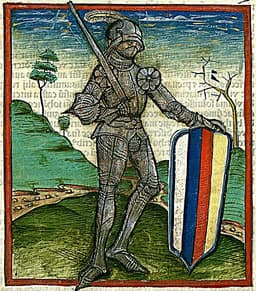
John Hunyadi
General · Medieval
60.7Total
Basic Information
Born
1358
1406
Died
1408
1456
Era
Medieval
Medieval
Nationality
Japan
Hungary
Occupation
General
General
Civilization
Eastern
Western
Score Comparison
Military (10%)
25.0
72.8
Political (20%)
68.0
59.2
Influence (20%)
57.2
57.2
Legacy (20%)
49.2
50.0
Leadership (15%)
72.0
69.4
Strategy (15%)
60.0
73.6
TOTAL
56.1
60.7
Ashikaga Yoshimitsu — Complete Timeline
1392 AD
Unification of the Northern and Southern CourtsPolitical Action
Ashikaga Yoshimitsu negotiated the end of the Nanboku-cho period by persuading the Southern Court's Emperor Go-Kameyama to abdicate in favor of the Northern Court's Emperor Go-Komatsu. This reunified the imperial line under a single throne, ending decades of civil war and stabilizing Japan.
UnificationNanboku-cho PeriodImperial Court
Impact: nationalconstructive
1394 AD
Retirement and Assumption of Power as Cloistered ShogunPolitical Action◆ Major
Ashikaga Yoshimitsu formally retired as shogun but continued to wield effective power from his retirement villa, a practice known as cloistered rule. He controlled the shogunate's affairs and the imperial court, demonstrating a concentration of power unprecedented for a retired shogun.
GovernancePower ConsolidationMuromachi Period
Impact: national
1397 AD
Construction of Kinkaku-ji (Golden Pavilion)Cultural◆ Major
Ashikaga Yoshimitsu built the Kinkaku-ji, a Zen Buddhist temple in Kyoto covered in gold leaf, as his retirement villa. This structure became a symbol of the Kitayama culture and the Muromachi period's artistic flourishing. It remains a UNESCO World Heritage Site and a major cultural icon.
ArchitectureZen BuddhismCultural Heritage
Impact: globalconstructive
1401 AD
Establishment of Trade with Ming ChinaPolitical Action◆ Major
Ashikaga Yoshimitsu sent an embassy to the Ming court of Emperor Jianwen, formally establishing tributary trade relations. This opened lucrative trade routes for Japanese goods, especially swords and copper, in exchange for Chinese silk and coins. It also enhanced Yoshimitsu's prestige.
TradeDiplomacyMing Dynasty
Impact: regionalconstructive
John Hunyadi — Complete Timeline
1444 AD
Battle of VarnaWar◆ Major
Hunyadi commanded the Hungarian and allied forces against the Ottoman army of Sultan Murad II at Varna. The crusader army was defeated, and King W
CrusadeBattleOttoman Wars
Impact: regionaltragic
1446 AD
Appointed Regent of HungaryPolitical Action◆ Major
Following the death of King Albert II and the minority of Ladislaus V, John Hunyadi was elected regent of Hungary by the Diet. He assumed effective control of the kingdom, organizing defense against Ottoman threats and consolidating royal authority.
RegencyHungarian Politics
Impact: nationalconstructive
1448 AD
Second Battle of KosovoWar◆ Major
Hunyadi led a Hungarian army into Serbia to confront the Ottomans at Kosovo Polje. After three days of fighting, the Hungarian forces were defeated by Sultan Murad II. The loss ended major crusading efforts in the Balkans for decades.
BattleOttoman WarsDefeat
Impact: regionaltragic
1456 AD
Siege of BelgradeWar
Hunyadi, with the help of Franciscan friar John of Capistrano, led a relief force to break the Ottoman siege of Belgrade. The Hungarian victory forced Sultan Mehmed II to retreat, halting Ottoman expansion into Hungary for 70 years. Hunyadi died of plague shortly after.
SiegeVictoryOttoman Wars
Impact: regionalconstructive
Expert Analysis
Origins
Ashikaga Yoshimitsu was born in 1358 in Kyoto, Japan, the third son of Ashikaga Yoshiakira, the second shogun of the Ashikaga shogunate. His early life was shaped by the ongoing Nanboku-chō period, a time of civil war between the Northern and Southern Courts. He became shogun at age 10 after his father's death in 1367, with the support of his grandfather, Ashikaga Takauji, the founder of the shogunate. His education was steeped in Zen Buddhism and courtly culture, which later influenced his patronage of the arts.
John Hunyadi was born around 1406 in Transylvania, then part of the Kingdom of Hungary, into a noble family of Romanian origin. His father, Voyk, was a knight in the service of King Sigismund. Hunyadi received a military education and early exposure to warfare against the Ottoman Empire. He quickly rose through the ranks due to his martial skills and loyalty to the crown, becoming a key figure in Hungary's defense against the Turks.
Rise to Power
Yoshimitsu's rise was marked by his consolidation of shogunal authority. After becoming shogun, he gradually sidelined rival factions within the Ashikaga clan and the imperial court. His key turning point came in 1392 when he negotiated the end of the Nanboku-chō period. He persuaded Emperor Go-Kameyama of the Southern Court to abdicate in favor of the Northern Court's Emperor Go-Komatsu, effectively unifying the imperial line under Ashikaga control. This move secured his political dominance and brought stability to Japan.
Hunyadi's rise to prominence came through military success. He was appointed Ban of Szörény in 1439 and later Voivode of Transylvania. His reputation soared after his defense of Belgrade in 1441 and subsequent campaigns against the Ottomans. Following the death of King Albert II in 1439, Hunyadi was elected regent of Hungary in 1446 during the minority of Ladislaus V, effectively becoming the ruler of Hungary. His political power was reinforced by his military victories, though he faced opposition from the Hungarian nobility.
Leadership & Governance
Yoshimitsu ruled as a shogun but also adopted the practice of cloistered rule after his formal retirement in 1394. He continued to wield power from his Golden Pavilion, influencing politics and culture. His governance focused on centralizing authority, promoting trade with China, and patronizing Zen Buddhism. He sent embassies to the Ming court in 1401, establishing tributary trade that enriched the shogunate. He also suppressed powerful daimyo families and curbed the influence of the imperial court. His leadership was characterized by diplomatic finesse and cultural patronage rather than military conquest.
Hunyadi's leadership was defined by his military command and administrative reforms. As regent, he strengthened the Hungarian army, introduced new tactics, and built a network of fortresses along the Ottoman frontier. He convened the Diet of Hungary to secure funding and support for defense. His governance was pragmatic, focusing on military preparedness and maintaining noble loyalty. He also supported the Catholic Church's crusading efforts, aligning with figures like John of Capistrano. His political score of 59.2 reflects his competent but contested rule, often challenged by nobles who resented his power.
Triumph & Tragedy
Yoshimitsu's greatest triumph was the unification of the Northern and Southern Courts in 1392, ending decades of civil war. He also constructed the Kinkaku-ji (Golden Pavilion), a masterpiece of architecture that symbolizes his cultural legacy. His establishment of trade with Ming China brought wealth and prestige. However, his rule faced challenges: his retirement and cloistered rule created tensions with his successor, Ashikaga Yoshimochi, and his centralized control eventually weakened after his death. His legacy score of 49.2 is moderate, as the Ashikaga shogunate declined in the following century.
Hunyadi's greatest triumph was the Siege of Belgrade in 1456, where he led a relief force that broke the Ottoman siege, securing a major victory that halted Ottoman expansion for decades. However, his career was marked by tragedies: the Battle of Varna in 1444 ended in a disastrous defeat and the death of King Władysław III, partly due to Hunyadi's controversial retreat. The Second Battle of Kosovo in 1448 also ended in defeat. These failures cost him political support. His military score of 72.8 reflects his effectiveness, but his overall total of 60.7 is tempered by these setbacks.
Character & Destiny
Yoshimitsu was a shrewd diplomat and aesthete. He prioritized stability and cultural achievement over military expansion. His decision to retire and rule from his villa showed a preference for indirect power. He was also ambitious, as seen in his negotiations with the Ming court that elevated Japan's status. His character shaped a destiny of peaceful consolidation, but his reliance on personal influence meant his achievements were not institutionalized, leading to the shogunate's later decline.
Hunyadi was a relentless warrior and strategist. His military score of 73.6 in strategy shows his tactical acumen, but his aggressive pursuit of crusade led to overreach at Varna and Kosovo. He was also a devout Catholic, which influenced his alliance with the Church. His character was defined by resilience; despite defeats, he continued to fight the Ottomans. His destiny was to become a national hero, but his political ambitions were never fully realized due to noble opposition and his early death in 1456.
Legacy
Yoshimitsu's legacy is primarily cultural. The Golden Pavilion remains a symbol of the Muromachi period, and his patronage of Zen Buddhism influenced Japanese arts. His unification of the courts ended a civil war, but the peace was fragile. His trade with China set a precedent for later relations. However, his political system of cloistered rule was not sustainable, and the Ashikaga shogunate weakened after his death. His influence score of 57.2 reflects his moderate long-term impact.
Hunyadi's legacy is military and national. He is remembered as a defender of Christendom and a symbol of Hungarian resistance against the Ottomans. His victory at Belgrade is celebrated as a turning point in Ottoman-Hungarian wars. His military reforms influenced later Hungarian kings. He also founded the Hunyadi family, which produced King Matthias Corvinus. However, his defeats at Varna and Kosovo limited his effectiveness. His legacy score of 50.0 is similar to Yoshimitsu's, but his martial achievements had a more direct impact on European history.
Conclusion
John Hunyadi had a greater overall impact than Ashikaga Yoshimitsu, despite only a 4.6-point score gap. Hunyadi's military actions directly shaped the course of European history by halting Ottoman expansion at a critical moment. His victory at Belgrade in 1456 prevented the fall of Hungary and delayed Ottoman advances into Central Europe. In contrast, Yoshimitsu's unification of Japan's courts was a political achievement that brought stability, but it was temporary and did not prevent the eventual decline of the Ashikaga shogunate. Hunyadi's legacy as a crusader general and founder of the Corvinus dynasty had lasting political consequences, while Yoshimitsu's cultural contributions, though significant, were less transformative. Therefore, Hunyadi's higher scores in military (72.8 vs 25.0) and strategy (73.6 vs 60.0) outweigh Yoshimitsu's political and leadership advantages. Hunyadi's total score of 60.7 reflects a more substantial historical footprint.
Rankings
🥇
John HunyadiLeader
Mil: 72.8Pol: 59.2Inf: 57.2
60.7
🥈
Ashikaga Yoshimitsu
Mil: 25.0Pol: 68.0Inf: 57.2
56.1
+4.6 behind
How This Comparison Works
Algorithm
Each figure is scored on 6 dimensions (0—100 scale) based on structured historical data: Military (10%), Political (20%), Influence (20%), Legacy (20%), Leadership (15%), Strategy (15%). The weighted total produces the final ranking.
Data Sources
Scores are computed from structured sub-indicators in the database. Scale factors adjust for era (Ancient ×0.85, Modern ×1.0) and civilization size (Eastern ×1.05, Other ×0.80) to account for differences in population and military scale.
Maximum 3 Figures
Comparisons are limited to 2—3 figures to ensure readability and statistical meaningfulness.
Error Margins
±5 points per dimension — Sub-scores are derived from historical records with inherent uncertainty. Two figures within 5 points on a dimension should be considered roughly equivalent in that area.
Total Score Accuracy
±3 points overall — The weighted combination of 6 dimensions produces a total score with approximately ±3 points of uncertainty. Differences of less than 3 points are not statistically significant— the figures are effectively tied.
Known Limitations
- Historical records are incomplete and uneven across civilizations
- Figures from oral-tradition societies may be underrepresented
- Occupation labels can misclassify multi-role figures
- Scores measure capability and impact, not moral character
- Quantitative scoring is a comparison tool, not absolute truth
Capability Radar
Military (10%) — Battles & Warfare
Battles
25
78
Win Rate
30
75
Expansion
30
65
Political (20%) — Governance & Reform
Reform
60
68
Diplomacy
70
74
Economy
65
60
Influence (20%) — Cultural & Global Reach
Cultural
70
60
Global
45
55
Legacy (20%) — Historical Impact
Historical
65
70
Longevity
60
65
Leadership (15%) — Power & Stability
Tenure
65
72
Stability
55
62
Strategy (15%) — Tactics & Innovation
Strategy
40
80
Tactics
35
82
Reform
20
70
Similar Comparisons
Comments & Discussion
No comments yet. Be the first to share your thoughts!