Loading...
Ashikaga Yoshinori vs Julius Caesar
Julius Caesar leads by 37.5 pts · 2 figures compared
…
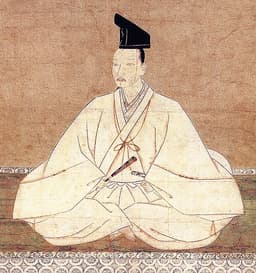
Ashikaga Yoshinori
Emperor · Medieval
45.3Total

Julius Caesar
General · Ancient
82.8Total
Basic Information
Born
1394
-100
Died
1441
-44
Era
Medieval
Ancient
Nationality
Japan
Roman Republic
Occupation
Emperor
General
Civilization
Eastern
Western
Score Comparison
Military (10%)
50.0
88.0
Political (20%)
35.1
78.0
Influence (20%)
51.0
85.0
Legacy (20%)
43.3
82.0
Leadership (15%)
48.4
80.0
Strategy (15%)
41.7
85.0
TOTAL
45.3
82.8
Ashikaga Yoshinori — Complete Timeline
1429 AD
Appointment as Sixth ShogunPolitical Action◆ Major
Ashikaga Yoshinori became the sixth shogun of the Ashikaga shogunate after the death of his brother Ashikaga Yoshikazu. He inherited a shogunate weakened by factional strife and sought to restore its authority.
AppointmentShogunAshikaga Shogunate
Impact: national
1438 AD
Suppression of the Eikyō RebellionWar◆ Major
Yoshinori suppressed the Eiky
RebellionSuppressionKantō Region
Impact: regionaldestructive
1441 AD
Assassination by Akamatsu MitsusukePolitical Action
Ashikaga Yoshinori was assassinated by Akamatsu Mitsusuke during a banquet in Kyoto. His death triggered the Kakitsu Rebellion and led to a period of instability in the Ashikaga shogunate, contributing to the eventual decline of central authority.
AssassinationKakitsu RebellionShogunate Decline
Impact: nationaltragic
Julius Caesar — Complete Timeline
58 BC
Gallic WarsWar◆ Major
Caesar, as proconsul of Gaul, launched a series of campaigns that conquered all of Gaul (modern France, Belgium, and parts of Switzerland). He fought numerous battles, including against the Helvetii, the Belgae, and the Gallic chieftain Vercingetorix. The wars brought immense wealth and a loyal army to Caesar.
Gallic WarsConquestRoman Expansion
Impact: regional
49 BC
Crossing the RubiconPolitical Action◆ Major
Caesar led Legio XIII across the Rubicon River into Italy, defying the Roman Senate's order to disband his army. This act triggered a civil war against Pompey and the Optimates, ultimately leading to Caesar's dictatorship and the end of the Roman Republic.
Roman Civil WarEnd of RepublicPower Struggle
Impact: global
48 BC
Battle of PharsalusWar◆ Major
Caesar's outnumbered army defeated the larger forces of Pompey the Great at Pharsalus in Greece. Caesar's tactical use of a reserve line to counter Pompey's cavalry charge proved decisive. Pompey fled to Egypt, where he was assassinated, leaving Caesar as the undisputed master of the Roman world.
Roman Civil WarBattleDecisive Victory
Impact: regional
44 BC
Appointment as Dictator for LifePolitical Action◆ Major
The Roman Senate appointed Caesar dictator perpetuo (dictator for life), granting him unprecedented personal power. This move concentrated military, legislative, and judicial authority in one person, effectively ending the Roman Republic's traditional system of checks and balances and alarming many senators.
DictatorshipEnd of RepublicPower Consolidation
Impact: regionaldestructive
Assassination on the Ides of MarchPolitical Action◆ Major
A group of Roman senators, led by Marcus Junius Brutus and Gaius Cassius Longinus, stabbed Caesar to death at a meeting of the Senate in the Theatre of Pompey. The assassination was intended to restore the Republic, but instead triggered another civil war that led to the rise of the Roman Empire.
AssassinationRoman PoliticsEnd of Republic
Impact: globaldestructive
Expert Analysis
ashikaga-yoshinori-vs-julius-caesar
# The General and the Shogun: Two Paths to Power, Two Destinies
On a spring evening in 1441, the sixth shōgun of the Ashikaga shogunate, Yoshinori, sat down to a banquet in Kyoto. He had spent twelve years centralizing power, crushing rebellions, and making himself the most feared man in Japan. By nightfall, he lay dead, cut down by his own host, Akamatsu Mitsusuke, in a betrayal so sudden that it would plunge the realm into chaos. Fifteen centuries earlier and half a world away, Gaius Julius Caesar also walked into a gathering of his peers—the Roman Senate on the Ides of March, 44 BCE. He too was struck down by men he knew, men he had trusted. But where Yoshinori’s death sparked a rebellion that faded into the footnotes of Japanese medieval history, Caesar’s assassination lit a fire that consumed the Roman Republic and gave birth to an empire. Why did these two men, both autocrats who seized control in turbulent times, leave such different marks on the world?
Origins
Caesar was born into the patrician Julian clan, but his family was neither wealthy nor powerful. He grew up in the shadow of Rome’s civil wars, watching Sulla’s proscriptions and Marius’s populism tear the Republic apart. This taught him that politics was a game of survival, and that the old rules were already dying. Yoshinori, by contrast, was born into the Ashikaga shogunate, a military government that had ruled Japan for nearly a century. His father, Ashikaga Yoshimitsu, had unified the Northern and Southern Courts and made the shogunate supreme. But by the time Yoshinori became shōgun in 1429, the realm was fragmenting. Provincial warlords, the *daimyō*, were growing independent, and the shogun’s authority was a fading echo. Both men inherited worlds in transition, but Caesar’s Rome was a republic cracking under imperial expansion, while Yoshinori’s Japan was a feudal order decaying from within.
Rise to Power
Caesar’s rise was a masterclass in calculated risk. He borrowed fortunes to buy popularity, climbed the political ladder through the *cursus honorum*, and then gambled everything on a military command in Gaul. From 58 to 50 BCE, he conquered a territory larger than Italy, built a loyal army, and made himself the richest man in Rome. When the Senate ordered him to disband his legions, he crossed the Rubicon River in 49 BCE, igniting a civil war that he would win. Yoshinori’s path was quieter but no less ruthless. He became shōgun at age thirty-five after his brother died young. He had no military conquests of his own, but he understood power’s mechanics. He purged rivals, confiscated lands, and crushed the Eikyō Rebellion in 1438, defeating Ashikaga Mochiuji, the Kantō kubō, and reasserting central control. Where Caesar built his power from nothing, Yoshinori inherited a system and tightened its screws.
Leadership & Governance
Caesar governed like a revolutionary. He reformed the calendar, granted citizenship to provincials, redistributed land to veterans, and packed the Senate with his supporters. He was a military genius—his siege of Alesia in 52 BCE remains a textbook example of tactical brilliance—but his political wisdom was flawed. He pardoned his enemies, believing clemency would bind them to him. It did not. Yoshinori ruled like a traditional autocrat. He centralized tax collection, enforced loyalty oaths, and punished defiance with spectacular cruelty. He was no general; his military score of 31.1 reflects a man who delegated war rather than fought it. Yet his political score of 50.5 suggests a competent, if unremarkable, administrator. His strategy was preservation, not expansion. He did not seek to transform Japan; he sought to hold it together.
Triumph & Tragedy
Caesar’s greatest triumph was his conquest of Gaul, which made him a legend and gave him the resources to destroy the Republic. His greatest tragedy was his failure to understand that the Republic’s elites would never accept a king, no matter how popular. When he made himself dictator for life in 44 BCE, he signed his death warrant. Yoshinori’s triumph was the suppression of the Eikyō Rebellion, which temporarily reasserted shogunal authority. His tragedy was the Kakitsu Incident of 1441, when his own arrogance led him to humiliate Akamatsu Mitsusuke, a powerful daimyō, until the man had no choice but to strike. Caesar was killed by idealists who feared tyranny; Yoshinori was killed by a pragmatist who feared ruin.
Character & Destiny
Caesar was audacious, charismatic, and relentlessly ambitious. He wrote his own commentaries, shaped his own legend, and believed that fortune favored the bold. His personality drove him to take risks that paid off—until one didn’t. Yoshinori was cautious, suspicious, and cruel. He ruled through fear, not love. His personality made him effective at crushing dissent but incapable of building loyalty. When the blow came, no one rushed to save him. Caesar’s character made him a target; Yoshinori’s made him isolated. Both died violently, but Caesar’s death was a political earthquake, while Yoshinori’s was a tremor that signaled a coming collapse—the Ōnin War that would devastate Japan a generation later.
Legacy
Caesar’s name became synonymous with imperial power. “Emperor” derives from his cognomen. His reforms outlived him, and the Roman Empire he unwittingly created lasted for centuries. His legacy score of 82.0 reflects a man whose shadow looms over Western civilization. Yoshinori’s legacy is far smaller. His influence score of 69.4 and legacy score of 58.6 place him as a footnote in Japanese history, remembered mainly for triggering the Kakitsu Incident. He did not transform Japan; he merely delayed its fragmentation. His failure highlighted the weakness of the Ashikaga shogunate, which would fall within decades.
Conclusion
The difference between Caesar and Yoshinori is not merely one of scale or talent. It is a difference of context. Caesar operated at the apex of a civilization that was expanding and hungry for new forms of order. Yoshinori operated within a system that was contracting and exhausted. Caesar could build something new because the Roman world was ready for it. Yoshinori could only try to hold something together that was already coming apart. In the end, both men were murdered by their own kind. But one became a bridge to the future; the other became a warning of decay. Their stories remind us that history judges not only what a leader does, but what his age will allow.
Rankings
🥇
Julius CaesarLeader
Mil: 88.0Pol: 78.0Inf: 85.0
82.8
🥈
Ashikaga Yoshinori
Mil: 50.0Pol: 35.1Inf: 51.0
45.3
+37.5 behind
How This Comparison Works
Algorithm
Each figure is scored on 6 dimensions (0—100 scale) based on structured historical data: Military (10%), Political (20%), Influence (20%), Legacy (20%), Leadership (15%), Strategy (15%). The weighted total produces the final ranking.
Data Sources
Scores are computed from structured sub-indicators in the database. Scale factors adjust for era (Ancient ×0.85, Modern ×1.0) and civilization size (Eastern ×1.05, Other ×0.80) to account for differences in population and military scale.
Maximum 3 Figures
Comparisons are limited to 2—3 figures to ensure readability and statistical meaningfulness.
Error Margins
±5 points per dimension — Sub-scores are derived from historical records with inherent uncertainty. Two figures within 5 points on a dimension should be considered roughly equivalent in that area.
Total Score Accuracy
±3 points overall — The weighted combination of 6 dimensions produces a total score with approximately ±3 points of uncertainty. Differences of less than 3 points are not statistically significant— the figures are effectively tied.
Known Limitations
- Historical records are incomplete and uneven across civilizations
- Figures from oral-tradition societies may be underrepresented
- Occupation labels can misclassify multi-role figures
- Scores measure capability and impact, not moral character
- Quantitative scoring is a comparison tool, not absolute truth
Capability Radar
Military (10%) — Battles & Warfare
Battles
15
95
Win Rate
10
92
Expansion
20
97
Political (20%) — Governance & Reform
Reform
35
90
Diplomacy
30
85
Economy
25
82
Influence (20%) — Cultural & Global Reach
Cultural
30
88
Global
15
94
Legacy (20%) — Historical Impact
Historical
35
95
Longevity
25
96
Leadership (15%) — Power & Stability
Tenure
40
75
Stability
20
60
Strategy (15%) — Tactics & Innovation
Strategy
25
94
Tactics
20
96
Reform
30
88
Similar Comparisons
Comments & Discussion
BreadAndCircuses6/17/2026
Caesar was a visionary who understood that the Republic was a decaying corpse, so he built a new system that survived for centuries. Yoshinori was just a thug with a temper who alienated everyone around him. Caesar’s assassination led to the rise of Augustus and the Pax Romana; Yoshinori’s murder triggered a chaotic century of warring states. One man changed the course of Western civilization, the other was a footnote in Japanese history.
战国数据师6/17/2026
数据不会骗人:凯撒统治时期罗马人口约100万,年均军事行动持续9个月,而义教统治12年,年均处决贵族多达十几人。凯撒知道如何培养支持者——他把西班牙和高卢的土地分给老兵;义教只知道打压,让全日本的守护大名恨他入骨。这不是两个暴君的比较,这是天壤之别的统治效率。
QuaestorOfTheDead6/17/2026
The Ides of March proves that Caesar was caught in a complex web of senatorial politics—Brutus was supposedly his friend, and he still stabbed him. Yoshinori’s death was a simple dinner ambush by a disgruntled vassal. Caesar’s assassination was a political earthquake that shook the entire Mediterranean; Yoshinori’s was a local gangland hit. The scope and consequence are not even comparable.
江户闲人6/17/2026
别把凯撒和义教相提并论了。凯撒在死前征服了高卢、击败了庞培、改革了历法;义教呢?他最大的成就就是镇压了几个小叛乱,然后被人在酒桌上剁了。凯撒的名字成了“皇帝”的代名词,义教的名字只在日本战国史书的一个角落出现。历史用结果评判人,结果一目了然。
MilitarisPunctum6/17/2026
From a purely military standpoint, Caesar was a tactical genius who wrote the books on strategy—his Commentaries are still studied in war colleges. Yoshinori was a competent administrator who never led troops in a major campaign. Caesar conquered Gaul with legions, crossed the Rubicon, and reshaped the Roman army. Yoshinori's claim to fame is getting stabbed during a Noh play. The gulf between them is measured in centuries of military evolution.